We used to travel to escape. Now, more and more of us are traveling to remember. Call it the comfort trip. The "back-then getaway."
We used to travel to escape. Now, more and more of us are traveling to remember. Call it the comfort trip. The "back-then getaway." Or just a really good excuse to revisit your favorite childhood feels, only this time, with better cocktails, upgraded beds, and no parental supervision. Welcome to nostalgic travel, one of the year's most emotionally charged vacation trends.
It's not about going back in time; it's about going back to your time. To the waterparks that defined your summers, the storybook escapes you imagined from your bedroom floor, or the quirky cult TV towns that lived rent-free in your teen brain.
Here are four destinations serving major nostalgia, reimagined for your adult self, with just the right mix of memory and modern magic.
For Recreating Waterpark Days - Sandos Caracol Eco Resort
Sprawled within the lush jungle of the Riviera Maya, Sandos Caracol Eco Resort is the ultimate throwback to childhood waterpark bliss. The resort's massive 29-slide water park (one of the largest in the region) stirs up carefree nostalgia with splash zones, twisting slides, and waterfall fun for all ages.
However, the magic doesn't stop at the slides. Guests can snorkel in crystal-clear cenotes, encounter native wildlife like spider monkeys and coatis, and catch vibrant cultural performances. Plus, it's all wrapped into one eco-friendly, all-inclusive price that satisfies both your inner child and your adult budget.
For Recreating the Great American Road Trip - The Meritage Resort and Spa
Pack the car, roll the windows down, and cue the road trip playlist. The Meritage Resort and Spa in Napa Valley channels the golden age of family vacations, only this time, it's luxe.
Think of it as a grown-up version of those summer road trips to wine country with Mom and Dad, where instead of fast food stops and motel pools, you're indulging in farm-to-table dining, wine tastings, and cabana-side lounging. With its backyard vineyard, nostalgic lawn games, retro-inspired bowling alley, and scenic hillside views, The Meritage Resort and Spa offers the charm of a classic California escape with all the adult perks you never knew you needed back then.
“California wine country is basically one giant autocross course, only with better scenery, slower cruising, and the kind of rewards you can sip and savor.”— Olivia Richmond,Guessing Headlights.
For Recreating Storybook Summers - Villa Bokéh - Antigua, Guatemala
Remember the childhood joy of curling up beneath a tree, nose buried in a book, imagining faraway places filled with magic, mystery, and adventure? At Villa Bokéh - a 15-room luxury retreat set on the edge of Antigua, Guatemala - that feeling comes rushing back. With its own private lagoon and complimentary canoe rides aptly named 'The Notebook Experience', the hotel invites guests to paddle past willows and wildflowers at their own pace, like a scene pulled straight from a vintage storybook.
Surrounding it all is a pristine six-acre garden dotted with reading benches and hidden nooks perfect for quiet reflection, plus a charming picnic basket amenity service that brings lunch straight to the lawn. It's a grown-up version of the summers you once loved, and the books you imagined yourself living in.
For Recreating Your Twin Peaks Obsession - Bellevue, Washington
If you ever found yourself captivated by cherry pie, damn fine coffee, and the eerie mystery of Twin Peaks, now's your chance to step into the show's surreal Pacific Northwest world. While the iconic series was filmed in nearby Snoqualmie and North Bend, savvy travelers base themselves in Bellevue, just outside of Seattle, and it is the perfect 'basecamp' to explore the entire area where the iconic show was filmed.
Spend the day tracing the show's most iconic locations, from the real-life Double R Diner (aka Twede's Café) to Snoqualmie Falls, which famously appeared in the opening credits. For those serious about making the pilgrimage, Visit Bellevue has compiled a complete Twin Peaks guide here - including exact filming sites, fun facts, and tips.
by Kirra Fazio | Travelbinger
Copyright Associated Press. All rights reserved. This material may not be published, broadcast, rewritten, or redistributed.
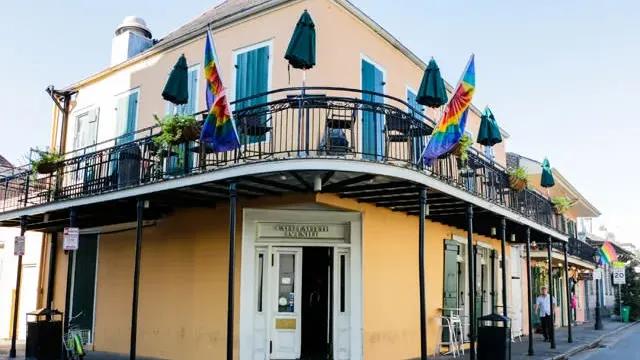
Café Lafitte in Exile stands as one of the oldest continuously operating gay bars in the United States and remains a cherished safe haven for LGBTQ+ locals and travelers in New Orleans’ historic French Quarter.
Nestled at the corner of Bourbon and Dumaine Streets in the heart of the French Quarter, Café Lafitte in Exile has served as an LGBTQ+ cornerstone since its founding in 1933, originally opening at a different location before moving to its current site in 1953 . Its longevity is no accident: from the post-Prohibition era through the challenges of the 20th and 21st centuries, the bar has provided an unwaveringly inclusive atmosphere—one of the few spaces in the South where LGBTQ+ individuals could gather safely long before protections were codified into law .
The venue’s name references its forced move from the original Lafitte’s Blacksmith Shop Bar due to anti-gay sentiment, with “in Exile” symbolizing both displacement and resilience. It quickly became a focal point for local activists, artists, and notables, including literary icons like Tennessee Williams and Truman Capote, who both frequented the establishment .
Today, Café Lafitte in Exile continues to attract tourists from around the globe, drawn not only by its storied past but also by its vibrant present-day atmosphere. The bar operates 24 hours a day, seven days a week, offering a welcoming space regardless of the hour—a rarity even in New Orleans’ famously lively nightlife scene .
The venue is renowned for its colorful balcony overlooking Bourbon Street, making it a prime spot for people-watching during major city events, including Mardi Gras and Southern Decadence, one of the largest LGBTQ+ festivals in the South. During these events, Café Lafitte in Exile hosts themed parties, drag performances, and community fundraisers, solidifying its role as a hub for both entertainment and advocacy .
Beyond its reputation as a nightlife destination, Café Lafitte in Exile is deeply involved in local LGBTQ+ initiatives. The bar supports a range of organizations, including local AIDS assistance groups and youth outreach services, and regularly hosts events that raise awareness and funds for marginalized members of the community .
Staff at the bar, many of whom identify as LGBTQ+, describe their mission as fostering a space where all are welcomed—including transgender people, nonbinary patrons, and those new to the community. The establishment’s zero-tolerance policy for discrimination and its open embrace of diversity have earned it accolades from both local and national LGBTQ+ publications .
For tourists visiting New Orleans—a city consistently ranked among the world’s most LGBTQ+ friendly destinations—Café Lafitte in Exile offers an authentic and affirming experience that blends history, culture, and celebration . The bar is frequently listed in travel guides and reputable LGBTQ+ media as a must-visit spot, both for those seeking nightlife and for travelers interested in understanding the struggles and triumphs of the local LGBTQ+ community .
The venue’s enduring presence and commitment to inclusion serve as a model for LGBTQ+ businesses worldwide, demonstrating how a single establishment can spark change, foster resilience, and offer sanctuary in the heart of a bustling tourist destination.
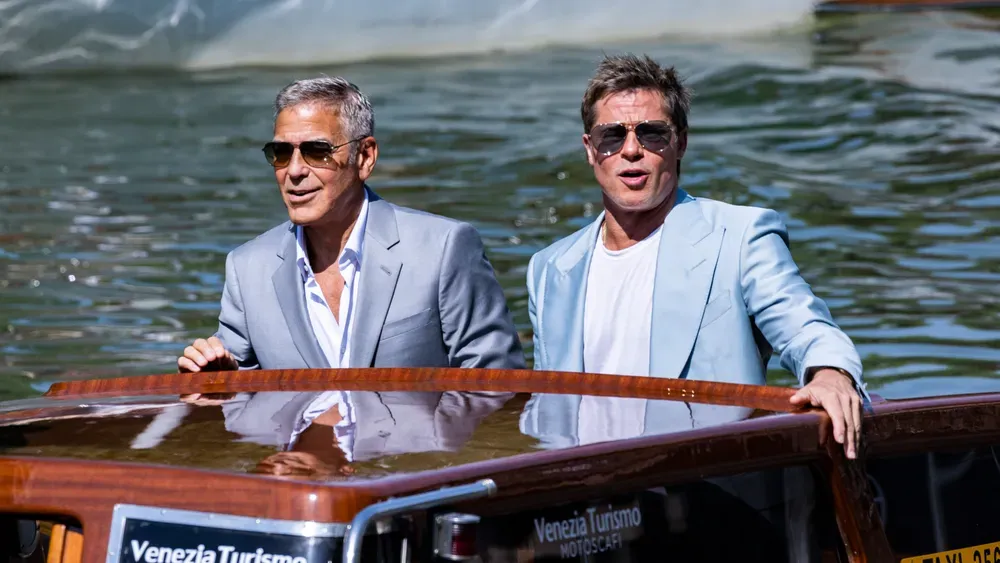
George Clooney, left, and Brad Pitt upon arrival for the press conference of the film 'Wolfs' during the 81st edition of the Venice Film Festival in Venice, Italy, on Sunday, Sept. 1, 2024. Photo Credit: Joel C Ryan/Invision/AP
George Clooney has a long history with Venice, from film premieres to his wedding
VENICE, Italy (AP) — No Hollywood star seems as intrinsically tied to Venice as George Clooney.
Twenty-seven years ago he attended his first Venice Film Festival with the instant classic “Out of Sight”; 20 years ago, it’s where he debuted his sophomore film, “Good Night, and Good Luck,” which earned him his first best director nomination; and 11 years ago, it’s where he exchanged vows with then Amal Alamuddin, at the Aman Venice, a five-star hotel perched alongside the Grand Canal.
Venice is a city that he, like many, thinks is one of the most beautiful in the world. Unlike most people, he also owns 15-bedroom villa a few hours away on Lake Como that famously co-starred in “Ocean’s Twelve.”
This year he’ll be back on the Lido again with Noah Baumbach’s “Jay Kelly,” in which he plays a middle-aged movie star on a journey through Europe with his manager, played by Adam Sandler. And his longtime friend and oft co-star Julia Roberts is making her Venice debut this year with “After the Hunt.”
Here are some of Clooney’s most memorable Venice moments.
1998: “Out of Sight”
As legend has it, Clooney’s long term love affair with Venice may have begun with the festival’s premiere of Steven Soderbergh’s Elmore Leonard adaptation “Out of Sight.” Then 37 and doing press alongside Jennifer Lopez, the actor would also make another big jump soon: Leaving “ER” that February.
2003: “Intolerable Cruelty”
This Coen brothers joint, co-starring Catherine Zeta-Jones, premiered out of competition at the 60th Venice Film Festival, alongside titles like “Matchstick Men,” “Once Upon a Time in Mexico” and “The Dreamers.” Clooney’s nearby Italian residence was already as famous as him, and a stakeout spot for amateur and professional paparazzi.
In a profile that fall, while shooting “Ocean’s Twelve,” Vanity Fair writer Ned Zeman observed: “That an affable, self-effacing Kentucky-born Hollywood actor is fast becoming the most popular public figure in Italy says a little about Italy and a lot about Clooney, who isn’t Italian, doesn’t speak Italian, and lives here only in summertime.”
2005: “Good Night and Good Luck”
Clooney’s acclaimed black-and-white dramatization of journalist Edward R. Murrow’s clash with Joseph McCarthy began its successful run in competition at the 62nd Venice Film Festival. Though it lost the Golden Lion to Ang Lee’s “Brokeback Mountain,” it did go on to pick up six Oscar nominations including for Clooney’s directing.
During the trip, he also inspired a cocktail still served at the ritzy Belmond Hotel Cipriani on Giudecca. One night he retreated to the hotel’s Gabbiano Bar where his friend, the legendary bar manager Walter Bolzonella, mixed him a drink of lemon, sugar, vodka, cranberry juice, ginger and Angostura bitters and named it Buona Notte in honor of the film. The two would later name a prosecco, passionfruit and elderflower cocktail La Nina after Clooney’s mother, which was served at his wedding.
2007: “Michael Clayton”
Tony Gilroy’s “Michael Clayton,” which nabbed Clooney an Oscar nomination for his turn as the titular law firm fixer, played in competition at Venice. The top prize went again to an Ang Lee film: “Lust, Caution,” which also beat out the likes of “I’m Not There,” “Atonement” and “The Assassination of Jesse James by the Coward Robert Ford.”
2008: “Burn After Reading”
This Coen brothers comedy featuring Clooney and Brad Pitt opted to debut out of competition in the opening night slot. He said it completed his “trilogy of idiots” that he’d played for the Coens, including “Intolerable Cruelty” and “O Brother, Where Art Thou?” “Looking at the parts we are playing, I’m very concerned about what you think of us,” Clooney said at the press conference. Pitt, who’d won the festival’s acting prize the year prior, added: “Like George … I’m not sure if I should be flattered or insulted.”
2011: “The Ides of March”
Another opening night, out of competition slot debut for this Clooney-directed campaign thriller starring Ryan Gosling and Philip Seymour Hoffman. As usual, Clooney was peppered with political questions in which he observed that, “it’s a very difficult time to govern.”
2013: “Gravity”
Alfonso Cuarón’s “Gravity” opened the 70th edition of the Venice Film Festival before going on to win seven Oscars. Clooney, of course, attended the premiere alongside Sandra Bullock and he was self-deprecating about his role: “There were only two parts and Sandy had the other one, so I felt like this was the only one I could get away with.”
2014: George and Amal get married
The canals were packed with paparazzi for the nuptials of one of Hollywood’s favorite bachelors. On Sept. 27, Clooney, then 53, and Alamuddin, then 36, exchanged vows in front of 100 of their closest friends and family, including Bono and Matt Damon, at the luxury hotel Aman Grand Canal, originally a grand palazzo built in 1550. She wore a custom Oscar de la Renta dress, of French lace, pearls and diamanté accents. He wore a black wool/cashmere Giorgio Armani tuxedo.
2017: “Suburbicon”
Clooney returned to the festival with another of his directing projects, “Suburbicon,” a dark comedic satire about a seemingly idyllic 1950s community with Damon and Julianne Moore. This festival was especially notable for it being the Clooneys’ first public appearance since the birth of their twins, Alexander and Ella, a few months prior.
2023: Spotlight on Amal
This time George was the plus one to Amal, who was receiving an award from the Diane von Furstenberg and The Diller-von Furstenberg Family Foundation for her work as a human rights lawyer. The power couple gave the festival some much-needed star power amid the actors strike with an appearance at the adjacent DVF Awards. “I am here in Venice with my husband; he is a rising star,” she said that night. “I just wanted to say, you, my love, like this city, take my breath away.”
2024: “Wolfs”
Clooney and Pitt reunited for the Jon Watts action comedy “Wolfs,” that played out of competition. But the spotlight was less on the film and more on the off-screen drama of the AppleTV+ produced film only getting a limited theatrical release, and his then-recent New York Times op-ed urging President Joe Biden to end his reelection bid.
“The person who should be applauded is the president who did the most selfless thing anyone’s done since George Washington,” Clooney said. “All the machinations that got us there, none of that’s going to be remembered. And it shouldn’t be. What should be remembered is the selfless act.”
Thousands of people are set to paint a Spanish town red with tomato pulp during the famous "Tomatina" festival
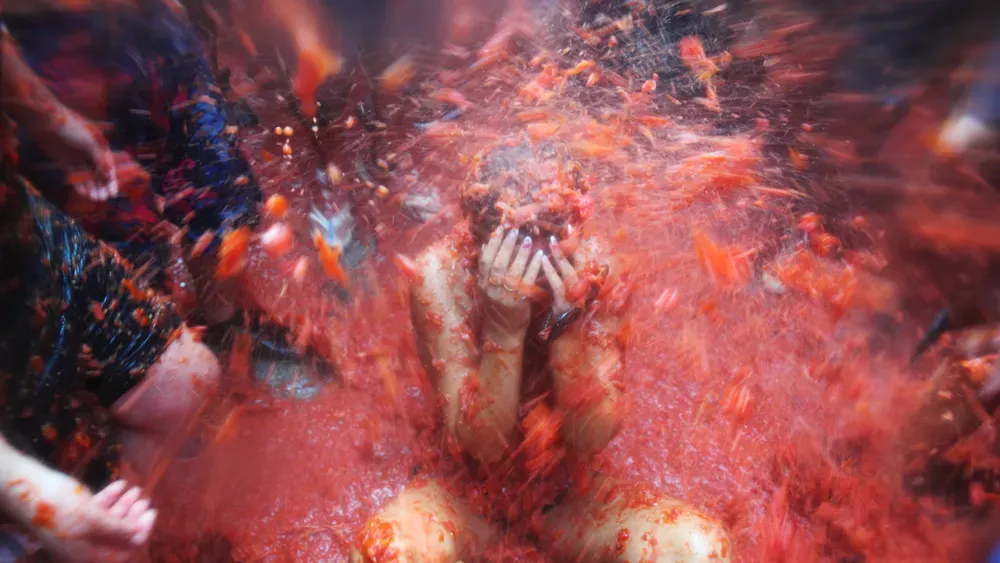
Thousands of people will paint a town red with tomato pulp Wednesday, flinging the fruit at one another in the 80th anniversary of Spain’s famous “Tomatina” tomato street fight.
The hourlong event brings 120 tons of overripe tomatoes to the eastern town of Buñol, where tarp-covered buildings flank a crowd of up to 22,000 participants awaiting their ammo. Non-local attendees pay 15 euros ($17.50) for a ticket and arrive from countries across the globe or cities a bus ride away.
“When it’s going on, it’s just a blur of tomatoes,” said Adrian Columb of Ireland, who attended in 1999. “It was a blast.”
Here’s what to know about the “Tomatina” festival:
The anniversary of a spontaneous food fight
Held on the last Wednesday of August, the event was inspired by a food fight between local children who pelted each other with tomatoes in 1945.
After becoming a yearly tradition, “Tomatina” was briefly banned in the 1950s by Spanish dictator Francisco Franco, a decision locals protested. Televised media attention in the 1980s turned the festival into a national event, eventually drawing an international crowd.
In 2002, Spain officially recognized the festival as an international tourism attraction. Since then, the event has only been suspended twice, in 2020 and 2021, because of the coronavirus pandemic.
The tomatoes aren’t edible
The tomatoes thrown aren’t from crops treated like those used for food. That’s because they’re grown exclusively for the festival, said Buñol Deputy Mayor Sergio Galarza.
“If ‘Tomatina’ didn’t exist, these tomatoes wouldn’t be cultivated because there wouldn’t be a need for them,” Galarza said.
This year’s supply hails from Don Benito, a town over 5 hours away.
There’s only one rule
There are no teams, no points and no referees, but there is a guideline: To avoid injuries, participants are encouraged to squash the tomatoes before hurling them (and of course, refrain from hurling anything else).
Even then, many people don swimming goggles and earplugs for protection.
When Columb attended, he said, a friend of his finished the battle with two black eyes. “But I know he’s kind of tall, so maybe he was a target,” Columb added.
“You finish exhausted,” said Galarza, who grew up going to the festival before becoming its chief councilor. “Your arms are worn out, everything is worn out from moving and launching it all.”
The mash of projectiles leaves attendees “up to your ankles deep in this tomato puree,” Columb said.
Once the hour is up, marked by the sound of a cannon shot, crowds shuffle to wash off at nearby communal showers while the town’s streets are hosed. Though the stains on clothes are likely irreversible, the citric acid in the tomatoes acts as an effective cleaning agent on the pavement. Three to four hours later, the streets are sometimes left cleaner than before.
Other countries have taken inspiration
Similar tomato-flinging festivals have taken place in Florida, London, Amsterdam, the Colombian town of Sutamarchán and, most recently, Hyderabad, India.
Still, for Galarza, a native of the festival’s original location, “Tomatina” is synonymous with Buñol, he said.
“The truth is that it’s exciting because year after year, you can see how ‘Tomatina’ grows and evolves,” Galarza said, “and you can enjoy a festival that is super wholesome.”
by Luena Rodriguez-Feo Vileira
Copyright Associated Press. All rights reserved. This material may not be published, broadcast, rewritten, or redistributed.
The legendary story of The Wizard of Oz is reimagined for a new era as the Sphere in Las Vegas unveils an immersive cinematic adventure, launching August 28, 2025.
On August 28, 2025, Las Vegas’ Sphere will open its doors to audiences for a next-generation journey down the yellow brick road, launching “The Wizard of Oz at Sphere”—an immersive cinematic experience that blends the timeless magic of the 1939 film with cutting-edge technology and a spirit of inclusivity that resonates deeply with queer audiences.
For generations, "The Wizard of Oz" has been a touchstone for queer communities, offering themes of chosen family, self-acceptance, and the promise that there’s a place “over the rainbow” for everyone. Now, Sphere’s technology—spanning 160,000 square feet of immersive visuals, haptic seating, and Sphere Immersive Sound’s 167,000 speakers—brings Dorothy’s world to life like never before, amplifying the story’s enduring queer resonance.
Unlike traditional screenings, the Sphere’s “Wizard of Oz” envelops visitors in a 360-degree environment where every sense is engaged. As the original film’s imagery fills the vast, wrap-around screen, visitors are immersed in Oz through enhanced visuals, remastered music, and interactive environmental effects—including custom scents and tactile feedback that transport the audience from Kansas to the Emerald City.
This collaboration between Sphere Entertainment, Warner Bros. Discovery, Google, and Magnopus marks the first time the beloved film has been reimagined on such a scale, with a meticulous focus on both technological innovation and accessibility.
Adding to the spectacle, Sphere’s outdoor activation features a towering 22-foot-tall pair of ruby slippers and the Wicked Witch of the East’s iconic legs—visuals that have already become a magnet for visitors and social media, sparking playful engagement across all generations.
The enduring bond between "The Wizard of Oz" and queer culture is woven throughout the Sphere experience. The film’s original “friends of Dorothy” subtext, long understood as a coded reference to queer community, is honored both visually and thematically. The immersive journey invites guests to explore the meaning of belonging, bravery, and authenticity—values that have made Oz a symbol of hope and solidarity for generations of queer people.
For many LGBTQ+ visitors, the Sphere’s Oz experience is more than spectacle—it’s a homecoming. Queer fans have long found kinship in Dorothy’s journey, her unwavering allies, and the message that being true to oneself is the ultimate magic. The Sphere’s approach is both celebratory and inclusive, offering accessible seating, sensory accommodations, and welcoming messaging that affirms all identities.
Tickets for “The Wizard of Oz at Sphere” are on sale now, with select VIP packages offering exclusive access: premium seats, a two-night suite at The Venetian, advance entry, and collectible memorabilia. The Sphere is also promoting special events and themed nights that invite queer organizations, drag performers, and LGBTQ+ families to take center stage, reinforcing the venue’s commitment to community engagement and celebration.
This Las Vegas launch is poised to be a cornerstone for Pride travel in late 2025, inviting visitors from around the world to gather, celebrate, and find new meaning in a story that has always been about finding your people and embracing your authentic self.
As the Sphere’s doors open to Oz, the spirit of LGBTQ+ celebration is unmistakable. For queer audiences, the new experience is both a tribute to the past and a bold step into the future—where everyone can follow their own yellow brick road and discover, perhaps for the first time, that there truly is no place like home.
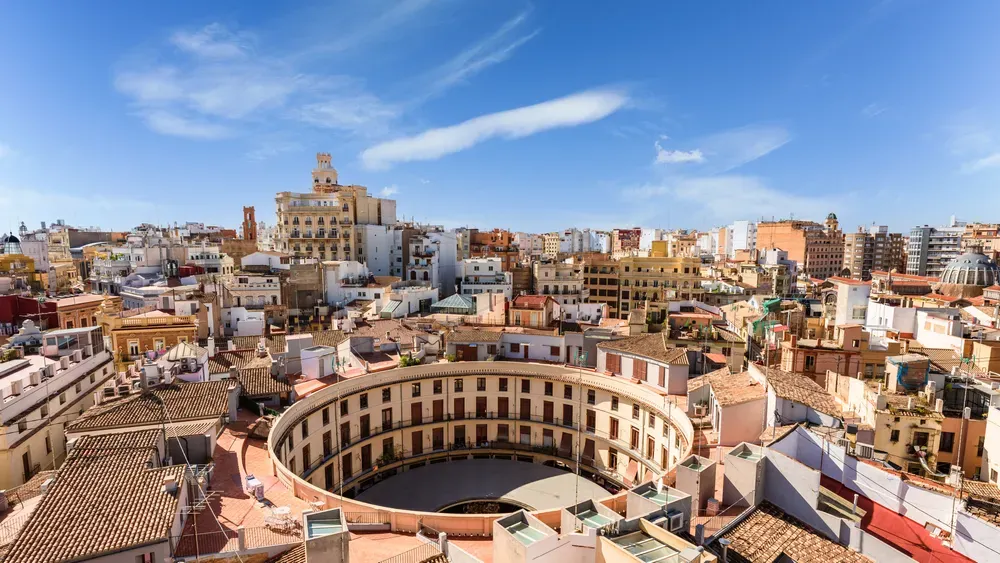
Valencia, Spain, will host the 2026 Gay Games from June 27 to July 4, positioning the city as a global hub for LGBTQ+ sports, culture, and travel.
Valencia, the sun-drenched coastal jewel of eastern Spain, is preparing to roll out the rainbow carpet for the 2026 Gay Games, a landmark event expected to draw between 8,000 and 12,000 athletes and tens of thousands more supporters, allies, and spectators from across the globe. Scheduled for June 27 to July 4, 2026, the Games will transform the city into a vibrant celebration of LGBTQ+ inclusion, athletic excellence, and cultural exchange, marking a significant chapter both for Spain and the international queer community .
Since their inception in 1982, the Gay Games have stood as the world’s largest all-inclusive sporting and cultural event, open to participants of all sexual orientations, gender identities, and abilities. The 2026 edition, the twelfth in the event’s history, will be guided by the principles of participation, inclusion, and achieving one’s personal best. The Games are open to anyone over 18, with no qualifying standards—making them a uniquely accessible and affirming space for LGBTQ+ athletes and allies alike .
Valencia’s program will feature 37 to 38 sports, including aquatics, basketball, rugby, rowing, and more, plus local favorites such as colpbol and pilota valenciana, offered in exhibition mode to highlight regional culture and tradition. Each sport is overseen by its respective governing body, ensuring both competitive integrity and a welcoming atmosphere for all skill levels .
Central to the experience will be the Gay Games Village, located in the iconic Ciudad de las Artes y las Ciencias (City of Arts and Sciences). This architectural landmark will serve as a hub for social gatherings, cultural programming, and community-building, much like the Olympic Village tradition. With 33 venues—22 of them government-owned and most situated within the city limits—the Games aim to be both accessible and visible throughout Valencia, reinforcing its role as a beacon of LGBTQ+ hospitality .
Beyond the competitions, attendees will enjoy Valencia’s celebrated beaches, vibrant nightlife, world-class cuisine, and centuries-old history. The city’s Mediterranean climate and renowned cultural festivals make it a prime destination for queer travelers, with tourism officials eager to demonstrate Valencia’s ongoing commitment to diversity and inclusion .
Valencia’s tourism boosters are already eyeing the Gay Games as a catalyst for lasting change—not only hoping to welcome a record number of LGBTQ+ visitors in 2026, but to encourage them to return in subsequent years. The event’s timing coincides with the city’s busiest tourism season, promising a substantial economic boost and a chance to further establish Valencia as one of Europe’s premier queer-friendly destinations .
Spain’s reputation as an LGBTQ+ travel leader is well-earned, with decades of investment in queer-friendly infrastructure and events. From the island parties of Ibiza and Mallorca to the metropolitan celebrations in Madrid and Barcelona, Spain has consistently prioritized LGBTQ+ inclusion in its tourism strategy. The decision to bring the Gay Games to Valencia is seen as both an affirmation of these efforts and a springboard for future growth .
Organizers are also mindful of the importance of accessibility, working to ensure the Games are welcoming to people of all backgrounds, abilities, and identities—including transgender people, nonbinary individuals, and those with disabilities. The event is promoted as a “safe environment for the entire LGTBIQ+ community,” regardless of sexual orientation, gender identity, ethnicity, age, religion, or health status .
While the athletic contests will take center stage, the Gay Games are also renowned for their cultural programming: art exhibitions, music performances, and educational events that foster dialogue, visibility, and solidarity within and beyond the LGBTQ+ community. For many participants and attendees, the Games are as much about forging connections and affirming identities as they are about medals or records.
The legacy of the Gay Games is measured not just in victories, but in the memories, friendships, and sense of belonging they create. As Valencia looks ahead to 2026, local leaders, activists, and tourism professionals are united in their vision: to make the city a home for everyone, if only for a week—and, perhaps, to inspire visitors to return long after the closing ceremony.
For more information or to subscribe for updates, visit the official Gay Games Valencia 2026 website at gaygamesvalencia2026.com .
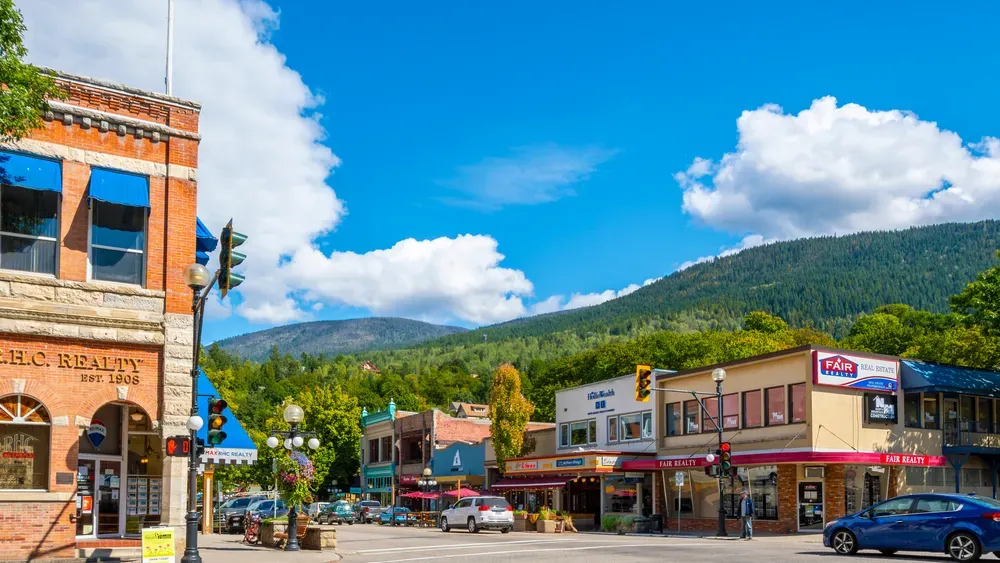
The historic buildings with businesses, shops and cafes along Baker Street in the town center of Nelson, BC, Canada, in the Selkirk Mountains of British Columbia.Photo Credit: Getty
Set in the heart of the Canadian Rockies, Nelson, British Columbia, is rapidly gaining recognition as one of North America's most welcoming and vibrant queer-friendly small towns.
Nestled at the edge of Kootenay Lake and surrounded by dramatic mountain scenery, Nelson, British Columbia, is a town of just over 10,000 residents that punches well above its weight in terms of queer inclusion and cultural vibrancy. While major cities such as Vancouver and Toronto have long been recognized as LGBTQ+ travel hotspots in Canada, Nelson has quietly built a reputation as a progressive, open-minded community where diversity is both celebrated and protected .
The town’s inclusive ethos is rooted in its history as a refuge for alternative thinkers, artists, and activists, dating back to the countercultural migration of the 1960s and ‘70s. Today, this legacy is evident in both policy and practice: Nelson’s municipal government has enacted various anti-discrimination ordinances, and public spaces often display the rainbow flag not just during Pride, but year-round .
Nelson’s reputation as a queer-friendly destination is bolstered by its rich arts scene, which includes everything from experimental theater to drag cabarets and queer film nights. The town's restored heritage buildings house independent galleries, bookstores, and queer-owned coffee shops where all identities are welcome .
Summer is particularly lively, as Nelson hosts the annual Kootenay Pride, a week-long series of events drawing visitors from across British Columbia and the U.S. Pacific Northwest . The 2025 parade saw record participation, featuring drag performances, queer musicians, and inclusive family activities, all underpinned by strong support from local businesses and civic leaders .
For those seeking a quieter or more nature-focused experience, Nelson’s setting offers unparalleled access to outdoor recreation. Queer hiking groups, inclusive yoga studios, and LGBTQ+-run eco-tours make it easy to connect with like-minded travelers and locals while exploring the region’s forests, lakes, and mountain trails .
Safety is a significant draw for LGBTQ+ visitors to Nelson. The town has repeatedly been singled out in Canadian travel indexes for its low crime rates and robust anti-harassment policies . Local advocacy groups, such as the Kootenay Pride Collective and Gender Outlaws Nelson, work year-round to ensure that transgender people, queer youth, and those from other marginalized backgrounds have access to resources and community .
Nelson’s intersectional approach is also noteworthy. The city’s Pride events and queer spaces make a point of centering Indigenous voices, people of color, and the disabled queer community. For example, this year’s Pride Grand Marshal was Two-Spirit activist Raven L'Hirondelle, whose presence underscored the town’s commitment to inclusion across all spectrums of identity .
Reaching Nelson is part of the adventure. The town is accessible via a scenic drive from Spokane, Washington, or through flights to nearby Castlegar Airport, followed by a short drive. Accommodations range from queer-owned B&Bs and boutique hotels to eco-lodges and cozy Airbnbs, many of which explicitly advertise their inclusivity .
Local businesses such as Oso Negro Café and the Hume Hotel have been highlighted for their welcoming staff and visible support of LGBTQ+ causes . Visitors consistently remark on the warmth and openness of Nelson’s residents, reinforcing the sense that this is not just a safe space, but a place where queer travelers can truly belong .
As larger urban centers become increasingly saturated and expensive, many LGBTQ+ travelers are seeking destinations where authenticity and community are prioritized over commercialism. Nelson’s blend of progressive politics, grassroots activism, and natural beauty provides a template for what queer travel can look like in the 2020s: inclusive, intersectional, and deeply connected to place .
Whether you’re looking to celebrate Pride on a more intimate scale, hike with a chosen family, or simply relax in a town where your identity is affirmed, Nelson is emerging as one of North America’s most exciting—and genuinely queer-friendly—travel discoveries.
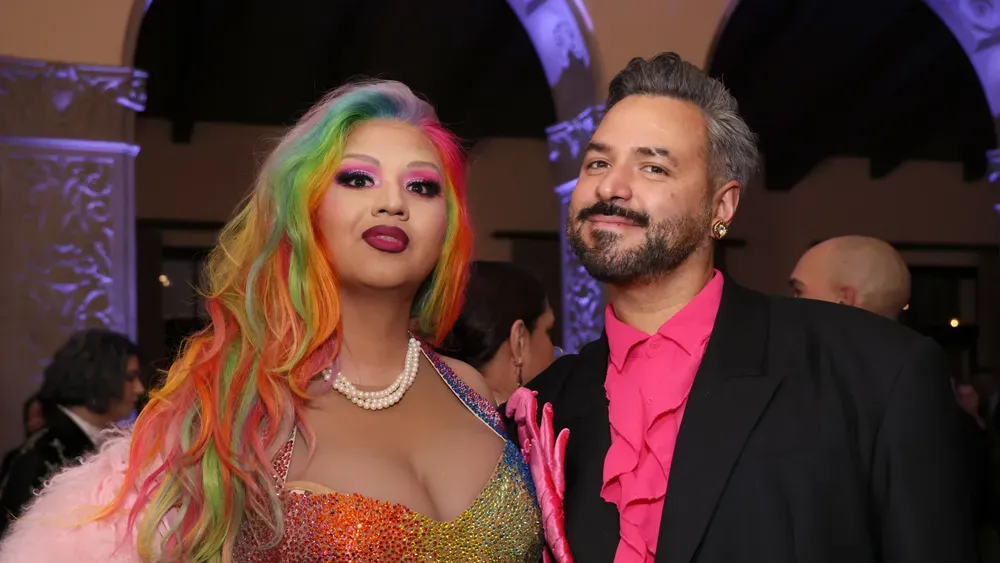
LOS ANGELES, CALIFORNIA - FEBRUARY 06: (L-R) Mindy L'amour and Diego Montoya attend the 27th Costume Designers Guild Awards (CDGA) at Wilshire Ebell Theatre on February 06, 2025 in Los Angeles, California. Photo Credit: (Photo by Rodin Eckenroth/Getty Images for CDGA)
Emmy Award-winning costume designer Diego Montoya, celebrated for his iconic work on “RuPaul’s Drag Race” and HBO’s “We’re Here,” is featured in a new exhibition at the Indianapolis Museum of Art at Newfields.
The Indianapolis Museum of Art at Newfields has opened its doors to “Resplendent Dreams: Reawakening the Rococo,” a vibrant exhibition that brings together the works of three contemporary queer artists—Diego Montoya, Robert Horvath, and Anthony Sonnenberg. Running from June 6, 2025, through March 2026, this exhibition is a celebration of opulence, self-expression, and queer visibility through immersive art, fashion, and historical dialogue .
Diego Montoya has become a household name in the world of drag and costume design, thanks to his show-stopping creations on “RuPaul’s Drag Race” and his Emmy Award-winning work as a costume designer for all four seasons of HBO’s “We’re Here” . Renowned for transforming drag artists into living artworks, Montoya draws from his queer and Latine heritage to craft visually stunning pieces that challenge convention and celebrate individuality.
His participation in “Resplendent Dreams” marks a significant moment: the transition from designing for performance to presenting his work in a fine art context. In this exhibition, Montoya’s gowns and costumes are showcased alongside the works of Horvath and Sonnenberg, offering museum visitors a rare opportunity to experience the theatricality, intricacy, and emotion inherent in drag artistry .
“Resplendent Dreams” invites visitors to step into a world where the lavishness of the 18th-century Rococo style is reinterpreted through contemporary queer perspectives. The exhibition features painting, sculpture, video, performance, installation, fashion, and costuming, blending historical and modern elements to explore themes of sensuality, artifice, and the freedom of self-expression .
Montoya’s extraordinary gowns stand out as exemplars of maximalist decoration and theatricality. Drawing inspiration from Rococo’s frivolity and extravagance, his work embraces bold color, lush textures, and intricate embellishments—elements that have defined many of the most memorable moments on drag stages worldwide. “This exhibition reclaims a historically devalued aesthetic of maximalist decoration as a form of subversion, self-expression, and visibility,” said Michael Vetter, PhD, Associate Curator of Contemporary Art at Newfields .
By presenting his fashion in a museum setting, Montoya also honors the artistry of drag and its importance as a form of cultural and social resistance. His work, alongside Horvath’s immersive watercolor room and Sonnenberg’s ceramic sculptures, offers a dialogue not only with each other but also with ten 18th-century Rococo masterpieces from the IMA’s collection, including paintings by Boucher and Fragonard .
Montoya’s designs pay tribute to the intersectionality of queer and Latine identities, infusing each piece with a sense of history, resilience, and pride. By bringing drag costumes—often relegated to nightclubs and television—into the respected halls of a major museum, “Resplendent Dreams” challenges artistic hierarchies and expands the definition of what constitutes fine art .
The exhibition is as much about honoring queer history and artistry as it is about reimagining the past. The curatorial team, including Vetter and the participating artists, deliberately selected Rococo-era works to highlight the latent queerness and sensuality of the period, creating a bridge between eras and identities .
Montoya’s presence in this show is a testament to the power of drag as a vehicle for both personal and collective storytelling within the LGBTQ+ community. His work exemplifies how queer and Latine creatives continue to shape mainstream culture and reclaim narratives that have long been marginalized or misunderstood.
With “Resplendent Dreams,” the Indianapolis Museum of Art at Newfields signals its commitment to fostering inclusivity and amplifying LGBTQ+ voices within the art world. The exhibition’s immersive installations invite visitors of all backgrounds to experience the beauty, complexity, and resistance that define queer artistry today .
Advance tickets for the exhibition are available through the museum’s website and are included with general admission .
As Diego Montoya and his fellow artists reclaim and transform the Rococo, they remind viewers that art, like identity, is constantly evolving—and that every gown, sculpture, and brushstroke has the power to spark conversation, connection, and pride.
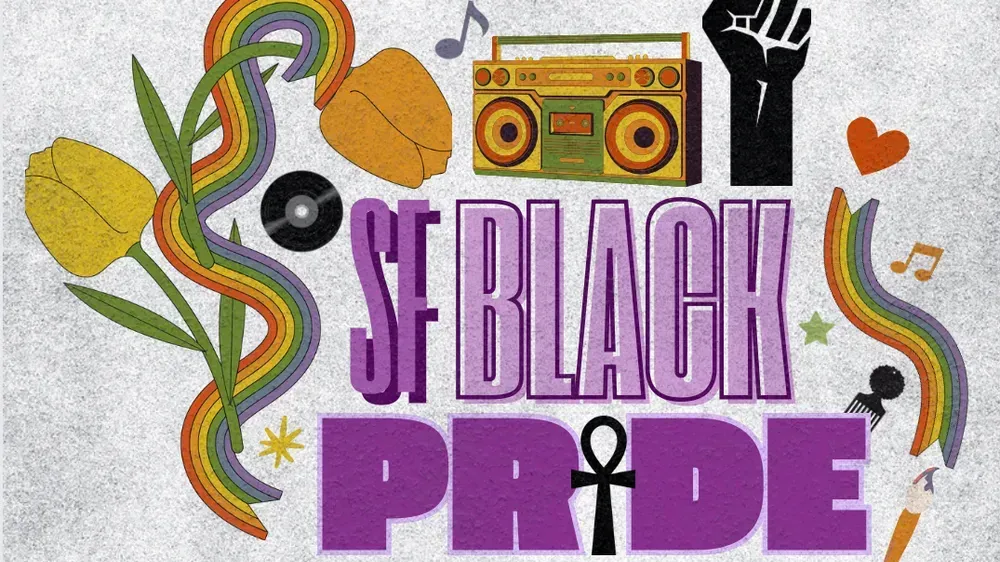
San Francisco is set to host its first SF Black Pride, a week-long festival running from August 25 to August 31, 2025, dedicated to celebrating and uplifting Black Queer voices and culture. Organizers and community leaders emphasize the significance of Black LGBTQ+ representation in the Bay Area’s storied queer history.
San Francisco, long recognized as a beacon for LGBTQ+ rights and activism, is launching its inaugural SF Black Pride festival, scheduled from August 25 to August 31, 2025. The event is organized by @sfblackpride and supported by local community organizations, marking a major milestone in the city’s ongoing efforts to center and uplift the intersectional experiences of Black LGBTQ+ individuals. The festival’s emergence comes amid a national dialogue about race, equity, and the importance of amplifying marginalized voices within the broader LGBTQ+ movement .
Organizers state that SF Black Pride is designed not only as a celebration but as a platform for visibility, empowerment, and advocacy. “This festival is a testament to the strength and resilience of Black LGBTQ+ people in the Bay Area,” said festival co-chair Jordan Woods. “We’re creating space for joy, healing, and cultural affirmation that’s been overdue in our local queer landscape” .
SF Black Pride features a robust lineup of events throughout the week, including music and dance performances, visual art exhibitions, panel discussions focused on racial justice and queer liberation, and health outreach initiatives. Highlights include a Black LGBTQ+ history walking tour in the Castro, a wellness day with free HIV and mpox testing, and an intergenerational storytelling session that invites elders to share their journeys with younger participants .
Health advocacy is a central component of SF Black Pride, prompted by recent reports of rising mpox cases in San Francisco’s LGBTQ+ communities. Local health departments are partnering with festival organizers to provide accessible information and resources, aiming to address disparities in health outcomes faced by Black LGBTQ+ people . “We want to ensure everyone feels safe and supported,” said Dr. Marsha Lee, a public health volunteer for the event.
Community members have expressed enthusiasm and hope for the event’s success, seeing it as an opportunity to foster solidarity and build lasting networks. “Black Pride means celebrating all of who we are — our history, our struggles, and our creativity,” said local activist Tyrell Evans .
The launch of SF Black Pride comes at a critical time for LGBTQ+ centers and organizations in California, many of which are contending with financial challenges and evolving community needs. Recent coverage by Bay Area Reporter highlights similar realities facing LGBTQ+ centers outside the Bay Area, such as those in Sacramento and Los Angeles, which are addressing budget cuts and working to maintain vital services . The new festival reflects a broader movement to ensure that intersectional perspectives — particularly those of Black, transgender, and gender-nonconforming people — remain front and center in community advocacy efforts.
Advocates note that Black LGBTQ+ people continue to face disproportionate barriers in housing, healthcare, and employment, underscoring the importance of events like SF Black Pride for raising awareness and catalyzing change .
Organizers hope that SF Black Pride will become an annual fixture in San Francisco’s cultural calendar and inspire similar initiatives nationwide. The festival’s emphasis on intersectionality, community health, and creative expression is seen as a model for other cities seeking to strengthen support for Black LGBTQ+ communities .
Local leaders and attendees are optimistic that the event will catalyze ongoing dialogue and policy advocacy. “This is just the beginning,” said Woods. “We’re building a future where Black queer and trans people are seen, celebrated, and protected — not just during Pride, but every day” .
A Berlin bathhouse has made headlines for drawing lines of over 300 people, prompting questions about what makes this queer space so magnetic.
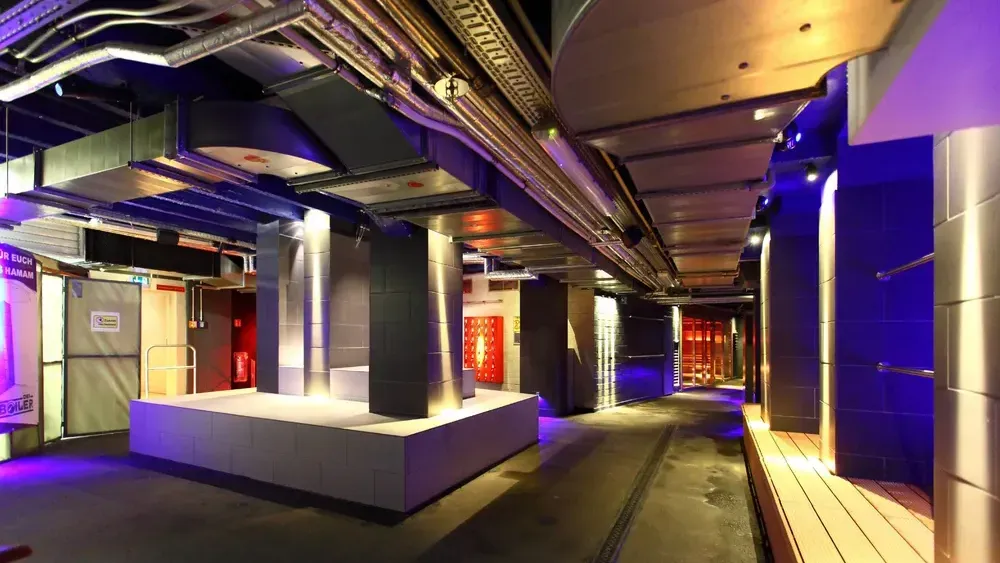
On a recent weekend in Berlin’s lively Kreuzberg district, a line of over 300 people snaked down the street, waiting for entry into BOILER, the city’s most celebrated gay bathhouse. The sheer length of the queue—stretching past neighboring businesses—has sparked debate among locals and international visitors alike: what is it about this venue that inspires such devotion, and is it truly worth the wait?
BOILER, self-described as “the male spa with a smile,” has become an institution in Berlin’s queer landscape since its opening. The venue combines traditional spa amenities—such as steam rooms, saunas, and a sizeable pool—with a welcoming, affirming environment for gay, bisexual, transgender, and queer men and their allies. The appeal is not just in the facilities but in the sense of community fostered within its walls, offering a rare blend of relaxation, socializing, and sexual exploration in a safe setting .
The BOILER team recently completed a round of summer renovations, temporarily closing its main spa from August 11 to 15, 2025, and operating a smaller Club Sauna nearby to keep regulars connected . When the main venue reopened, anticipation reached fever pitch—culminating in the now-viral 300-person queue. Staff cited both the renewed facilities and pent-up demand as drivers of the unprecedented turnout .
Visitors describe BOILER as more than just a bathhouse: it is a cultural hub where Berlin’s LGBTQ+ community converges . The venue’s pool offers a social center, while themed nights and infusion ceremonies (aromatic steam rituals) create a unique sensory experience . Cleanliness and staff attentiveness have been repeatedly noted in reviews, with the staff’s inclusive approach ensuring that everyone—regardless of body type, age, or background—feels welcome .
The line outside, while daunting, becomes a social opportunity in itself. Patrons strike up conversations with strangers, share tips for first-timers, and debate the merits of making a reservation versus braving the walk-in line . Some visitors describe the wait as a rite of passage, while others suggest the venue’s popularity is a testament to the enduring need for queer-centered spaces in an increasingly gentrified city.
BOILER’s lines highlight a broader debate about access, inclusivity, and the commercialization of queer spaces. While some locals lament the long waits and recommend booking in advance, others argue that the communal atmosphere outside is part of the appeal . Staff have pointed out that fire safety regulations limit the number of people inside at any time, especially after the venue’s recent upgrades .
The surge in popularity coincides with a broader conversation about the future of queer spaces in Berlin. As the city’s nightlife scene evolves, longstanding venues like BOILER and newcomers such as Club Sauna Berlin face the challenge of balancing exclusivity, safety, and broad community access . Club Sauna, for example, has recently opened just a few blocks away, catering to younger crowds with a sleeker, more intimate atmosphere, while maintaining close ties to BOILER for overflow and community events .
As Berlin’s queer nightlife continues to adapt and thrive, the question of whether any venue is “worth” a 300-person wait may ultimately miss the point. For those seeking community, affirmation, and a safe place to simply be themselves, the line outside BOILER is less an inconvenience than a testament to queer resilience and joy.