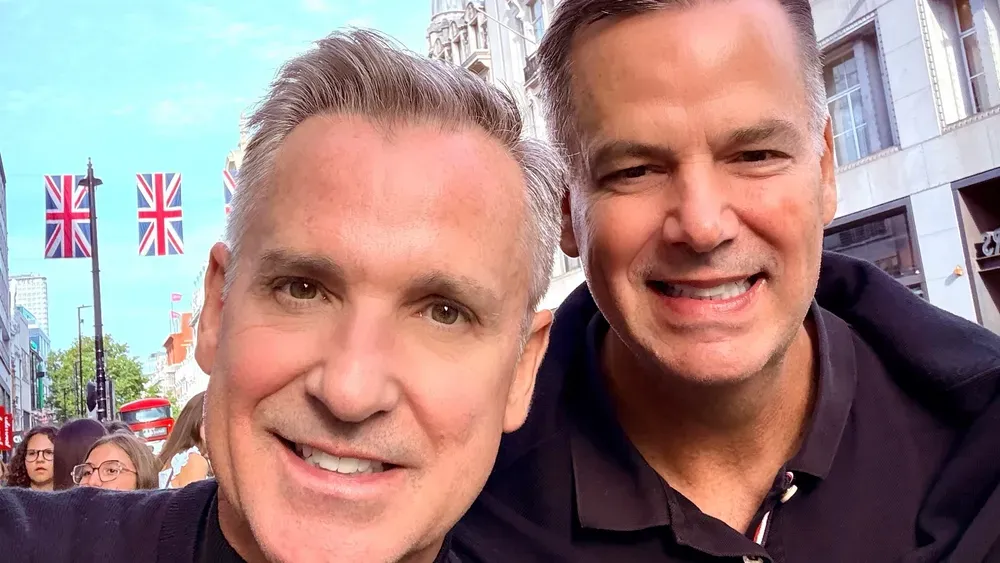
As I look back on those whirlwind days in London—filled with theater, laughter, long dinners, and the kind of conversations that nourish the soul—I’m reminded of how lucky I am to live a life threaded together by such extraordinary people and places.
September came and went in a blur of planes, parties, and performances—so much so that I found myself off the grid when it came to writing my column. With a month this packed, one piece simply won’t do it justice. I have so many adventures to share that I’ll need three columns in a row just to cover September.
Instead of spanning coast to coast and across the globe all at once, this edition focuses solely on our London trip—a whirlwind packed with theater, friends, community impact, and unexpected encounters. London deserves its own spotlight, while my next installments will take you back across the pond and on to the rest of September’s adventures in Phoenix, Tucson, Atlanta, and beyond. And with the city in the grip of a tube strike that week, we experienced London above ground—on foot, by bus, and by cab—giving every outing its own sense of adventure and discovery.
From New York to London for Evita’s Last Curtain
Eric and I boarded a red-eye out of Newark—hardly the most reliable airport in the area, but for overnight flights to London, it offers the widest selection. It was the kind of flight where the anticipation of what awaited us across the Atlantic made sleep elusive. After more than a year and a half of commuting back and forth to the UK, we’ve found our rhythm on United’s Polaris service: dinner in the lounge before boarding, just a light snack on the plane, and always saving room for the ice cream sundae cart (extra hot fudge, please). A movie, a sip of Baileys, and a decaf cappuccino set the perfect stage for a little dozing before wheels down in London.
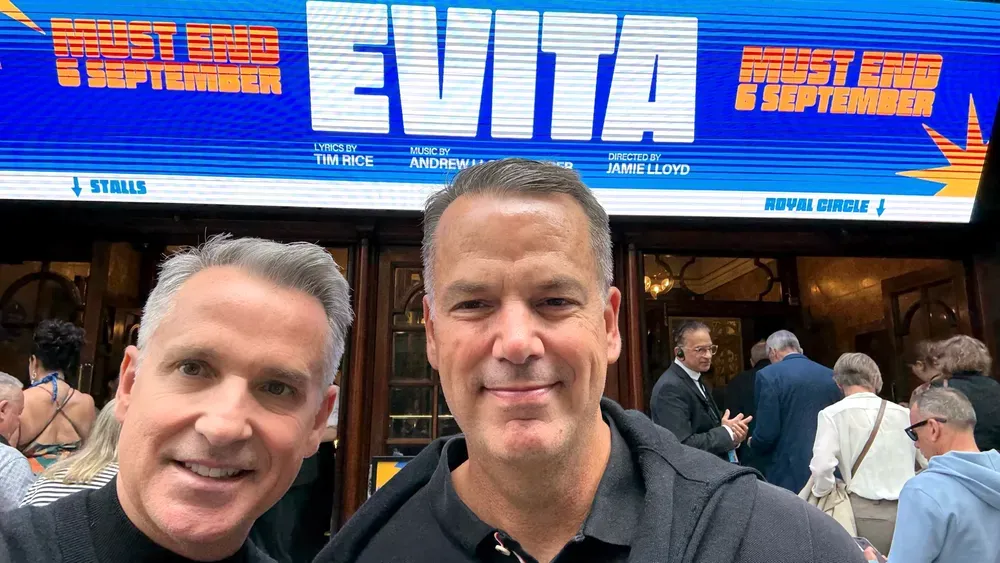
We landed on the morning of September 6th, dropped our bags at the Four Seasons in Mayfair, and went straight to the London Palladium for the closing matinee of Evita. Before the show, we scurried across the street into Hyde Park, taking in the unparalleled views before heading inside.
It was the final day of Rachel Zegler’s dazzling, 12-week summer run, and the atmosphere inside the theater felt electric with anticipation.
The show itself was extraordinary, but the most unforgettable moment came when Zegler stepped outside onto the makeshift balcony—an audacious choice by director Jamie Lloyd that transformed “Don’t Cry for Me Argentina” into a living, breathing moment of history.
From our seats, we watched the livestream of her addressing the masses below; it felt as though we were watching old news footage from the real Casa Rosada, waiting for Evita to emerge and speak directly to “her people.”
The performance inside the Palladium was equally thrilling—the inventive staging stripped away excess and brought raw intensity to the story, with a sleek, modern design that let the music and movement take center stage. The energy on stage was electric, every performer giving their all, and Zegler delivered a performance so powerful and nuanced that it left us both moved and exhilarated.
The audience leapt to its feet in a well-deserved ovation, a perfect send-off to a remarkable run.
Later that evening, Eric and I returned to the theater to be part of the excitement from outside, joining the sea of fans gathered for Zegler’s final balcony scene. The energy was absolutely electric, and as her voice soared into the London night, I felt as if I were part of theater history—witnessing not just a performance, but a bold reimagining of a classic that will be remembered for years to come.
Rupert Street: A London Homecoming
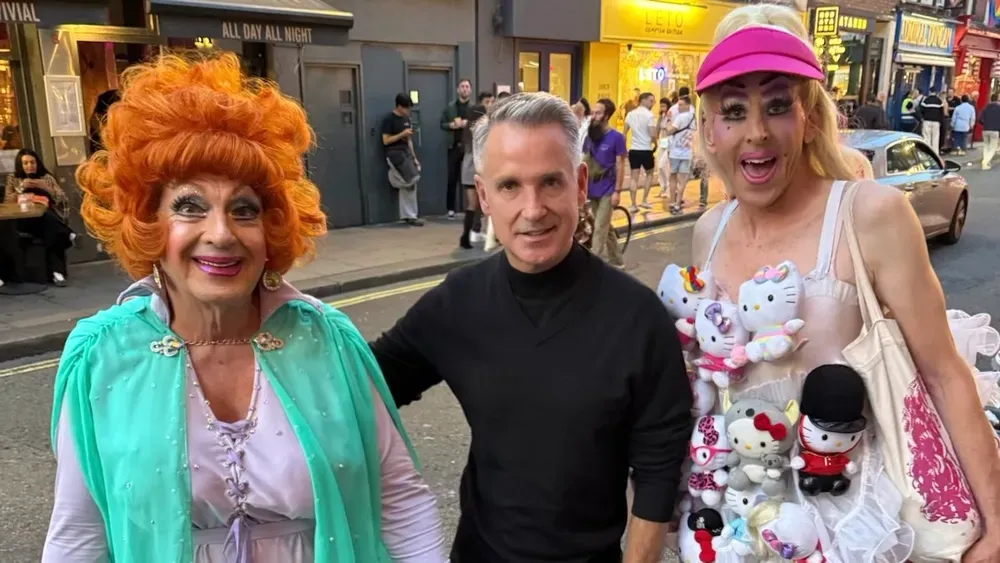
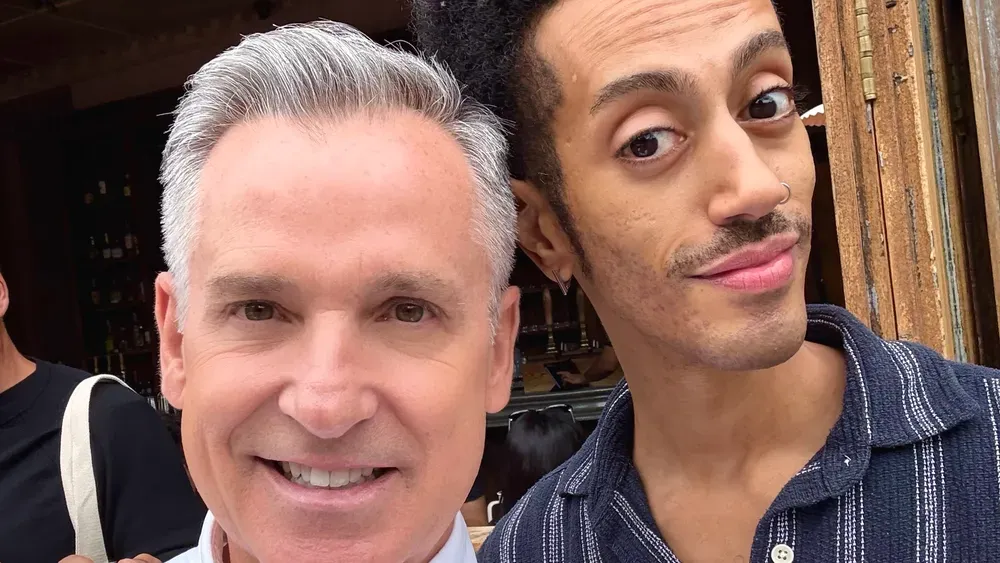
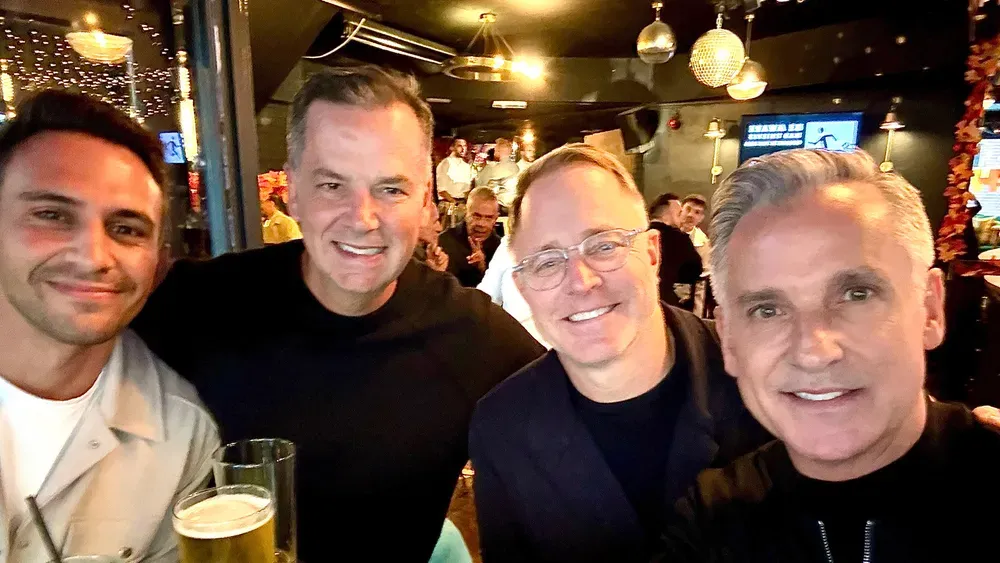
Eric and I pushed ourselves to stay awake that first day and made our way toward Rupert Street Bar to toast our London arrival. Along the walk, we stumbled onto a scene straight out of a Warner Brothers backlot: Miss Bea Haven, the beloved Palm Springs drag performer (Paul Torrigino), resplendent in full Endora-from-Bewitched regalia, chatting with my favorite London talent, Heidi Liscious (Robbie John Dean)
Heidi was a vision—dressed in a light pink camisole with a tulle overlay that created the effect of a high-waisted skirt—her outfit playfully adorned with stuffed Hello Kitty dolls. A matching pink visor perched on her head as if she’d just stepped off the tennis court, while pink sneakers completed the ensemble.
A longtime DJ at Rupert Street and a fixture of the city’s nightlife, Heidi asked us to escort her to the club where she was spinning that evening. And so, the four of us strolled together down the cobblestone street—a riot of color and sparkle, waving to strangers and drawing smiles as we passed. It was an unexpected, joyful moment that made London feel alive and welcoming, even after a sleepless night.
We found ourselves back at Rupert Street several times that week. Its central location, just steps from the Soho Houses we frequent in London, made it an easy choice. The bar itself is relaxed and unpretentious—more neighborhood hangout than high-gloss club—reminding us of the kind of spot we’d happily slip into back home in Chelsea.
Bankside Evenings: Friends, Views, and History
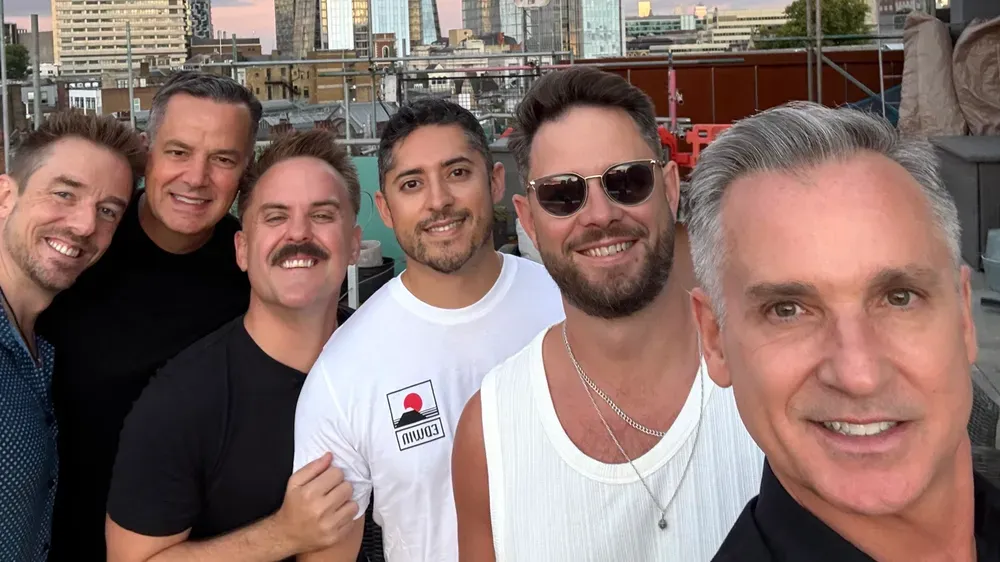
Between work and conference obligations, we also made time to break bread with longtime UK friends, and even one of our besties from New York who was in London for a few months working on scenic design projects. We gathered with four of our favorite London locals—each of whom we’d first met during their stints in New York—for dinner at Adam and David’s new apartment in Bankside, near Elephant and Castle.
The apartment was spacious by London standards, with a palatial deck offering captivating rooftop views. Looking south, you could see Elephant and Castle, while a 360-degree turn revealed the Thames, the Shard—London’s 95-story glass skyscraper and the tallest building in the UK—and the “big three” churches: St. Paul’s Cathedral, Westminster Abbey, and Southwark Cathedral.
We grabbed dinner in the neighborhood, where restaurants abound at the base of their building, and then enjoyed dessert in the form of a guided walk from David, who took us through the southeastern edge of medieval London—now firmly in the middle of everything.
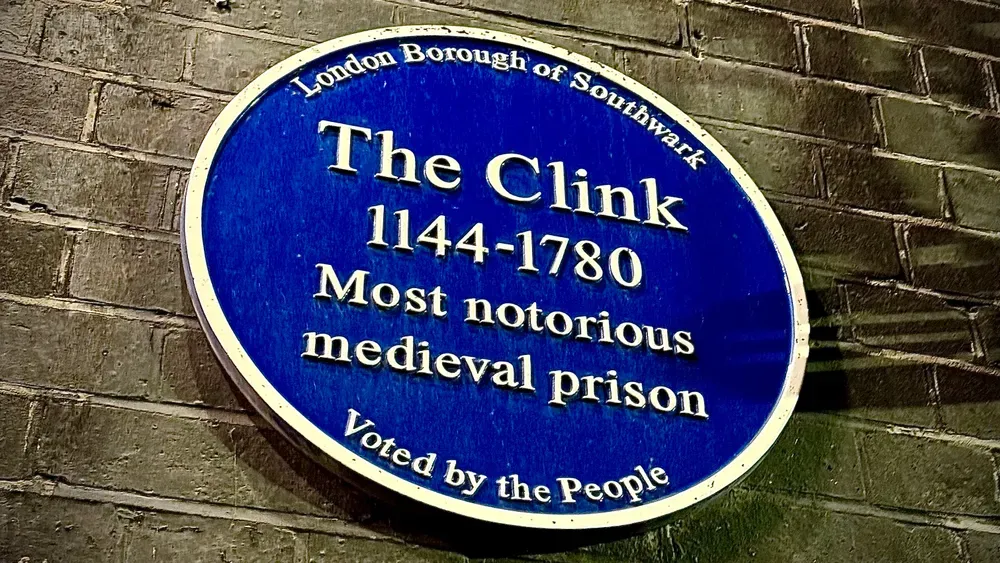
Our tour ended at “The Clink,” the notorious medieval prison that operated from 1144 to 1780, before we ducked into a local pub to toast the night.
Catching Up Over Brunch at The Hero
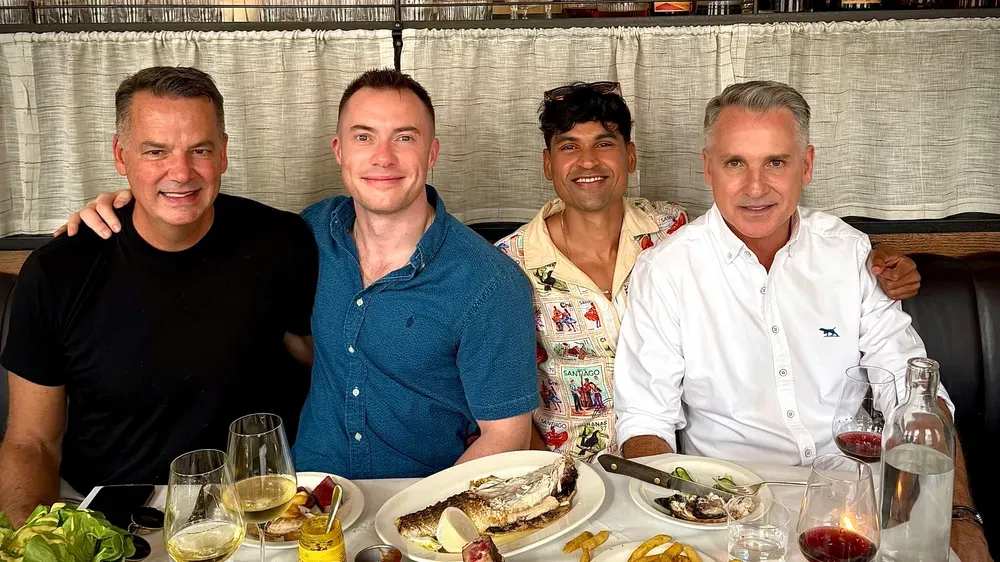
The next day, we met up with two more of our British friends, Dane and Adam, for brunch at The Hero in the Maida Vale/Little Venice area. The pub has two personalities: downstairs, “The Pub” offers a relaxed, casual setting for dining and drinks—where Eric and I grabbed a beer outside and enjoyed the people-watching—while upstairs, the Grill Room serves a more refined menu.
While waiting for the boys to arrive, we were delighted to reconnect with Haben Tesfamariam, who now manages “The Pub.” We first knew Haben from his time at the Chiltern Firehouse, just around the corner from our flat in Marylebone, which unfortunately had to close this past Valentine’s Day after a fire caused by burning wood from the pizza oven. It was wonderful to see that staff from the Firehouse had found new opportunities while repairs are underway.
As for brunch, we did what we do best—over-ordered and over-indulged—but the time together was absolutely worth it. Sharing a meal and catching up with friends you’ve known for years, picking up as if no time has passed, is the truest sign of friendship. The afternoon was simply terrific.
London Moments with Women Who Inspire
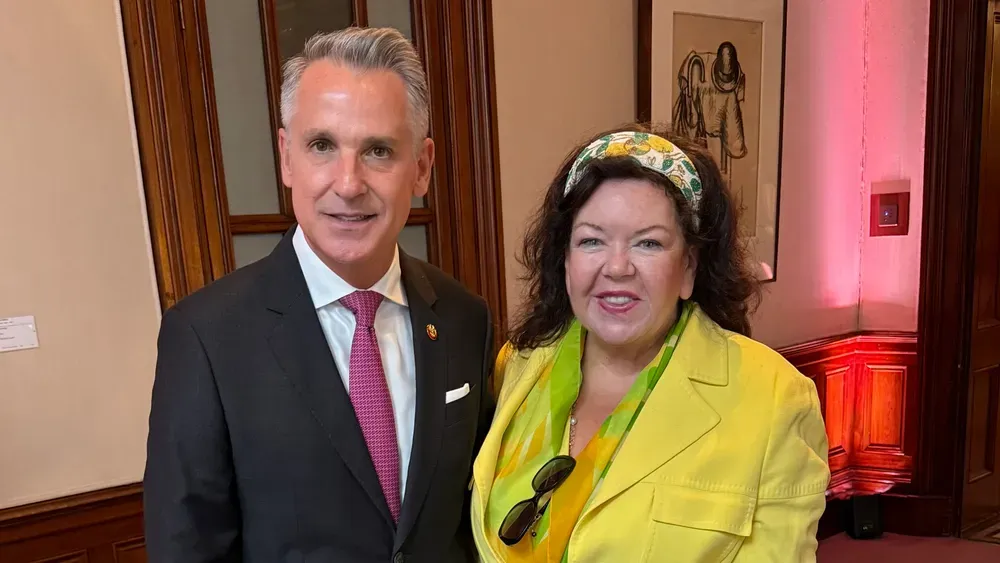
In addition to catching up with the London chaps, I was grateful for time with several of my dearest lady friends. A real highlight was spending time with Dame Karen Pierce, the former UK Ambassador to the United States. I’ve known Karen for many years—we first crossed paths at the UN in New York—and I’ve always admired her sharp insight and approachable style.
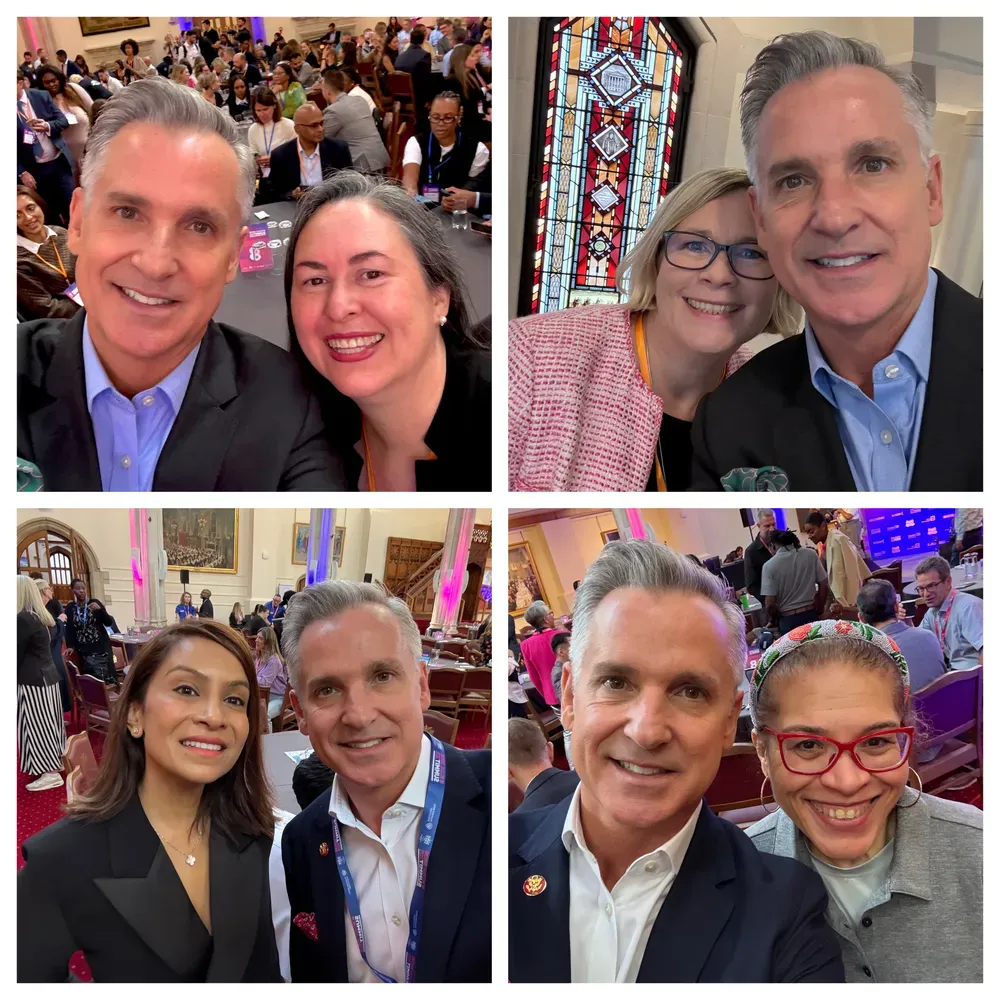
I also reconnected with Maggie Berry OBE, a great friend since our days in Dublin, when we co-presented on The 30% Club Ireland’s mission of achieving at least 30% gender balance at senior decision-making tables.
I was lucky, too, to see my friend Reshma Sheikh, Managing Director of MSDUK, the UK’s leading supplier diversity organization. Her leadership in inclusive procurement is especially timely with the UK’s new Procurement Act of 2023, which is reshaping opportunities for suppliers of all sizes.
I also spent time with Elizabeth Vazquez, CEO and Co-Founder of WEConnect International. Elizabeth is not only a global leader in women’s economic empowerment, she’s also a very special friend—I’m fortunate to see her often, whether while traveling or back in the States, where I have the honor of serving on her board.
And finally, a friend who always makes me smile is Carla Preston from Amazon; her warm, giving personality makes every moment in her company uplifting.
Sparkle, Sequins, and Chosen Family: Evenings with Scott in London
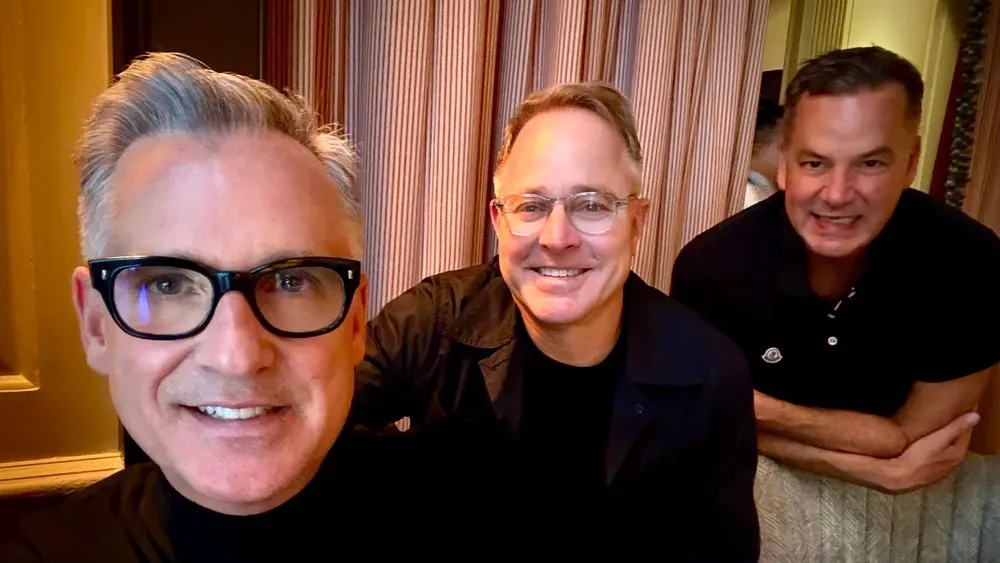
Although there were many standout moments during our short trip to London, the most special were those spent with our dear friend Scott Pask—a part of our chosen family who, like us, lives in New York but also keeps a home in Arizona. Our evenings together were filled with drinks and dinners, including a night out with our buddy Shen (who I often forget actually lives in London, since we seem to bump into him all over the world), and a visit to Soho House Mews.
The Mews is one of those tucked-away London gems—a members’ club reserved for those who’ve been part of the Soho House family for at least ten years. With its townhouse charm and intimate feel, it offers longtime members and their guests a more secret, hidden side of the Soho House world.
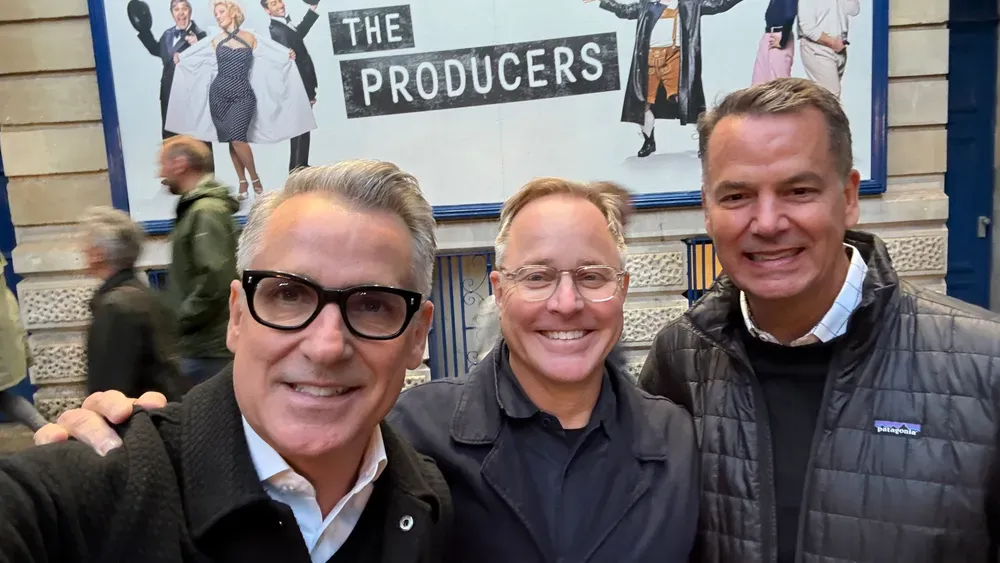
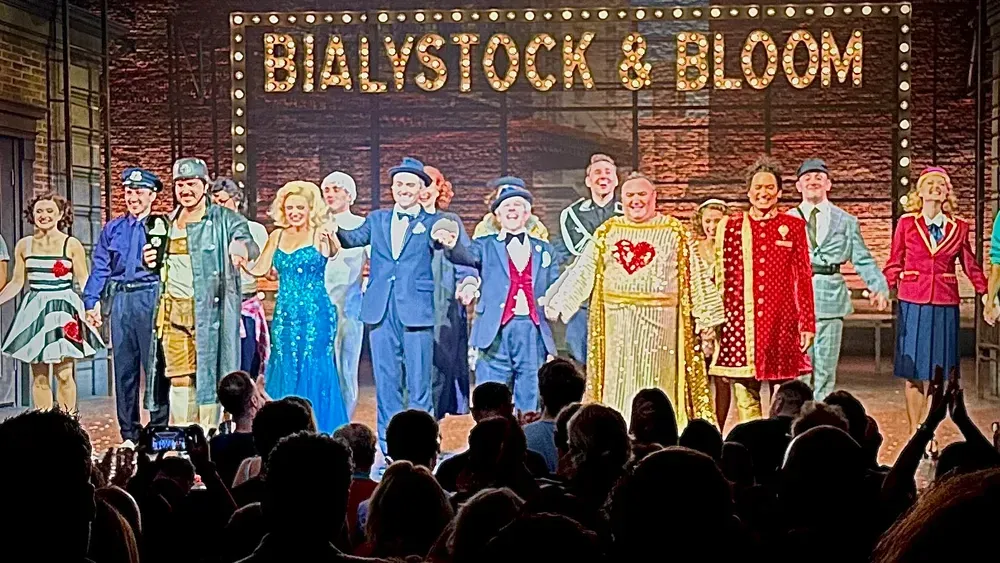
And then there was Scott’s latest show, The Producers, which was one of the most heartwarming and soul-enriching experiences of the trip. We first saw The Producers back in 2001 with Nathan Lane and Matthew Broderick, but the London staging surpassed anything I’d seen before—cleverly staged, perfectly cast, and laugh-out-loud funny.
Scott’s set design tied it all together, playful and inventive in ways that made each scene sparkle. And I mean sparkle quite literally—the costumes were a dazzling riot of sequins, feathers, and over-the-top glamour, from shimmering chorus lines to outrageous character ensembles that had the audience laughing before a single line was spoken.
The True Treasure of Travel: People, Places, and Memories
As I look back on those whirlwind days in London—filled with theater, laughter, long dinners, and the kind of conversations that nourish the soul—I’m reminded of how lucky I am to live a life threaded together by such extraordinary people and places. Each encounter, whether with old friends or unexpected moments of joy on the streets of Soho, reaffirmed for me that the true magic of travel lies not only in the destinations, but in the connections we carry and the memories we create together. September may have been a blur of planes, panels, and parties, but it was also a reminder to pause, savor, and celebrate the beauty of community, wherever in the world we may find it. And with so many more September happenings still to share, this is just the beginning of the story.
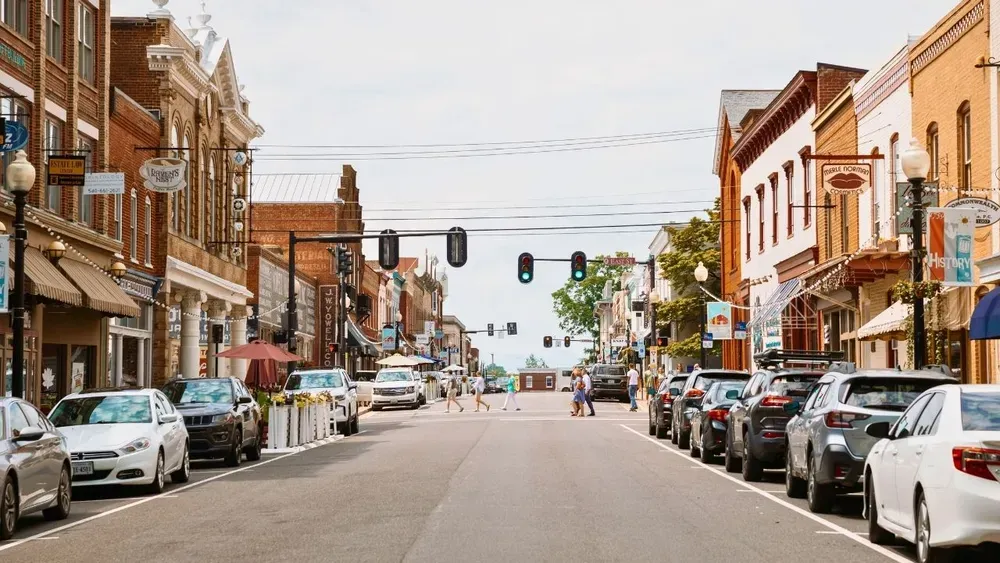
Culpeper, Virginia, offers couples, families, and friends a small-town escape straight out of a feel-good movie.
Culpeper, Virginia, offers couples, families, and friends a small-town escape straight out of a feel-good movie.
Located near both Washington, D.C., and Richmond, Virginia, this Southern town offers the perfect "townsizing" experience, blending history and tradition with a vibrant local dining scene, boutique hotels, and shopping options. Townsizing is one of 2025’s biggest travel trends, focusing on swapping busy cities for the charm of small towns.
Downtown Culpeper feels both timeless and fresh, thanks to a community-led transformation that preserves its history while welcoming thoughtful new additions.
Founded in 1759, Culpeper has been an integral part of Virginia’s story for centuries, and its historic sites, cultural attractions, and thriving Davis Street make it a place where the past and present coexist side by side.
Stay Boutique for a True Small Town Experience
The Suites@249 boutique hotel combines bespoke charm with modern amenities. Centrally located on Davis Street in downtown Culpeper, it is just steps away from dining and shopping options, making it the perfect home base to experience the cozy charm of this small town.
Each of their six luxury suites is uniquely decorated with thoughtful touches and amenities, and is a far cry from the monotone décor of giant hotel chains. This spot is an especially great option for a romantic weekend getaway for couples.
Unique Shopping and Whimsical Finds
First and foremost, any Davis Street shopping experience in downtown Culpeper should start with a stop at Raven's Nest Coffee House. This community-focused coffee shop serves all the best cafe staples: espresso, coffee, tea, breakfast sandwiches, and freshly baked sweet treats. Between the beautiful greenery and creative décor, Raven's Nest is a place that welcomes you to sip, enjoy, and stay awhile.
For a shopping trip, you won’t want to miss these women-owned favorites, such as Botanical Dwellings, a plant and home décor haven featuring gorgeous greenery, unique gifts, and fun workshops, including terrarium making and yoga, set among the plants.
Le Monkey House is eclectic, contemporary, and full of personality, with playful finds that'll make you smile. Green Roost is a boutique built around meaningful brands and purposeful gifting, offering a curated selection of everything from jewelry to cozy home goods.
La Bee da Loca has honey, bee-themed treasures, artisan-made goods, and even a live beehive upstairs. Reigning Cats & Dogs and Kindness is a treasure trove of toys, treats, and gear for your furry best friend (and you can even say hello to their little whiskered greeter, Bluey).
From home décor and thoughtful gifts to just-for-fun browsing, downtown Culpeper offers a mix of unique boutiques and whimsical finds.
Culpeper's Dining Scene Serves a Side of Nostalgia
Frost Café is the ultimate source of nostalgia, making you feel like you are stepping back in time in the best way, with its 1950s diner décor and classic menu. Situated in the heart of downtown on the corner of South Main Street and East Davis Street, it is a perfect place to soak up the small-town buzz of Culpeper.
Enjoy Southern classics like golden biscuits and savory Virginia ham, alongside other hearty American breakfast staples, such as fluffy pancakes and cheesy omelets, while sitting at the diner counter or in their red-and-white booths.
It's About Thyme is a local favorite that combines flavorful culinary creations with timeless details in its cozy décor. From fresh seafood and pasta to hearty daily specials and fresh cocktails, there's something delicious for every craving.
Here you can dine among beautiful murals and flowers inside, or outside in the glow of their cozy alley patio seating. Either way, you're sure to soak up Culpeper's small-town charm here.
A meal at Dtom Dtun Noodle will be packed with incredible flavor, featuring a wide menu that includes fresh Thai, Vietnamese, Chinese, Japanese, and Korean noodle dishes, as well as a variety of appetizers, such as steamed buns and dumplings.
With friendly service, fun décor, and delicious food, this is the kind of spot that you want to go to more than once on your trip.
Sip Your Way Through Culpeper’s History
Family-owned and rooted in tradition, Belmont Farm Distillery is authentic at its core, from its genuine copper pot still to its signature Kopper Kettle whiskey. This award-winning establishment has been recognized as one of the top moonshine distilleries in the country.
Virginia's whiskey-making roots are thriving here, and stepping inside feels less like a visit and more like being invited to experience Virginia's heritage firsthand. The Discovery Channel has even featured this local spot on its popular TV show Moonshiners.
Tucked away on 75 scenic acres, Old House Vineyards is Virginia's first tri-fecta: winery, brewery, and distillery. Here, you can sip and sample award-winning wines and craft spirits, including gin, whiskey, and vodka, while enjoying inventive and gourmet dishes from their in-house kitchen, Green Ribbon.
One of Green Ribbon's owners, Jocelyn, received patisserie and culinary training from Le Cordon Bleu in Paris, France, and keeps environmental sustainability and options for all diets, including vegetarian and gluten-free, at the forefront as they curate their menus.
Old House's wines have been among the winners of the Virginia Governor's Cup Best Wines for the last five years, and their brandy has been recognized as the best in class by Virginia's First Landing Cup.
In addition to their expansive winery space, their distillery offers a wide selection of spirits and honors WWII veterans with community-donated artifacts, making your visit both meaningful and memorable.
Hikes, History, and Hidden Stories
You can step into history at Culpeper Battlefields State Park, Virginia's 43rd state park. Spanning more than 2,200 acres, this preserved landscape allows you to step into four major Civil War battles: Brandy Station, Cedar Mountain, Kelly's Ford, and Rappahannock Station.
With trails ranging from short walks, such as Fleetwood Hill (0.26 mi), to longer hikes like Buford's Knoll (2.52 mi), you can find plenty of ways to explore while taking in the views and signage throughout the park that bring the past to life.
The Museum of Culpeper History is full of unique artifacts and is another excellent place to step back in time. Here you can see some of Culpeper's 5,000 unearthed dinosaur tracks from the Triassic era.
Fun fact: Most of the tracks are from the four-legged carnivore and ancestor of the infamous raptor, called the Anchisauripus Parallellus.
Here, you can also find detailed exhibits and artifacts related to Culpeper's role in the American Revolution and the Civil War, as well as its Native American Gallery, which highlights the Manahoac Confederation's tool and weapon artifacts.
Experience Small Town Charm in Culpeper, VA
Culpeper, Virginia, is a getaway where you can relish nostalgia and experience the authentic charm of a small town. With a mouthwatering dining scene, unique local goods, charming boutique hotels, and historic stops, this town is the perfect place to enjoy life’s small moments.
by Katherine Woodward Ramer | Guessing Headlights
Copyright Associated Press. All rights reserved. This material may not be published, broadcast, rewritten, or redistributed.
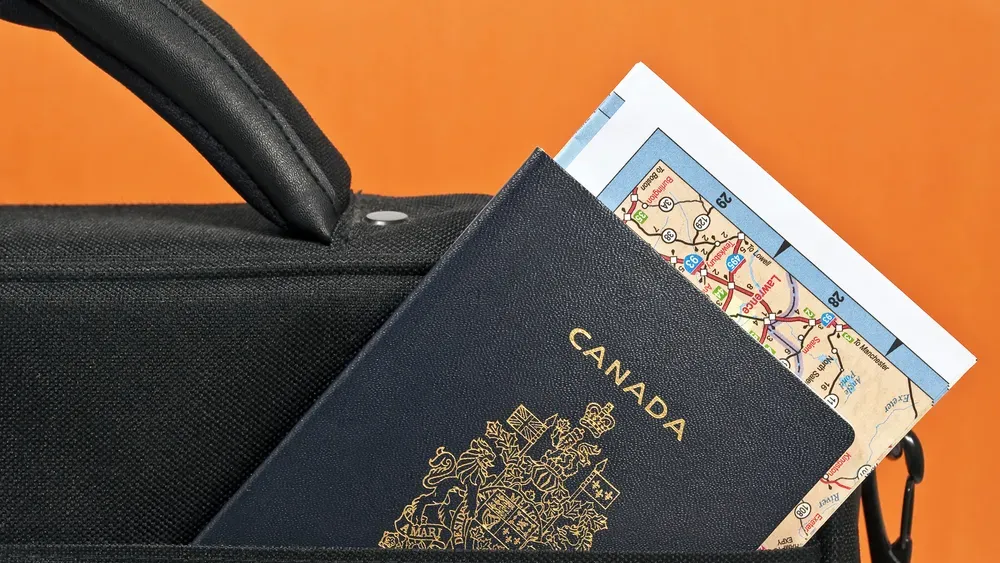
The Government of Canada has cautioned citizens holding passports with a gender-neutral ‘X’ marker that they may encounter difficulties when entering the United States.
The Canadian government has issued a travel advisory warning that citizens holding passports with a gender-neutral ‘X’ marker may face problems at the United States border. The caution comes amid heightened concerns about varying recognition of gender markers across national boundaries and shifting U.S. federal policies affecting transgender and non-binary travelers .
Since 2017, Canada has offered an ‘X’ option on passports to designate a gender other than male or female, a move widely praised by LGBTQ+ advocates as a step toward greater inclusion and recognition of gender diversity . The ‘X’ marker allows passport holders to indicate that their gender identity is non-binary, gender-fluid, or otherwise not exclusively male or female. However, the use of the ‘X’ marker is not uniformly recognized by other countries, leading to potential challenges at international borders.
While the United States previously allowed its own citizens to select an ‘X’ gender marker on federal documents, recent policy reversals and new executive actions have introduced uncertainty for travelers. In January 2025, the White House announced Executive Order 14168, which redefined sex markers on federal documents and instructed agencies to apply a binary understanding of gender in government-issued identification .
Although some court decisions, such as the June 2025 preliminary relief in *Orr v. Trump*, provided limited exceptions for U.S. citizens, these changes do not guarantee recognition for foreign nationals traveling with non-binary or gender-neutral markers .
The Government of Canada’s travel advisory states: “While the Government of Canada issues passports with an ‘X’ gender identifier, it cannot guarantee your entry or transit through other countries. Each country or territory decides who can enter or exit through its borders and the Government of Canada cannot intervene on your behalf if you do not meet entry or exit requirements for the United States” .
Canadian officials emphasize that U.S. border agents have significant discretion when determining who is permitted entry, and that travelers may face additional scrutiny or denial of entry if their documents do not match the expectations or systems used by U.S. authorities .
The advisory has sparked concern among LGBTQ+ rights organizations and advocates, who note that non-binary and gender-diverse individuals already face heightened risks and barriers when traveling internationally. Advocacy groups highlight that inconsistent recognition of gender markers not only creates bureaucratic obstacles but can also expose travelers to misgendering, invasive questioning, and potential discrimination at the border .
“Traveling with documents that reflect your authentic self should not put you at risk,” said a spokesperson from Rainbow Railroad, an organization that supports LGBTQ+ people facing persecution globally. “We urge all governments to work toward harmonized standards that respect the dignity and rights of all travelers."
Reports from travelers suggest that experiences at the U.S. border vary widely. Some Canadian citizens with ‘X’ markers have been allowed entry without issue, while others report additional questioning, delays, or the need to provide supplementary documentation . The ambiguity and unpredictability at the border can cause anxiety and deter non-binary and transgender travelers from crossing into the United States for business, personal, or family reasons.
Community organizations have responded by providing updated travel guidance and resources for those with gender-diverse documentation. The Canadian Centre for Gender and Sexual Diversity, for example, encourages travelers to carry supporting identification and to be prepared for possible questions at the border.
Both Canadian and U.S. government websites recommend that travelers check the latest entry requirements before embarking on international trips. The U.S. Department of State reminds travelers that, as of now, U.S. authorities reserve the right to determine eligibility for entry, regardless of the sex marker listed on a passport .
Travelers who are denied entry or face difficulties are advised to contact their nearest Canadian consulate or embassy for support and to report their experiences, which can help inform future policy advocacy .
LGBTQ+ advocates continue to call for international dialogue and policy harmonization to protect the rights of gender-diverse travelers. The Canadian government has reiterated its commitment to promoting the rights of LGBTQ+ individuals abroad, but also acknowledges the limits of its influence over foreign entry requirements .
As governments around the world grapple with evolving understandings of gender, the situation remains fluid. Advocates urge travelers to remain informed, exercise caution, and seek assistance when needed, while calling on policymakers to prioritize the safety and dignity of all individuals, regardless of gender identity.
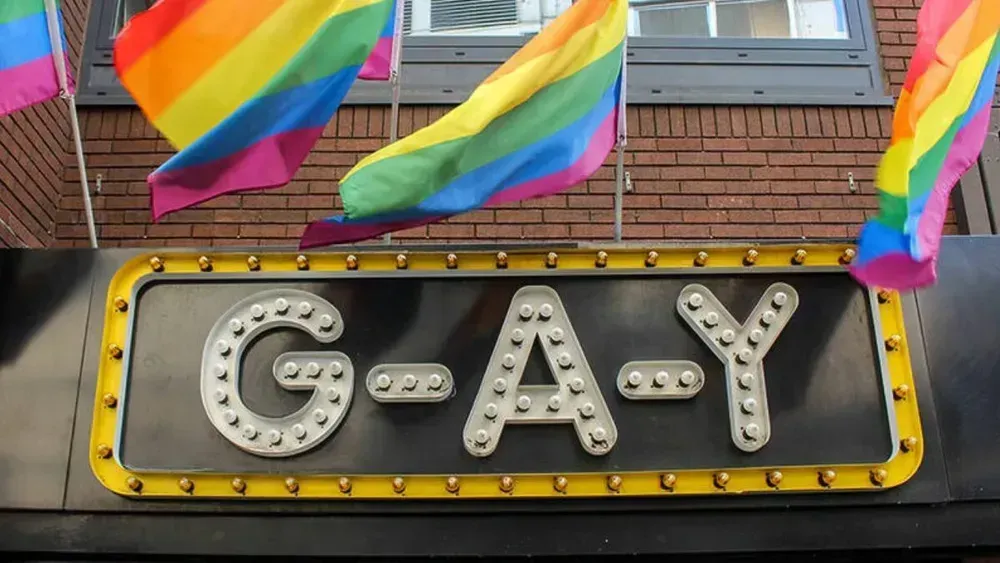
G-A-Y Bar, a cornerstone of London’s LGBTQ+ nightlife, will soon close its doors, according to owner Jeremy Joseph, who delivered an emotional statement reflecting on decades of community, activism, and celebration.
The iconic G-A-Y Bar, a staple of London’s LGBTQ+ nightlife for more than two decades, will soon cease operations, owner Jeremy Joseph confirmed in a heartfelt public statement this week. The venue, located on Old Compton Street in Soho, has been a vital hub for the city’s queer community, hosting generations of revelers, activists, and allies since its opening in 1996 .
In his announcement, Joseph described the decision as “one of the hardest of my life,” emphasizing the deep personal and cultural significance of the bar: “G-A-Y has been my life. It’s been your life. It’s been a place where we have come together in good times and bad, to celebrate, to protest, and to find community.” He went on to explain that the closure reflects both personal circumstances and the evolving character of Soho, stating, “The street has lost its LGBT identity” .
The announcement has sparked both sadness and reflection within the LGBTQ+ community and beyond. For many, G-A-Y Bar has represented more than just a nightlife destination—it has been a symbol of acceptance, safety, and queer progress in a city long synonymous with LGBTQ+ rights and culture .
Joseph’s statement alluded to the shifting identity of Soho, once widely considered the heart of London’s LGBTQ+ community. Over recent years, rising rents, increasing commercialization, and changing demographics have contributed to the loss or transformation of multiple queer spaces in the neighborhood. “Soho is not what it was,” Joseph noted, pointing to a growing sense of displacement among LGBTQ+ business owners and patrons .
Community advocates have echoed these concerns. Many fear that the closure of G-A-Y Bar will accelerate the erasure of LGBTQ+ spaces in central London, making it harder for queer people—especially those who are young, marginalized, or new to the city—to find welcoming environments. As one long-time patron remarked, “It’s not just a bar. It’s history, it’s family, it’s a safe place in a world that isn’t always safe for people like us” .
Since opening, G-A-Y Bar has played a prominent role in London’s LGBTQ+ life—not only as a nightlife venue, but as a platform for activism and visibility. The bar has hosted countless fundraisers, pride events, and appearances by LGBTQ+ icons and allies, serving as a launchpad for campaigns on issues ranging from HIV/AIDS awareness to anti-discrimination legislation .
Jeremy Joseph has long been recognized as a leading advocate for LGBTQ+ rights in the UK, using the platform of G-A-Y to foster solidarity, amplify marginalized voices, and support charitable causes. In his closing statement, he thanked the countless staff, drag performers, DJs, and community members who have contributed to the bar’s legacy, saying, “This isn’t the end of our story—it’s just the end of this chapter” .
Although the closure of G-A-Y Bar is a significant loss, Joseph expressed hope for the resilience of LGBTQ+ nightlife in London. He confirmed that other venues under the G-A-Y brand, including G-A-Y Late and Heaven, will remain open for the foreseeable future, continuing to provide spaces for celebration and community .
The event has reignited conversations about the need to protect and support queer spaces in cities worldwide. LGBTQ+ organizations and advocates have called on local authorities to recognize the cultural and historical value of such venues and to implement policies that safeguard their future. As the queer community in London and beyond reflects on the legacy of G-A-Y Bar, many are vowing to keep its spirit alive—by supporting existing venues, fostering inclusive spaces, and remembering the importance of visibility and solidarity.
As Jeremy Joseph concluded in his statement: “G-A-Y has always been about more than just a night out. It’s about family, about belonging, and about standing together. Thank you for making it what it was—and for keeping the fight for equality alive, wherever you are.”
The UK government’s announcement of a compulsory digital ID, known as the ‘Brit Card,’ has ignited widespread concern among transgender people and LGBTQ+ advocates, who fear the scheme could compromise privacy and force unwanted disclosure of gender histo
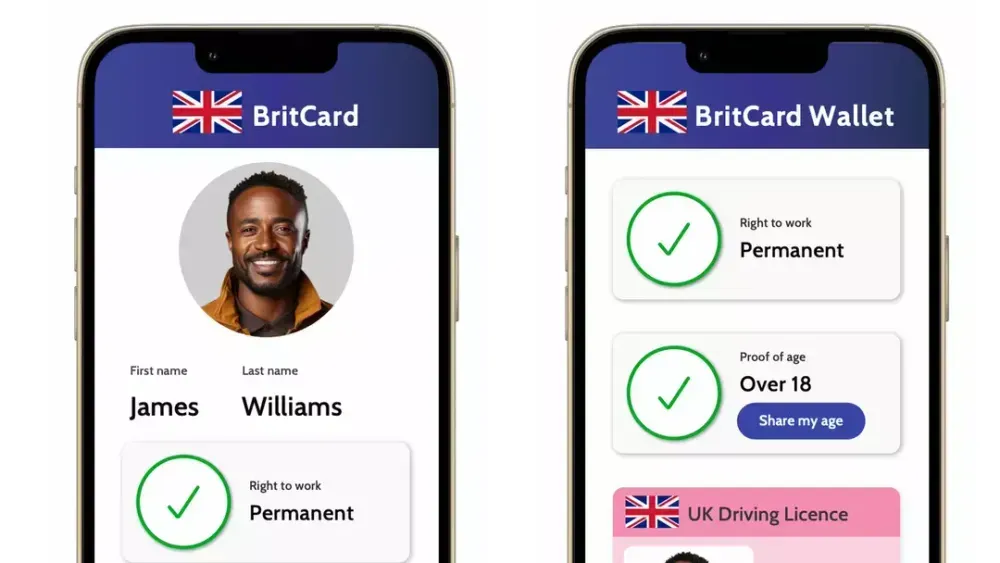
The UK government, led by Prime Minister Sir Keir Starmer, formally announced plans to introduce a nationwide mandatory digital identification system for all working adults on 25 September 2025. The proposed 'Brit Card' will serve as a digital credential stored on smartphones, intended to verify identity, right to work, and access to public services. Officials assert that the scheme aims to tackle illegal migration and streamline bureaucratic processes, positioning it as an “important part” of what Starmer calls “patriotic renewal” for the country .
However, the announcement was met with swift and significant opposition. Within 24 hours of the scheme’s unveiling, a parliamentary petition demanding its withdrawal amassed nearly 800,000 signatures, reflecting widespread unease about its implications for privacy, civil liberties, and digital security . Civil rights organizations and cybersecurity experts have described the policy as “intrusive” and potentially dangerous, echoing past controversies that led to the abandonment of similar proposals in the late 2000s and again in the 2010s .
Transgender people and LGBTQ+ advocacy groups have voiced acute concerns that the Brit Card could jeopardize the privacy and safety of trans and non-binary individuals. Questions have emerged over whether the digital IDs will accurately reflect a person’s affirmed gender, especially for those holding Gender Recognition Certificates (GRCs)—the legal documentation used to change gender markers in the UK. Many trans people fear the scheme could require them to disclose their sex assigned at birth, effectively outing them in workplaces and public settings .
Olivia Campbell-Cavendish LLB, founder of the Trans Legal Clinic, argued that the proposal “effectively forces the outing of trans people,” warning that it marks a “dangerous escalation in the erosion of civil liberties, human rights, and the fundamental right to privacy.” Campbell-Cavendish emphasized that any digital identification system must ensure that individuals’ lived and legally recognized genders are respected, as required under European and international law .
Not A Phase, a UK-based trans advocacy charity, echoed these concerns in a public statement: “If we’re hypothetically headed towards a future where trans people will be outed by the digital ID documents they possess, this could have a monumental impact on the right to disclosure every trans+ person deserves. We should be gravely concerned about any potential documentation which forces a person’s transness to be more broadly known” .
The anxiety surrounding the Brit Card is not limited to privacy concerns. Advocacy groups and legal experts warn that the scheme could expose trans and non-binary people to discrimination, harassment, and violence if their gender history is revealed without their consent. According to campaigners, the system could be weaponized by anti-trans groups and policymakers seeking to restrict trans rights, including the ability to use gendered facilities or access gender-affirming healthcare .
Keyne Walker, strategy director at TransActual, stated, “Even before the plans were announced, anti-trans groups have already been lobbying ministers, civil servants and right-wing parliamentarians to ensure that the single governmental record held lists trans people as their ‘birth sex’. This scheme could easily be weaponised and hijacked by MPs who are already trying to push anti-trans policies through Parliament” .
While government mock-ups of the Brit Card currently omit a sex marker, campaigners remain skeptical, citing ongoing efforts by government officials to require public institutions to record sex assigned at birth. The possibility that such information may be tied to digital IDs has alarmed many, who fear it could facilitate unwanted disclosure and undermine the protections that GRCs provide .
Beyond the specific concerns of the trans community, broader civil liberties groups have criticized the digital ID scheme as a step towards “mass surveillance and digital control.” Privacy experts argue that the centralized collection of sensitive personal data increases the risk of breaches and misuse, particularly if the system is not designed with robust safeguards .
Opponents have also questioned the scheme’s practicality, noting that some individuals—especially older adults, people with disabilities, and those without access to smartphones—may struggle to comply with the requirements. A Reddit user highlighted these challenges, saying: “My mum just can’t do technology, and my dad has advanced Parkinson’s – there’s no way he’s using a touchscreen device” .
The government asserts that the Brit Card will be free of charge and based on existing GOV.UK ‘One Login’ infrastructure, including name, date of birth, nationality, residency status, and a biometric photo. A public consultation is planned regarding the inclusion of address details and other data points .
The concept of mandatory ID cards has a contentious history in the UK. Previous attempts to implement similar systems were abandoned following public outcry, with critics labeling them as “intrusive, ineffective, and enormously expensive” . Other countries, including France, China, and the United Arab Emirates, have introduced digital ID systems, often accompanied by debates over privacy and human rights .
In the UK, the current proposal arrives amid heightened scrutiny of trans rights and a documented rise in hate crimes against transgender people, with statistics showing a 186% increase from 2018 to 2023 . Advocates urge lawmakers to consider the unique vulnerabilities faced by transgender individuals in any digital identification policy.
As the government prepares to move forward with legislation, LGBTQ+ organizations and legal experts are calling for robust safeguards to protect trans and non-binary people from forced disclosure and discrimination. They emphasize the need for meaningful consultation with affected communities and adherence to international human rights standards.
Trans Legal Clinic’s Olivia Campbell-Cavendish concluded, “Any system of digital identification must ensure that the gender in which a person navigates the world is accurately and lawfully recognised. This principle is not up for debate, it is enshrined in European and international law, and was recently reaffirmed by the European Court of Justice” .
As debate continues, many in the LGBTQ+ community remain vigilant, urging transparency and accountability from the government to prevent the Brit Card scheme from becoming a tool of surveillance, discrimination, or harm.
After two years of closure and extensive renovations, San Francisco’s historic Castro Theatre will reopen its doors in February 2026.
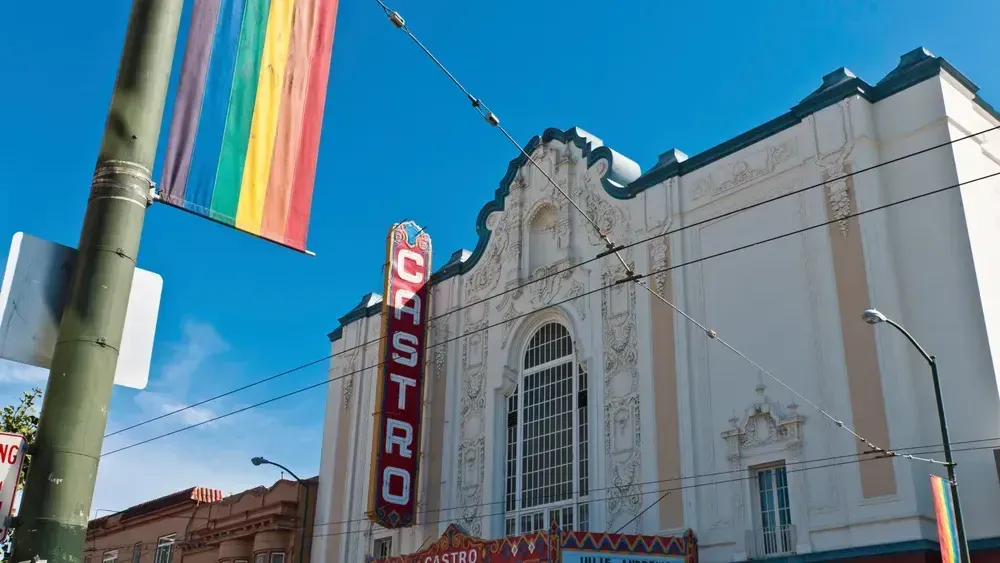
San Francisco’s Castro Theatre, a century-old architectural and cultural icon at the heart of the city’s LGBTQ+ community, is set to reopen in February 2026 after a two-year closure for extensive renovations. The announcement has been met with excitement and anticipation by residents, business owners, and queer communities locally and beyond, marking a significant moment in the ongoing story of one of America’s most storied LGBTQ+ spaces .
The reopening will be celebrated with an eight-night residency by Sam Smith, the Grammy-winning British pop star and openly nonbinary artist, whose presence is seen as both a tribute to the venue’s legacy and a statement for its future. Smith’s performances, scheduled for February 10–21, 2026, will inaugurate the restored venue, which has undergone $41 million in renovations overseen by Another Planet Entertainment .
The Castro Theatre, first opened in 1922, has long stood as a gathering place for queer cinema, performance, and activism. In 2022, Another Planet Entertainment assumed management, initiating a multi-million dollar renovation to modernize the building while preserving its signature Spanish Colonial Baroque façade and opulent interior details .
The renovation aimed to secure the theatre’s future as a multipurpose venue, with upgrades including state-of-the-art sound and lighting, improved accessibility, and a more flexible auditorium layout designed to accommodate concerts, film screenings, comedy, live podcasts, and community events throughout the year. Allen Scott, President of Concerts and Festivals at Another Planet Entertainment, emphasized, “We’ll have concerts, podcasts, movies, comedy… programmed for over 300 nights a year. It’s going to be very active, and I think it’s going to serve the community really well” .
The two-year closure, however, was not without challenges. Renovation delays, rising costs, and debates over the theatre’s evolving focus sparked passionate responses from community members and movie lovers concerned about the future of film programming in the venue. Another Planet Entertainment has responded by affirming its commitment to maintaining film as a key part of the Castro Theatre’s offerings, alongside new forms of live entertainment .
The decision to have Sam Smith headline the reopening is deeply symbolic for many in the LGBTQ+ community. Smith, a globally recognized performer who uses they/them pronouns, made history in 2022 as the first openly nonbinary artist to top the Billboard Hot 100 with their song “Unholy” . Their presence at the Castro Theatre—an iconic location in LGBTQ+ history—underscores the venue’s enduring significance as a site of visibility, celebration, and inclusion.
Smith’s residency, titled “To Be Free: San Francisco,” will feature eight concerts and is named after their latest single, “To Be Free.” The artist teased the announcement with a TikTok video filmed beneath the Castro Theatre’s illuminated marquee, generating waves of excitement across social media and in the neighborhood itself .
“Getting a huge artist like Sam Smith… was a huge shot of adrenaline of what is going to be an already exciting reopening,” said Nate Bourg, President of the Castro Merchants Association, highlighting the positive impact anticipated for local businesses and the broader Castro community .
For many in San Francisco and the global LGBTQ+ community, the Castro Theatre is much more than a venue—it is a gathering place, a symbol of resistance, and a living memorial to generations of queer culture and activism . The theatre has hosted rallies, film festivals, drag shows, and countless events central to the struggle for LGBTQ+ rights and visibility. Its closure during renovations was keenly felt, with at least 15 neighboring storefronts shuttering amid a downturn in foot traffic .
Gregg Perloff, CEO and co-founder of Another Planet Entertainment, reaffirmed the venue’s renewed commitment to equity and inclusion, stating, “Our goal is to activate and re-energize the building with equity, inclusion, and community at the forefront. We look forward to contributing to the vibrancy and economic health of the Castro while honoring its legacy as an LGBTQ+ landmark and cultural anchor” .
Business owners and community leaders hope the theatre’s revival will catalyze a broader economic and cultural recovery for the neighborhood. With over 300 nights of programming planned annually, the Castro Theatre aims to serve as a resilient hub for both traditional moviegoers and a new generation of LGBTQ+ artists, performers, and audiences .
As the Castro Theatre prepares to turn the lights back on, its reopening is poised to be a milestone not just for San Francisco, but for LGBTQ+ communities everywhere—a testament to the enduring power of queer spaces, representation, and collective celebration .
The owners of a giant Northern California corn maze once crowned the world’s largest want visitors to remember that there is fun in getting lost
The owners of a giant Northern California corn maze once crowned the world's largest want visitors to remember that there is fun in getting lost.
“It is confusing. It’s exciting, and in a world of GPS and constant signage, you always know where you are, where you’re going," said Tayler Cooley, whose family owns Cool Patch Pumpkins. “When you’re in the corn, everything looks the same until you pop up on a bridge and you’re like, ‘Oh wait, I’m all the way over here. I thought I was over there.’”
The pumpkin patch and corn maze along Interstate 80 between Sacramento and San Francisco are open once again for the fall season through Halloween. Back in 2007 and again in 2014, Cool Patch Pumpkins earned a spot in the Guinness Book of World Records as the world’s largest corn maze.
The maze — spread out over 40 acres (16.2 hectares) — typically takes at least 45 minutes to complete and features five different bridges that allow maze-goers to rise above the stalks. It is also known for the elaborate designs the team creates in the maze that can be seen from overhead. This year's maze celebrates farmers. Previous seasons honored veterans and first responders with giant murals included in the maze design.
“Everything is done by hand,” Cooley said. “We want to communicate something fun and exciting, and then we build our pathways around that.”
On a recent afternoon, visitors from near and far wound their way through the maze.
“I have no sense of direction, and we could spend all day here. That’s fine. We have water. We’ll survive, three days,” said Ryan Moore, who was visiting from Hawaii.
Likewise, Shelley Tang from Redwood City, California, joked there is always corn to eat if they get lost.
“My children have a better sense of direction than me, so I’ll be following them,” she said.
A corn maze in Quebec, Canada, as well as those in Minnesota and Illinois, also boast record-breaking mazes, either by acreage or mileage.
Beyond the maze, Cool Patch features a corn bath for toddlers full of 150,000 pounds (68 kilograms) of dried corn.
by Haven Daley
Copyright Associated Press. All rights reserved. This material may not be published, broadcast, rewritten, or redistributed.
From Kenya's conservation retreats to England's canal journeys, travelers in 2025 are rethinking where to go next. As crowded cities and oversold attractions lose appeal, smaller towns, rural escapes and slower-paced trips are stepping into the spotlight.
From Kenya's conservation retreats to England's canal journeys, travelers in 2025 are rethinking where to go next. As crowded cities and oversold attractions lose appeal, smaller towns, rural escapes and slower-paced trips are stepping into the spotlight.
This shift is especially clear among younger travelers. Gen Z in their 20s drives the trend by choosing experiences that feel more personal. They're booking conservation-focused stays such as Segera Retreat in Kenya and leisurely trips along England's canals. Destinations are responding with itineraries that encourage visitors to linger, connect with locals and spend more time in one place.
The pressures of overtourism
Overtourism weighs on destinations, with crowded streets, packed buses and trains and attractions overwhelmed by long lines. Even basic services like water, waste and sanitation struggle to keep up, leaving local resources stretched thin.
The toll extends to the environment and daily life. I've watched natural areas suffer from trampling and litter, while residents deal with traffic, noise and overflowing public spaces. These pressures push both travelers and tourism boards to highlight less-visited destinations that ease the load on popular hubs.
Explore beyond crowded hubs
Crowded streets and overrun attractions are steering more travelers toward smaller towns and off-the-beaten-path cities. These places offer breathing room and a closer connection to local life, and they're easier to reach now with new flights and improved transport links. In Germany, for example, time in Cologne often combines with a stop in Düsseldorf, where the pace feels more relaxed.
Many travelers are also using big cities as jumping-off points and adding side trips to nearby towns or rural areas to keep their itineraries distinct. I've seen this in Europe, where visitors might split time between Vienna and Salzburg, and in Africa, where a weekend in Nairobi pairs naturally with a stay at Segera Retreat in Kenya. Blending major cities with smaller stops makes a trip feel more balanced and memorable.
Travelers seek real experiences
More travelers want more than a checklist of landmarks when planning trips. A McKinsey survey shows 52% of Gen Z travelers splurge on experiences, compared with only 29% of baby boomers. Retreats such as Segera in Kenya weave conservation and community programs into the guest experience, making the stay feel part of something bigger. Platforms that highlight these kinds of authentic encounters are capturing growing interest and bookings.
Trends shape modern trip choices
Travelers are gravitating toward more peaceful corners, where small communities benefit without being overwhelmed. New flight routes and rail connections make it easier to include these stops in longer trips, giving travelers more variety without the crush of big-city crowds.
I've experienced the value of slow travel on a narrowboat trip along England's Kennet & Avon Canal, where moving at 4 miles per hour meant stopping in villages, shopping at local markets and joining community events along the way. Staying longer in one place can spread spending over more days and give both travelers and locals a break from the quick turnover of short visits.
Regional examples of growing interest
U.S. News & World Report's latest rankings feature quieter destinations in the United States. On Georgia's coast, St. Simons Island boasts beaches, hiking paths and a small-town pace far removed from the theme parks and city lights. In upstate New York, the Catskills continue to attract visitors with clear lakes and forest trails, appealing to those who prefer mountain air over crowded shorelines.
Social posts spotlight new spots
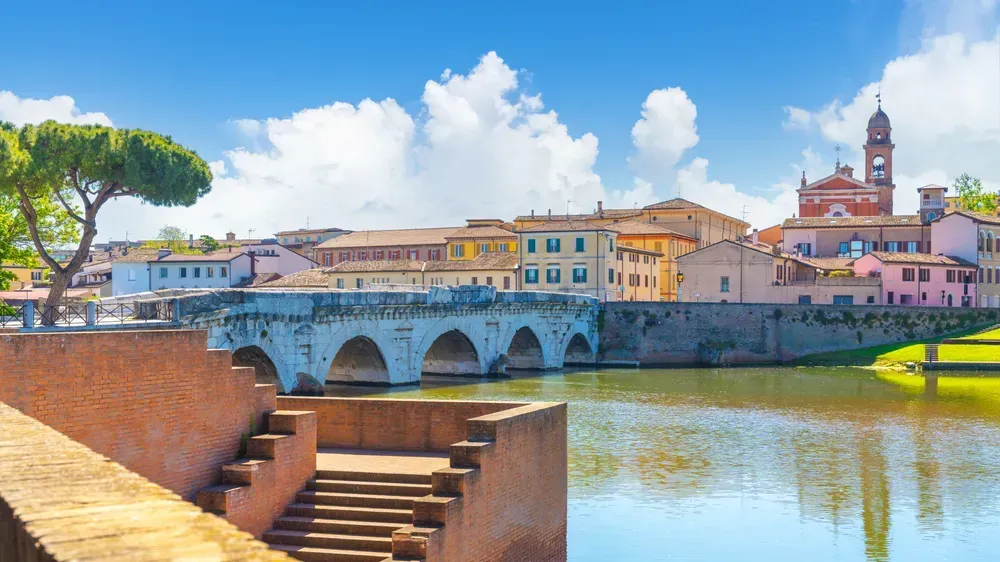
Rimini is gaining buzz online for its lively nightlife, sunny beaches and walkable streets, with travelers calling it a cheaper and less crowded alternative to Ibiza. Social media users describe it as how Ibiza felt a decade ago, with relaxed days, late-night house music and mostly local visitors.
In the U.S., Tioga Pass in California is gaining attention as a less-crowded gateway to Yosemite, with sweeping Sierra Nevada views and access to less crowded trails like Clouds Rest, Soda Springs and sections of the Pacific Crest Trail that are ideal for photos. Reels and tags make it easy for travelers to save these spots and plan their own trips.
The visuals do most of the work. Reels that map out each step make remote places feel simple to reach. Online groups swap itineraries and share under-the-radar finds, giving small businesses a boost in recognition they might not have had otherwise.
Tourism beyond the crowds
Travel in 2025 is moving beyond crowded hubs toward places with more space and a slower way of life. As overtourism pushes both travelers and tourism boards to seek alternatives, smaller towns and rural regions are stepping into the spotlight. With better transport links and social media visibility making them easier to reach, visitors are staying longer and engaging more with local life. I've found that the most meaningful journeys aren't always in the busiest cities but in the moments when I slow down and connect with a place that feels personal.
Mandy is a luxury travel, fine dining and bucket list adventure journalist with expert insight from 46 countries. She uncovers unforgettable experiences around the world and brings them to life through immersive storytelling that blends indulgence, culture and discovery, and shares it all with a global audience as co-founder of Food Drink Life. Her articles appear on MSN and through the Associated Press Wire in major U.S. outlets, including NBC, the Daily News, Boston Herald, Chicago Sun-Times and many more.
by Mandy Applegate
Copyright Associated Press. All rights reserved. This material may not be published, broadcast, rewritten, or redistributed.
Crush, a beloved LGBTQ+ bar in Dallas’s Oak Lawn neighborhood, has revealed urgent financial struggles threatening its future.
Crush, an LGBTQ+ nightspot located at 2914 Oak Lawn Ave in Dallas, has become a cornerstone for queer nightlife since its opening just over a year ago. The venue celebrated its first anniversary in August with a performance by Kennedy Davenport, a renowned drag entertainer, highlighting its commitment to providing a vibrant and affirming space for the local LGBTQ+ community . However, Crush now faces the very real possibility of closure due to mounting financial pressures.
On Friday, owners Andrew and David Perre issued a public letter on the bar’s social media platforms, detailing the economic hardship that has left the business unable to make its weekly rent. The letter cited “much-needed repairs and a very slow last 2 months” as primary factors behind the bar's cash flow crisis . The financial shortfall has escalated to a critical point: the Perres revealed they must pay a balance of over $30,000, with an additional $11,440 due for upcoming rent, or risk being locked out by their landlord at any time .
In response to the dire situation, the owners have launched an online fundraising campaign with a goal of $50,000. The campaign gained immediate traction, raising more than $2,000 within hours of its announcement . The Perres’ appeal underscores the essential role Crush plays as a safe and celebratory space for LGBTQ+ individuals, particularly in a region where such venues are not always guaranteed.
The bar’s supporters have expressed their love for the venue across multiple platforms, praising its inclusive atmosphere, energetic drag shows, and the sense of family fostered by staff and management . Reviews from patrons consistently highlight Crush’s welcoming environment and its importance as a gathering spot for queer people in Dallas, with one reviewer stating, “The owners, David & Andrew, have created something truly special—heaven on earth. No notes. Keep up the good work...” .
Crush’s financial troubles are emblematic of broader challenges faced by LGBTQ+ bars and clubs nationwide. These venues have historically been lifelines for queer and transgender people, serving as places for self-expression, community organizing, and celebration—often in the face of discrimination and exclusion elsewhere . However, the economic fallout from unexpected repair costs, fluctuating attendance, and increased rent have left many such establishments vulnerable to closure .
Industry experts and advocates have noted that the decline of LGBTQ+ nightlife spaces has accelerated over the past decade, with fewer venues able to sustain themselves amid rising costs and shifting nightlife trends . In many cities, the loss of such spaces has had a tangible impact on the well-being and visibility of LGBTQ+ communities.
The situation at Crush has galvanized supporters online, with many expressing a desire to help preserve the bar. Fundraising efforts are being tracked on social media, and regular patrons have shared testimonials about the bar’s positive impact on their lives . “From the moment you step in, you’re greeted with amazing service that makes you feel like family,” one supporter posted, reflecting a sentiment echoed by many .
The owners have not yet responded to requests for additional comment, but their initial letter emphasizes a message of hope and perseverance. They encourage the community to rally together, not only to save Crush, but to ensure that Dallas’s LGBTQ+ scene remains vibrant and resilient .
If Crush is unable to meet its financial obligations, Dallas risks losing one of its newest and most celebrated queer venues. The bar’s closure would not only affect the staff and performers who rely on it for income, but would also signal the loss of a vital resource for LGBTQ+ people seeking connection and affirmation in their city .
The fundraising campaign and community response highlight both the precariousness and the enduring strength of LGBTQ+ spaces. As Crush’s patrons and supporters mobilize, the fate of the bar serves as a powerful reminder of the importance of solidarity and mutual aid in preserving queer culture and history.
For now, the Dallas LGBTQ+ community watches anxiously, united in their hope that Crush will weather this storm—and continue to be a beacon of inclusivity, joy, and resistance for years to come.
NEW YORK, NEW YORK - MAY 05: Cardi B attends the 2025 Met Gala Celebrating "Superfine: Tailoring Black Style" at Metropolitan Museum of Art on May 05, 2025 in New York City. Photo Credit: (Photo by Dimitrios Kambouris/Getty Images for The Met Museum/Vogue)
Cardi B has partnered with the Metropolitan Transportation Authority to record public service announcements for the New York City subway system.
Cardi B, the Grammy-winning rapper and cultural icon, is now the new voice of New York’s subway system. In a unique partnership with the Metropolitan Transportation Authority (MTA), the Bronx native has recorded a series of public service announcements (PSAs) that are being broadcast across train stations and platforms throughout the city, infusing the daily commute with her unmistakable energy and inclusivity .
The collaboration, unveiled this week, is already making waves across social media and the city’s diverse communities. Cardi B’s PSAs, delivered in her signature style, address core issues of subway etiquette and safety. In one announcement, she reminds riders, “These trains don’t move without you. So make sure you pay that fare and keep it real.” In another, she tackles the dangerous trend of subway surfing, urging, “Stop subway surfing. Ride safe, keep it cute, and keep it moving” .
The decision to feature Cardi B is both a nod to her local roots and her international star power. Born and raised in the Bronx, Cardi B’s life and music have long celebrated the energy and resilience of New York’s boroughs. The MTA’s campaign comes at a time when the city is seeking to rebuild ridership and public trust following several challenging years.
“Having Cardi B as the voice of our subway is a celebration of the city’s diversity and vibrancy,” said MTA spokesperson Angela Martinez. “She represents New York’s spirit—bold, unapologetic, and welcoming to all” .
For many LGBTQ+ New Yorkers, the arrival of Cardi B’s voice in the subway is more than a celebrity endorsement—it’s a sign of representation and belonging. The subway is a lifeline for millions, including LGBTQ+ youth, transgender people, and queer commuters who rely on public transit not just for mobility but as safe spaces in a city that prides itself on diversity.
“Cardi B has always stood up for our community, whether it’s speaking out against discrimination or celebrating Pride,” said Marsha Taylor, director of the LGBTQ+ advocacy group OUTreach New York. “Hearing her voice in the subway is a reminder that this city is for all of us, no matter who we are or who we love” .
The campaign’s inclusive tone is intentional. The MTA has stated that Cardi B’s announcements are part of a broader effort to make the subway feel more welcoming and safe for all, particularly marginalized communities that have historically faced harassment or exclusion on public transit .
Cardi B’s involvement in public safety announcements is timely. The MTA reports that subway surfing, a dangerous and sometimes deadly trend, resulted in six fatalities in 2023 alone. By lending her voice to safety campaigns, Cardi B is using her platform to reach younger riders and fans who might otherwise tune out traditional warnings .
“Public figures have a responsibility to the communities they come from,” said LGBTQ+ activist and subway conductor Jamie Rivera. “Cardi B showing up for the city, especially for communities that are often overlooked, makes a real difference” .
This campaign is not Cardi B’s first time supporting LGBTQ+ communities. Over the years, she has spoken out in support of same-sex marriage, advocated for transgender rights, and frequently used her platform to amplify the voices of LGBTQ+ artists and activists. Her visibility and advocacy have made her a beloved figure in queer nightlife and Pride celebrations across New York and beyond .
The MTA’s choice builds on previous efforts to make New York’s transit system more inclusive, including campaigns that feature multilingual announcements, gender-inclusive restroom signage, and partnerships with Pride organizers during June and beyond.
As the subway’s new voice, Cardi B is helping redefine what public transportation sounds like in a city that is constantly evolving. Her messages blend humor, authority, and authenticity—a combination that resonates with the city’s mosaic of riders.
For LGBTQ+ New Yorkers, the message is clear: the subway, like the city itself, belongs to everyone. Cardi B’s voice, echoing through the tunnels and platforms, is both a celebration of local pride and a reminder of the importance of visible, affirming representation in public life .
As New York continues to set the standard for urban innovation, Cardi B’s subway debut is a powerful statement: every voice matters, and every rider belongs.