Newcastle, a once-sleepy steel city two hours north of Sydney, is quietly transforming into one of Australia’s most welcoming and creatively charged destinations for LGBTQIA+ travelers.
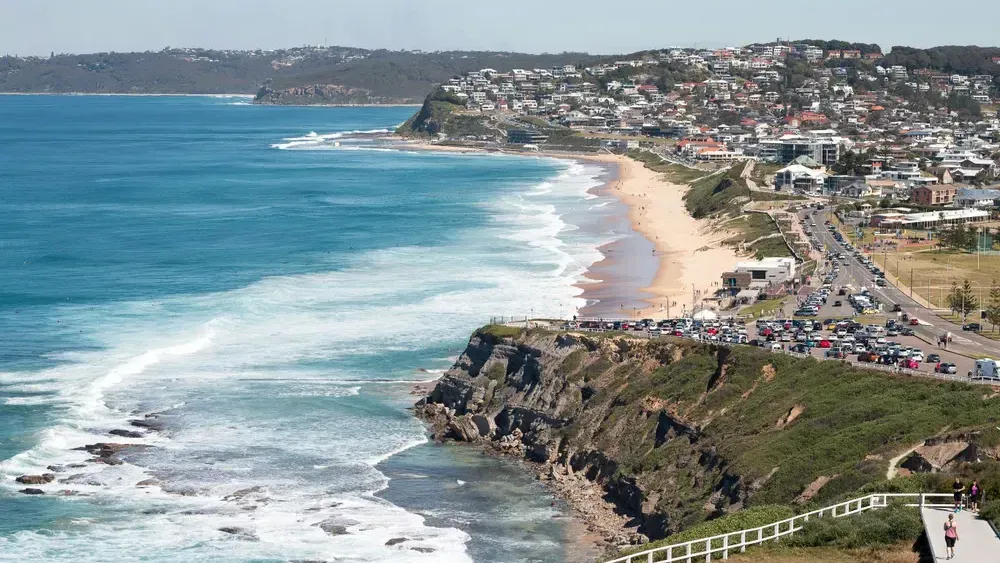
Stand on Newcastle’s working harbour at dusk and you can watch coal ships slip out to sea as surfers carve the last waves off Nobbys Beach. Behind you, renovated warehouses host galleries, vintage stores, and small bars flying rainbow stickers in their windows. This regional city on Awabakal and Worimi land, about a two-hour train ride from Sydney, has been steadily shaking off its industrial stereotype and emerging as a queer-friendly coastal hub that rarely appears on mainstream LGBTQIA+ travel lists.
Newcastle’s transformation is not accidental. Over the past decade, investment in the arts, hospitality, and public spaces has coincided with a visible growth in LGBTQIA+ community life, from regular drag nights and inclusive sports clubs to an annual pride festival that now draws visitors from across New South Wales. Unlike Sydney’s tightly defined “gaybourhoods”, Newcastle’s queer culture is woven into its everyday streets: small venues, beachside gatherings, and community-led events that make the city feel welcoming rather than overwhelming.
For much of the 20th century, Newcastle was known primarily as a steel and coal town, dominated by the BHP steelworks and one of the world’s largest coal-exporting ports. When the steelworks closed in 1999, the city entered a period of economic and cultural reinvention that opened space for new creative and social communities, including LGBTQIA+ people, to reshape its identity.
Today, visitors arrive to find a compact CBD whose heritage buildings house independent galleries, creative studios, and bars, many of which explicitly promote inclusive values. Newcastle Museum highlights the city’s industrial and maritime history, while nearby streets like Hunter Street and Darby Street feature public art, cafes, and shops that contribute to a more progressive and youth-driven atmosphere.
Tourism and official visitor guides describe Newcastle as relaxed, friendly, and increasingly attractive to artists, students, and young professionals, demographics that research has shown often correlate with more visible and accepted LGBTQIA+ communities in Australian urban areas. While these reports rarely single out queer people explicitly, they document social changes—such as support for diversity and growth in creative industries—that correspond with the inclusive culture many LGBTQIA+ visitors encounter on the ground.
Newcastle now hosts a dedicated pride festival, Newcastle Pride, founded in 2018 as a not-for-profit organization to celebrate LGBTQIA+ communities in the Hunter region. The festival program has included a Fair Day, parties, drag performances, and community events across multiple venues. In 2019, Newcastle Pride partnered with the City of Newcastle to stage events in civic spaces, signaling growing institutional support.
Beyond the main festival, local venues regularly host LGBTQIA+-focused nights. The Hamilton and Islington precincts, known for pubs and live music, have seen drag shows and queer-focused events programmed throughout the year. Community organizers and performers from the Hunter region have also collaborated with Tropical Fruits, the long-running LGBTQIA+ social group based in nearby Lismore, which is known nationally for its New Year’s Eve parties and regional queer gatherings.
According to Tourism Australia’s LGBTQIA+ travel guidance, regional hubs such as Newcastle are part of a broader pattern in which Australian towns outside the major capitals are building their own pride events and queer spaces, supported by anti-discrimination laws and a generally welcoming legal framework for LGBTQIA+ people. New South Wales law prohibits discrimination on the basis of sexual orientation and gender identity in areas such as employment, education, and provision of goods and services, protections that apply equally in Newcastle as in Sydney.
The city’s beaches and ocean baths form a major part of its appeal. Newcastle Ocean Baths and the Art Deco-style Merewether Ocean Baths are widely featured in tourism materials as iconic places to swim and socialise year-round. While official guides do not designate specific “gay beaches”, LGBTQIA+ locals and visitors use these public spaces alongside everyone else, benefiting from a casual coastal culture where same-sex couples and gender-diverse people can generally enjoy the water and promenades without drawing undue attention.
Newcastle’s arts scene is a key part of what makes it feel culturally rich for LGBTQIA+ travelers. The Lock-Up, a contemporary art space housed in a former police station and jail, is known for hosting exhibitions and events that explore social justice, identity, and experimental practice. Its programs have included works by queer and gender-diverse artists, aligning with a broader commitment in Australian contemporary art to platform marginalized voices.
The nearby Newcastle Art Gallery, one of Australia’s leading regional galleries, houses a collection of modern and contemporary Australian art, including works that engage with sexuality, gender, and social change. While the gallery’s cataloguing does not sort works by artists’ sexual orientation or gender identity, curatorial texts and exhibitions have addressed LGBTQIA+ subject matter as part of Australian cultural history, which offers queer visitors a point of connection.
Nightlife for queer visitors is less about a single “gay bar” and more about an ecosystem of inclusive venues. Small bars and live music spaces in the city centre and along Hunter Street often display rainbow symbols and host drag, cabaret, and themed dance nights. This dispersed model echoes Tourism Australia’s observation that outside the biggest capitals, LGBTQIA+ social life in Australia is often integrated into broader community spaces rather than confined to standalone venues.
Sport is another surprisingly important element of Newcastle’s queer-friendly environment. The city has a strong sporting culture, particularly around rugby league and surfing. Across Australia, LGBTQIA+ inclusion in sport has been a public focus, with organizations such as Pride in Sport working with clubs nationally to improve participation and visibility for LGBTQIA+ people. Local clubs in the Hunter region have taken part in national inclusion initiatives, such as rainbow rounds and policies against homophobia and transphobia, which contribute to a safer environment for LGBTQIA+ players and fans.
For travelers who enjoy connecting through movement, Newcastle’s cycleways and coastal walks, including the Bathers Way, provide accessible outdoor activities that are popular among both locals and visitors. Public health and tourism material notes that these shared spaces can foster social interaction and community building, which many LGBTQIA+ travelers value when exploring new cities.
Any queer-focused exploration of Newcastle is also an opportunity to engage with the city’s deeper cultural layers. The area is the traditional Country of the Awabakal and Worimi peoples, whose connection to land, water, and sky is central to local identity. Aboriginal cultural tours and interpretive signage around the coastline and Blackbutt Reserve introduce visitors to stories of creation, navigation, and resilience that predate colonial industry and contemporary tourism.
Across Australia, Aboriginal and Torres Strait Islander communities include diverse understandings of gender and sexuality, including sistergirl and brotherboy identities among some Torres Strait Islander and Aboriginal peoples, although these specific identities are more commonly documented in northern and central regions rather than in Newcastle itself. National LGBTQIA+ Aboriginal and Torres Strait Islander organizations, such as Black Rainbow , highlight the importance of culturally safe spaces for First Nations LGBTQIA+ people and advocate for intersectional inclusion in cities across the country.
While Newcastle’s tourism materials focus primarily on broader reconciliation initiatives and cultural heritage, the presence of First Nations-led arts and community programs contributes to a more nuanced understanding of inclusion, one that queer travelers can seek out by attending exhibitions, performances, or community events led by Aboriginal and Torres Strait Islander people.
For international visitors familiar with Sydney’s Mardi Gras or Melbourne’s Midsumma, Newcastle offers a different pace and scale. Tourism Australia notes that while major cities remain focal points for LGBTQIA+ travel, regional centers like Newcastle provide more relaxed environments where many visitors feel comfortable showing affection in public, accessing services, and engaging with local communities. This comfort is shaped by Australia’s nationwide legal recognition of marriage equality in 2017 and federal protections against discrimination based on sexual orientation, gender identity, and intersex status in key areas of public life.
Newcastle’s relative affordability compared to Sydney, combined with its beaches and university presence, has attracted students and creatives, including LGBTQIA+ people, from across New South Wales. The University of Newcastle promotes equity and diversity initiatives, including support services for LGBTQIA+ students and staff, which contributes to a visible youth queer culture in and around the city. Campus-based queer collectives and events often spill into city venues, reinforcing the sense that Newcastle is an emerging node in Australia’s broader rainbow map rather than a peripheral outpost.
National queer travel guides frequently highlight Sydney, Melbourne, Brisbane, Canberra, Hobart, Adelaide, Perth, and specific regional destinations such as Daylesford and the Lismore region as LGBTQIA+ hotspots. Newcastle appears less often in these lists, despite having an established pride festival, inclusive arts institutions, and visible community activity documented by local government and community organizations. This gap between on-the-ground reality and destination marketing is precisely what makes Newcastle feel like a hidden gem: queer travelers can experience a living, evolving community rather than a fully commercialized scene.
For LGBTQIA+ visitors seeking a blend of coastal landscapes, contemporary Australian culture, and everyday queer life, Newcastle offers:
- Accessible transport: regular trains from Sydney and an airport with domestic connections. - Walkable urban cores: a city centre and adjacent suburbs that can largely be explored on foot or by light rail. - Inclusive events calendar: from Newcastle Pride to gallery openings, live music, and community markets where diversity is visible and welcomed. - Legal and social protections for LGBTQIA+ people embedded in state and federal law, reinforcing a general expectation of respect and safety.
For queer travelers used to the intensity of major festivals, Newcastle’s appeal lies in slower rhythms: morning swims in historic ocean baths, afternoons spent with contemporary art and coffee, evenings listening to live music or watching drag in venues where regulars greet each other by name. It is a city still in the process of defining itself, which means LGBTQIA+ visitors are not just spectators but potential participants in an evolving, locally-rooted queer culture.
A small Caribbean island offers a different pace from the usual resorts, where its laid-back daily life outshines tourist crowds. Photo Credit: Experience Turks and Caicos Islands
Most travelers bound for Turks and Caicos stop at Providenciales, the island known for Grace Bay's bright shoreline and its cluster of polished resorts. South Caicos, a smaller island to the southeast, is vastly different, with less commercialism and far fewer tourists. It's quieter and shaped less by tourism than by daily life, and it's the perfect spot to enjoy the untouched Caribbean.
Most travelers bound for Turks and Caicos stop at Providenciales, the island known for Grace Bay's bright shoreline and its cluster of polished resorts. South Caicos, a smaller island to the southeast, is vastly different, with less commercialism and far fewer tourists. It's quieter and shaped less by tourism than by daily life, and it's the perfect spot to enjoy the untouched Caribbean.
I flew to South Caicos after several days on Providenciales, and the shift wasn't subtle. That short hop feels more like crossing into a different version of the territory: the plane door opens onto wide salinas, low mangroves, fishing skiffs easing back toward the docks and donkeys wandering wherever they please. Instead of the hum of new development, the island's older bones hold most of the attention.
A smaller island that has set its limits
Only a small percentage of visitors travel past Providenciales, and South Caicos reflects that choice. The airport is a single, utilitarian building where luggage is rolled out beside the runway, and the drive to the resort moves through open land and quiet roads. On my arrival, a cluster of donkeys stood squarely across the road, slowing cars in a way no traffic ever does.
Salterra is the island's lone full-service resort, but it doesn't dominate the coastline. Its low buildings spread along the shore rather than rising above it, and the layout gives more room to the water and wind than to amenities. Afternoon activity follows the fishing fleet, which returns with conch and lobster, not a beach club's schedule.
Island and water
Beyond the docks, the coastline stretches for long, unbroken distances where you're more likely to share the water with eagle rays, turtles or small sharks than with other snorkelers. Kiteboarders come for the strong, steady wind and the wide, shallow bays, and the calm surface makes it easier for beginners to learn. Much of the shore forms around rock shelves instead of manicured sand, leaving the landscape sharper, quieter and more natural than what most visitors associate with Turks and Caicos.
What travelers find here
Many people come for that sense of space. Suites at Salterra open toward a coastline that stays mostly empty, and nights fall dark enough to show the Milky Way when the weather cooperates. Residents I spoke with said they want tourism to remain measured. South Caicos has watched other islands scale up quickly, and the preference here is to grow slowly and keep development low to preserve the island's character. The resort's footprint reflects that mindset with added jobs but limited buildup.
Most visitors split their time between the water and exploring the island. The inland salinas create long, open paths that let you wander without crossing crowds, and the stillness gives the island a different kind of appeal than its larger neighbors.
Reaching South Caicos
Getting to South Caicos still requires a short inter-island flight from Providenciales, and accommodations remain limited by design. Salterra serves as the central base for overnight visitors, a scale that helps the island avoid the crowding common in busier parts of the Caribbean.
South Caicos continues to change, but at a slow and intentional pace. Its coastline is still wide open, its roads stay quiet and the island remains one of the few places in Turks and Caicos where daily life outweighs tourism. For now, that balance holds, and it's what gives the island its appeal.
Mandy is a luxury travel, fine dining and bucket-list-adventure journalist with expert insight from 46 countries. She uncovers unforgettable experiences around the world and brings them to life through immersive storytelling that blends indulgence, culture and discovery, and shares it all with a global audience as co-founder of Food Drink Life. Her articles appear on MSN and through the Associated Press wire in major U.S. outlets, including NBC, the Daily News, Boston Herald, the Chicago Sun-Times and many more.
by Mandy Applegate
Copyright Associated Press. All rights reserved. This material may not be published, broadcast, rewritten, or redistributed.
Far from Australia’s big-name queer capitals, the North Queensland city of Townsville is quietly building a reputation as a welcoming, culturally rich base for LGBTQ+ travelers.
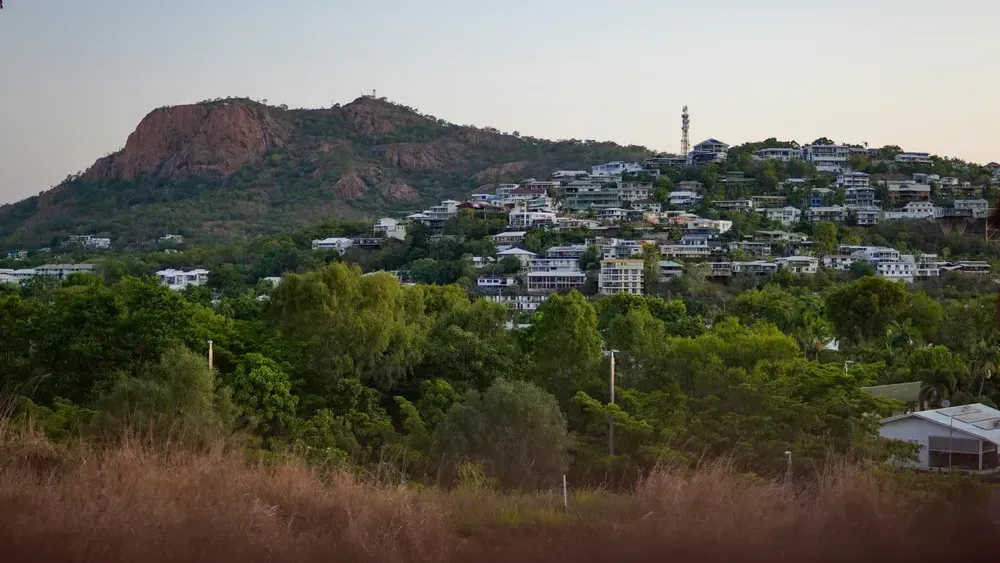
On Queensland’s north-eastern coast, halfway between the global tourist magnets of Cairns and the Whitsundays, sits Townsville, a dry tropical city better known for its garrison history and reef science than for rainbow nightlife. Yet for queer travelers willing to look beyond Australia’s marquee LGBTQ+ destinations, Townsville is emerging as an unexpectedly welcoming, community-driven, and culturally layered place to land.
Tourism Australia’s national LGBTQIA+ guide highlights that queer-inclusive experiences are no longer confined to Sydney or Melbourne, noting that regional centres and “towns in the bush” across the country increasingly fly the rainbow flag alongside the capital cities’ scenes. While Townsville is not singled out in that national tourism guide, local government policies, events, and community infrastructure show how this port city fits into that broader shift.
Townsville sits on the land of the Wulgurukaba and Bindal peoples and has grown into the largest urban centre in North Queensland, with a population of more than 190,000 people according to the Australian Bureau of Statistics. Its economy and identity are shaped by nearby Magnetic Island, the Great Barrier Reef, and the presence of James Cook University and the Australian Institute of Marine Science, giving the city a younger, research-focused population than many regional centres. This mix of students, scientists, Defence personnel, and long-term residents underpins a quiet but growing LGBTQ+ community.
The City of Townsville has adopted inclusive policy settings in recent years, including signalling support for LGBTQIA+ residents through community grants and participation in pride activities. While Queensland’s best-known tropical queer party is Tropical Fruits in nearby northern New South Wales, national tourism promotion notes that LGBTQIA+ festivals and events now dot the country beyond capitals, including in regional Queensland. Townsville’s role in this patchwork has grown as local advocates build visible spaces for gender-diverse and sexuality-diverse communities.
The regional advocacy group QUEERSpace Townsville describes itself as a peer-led social and support network for lesbian, gay, bisexual, transgender, intersex, queer, and questioning people and allies in the region, offering regular meetups and events designed to combat isolation. Townsville also hosts Headspace Townsville and Open Doors Youth Service outreach , which provide mental health and social support specifically for LGBTQ+ young people, reflecting a broader statewide commitment to inclusive health services for gender and sexuality diverse youth. These groups are primarily for locals, but their visibility matters for visitors who want to understand the community they are stepping into.
For many travelers, the first encounter with Townsville is The Strand, a palm-lined waterfront promenade that runs for 2.2 kilometres, facing Magnetic Island across Cleveland Bay. Families picnic on the grass, joggers loop past oceanfront pools, and at sunset couples of all genders and identities can be seen strolling or sitting on the seawall. While it is not a designated queer enclave, the casual public affection visible here reflects broader social changes in Queensland since the state equalised the age of consent and later legalised marriage equality, reforms documented by the Queensland Government and national press.
Townsville’s inclusive shift can also be read through its cultural infrastructure. The Perc Tucker Regional Gallery, housed in a heritage building in the city centre, has hosted exhibitions exploring gender, identity, and contemporary Australian photography, aligning with a national trend of regional galleries partnering with LGBTQ+ artists during pride periods. Townsville’s Civic Theatre program has featured touring queer-themed works and drag performances as part of broader arts festivals, reflecting how queer culture is threaded into mainstream programming rather than siloed.
The most visible annual celebration is Townsville Pride Festival, a community-driven event that includes a march, fair day, and associated social events. While much smaller than Brisbane Pride or Sydney Gay and Lesbian Mardi Gras, Townsville Pride is significant for North Queensland: media coverage by the Australian Broadcasting Corporation has documented rainbow families, transgender people, and First Nations queer community members taking part, with organisers emphasising the importance of visibility in regional areas.
For queer travelers, planning a trip around Townsville Pride offers an immediate entry point into local networks, with community information stalls, performances by local drag artists, and family-friendly activities that reflect a broad understanding of queer community rather than a focus solely on nightlife.
One of Townsville’s most distinctive qualities for visitors is the combination of First Nations culture, reef-focused science, and tropical everyday life. The city is a key gateway to the Great Barrier Reef, and reef tourism operators based at Townsville’s Breakwater Marina run day trips to nearby islands and reefs. For queer travelers seeking nature-based experiences in inclusive settings, Tourism Australia notes that many reef and outdoor operators across the country are accustomed to welcoming LGBTQIA+ guests, especially in areas with high international visitation.
Back on shore, the Museum of Tropical Queensland hosts exhibitions on maritime archaeology, Pacific cultures, and the natural history of the tropics, offering insight into the broader region. The museum has produced education resources that acknowledge the diversity of contemporary Queensland communities, including LGBTQ+ families, in line with state curriculum guidelines about inclusion. While not explicitly a queer venue, its framing of social diversity supports a sense that queer lives belong within the region’s story.
First Nations culture is foregrounded at events such as the Townsville Indigenous Music and Cultural Festival and through public art that recognises Wulgurukaba and Bindal connections to land and sea. National LGBTQIA+ organisations and researchers, including Black Rainbow and Rainbow Mob , have long highlighted the importance of recognising Sistergirl and Brotherboy identities and the intersecting experiences of Aboriginal and Torres Strait Islander LGBTQ+ people. While these organisations are not specific to Townsville, their work is directly relevant to the many First Nations queer people across northern Australia who travel through or live in the city.
This intersection of Indigenous culture and queer visibility is sometimes reflected in Townsville Pride programming, which has included acknowledgements of Country and participation from Aboriginal and Torres Strait Islander community members, as noted in local media reports. For visitors, engaging with First Nations-led tours and cultural experiences around Townsville and Magnetic Island offers ways to understand how gender, sexuality, and kinship are understood in this part of Australia.
Unlike Sydney’s Oxford Street or Melbourne’s Fitzroy and Collingwood, Townsville does not have a single, densely packed “gay village”. Tourism Australia notes that across Australia, many smaller cities and regions express queer-friendliness less through specific precincts and more through scattered inclusive venues and mainstream spaces where LGBTQIA+ people feel comfortable. Townsville follows this pattern.
The city’s Palmer Street dining strip and the laneways around Flinders Street host cafés, bars, and small restaurants that draw a mixed crowd of students and office workers. Local guides and social media posts by QUEERSpace Townsville highlight particular venues that are popular with LGBTQ+ locals for casual meetups, though these businesses generally promote themselves as inclusive rather than exclusively queer.
Nightlife for transgender people, lesbian women, gay men, bisexual people, and queer and questioning locals often centres on drag and cabaret nights hosted in mainstream pubs and clubs rather than dedicated LGBTQ+ bars. Townsville-based drag performers regularly appear at Pride events, ticketed drag brunches, and special nights at venues such as the Seaview Hotel on The Strand or inner-city bars, as documented through event listings and local news coverage. These events attract a mix of queer and non-queer audiences, creating spaces where visibility and celebration sit within the broader nightlife.
For visitors, this means that connecting with Townsville’s queer community often happens via Facebook groups and event-based nights, rather than by simply walking into a rainbow-flagged bar. This model reflects national trends in regional Australia, where LGBTQ+ social life pivots around pop-up events, sports clubs, and arts nights, as observed in community mapping projects by Australian LGBTQ+ organisations such as Equality Australia.
For many LGBTQ+ travelers, especially transgender and gender-diverse people, the question of whether a destination feels safe and respectful in everyday interactions can be as important as the availability of nightlife. Research published by the Australian Human Rights Commission has documented that discrimination persists in Australian public life, but also that legal protections at federal and state levels now prohibit discrimination on the basis of sexual orientation, gender identity, and intersex status in areas such as accommodation and services.
Queensland’s Anti-Discrimination Act 1991 was amended to include protections for gender identity and sexuality, a framework that applies in Townsville as it does in Brisbane or Cairns. Local health providers, including Townsville Hospital and Health Service, have publicly stated commitments to inclusive care for LGBTQ+ patients, aligning with Queensland Health guidelines that encourage training and policies specifically addressing the needs of transgender people, intersex people, and sexuality-diverse communities.
For queer travelers, this legal and institutional backdrop helps underpin the more subtle social signals encountered on the ground: staff using correct pronouns, rainbow stickers on clinic doors, or gender-neutral language on forms. While not unique to Townsville, the presence of a major hospital, university health services, and youth-specific LGBTQ+ organisations in the city provides reassurance to those who may need access to affirming care while far from home.
A 25-minute ferry ride from Townsville lies Magnetic Island, a mountainous island national park dotted with beaches and small villages. While not marketed specifically as a queer destination, it has become a favoured weekend escape for many North Queensland locals, including LGBTQ+ residents of Townsville. Tourism and Events Queensland describes Magnetic Island’s bays, walking tracks, and koala habitats as a “laid-back tropical getaway” close to the mainland, with small-scale accommodation and a focus on nature.
National LGBTQIA+ travel guides to Australia highlight that for many queer visitors, inclusive experiences are found in the attitudes of staff and fellow guests in such nature-focused destinations, rather than in explicit branding. Magnetic Island’s casual dress codes, secluded coves, and small café culture offer space for couples and groups to relax without intense scrutiny, reflecting a broader Australian beach culture that tends to be informal and, in many cases, quietly accepting.
Staying on the island and day-tripping into Townsville for Pride events, drag shows, or gallery openings can create a balanced itinerary: reef and rainforest by day, queer community by night.
Townsville does not compete with Sydney, Melbourne, or Brisbane in terms of dedicated queer nightlife or the density of LGBTQ+ venues. Tourism Australia’s LGBTQIA+ guide lists those cities, along with regional hubs like Daylesford and Lismore, as the country’s most high-profile queer destinations. That absence from mainstream LGBTQIA+ travel lists is precisely what makes Townsville interesting for travelers who want to understand how queer life unfolds outside the well-documented urban scenes.
Several factors contribute to its growing appeal as a hidden gem:
- Authentic regional queer community: The existence of organisations such as QUEERSpace Townsville, Townsville Pride Festival, and youth support services indicates a sustained, grassroots community rather than a purely tourist-oriented scene.
- Intersection with Indigenous and tropical cultures: Townsville’s role as a gateway to the Great Barrier Reef and as a centre for Wulgurukaba and Bindal Country creates a layered cultural environment where conversations about land, climate, and identity intersect in distinctive ways.
- Emerging arts and drag scenes: Regional galleries, theatres, and hospitality venues are increasingly incorporating queer artists, drag performers, and LGBTQ+ themed nights, mirroring a nationwide trend of regional arts sectors embracing diversity.
- Inclusive everyday spaces: From The Strand to Magnetic Island, many of the city’s most beautiful locations function as shared community spaces, where rainbow identities are visible but not segregated from the rest of local life.
For queer travelers who value connection with local communities, interest in First Nations culture and reef environments, and a preference for subtle, everyday inclusion over big-city spectacle, Townsville offers a compelling, under-the-radar base in northern Australia.
As national tourism bodies continue to encourage LGBTQIA+ visitors to look beyond the usual capitals, places like Townsville demonstrate how regional cities are quietly reshaping what queer travel in Australia can look like: less about dedicated gay strips and more about woven-in visibility, community care, and the freedom to be yourself in the tropics.
More than 8 in 10 Americans celebrate Christmas, often with a grand feast that rivals Thanksgiving. While glazed ham and eggnog are holiday staples in the United States, festive tables vary significantly around the world
More than 8 in 10 Americans celebrate Christmas, often with a grand feast that rivals Thanksgiving. While glazed ham and eggnog are holiday staples in the United States, festive tables vary significantly around the world. From Korea's tteokguk to Brazil's Chester-style chicken, discover how centuries of tradition shape each country's holiday flavors.
Korea's comforting winter table
"Seollal," the Lunar New Year, is one of South Korea's most cherished holidays. Unlike Christmas, which can be celebrated more casually, Seollal is steeped in tradition and togetherness. Celebrated over several days in January or February, it's a time when loved ones gather to honor their ancestors, share meals and play Korean games.
A central dish during Seollal is "tteokguk," a rice cake soup that symbolizes good fortune and the transition into a new year of life. Around it, tables overflow with "galbijjim," tender braised short ribs; "jeon," golden savory pancakes; and "bulgogi," beef marinated in Korean BBQ sauce. Families honor their elders with bows, exchange envelopes of New Year's money and savor the comforting flavors of home.
Mexico's month-long fiesta foods
In Mexico, Christmas is more than a single day. It's a season of joy that runs from Dec. 12 to Jan. 6. The festivities begin with Las Posadas, lively processions that reenact Mary and Joseph's search for shelter. From there, the country moves through Christmas Eve, midnight mass and finally Three Kings Day.
Families prepare beloved dishes like tamales filled with pork or cheese, and pozole, a hearty stew simmered with hominy and meat. To give a modern twist, some cooks add taco sauce for extra flavor while keeping the dish lighter. Sweet "buñuelos," crisp fritters dusted with sugar, pair perfectly with cups of cinnamon-spiced ponche. The season ends with Rosca de Reyes, a ring-shaped sweet bread filled with dried fruit to mark the arrival of the Three Kings.
Brazil's tropical feast
Brazil's Christmas is a vibrant mix of summer warmth and Catholic tradition. Families often spend the day outdoors at beaches, by the pool or in backyard gatherings. On Christmas Eve, many attend midnight mass before exchanging gifts and enjoying a festive dinner.
At the center of many tables is Chester-style chicken, a tender, meaty bird. It can be roasted with Cajun seasoning for a smoky, spicy touch or prepared traditionally with white wine and garlic. Feijoada, the country's iconic black bean and meat stew, often pairs with "farofa," toasted cassava flour for crunch. Sweet panettone and "rabanada," Brazil's version of French toast, round out the meal, while tropical fruits and chilled salads add color and freshness to the summer celebration.
Nigeria's Christmas rice
In Nigeria, Christmas comes alive with firecrackers, dancing and feasts that last into the night. At the heart of the celebration is jollof rice, often referred to as Christmas rice. This smoky, tomato-based dish is a staple in West Africa and is typically served with chicken or goat. Tables may also feature pounded yams, rich stews and golden, doughy fritters known as puff-puff. On Christmas Eve, many families host all-night parties before gathering for church services on Christmas morning, blending festivities with faith and tradition.
The Philippines' 2-tiered feast
Few countries celebrate Christmas like the Philippines, where the holiday season begins as early as September. The highlight of the season is "Noche Buena," a lavish Christmas Eve feast featuring "lechon," a whole roasted pig with crispy golden skin and tender meat as the centerpiece. Families serve it with "pancit," stir-fried noodles that symbolize long life, and "queso de bola," a red-waxed Edam cheese that adds a festive touch.
At midnight on New Year's Eve, families gather once again for "Media Noche," a meal to welcome the new year. A long-standing tradition during this time is to eat 12 round fruits, one for each month, to invite good fortune. Each gathering fills the home with laughter, music and the unmistakable warmth of Filipino hospitality.
A taste of Christmas magic in Germany
Germany captures the magic of the holidays with its world-famous Christmas markets. Some date back to the 15th and 16th centuries, a testament to the country's deep-rooted traditions. Stalls glow with lights, and the air fills with the scent of roasted nuts and "glühwein," a hot spiced wine that warms visitors on cold winter nights.
On Christmas Eve, many families enjoy a simple meal of carp with potato salad and sauerkraut. Christmas Day brings a more elaborate feast: roast duck or pork served alongside red cabbage and "kartoffelknödel," soft potato dumplings. For dessert, "stollen," a fruit bread dusted with sugar, and "lebkuchen," German gingerbread cookies, sweeten the season's celebrations.
A world of holiday flavors
Most Americans celebrate Christmas, but the holiday's traditions take different forms around the world. From Seoul's comforting soups to São Paulo's seaside feasts, holiday cuisine captures how different cultures honor family, faith and the new year. Wherever it is celebrated, this season is about gathering with loved ones and enjoying food that warms both the heart and soul.
Kristen Wood is an award-winning photographer, food writer, recipe developer and certified functional nutrition expert. She is also the creator of MOON and spoon and yum, a vegetarian food blog, and the author of "Vegetarian Family Cookbook," "Fermented Hot Sauce Cookbook" and "Hot Sauce Cookbook for Beginners." Her work has appeared in various online and print publications, including NBC, Seattle Times, ABC, Elle, Fox, CBS, Forbes, Chicago Sun-Times and more.
by Kristen Wood
Copyright Associated Press. All rights reserved. This material may not be published, broadcast, rewritten, or redistributed.
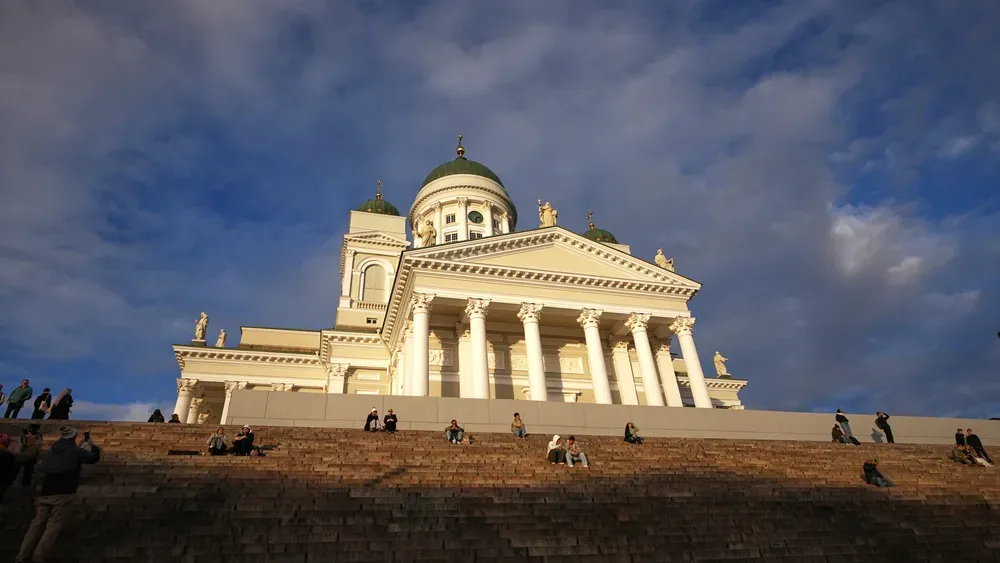
People enjoy the sunny weather with the Helsinki Cathedral of the background in Helsinki, Finland, Friday, Nov. 14, 2025. Photo Credit: (AP Photo/Sergei Grits)
The Nordic countries are no strangers to the long, dark winter
The Nordic countries are no strangers to the long, dark winter.
Despite little to no daylight — plus months of frigid temperatures — people who live in northern Europe and above the Arctic Circle have learned how to cope mentally and physically with the annual onset of the winter blues, which can begin as early as October and last into April for some.
The winter solstice will occur Dec. 21, marking the shortest day and longest night of the year in the Northern Hemisphere. While sunlight increases daily after that, winter won't be over for a while yet.
The Associated Press spoke to experts in Norway, Sweden and Finland about the winter blues. Here's how they suggest looking for light, literally and figuratively, during the darkest months of the year:
Dr. Timo Partonen, a research professor at the Finnish Institute for Health and Welfare, said the dark winter affects our circadian rhythm.
With limited daylight, our internal body clocks cannot reset or synchronize properly and it throws off our sleep. We may sleep longer in the winter, he said, but we don't wake up refreshed and can remain tired the rest of the day.
Partonen recommended trying a dawn simulator, sometimes known as a sunrise alarm clock, to gradually light up your bedroom and ease you awake.
In addition to being more tired, we're more likely to withdraw from others socially in the wintertime. We're more irritable, Partonen said, and more prone to fights with friends.
It's important to maintain our relationships, he said, because symptoms rarely improve in isolation.
And since keeping up with exercise is also key to combating the winter blues, consider inviting a friend along for a workout.
It could also help keep off the wintertime weight gain — typically 2 to 5 kilograms (4 to 11 pounds) a year, Partonen said — that's fed by cravings for carbohydrates, especially in the evenings.
Millions of people worldwide are estimated to suffer from seasonal depression. Also known as seasonal affective disorder, or SAD, patients typically have episodes of depression that begin in the fall and ease in the spring or summer. A milder form, subsyndromal SAD, is recognized by medical experts, and there’s also a summer variety of seasonal depression, though less is known about it.
Scientists are learning how specialized cells in our eyes turn the blue wavelength part of the light spectrum into neural signals affecting mood and alertness. Sunlight is loaded with the blue light, so when the cells absorb it, our brains’ alertness centers are activated and we feel more awake and possibly even happier.
Researcher Kathryn Roecklein at the University of Pittsburgh tested people with and without SAD to see how their eyes reacted to blue light. As a group, people with SAD were less sensitive to blue light than others, especially during winter months. That suggests a cause for wintertime depression.
In severe cases, people need clinical support and antidepressant medications. Christian Benedict, a pharmacology professor at Uppsala University in Sweden, suggests light therapy for people with SAD as well as those who have a milder case of the winter blues.
“It’s not like it’s a fate, an annual or a seasonal fate, and you cannot do anything about it,” Benedict said. “There are possibilities to affect it.”
A routine of morning light therapy, using devices that emit light about 20 times brighter than regular indoor light, can be beneficial for both people with and without SAD.
The light therapy helps to kickstart your circadian rhythm and increases serotonin in your brain, Benedict said.
Research supports using a light that’s about 10,000 lux, a measure of brightness, for 30 minutes every morning. Special lights run from $70 to $400, though some products marketed for SAD are not bright enough to be useful. Your insurance company might cover at least part of the cost if you’ve been diagnosed with SAD.
Partonen recommended using both a dawn simulator and a light therapy device each day before noon.
And don't forget to, well, look on the bright side. It's crucial to embrace winter instead of dreading it, according to Ida Solhaug, an associate professor in psychology at the University of Tromsø, also known as the Arctic University of Norway — the world's northernmost university.
Prioritize a positive outlook as a survival strategy and learn to appreciate the change in seasons. It's a typical Norwegian way of thinking, she said, that can make all the difference when there's very little daylight for months.
“It's part of the culture,” she said.
And don't forget to take advantage of both outdoor and indoor hobbies, she said. Inside, channel hygge — the Danish obsession with getting cozy — and snuggle up on the couch with blankets and a movie.
But don't hibernate all winter. After the film finishes, head outside with a thermos for fika, the traditional Swedish coffee break. Even during cloudy days, a quick walk in the fresh air will help, she said. And if you're brave enough, do a cold plunge like many people in the Nordics.
Solhaug tries to jump into the frigid waters off the coast of Tromsø, an island 350 kilometers (217 miles) north of the Arctic Circle, at least once a week, adding that it makes her feel revitalized during the long winter.
“Challenge yourself to look for light in the darkness,” she said.
After all, as many Nordic people say, there’s no such thing as bad weather — only bad clothing.
Finland's President Alexander Stubb, too, had some tips for how to tackle Nordic winters. When asked in an interview with The Associated Press last month how to survive the cold season, he had some very specific advice.
“Take an ice bath and then followed up by a sauna and do one more ice bath, one more sauna, then a shower and go out there. You’ll manage,” Stubb said.
by Stefanie Dazio
Copyright Associated Press. All rights reserved. This material may not be published, broadcast, rewritten, or redistributed.
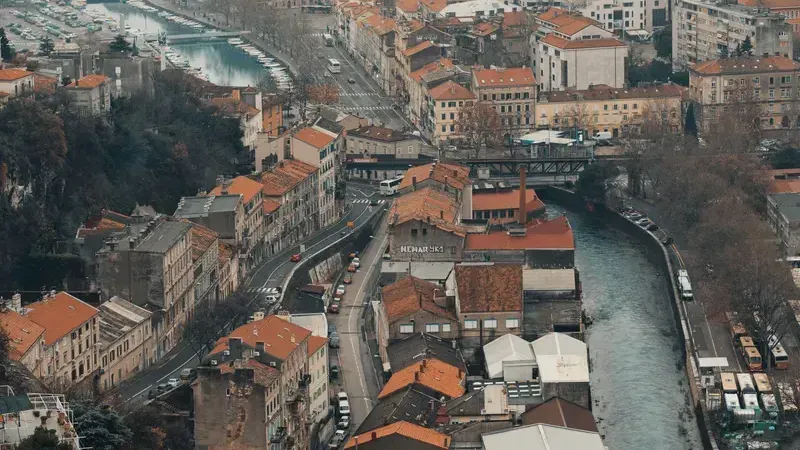
Rijeka—Croatia’s third‑largest city and principal seaport—has been quietly charting a different course, developing a reputation among regional activists and culture workers as one of the country’s most welcoming urban spaces for lesbian, gay, bisexual, transgender, and queer people.
When most queer travelers think of Croatia, images of Dubrovnik’s stone walls or Split’s Roman palaces usually come to mind, often paired with caution about the country’s conservative politics. Yet several hours up the coast, Rijeka—Croatia’s third‑largest city and principal seaport—has been quietly charting a different course, developing a reputation among regional activists and culture workers as one of the country’s most welcoming urban spaces for lesbian, gay, bisexual, transgender, and queer people.
Rijeka’s queer‑friendlier environment did not appear overnight. It grew out of a longer local tradition of left‑leaning politics, worker solidarity, and experimental art that has often set the city apart from the rest of the country.
Rijeka sits on Kvarner Bay in the northern Adriatic, historically shaped by Austro‑Hungarian, Italian, and Yugoslav rule before becoming part of independent Croatia in the 1990s. This layered past is visible in the Habsburg‑era palaces along Korzo, the main pedestrian promenade, and in the remnants of heavy industry that once made Rijeka one of Yugoslavia’s key shipbuilding centers.
That industrial identity also fostered a strong working‑class culture and a tradition of protest. Rijeka was one of the first Croatian cities to see mass anti‑fascist mobilization during World War II, and later hosted important punk and alternative scenes in socialist Yugoslavia. Contemporary queer organizers in the city frequently reference this legacy of resistance and non‑conformity when explaining why they feel comparatively safer being visible here than in some other Croatian urban centers.
In 2020, Rijeka served as one of the European Capitals of Culture, a European Union initiative that highlighted the city’s experimental arts institutions, from the Museum of Modern and Contemporary Art to a network of independent cultural centers housed in former industrial spaces. The official program included explicit LGBTQ+ themes and collaborations with local queer organizations, further legitimizing their presence in the city’s cultural mainstream.
For queer visitors, one of Rijeka’s most important assets is the presence of LORI Association , a local lesbian and feminist organization founded in 2000. LORI is one of the oldest LGBTQ+ organizations in Croatia and is based in Rijeka, where it has long provided counseling, educational programs, and public campaigns against homophobia and transphobia.
LORI has also been central in organizing Rijeka’s contribution to May 17th International Day Against Homophobia, Biphobia and Transphobia , staging public actions, exhibitions, and discussions in city spaces. These events, often held in collaboration with the City of Rijeka’s Department of Culture, signal an official openness to LGBTQ+ visibility that is still uneven across Croatia.
While Croatia’s most widely reported Pride events happen in Zagreb and Split, Rijeka has hosted smaller but symbolically important queer public gatherings and community festivals over the last decade, including film screenings, panel discussions, and cultural programs under banners such as “Smoqua – Festival of Queer and Feminist Culture.” Smoqua, founded in 2017, combines workshops, performances, and exhibitions with regional and international guests; organizers describe it as a space for “feminist, queer, and artistic reflection” in the Adriatic context.
These initiatives mean that, although Rijeka does not yet have the density of commercial gay bars or clubs seen in larger European capitals, it offers a community‑based infrastructure where queer travelers can plug into local networks anchored by activism and arts rather than nightlife alone.
Croatia has made several formal advances on LGBTQ+ rights in the last decade, including the introduction of life partnerships for same‑sex couples in 2014 and subsequent provisions allowing non‑married same‑sex couples to foster children. However, rights organizations have documented ongoing discrimination, periodic anti‑Pride incidents, and challenges for transgender people in accessing legal gender recognition and adequate healthcare.
Within this national context, Rijeka stands out for several reasons:
Firstly, surveys and anecdotal reporting by Croatian LGBTQ+ groups describe Rijeka as having a relatively high level of everyday acceptance, especially among younger residents, compared to some inland and smaller coastal towns.
Secondly, city officials in Rijeka have consistently partnered with civil society on anti‑discrimination campaigns, including support for educational workshops in schools and cultural venues. This institutional backing gives queer cultural events a sense of security and continuity.
Thirdly, Rijeka’s identity as a historically multicultural port—with Italian, Slovene, and other minority communities still present—has contributed to a civic narrative that values diversity. Scholars of Croatian urban history note that this pluralism often translates into greater openness toward gender and sexual diversity as well.
For queer travelers, much of Rijeka’s appeal lies in its scale. The city center is compact and walkable, with Korzo at its heart, lined with cafés where couples of all genders can sit together without attracting undue attention. From here, side streets lead to the port, the main market, and cultural landmarks like the imposing St. Vitus Cathedral and the 19th‑century National Theatre Ivan pl. Zajc, which has hosted productions by openly queer and feminist directors.
Climbing the steps behind the city brings visitors to Trsat, a hilltop neighborhood crowned by a medieval fortress and a Franciscan monastery. The views over Kvarner Bay and the islands of Krk and Cres are a reminder that Rijeka is at once an industrial port and a gateway to some of the Adriatic’s most coveted beaches. In warmer months, local residents—queer and straight—head to pebble beaches along the city’s eastern shoreline and to nearby coastal towns like Kostrena and Opatija for swimming and sunbathing.
Rijeka’s food culture reflects its mixed heritage. Seafood risottos and grilled fish share menus with Central European comfort dishes and Italian‑influenced pastas. Independent cafés and bars in the center and around the artsy “Benčić” complex—home to the Museum of Modern and Contemporary Art and the Children’s House—often host exhibitions and DJ nights that attract a young, alternative crowd, including many LGBTQ+ locals.
Unlike major queer capitals where clubbing dominates the experience, Rijeka’s emerging appeal lies in its cultural programming.
The Museum of Modern and Contemporary Art Rijeka has mounted exhibitions engaging with gender, sexuality, and body politics, including works by regional queer artists. Film screenings organized with local NGOs have featured documentaries on LGBTQ+ activism in the Balkans and beyond, often followed by discussions with activists and scholars.
During the European Capital of Culture year, several projects directly addressed queer histories and identities, such as performances exploring same‑sex desire in Yugoslav popular culture and installations highlighting the marginalization of LGBTQ+ people in post‑socialist transitions. Organizers report that these events drew mixed audiences and sparked public conversations about gender and sexuality that continue to resonate in the city’s cultural scene.
The Smoqua Festival of Queer and Feminist Culture has quickly become a key date on the local calendar, typically taking place in autumn. Programmes have included drag performances, zine‑making workshops, self‑defence classes for queer and feminist communities, and lectures on topics ranging from non‑binary identities to regional transfeminist movements. International guests from neighboring Slovenia, Italy, and Serbia underscore Rijeka’s position as a meeting point in the northern Adriatic for feminist and LGBTQ+ networks.
These culture‑driven spaces are particularly valuable for transgender people, non‑binary people, and other gender‑diverse travelers who may not feel fully at ease in more conventional gay nightlife environments. Workshops and discussions foreground intersectional experiences, including those of migrants, Roma people, and disabled queer people, reflecting a broader commitment to inclusivity.
From a logistics standpoint, Rijeka is accessible by bus and train from Zagreb and by ferry or catamaran from several Adriatic destinations, with a nearby airport on the island of Krk serving regional flights. Accommodation options range from small family‑run guesthouses to contemporary hotels along the waterfront.
Human rights groups note that while legal protections against discrimination on the basis of sexual orientation and gender identity exist in Croatia, the lived experience of LGBTQ+ people varies by region. In Rijeka, local activists emphasize that displays of affection such as holding hands are generally possible in central areas without major incident, especially during daytime and around cultural venues. However, they still advise caution late at night in less busy parts of the city, similar to guidance offered for many European destinations.
Transgender people traveling to Croatia may face particular challenges, including inconsistent understanding of gender diversity in medical and bureaucratic settings. In Rijeka, LORI and partner organizations sometimes facilitate referrals to LGBTQ‑affirming professionals and can offer up‑to‑date local guidance for those who reach out in advance via their website .
Rijeka rarely appears on mainstream LGBTQ+ travel lists, which tend to focus on cities like Berlin, Barcelona, and Amsterdam. However, some specialized travel features on “hidden” queer‑friendly destinations in Europe and the Adriatic region have begun to spotlight Croatia and the Kvarner area—often emphasizing the role of grassroots organizations and smaller festivals over large commercial Pride events.
Within this broader trend, Rijeka stands out as:
- Welcoming: A city administration that partners with LGBTQ+ groups, visible queer and feminist festivals, and cultural institutions hosting gender‑ and sexuality‑themed projects all contribute to a sense of safety for visitors.
- Emerging: Rather than a saturated party destination, Rijeka offers an evolving scene where new queer‑inclusive events and collaborations appear each year, many still small enough that visitors can meet organizers and artists personally.
- Culturally rich: From its European Capital of Culture legacy to ongoing experimental art, theatre, and music, the city offers depth well beyond sun and sea, with queer perspectives increasingly woven into this fabric.
For LGBTQ+ travelers seeking a European destination where they can explore both queer community life and local history without the pressure of a hyper‑commercial scene, Rijeka offers a compelling alternative. Cafés on Korzo instead of mega‑clubs, conversations at a feminist zine workshop instead of all‑night circuit parties, a swim in Kvarner Bay after a day at the museum: it is in these quieter combinations that the city’s appeal reveals itself.
And as local organizers continue to build festivals, alliances, and safe spaces, Rijeka’s position as a hidden gem on the queer map of Europe is likely to strengthen—still under the radar enough to feel intimate, but increasingly connected to a broader Adriatic and European LGBTQ+ network.
Nestled in the lush mountains of northern Thailand, Chiang Mai is emerging as a vibrant, welcoming destination for queer travelers seeking both cultural richness and a relaxed LGBTQ+ atmosphere.
Chiang Mai, the largest city in northern Thailand, is a destination that effortlessly blends ancient temples, verdant mountain landscapes, and a burgeoning queer community. While Bangkok and Phuket often dominate LGBTQ+ travel lists for Thailand, Chiang Mai stands out for its slower pace, cultural authenticity, and a welcoming spirit that has drawn queer travelers from across Asia and beyond .
Chiang Mai’s reputation as a queer-friendly city is rooted in Thailand’s broader acceptance of LGBTQ+ people, which is deeply influenced by the country’s Buddhist traditions and lack of legal discrimination against homosexuality . The city’s residents are known for their warmth and hospitality, and public displays of affection between same-sex couples are generally met with indifference or even smiles, especially in tourist areas and the city center. In January 2025, Thailand officially legalized same-sex marriage, further cementing its status as one of Asia’s most progressive countries for LGBTQ+ rights .
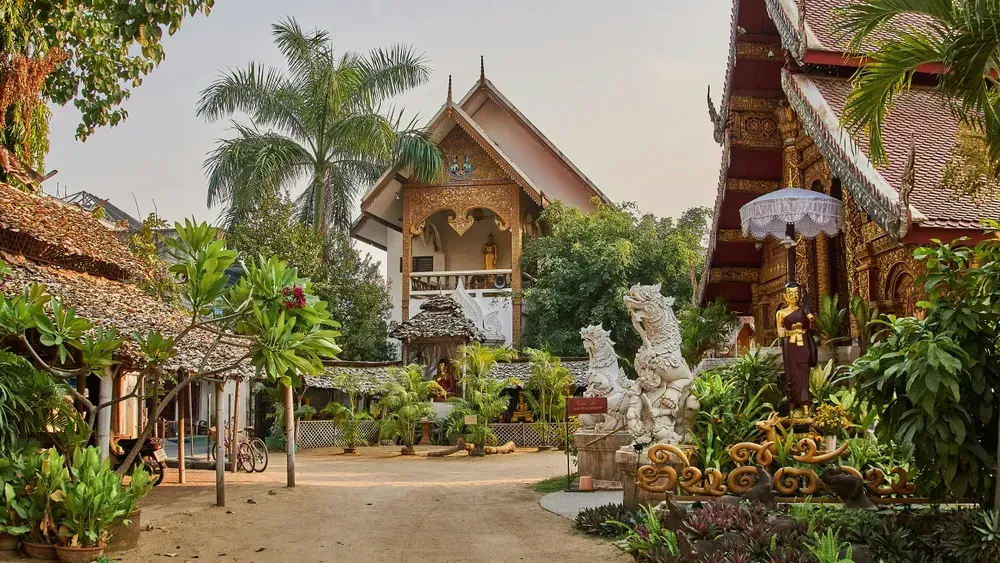
Chiang Mai’s cultural landscape is a tapestry of ancient temples, traditional markets, and a thriving arts scene. The city is home to dozens of historic Buddhist temples, including Wat Phra Singh and Wat Chedi Luang, which offer a peaceful retreat from the bustling streets. The Old City, surrounded by ancient walls and moats, is a maze of narrow alleys, street food stalls, and boutique shops, many of which are run by LGBTQ+ entrepreneurs or openly queer-friendly .
The city’s queer community is particularly vibrant in the Nimmanhaemin neighborhood, known for its trendy cafes, art galleries, and LGBTQ+-friendly bars. Nimman is a hub for young creatives, expats, and locals, and it’s not uncommon to see rainbow flags fluttering from shop windows or hear Thai pop music with queer themes playing in the background. The annual Chiang Mai Pride Festival, held in May and June, brings together LGBTQ+ locals and visitors for a weekend of parades, performances, and community events, further highlighting the city’s growing visibility and inclusivity .
Chiang Mai’s nightlife is more laid-back than Bangkok’s, but it offers a diverse range of queer-friendly venues. Bars like Ram Bar, 6ixcret Show, and Blwo CNX are popular spots for LGBTQ+ travelers and locals, often hosting drag shows, karaoke nights, and themed parties. The city’s queer scene is also supported by a growing number of LGBTQ+-owned guesthouses and boutique hotels, such as Club One Seven Gay Hotel, which provide safe and welcoming accommodations for queer travelers .
For those seeking a more immersive experience, Chiang Mai’s LGBTQ+ community is active in local arts and activism. Organizations like the Young Pride Club work to promote visibility, support, and advocacy for queer rights in the region. The city’s annual Pride Festival is a highlight, but smaller events and meetups happen throughout the year, fostering a sense of belonging and connection for both locals and visitors .
Chiang Mai’s appeal lies in its balance of tradition and modernity, making it a destination that feels both authentic and progressive. Unlike the more commercialized queer scenes in Bangkok or Pattaya, Chiang Mai offers a more intimate and community-driven experience. The city’s relaxed pace, stunning natural surroundings, and welcoming atmosphere make it an ideal destination for queer travelers seeking a deeper connection with Thai culture and a sense of belonging within a vibrant LGBTQ+ community .
For those looking to explore beyond the typical tourist trail, Chiang Mai’s hidden queer spaces, cultural richness, and progressive spirit make it a destination that is both emerging and deeply rooted in Thai hospitality. Whether you’re drawn to its ancient temples, vibrant arts scene, or welcoming LGBTQ+ community, Chiang Mai offers a unique and unforgettable experience for queer travelers in Asia .
There are places you visit to see all the sights and learn about a new place in the world, and there are places you go to relax and feel a new location. Iceland is a destination built for both, and how you spend your time may depend on how much you love a hot bath.
There are places you visit to see all the sights and learn about a new place in the world, and there are places you go to relax and feel a new location. Iceland is a destination built for both, and how you spend your time may depend on how much you love a hot bath.
In Iceland, geothermal heat rises from the ground, the air is clean and faintly smells of minerals, and nearly every town has its own geothermal spa.
Iceland has more naturally heated water than anywhere else on the planet, and daily “bathing” in local swimming pools (heated with geothermal water) is part of the culture. Now, more and more entrepreneurs are creating their own spas, and you can spend a week in Iceland and soak in a different spa every day.
You can visit an expensive and sleek lagoon or a pool of geothermal water with a few rocks around it to sit on. The choice is yours, and whichever you choose will be amazing.
Here’s how to experience the country one soak at a time.
Day 1: Blue Lagoon
There isn’t a more recognizable place in Iceland. In fact, photos of the Blue Lagoon are pasted all over Keflavik airport in case you hadn’t heard of the famous spa. Pictures of beautiful Icelanders with white silica masks on their faces in milky-looking turquoise water sell the place better than any brochure ever could.
The Blue Lagoon is an experience. Black lava fields surround the water, and a thick mist rises from the 100-degree water. It is the largest spa in Iceland, and even when it is busy, you can still find a spot for yourself.
However, the Blue Lagoon is one of the most expensive spas on the list, and it can be really crowded in the summer and early fall. I once visited in March, and it was pretty slow. If you want to be left alone with your thoughts and have some space to move around, this may not be your favorite. But if you have always dreamed of going, go; it is totally worth it once. You will find silica masks, swim-up bars, and tons of beautifully heated water.
Day 2: Krauma
In western Iceland, near Europe’s most powerful hot spring, Krauma is a soothing, minimalist retreat. The heat comes directly from Deildartunguhver, a roaring natural spring that produces water hot enough to cook with.
While Krauma is not the largest or most impressive spa, it might be the most relaxing. Quiet and modern, Krauma has five hot baths, one cold bath, and a sauna. There is also a relaxation room with a fireplace if you want to take a nap. Krauma is a good choice for relaxing at the end of a day of hiking, or a great way to start your day. Plus, the food at the restaurant is excellent and moderately priced.
Day 3: Laugarás Lagoon
The brand new Laugarás Lagoon is the country’s latest answer to the luxury-lagoon trend. With impeccably designed pools and mountain views, it’s stylish without being showy — an intimate retreat surrounded by some of Iceland’s most fertile landscapes. (The crops grown in the area are used in their restaurant.)
Two levels of pools give you plenty of space to spread out and enjoy the beautiful countryside views. Each level features its own swim-up bar where you can get a drink, and there is a waterfall and saunas to enjoy while you are there. One of the best things about Luagarás Lagoon is the Ylja restaurant run by Icelandic celebrity chef Gísli Matt. Slow-cooked cod is a speciality that I can’t recommend enough. Eat before or after your spa, and your day will feel totally complete.
Laugarás is very similar in feel and style to Forest Lagoon in Northern Iceland, so it is an excellent alternative if you don’t want to go too far from Reykjavik.
Day 4: Giljaböð Baths
For travelers who crave something a little closer to nature, Giljaböð Baths (Canyon Baths) may be the week’s most unforgettable stop. You can only reach the baths by bus, then walk down a steep hill to the most picturesque baths you have ever seen.
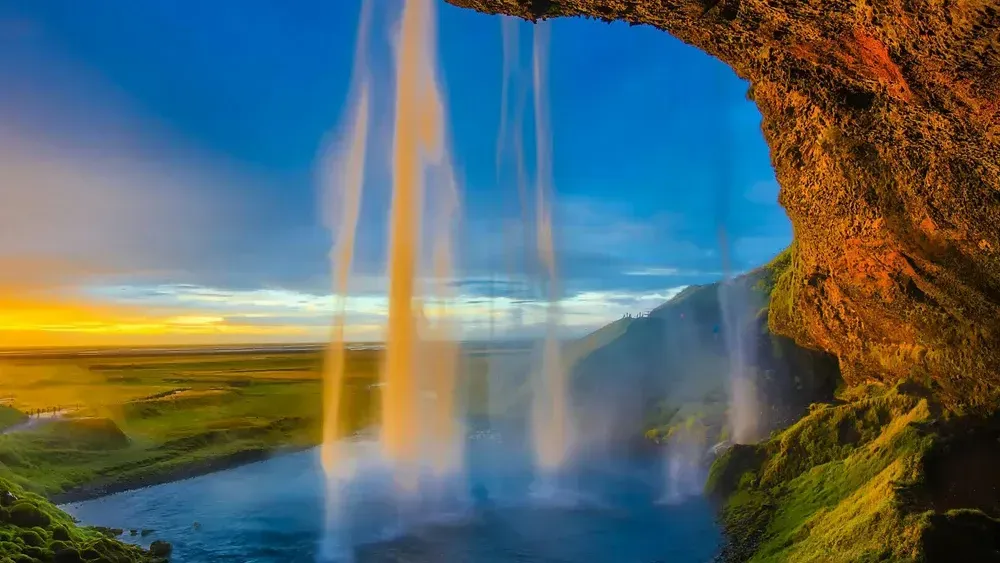
Stone-built pools capture the natural hot springs and overlook a moss-covered canyon where a nearby river meanders.
This is Iceland at its best — hot pools carved into nature, blending seamlessly into the valley. You won’t find luxury amenities; there are only two small changing rooms and a bathroom. What you will find is silence, solitude, and the sense of soaking in a place that hasn’t changed in centuries.
Just outside Reykjavík, Hvammsvík Hot Springs flow into a private fjord, where tidal waters and the geothermal heat mingle in a series of pools. The depth of the water in the pools rises and falls with the tide, and so does the temperature. It feels wonderfully elemental: you get a front-row seat to the ocean and the mountains, and you get to do it in a spa. Next to the Canyon Baths, you can’t get much closer to nature.
There are eight separate pools of differing temperatures built on the slope that runs to the fjord. Some are very hot, and others mix in with the ocean during high tide, making a colder pool. In addition, there is a steam room, a swim-up bar, paddle boarding, and a lovely cafe. If you want a more natural approach to geothermal baths, you will love Hvammsvík. Spend more time in beautiful Hvammsvík by renting out one of the nearby artist lodges. There are eight cottages overlooking the lake and the fjord.
Day 6: Sky Lagoon
If you have a day or two in Reykjavik, you will want to visit Sky Lagoon. No need to leave the city, the spa is actually in downtown Reykjavik on a rugged shoreline overlooking the ocean. Sky Lagoon embraces modern Icelandic minimalism and seems like a more grown-up version of the Blue Lagoon. It is one of the larger geothermal baths in Iceland, and while a newer addition to the country, it seems to be growing in popularity.
Its signature seven-step ritual — a cycle of hot, cold, steam, and exfoliation — is inspired by ancient Scandinavian baths and leaves you feeling relaxed, even more than spas that offer heated water. Along the shoreline is the infinity-edge, allowing people to look out onto the North Atlantic while staying warm in the lagoon.
Day 7: Forest Lagoon
You will have to drive to Forest Lagoon, or perhaps get off one of the many cruise ships that go to Akureyi to experience this bath. Perched on a forested hillside above Akureyri, this spa feels like you are in the middle of the forest with pools framed in cedar and the smell of the forest around you.
The spa has two hot-water pools and a cold plunge pool for the most intrepid spa-goers. Plus a swim-up bar and a sauna. There’s a sense of seclusion here in this spa sculpted into the landscape rather than built upon it. Guests drift between hot pools and a swim-up bar, all surrounded by the hush of trees and the view of the fjord down below the hill.
Have More Time? Local Swimming Pools
After a week of designer lagoons and canyon retreats, you might be tired of geothermal baths. Still, you should add in one of the most authentic Icelandic experiences of all: the community swimming pool. Nearly every town, no matter how tiny, has its own geothermal pool complex, complete with hot pots, steam baths, and cold plunges.
These swimming pools are open to locals and tourists alike and are more authentic than any other spas in the country.
This is where Icelanders relax, chat, and warm up from the chilly winter. It’s affordable, simple, and part of daily life — and the perfect final chapter in a week dedicated to soaking.
Favorites include:
Sundhöll Reykjavíkur — classic and atmospheric
Laugardalslaug — Reykjavík’s most beloved local pool
Selfoss Swimming Pool — family-friendly and beautifully maintained
A Week of Icelandic Wellness
Spend a week soaking in Iceland’s geothermal baths, and you’ll understand something Icelanders have known forever — that warmth isn’t just a temperature. It’s a feeling, time to relax with friends, and a ritual that you might bring back home with you.
Iceland makes spa-hopping feel not just like a luxury, but a way of life. Each lagoon and bath will give you a different experience. All of them will make you want to come back to do it again.
by Alicia Richards | Guessing Headlights
Copyright Associated Press. All rights reserved. This material may not be published, broadcast, rewritten, or redistributed.
Wellness travel explodes and Vegas responds with award-winning spas, functional nutrition and luxurious relaxation. Photo Credit: Fontainebleau Las Vegas
Wellness tourism moved squarely from niche to mainstream, with 84% of Americans now ranking it as a travel priority. Amidst this rise, the United States drinking rate is at a 90-year low, and just 54% of American adults say they consume alcohol. As consumer sentiment on alcohol and health shifts, Las Vegas highlights a different side of its personality.
Wellness tourism moved squarely from niche to mainstream, with 84% of Americans now ranking it as a travel priority. Amidst this rise, the United States drinking rate is at a 90-year low, and just 54% of American adults say they consume alcohol. As consumer sentiment on alcohol and health shifts, Las Vegas highlights a different side of its personality.
Vegas sees opportunity in wellness travel, a welcome trend amidst an overall decline in tourism. Visitor numbers have been down year over year for nine straight months. The city has been buffeted by strained household budgets and a steep decline in Canadian visitors to the U.S. Local investment in wellness offerings continues unabated.
A new kind of fabulous
With alcohol consumption at historic lows and wellness spending growing at a healthy clip, Las Vegas introduced a new slogan in September. Gone are the days of "What Happens Here, Stays Here," which gave travelers tacit permission to lean into hedonism.
The new "Welcome to Fabulous Las Vegas" campaign draws inspiration from the iconic sign and "is a reminder of how Las Vegas makes you feel, no matter how you choose to experience it," says Michon Martin, CEO of R&R Partners, who worked on the campaign. More and more, visitors choose wellness as their kind of fabulous.
As with many trends, Las Vegas leads the way in making wellness entertaining. Kate Wik, LVCVA chief marketing officer, highlights the circadian rhythm-inspired treatment at Lapis Spa inside Fontainebleau Las Vegas, which picks up on the sleep tourism trend.
When it comes to dining, the excellence that Las Vegas is known for now puts health on the menu, with fine vegan dining at Crossroads Kitchen at Resorts World. Wik says that these innovations have made Vegas "especially attractive for wellness seekers looking for more than just traditional entertainment. It's a destination where people can leave feeling better than when they arrived."
In a city known for its speakeasies, this kind of thinking marks quite a shift. Luxury travel writer Casandra Karpiak agrees that the city offers much more than gambling. "Lapis Spa at Fontainebleau delivers calm on a spectacular scale. Awana Spa's Art of Aufguss ritual turns heat into theater, and the F1-themed facial at the Waldorf Astoria Spa is the ultimate pre-race indulgence."
Indulgence takes on new meaning
At Lapis Spa & Wellness inside the Fontainebleau Las Vegas hotel, indulgence begins paradoxically with a forced detox. Spa attendants gently inform guests of the no-phone policy, requesting devices be left in the lockers. The provided robes have no pockets, leaving guests no choice but to comply.
With no distractions, spa goers are free to focus on the 55,000 square feet of wellness offerings. The spa excels in traditional services like massages, facials and body treatments, earning it the distinction of 2024 world's best casino hotel spa and Nevada's best hotel spa by World Spa Awards.
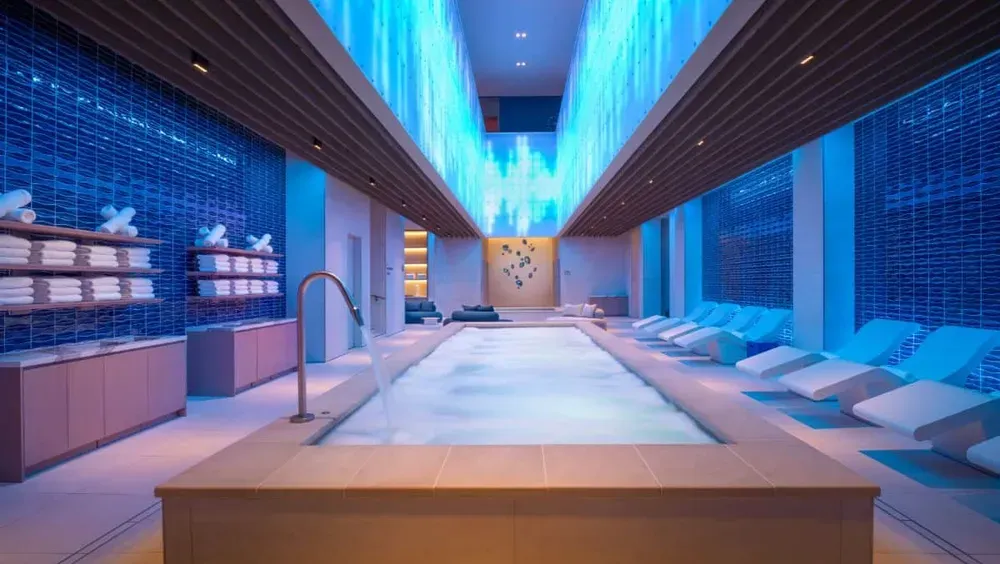
However, it's the extras that make the experience memorable. Lapis Spa & Wellness offers guests a near-endless variety of treatment options. Most guests start in the giant hot tub. The adventurous then move to the cold plunge before exploring one of the saunas. Some engage in herbal inhalation, a sauna-like space where fresh botanicals are heated to release their essential oils.
Guests with respiratory problems can visit the salt mist chamber. A salt brick wall provides a striking visual, and a salt dispensing system circulates salty air to reduce inflammation and clear toxins.
At the end of all the heat treatments, the spa recommends a quick trip to the snow shower, which feels like standing under a shaved ice machine as it churns out slushy snowflakes. In a city known for excess, this spa fits right in.
Well-rounded wellness
Whatever your health goal, the wellness corridor of the Fontainebleau is equipped to deliver. Steps away from the spa is the fitness center, where 14,000 square feet of exercise space greet visitors who want a more active kind of wellness.
Next door, those wanting a more clinical route to wellness pop into NutriDrip, where there is an IV concoction for every goal from longevity to increasing fertility. The hotel-exclusive Fontaine of Youth drip combines NAD+, vitamin C, glutathione and other vitamins and minerals to achieve detoxification, replenishment and cellular respiration for an eye-popping $1,000.
For those looking to achieve wellness through nutrition, Fontainebleau is home to the only wellness bar by supplement brand Cymbiotika. Staff wearing T-shirts with the slogan "longevity is the new luxury" serve $11 oat milk lattes with liposomal longevity mushrooms that give the drink a distinctly earthy tang. For an additional $3, patrons customize $21 smoothies and acai bowls with supplements like Irish sea moss, liquid colostrum or something called golden mind.
Wellness is big business
These unusual offerings make up part of the functional nutrition space, a fast-growing segment of the $500 billion wellness industry in the U.S. Half of all consumers and two-thirds of Gen Z and millennial respondents say they purchased functional-nutrition products last year.
Up to 60% of global consumers in the same study report that healthy aging is a top or very important priority for them. Those consumers are also travelers, and McKinsey & Company highlights travel as a top area for growth in the wellness industry.
The global wellness tourism market hit nearly $1 trillion in 2024 and is expected to reach more than $3 trillion by 2034. North America accounts for 40% of spending. Amidst this growth, Las Vegas has quietly amassed nine spas with a Forbes four or five-star rating.
Fontainebleau recently received the city's only MICHELIN key, the company's new hospitality equivalent to its prestigious star system for restaurant ratings. The city has never been better situated to serve up both longevity and luxury.
Something for everyone
Off the strip, new businesses rise to meet the demands of both locals and travelers. Pause Studio, a wellness franchise, opened its first Nevada location in Las Vegas in October. Visitors choose from offerings like cold plunge, infrared sauna, flotation therapy, compression therapy and IV vitamin drips.
Another newcomer, RAEYA, opened a luxury women's wellness sanctuary in November. RAEYA offers a science-backed wellness membership experience with select a la carte services. It focuses on personalized wellness, longevity-focused treatments and products by Laurel Skincare, a farm-to-face pioneer.
Nearby, Life Time, a luxury health club chain, broke ground on a new location scheduled to open in late 2026. The 130,000 square foot space will include standard fitness classes and sports courts, but also a hydrotherapy suite with a sauna, steam room, whirlpool and cold plunge.
For those who prefer to reconnect with nature, Las Vegas is an easy drive from several national parks. Red Rock Resort sits at the gateway to Red Rock Canyon, offering guests access to wide open spaces as well as the Red Rock Spa by Well & Being.
An unlikely pairing
Economic headwinds lead to lower visitor numbers, but wellness offers opportunities for tourism growth. Las Vegas meets the moment with award-winning spas, new business openings and collaborations in functional nutrition. Despite a reputation for overindulgence, Las Vegas proves that fabulous can also mean well.
Ashley Wali is a Seattle-based travel journalist and curator of Wanderlux, specializing in luxury family travel, sports tourism and wellness travel. Her work has appeared in The Seattle Times, Boston Herald, The Philadelphia Tribune, Orlando Sentinel, and many more. Recent assignments have had her slurping oysters on Cape Cod and cruising the fjords of Norway.
by Ashley Wali
Copyright Associated Press. All rights reserved. This material may not be published, broadcast, rewritten, or redistributed.
A Real ID sign is displayed as travelers wait to go through security check point at O'Hare International Airport in Chicago, May 23, 2025. Photo Credit: AP Photo/Nam Y. Huh, File
The Transportation Security Administration has announced that U.S. air travelers without a REAL ID will face a $45 fee starting in February
Air travelers in the U.S. without a REAL ID will be charged a $45 fee beginning in February, the Transportation Security Administration announced Monday.
The updated ID has been required since May, but passengers without it have so far been allowed to clear security with additional screening and a warning. The Department of Homeland Security says 94% of passengers are already compliant and that the new fee is intended to encourage travelers to obtain the ID.
REAL ID is a federally compliant state-issued license or identification card that meets enhanced requirements mandated in the aftermath of the Sept. 11, 2001, terrorist attacks.
Obtaining the ID — indicated by a white star in a yellow circle in most states — means taking more documents to the motor vehicle agency than most states require for regular IDs. It was supposed to be rolled out in 2008 but the implementation had been repeatedly delayed.
Beginning Feb. 1, travelers 18 and older flying domestically without a REAL ID and who don't have another accepted form of ID on them, such as a passport, will pay the non-refundable fee to verify their identity through TSA's alternative “Confirm.ID” system.
TSA officials said that paying the fee does not guarantee verification, and travelers whose identities cannot be verified may be turned away. If approved, however, the verification covers a 10-day travel period.
The fee can be paid online before arriving at the airport. Travelers can also pay online at the airport before entering the security line, but officials said the process may take up to 30 minutes.
The TSA initially proposed an $18 charge for passengers without a REAL ID, but officials said Monday they raised it after realizing the alternative identification program would cost more than anticipated.
Other acceptable forms of ID include military IDs, permanent resident cards and photo IDs from federally recognized tribal nations. TSA also accepts digital IDs through platforms such as Apple Wallet, Google Wallet and Samsung Wallet at more than 250 airports in the U.S.
by The Associated Press
Copyright Associated Press. All rights reserved. This material may not be published, broadcast, rewritten, or redistributed.