Once dismissed as a sleepy railroad town, Spokane, Washington is quietly becoming one of the most unexpectedly LGBTQ-friendly cities in North America, with queer-owned bars, bookstores, and festivals reshaping its downtown core and arts scene.
If you only know Spokane as the place your Seattle-bound flight sometimes stops to refuel, you may want to look again. In the last few years, Washington State’s second-largest city has gone from overlooked outpost to quietly buzzy queer-friendly hub, landing on LGBTQ+ safety and travel lists and drawing new attention from travelers who want mountain air with a side of drag brunch.
The surprise is part geography, part timing, and a lot of local organizing. Perched near the Idaho border and long branded as conservative-leaning compared with its coastal cousins, Spokane would not have made anyone’s shortlist of emerging queer destinations a decade ago. Today, LGBTQ+ travelers are more likely to encounter rainbow crosswalks, a growing cluster of queer-owned businesses, and a Pride festival that has swelled into one of the largest annual events in the region.
The shift is not just anecdotal. In 2025, data company SafeHome.org published an LGBTQ+ State Safety Report Card ranking Washington among the top ten safest states for LGBTQ+ people based on legal protections, hate-crime laws, and policy indicators. That statewide framework underpins Spokane’s local progress, from nondiscrimination protections to the visibility of Pride celebrations and community resources.
On the travel side, vacation platform Misterb&b, which focuses on “queer-friendly properties,” released its 2025 Queer Safety Index highlighting U.S. cities where LGBTQ+ travelers book frequently and report feeling supported and celebrated. While the top of the list is dominated by big-name hubs like Chicago, Seattle, and San Francisco, the report notes a broader trend: smaller and mid-sized cities in safer states are seeing increased queer travel interest as visitors look beyond the usual coastal standbys. Spokane, identified in the report as a Washington city benefiting from state-level protections and a growing hospitality market, is part of that pattern.
Washington’s legal environment adds a crucial layer. The American Civil Liberties Union has documented that Washington maintains statewide nondiscrimination protections in employment, housing, and public accommodations on the basis of sexual orientation and gender identity, alongside inclusive hate-crime laws and bans on anti-LGBTQ+ policies in public schools. That scaffolding does not solve every problem, but it creates a baseline of safety that queer locals and visitors in Spokane reference when deciding where to live, work, or book a weekend away.
Spokane’s modern LGBTQ+ visibility is anchored by its annual Pride celebration, organized by nonprofit Spokane Pride . Spokane Pride traces its roots back to smaller marches and picnics in the 1990s, and in recent years the event has expanded from a single-day march into a multi-event festival with a parade, mainstage performances, and family areas. In 2023, Pride weekend drew tens of thousands of attendees downtown, according to local coverage from The Spokesman-Review, which reported on packed Riverfront Park crowds and a growing number of local sponsors.
By 2024, Spokane Pride described the festival as a “month-long celebration,” bundling youth events, educational programming, and nightlife-focused gatherings around a central parade and festival. Local tourism officials at Visit Spokane promoted Pride as one of the city’s signature summer draws, highlighting its inclusive atmosphere and the diversity of events, from all-ages drag story hours to late-night DJ sets.
Spokane’s Pride story plays out against a wider Washington backdrop. Seattle’s long-established Pride weekend and Capitol Hill’s queer nightlife district have made the state an LGBTQ+ destination for years, and travel guides from brands such as Accor position Washington cities, including Seattle and coastal communities, as “LGBTQ+ friendly” stops for 2025 trips. What is newer is the idea that an inland city like Spokane belongs in that same conversation for travelers seeking a different pace and price point.
The transformation becomes more visible at street level. In downtown and nearby neighborhoods, a cluster of LGBTQ-owned or LGBTQ-affirming venues has given visitors more obvious touchpoints than in past decades.
Business directories from regional LGBTQ+ resource centers list multiple queer-owned or affirming bars, coffee shops, and creative spaces operating in central Spokane as of 2024. The Spokesman-Review has covered the growth of local drag shows, including regular drag brunches, trivia nights, and charity performances at venues in the downtown core and nearby districts.
One throughline is that many of these spaces are multi-functional: a bar that doubles as a performance venue, a café hosting queer book clubs, or a gallery making room for LGBTQ+ artists in its monthly rotations. According to features in weekly newspaper The Inlander, several of these businesses intentionally foreground inclusion by training staff on LGBTQ+ issues, displaying Pride, trans, and Progress flags year-round, and collaborating with local nonprofits for fundraising events.
Bookstores and arts venues also contribute to the city’s queer visibility. Local reporting has highlighted author readings and film screenings with LGBTQ+ themes at independent cultural spaces, tying into regional festivals and national book tours. These events do not always advertise themselves as “queer nights,” but the presence of LGBTQ+ authors, filmmakers, and audiences helps normalize diversity in a town once stereotyped as culturally homogenous.
Behind the storefronts and festivals is a network of organizers, nonprofit leaders, and everyday volunteers who have been building an LGBTQ+ infrastructure for years.
Odyssey Youth Movement, founded in the late 1990s, operates as a community center and support hub for LGBTQ+ young people in the Spokane area, offering drop-in hours, leadership programs, and health education. Its mission statement emphasizes creating “a safe affirming space for LGBTQ+ youth and young adults,” and the organization regularly partners with local schools, health departments, and Pride organizers.
On the adult side, groups such as Spokane Pride coordinate large-scale events and advocacy campaigns, from Pride parade logistics to partnerships with regional companies that sponsor inclusion-focused programming. Health-focused organizations, including local clinics and statewide advocacy groups, contribute by running HIV testing events, gender-affirming care information sessions, and mental health workshops tailored to LGBTQ+ communities.
Local media have also played a role. The Inlander and The Spokesman-Review have both published feature stories on LGBTQ+ life in Spokane, from profiles of transgender community leaders to coverage of anti-discrimination efforts in schools and workplaces. That visibility, while not a substitute for policy protections, can make a meaningful difference in how safe or welcome a place feels, especially in a mid-sized city where social networks overlap.
Part of Spokane’s appeal to travelers is that this emerging queer scene is layered onto a classic Inland Northwest backdrop. Visit Spokane promotes the city’s riverfront, trail systems, and proximity to lakes and ski areas as core draws, marketing the region as an accessible gateway to outdoor recreation. For LGBTQ+ visitors, that means nightlife is often bookended by hiking, biking, or strolling through Riverfront Park.
The combination of nature and urban culture mirrors a broader trend in queer travel. Guides from hotel and travel brands note that LGBTQ+ travelers increasingly seek destinations that offer both safety and “authentic” experiences—local food, arts, and outdoor access—rather than only nightlife-heavy districts. Spokane’s compact downtown, walkable core, and relatively lower costs compared with coastal hubs position it well in that niche, even if it remains far smaller than established queer meccas.
Several regional reports on LGBTQ+ demographics have pointed out that smaller cities and college towns in the U.S. West and Pacific Northwest have seen rising proportions of same-sex couples and openly LGBTQ+ residents over the past decade, though Spokane-specific statistics can be harder to isolate in national datasets. Researchers at the Williams Institute attribute some of this dispersion to housing costs, remote work, and shifting cultural attitudes that make it more viable for LGBTQ+ people to live outside a handful of major metros.
Spokane’s progress coexists with challenges that are familiar across the United States. Regional and national outlets have reported on anti-LGBTQ+ rhetoric and policy proposals in nearby states, including Idaho and Montana, prompting some residents to describe eastern Washington as both a refuge and a frontline. Local coverage has documented incidents of harassment and protests targeting LGBTQ+ events, including drag story hours, underscoring that increased visibility can also draw backlash.
Advocates in Spokane often emphasize that “LGBTQ-friendly” is a work in progress, not a finished label. Interviews in The Inlander with community organizers stress the importance of centering transgender people, queer people of color, and youth in conversations about safety and inclusion, especially as the city markets itself more actively to visitors.
For travelers, that nuance may be part of the draw. Spokane is not Provincetown or Palm Springs, both of which appear regularly on national lists of “gayest” or most LGBTQ-friendly destinations. Instead, it offers something quieter and more emergent: queer life threaded through a city still remaking its image, where the sight of a Pride flag in a shop window or a drag show advertised alongside a farmers’ market still feels like a small revelation.
For the traveler stepping off that once-ignored connection flight, the surprise may hit somewhere between the riverfront and a rainbow-lit marquee. Spokane, against expectation, has become a place where LGBTQ+ people can see themselves reflected in the festival banners, the bookstore shelves, and the bar lineups. In the evolving map of queer North America, this mid-sized railroad town is writing itself in ink.
Far north Queensland’s Cairns is emerging as an unexpectedly queer‑welcoming tropical city, pairing World Heritage‑listed reefs and rainforests with a small but active LGBTQ+ community, inclusive venues, and growing pride events.
At first glance, Cairns looks like a classic Australian resort town: palm‑lined esplanade, reef tour boats docking at dawn, backpackers spilling out of hostels and waterfront bars. Tourism brochures highlight turtles and tropical cocktails, not queer nightlife or pride marches. Yet in recent years, this compact city on the edge of the Great Barrier Reef has been steadily building a reputation as a welcoming, low‑key destination for LGBTQ+ travelers, driven by a mix of inclusive tourism, visible local advocates, and a relaxed culture where diversity is increasingly part of everyday life.
Unlike Sydney, Melbourne or Brisbane, Cairns rarely appears on international LGBTQ+ travel lists, which tend to focus on major capitals, well‑known pride festivals and historic “gaybourhoods”. But conversations with local operators and community groups, along with a review of regional tourism strategies, show a city that is deliberately positioning itself as safe and inclusive for queer visitors while retaining a more intimate scale and slower pace than the southern metropolises.
Cairns’ economy is built on tourism, with the city serving as one of the main gateways to the Great Barrier Reef and the Wet Tropics Rainforest, both UNESCO World Heritage‑listed areas. The region receives millions of domestic and international visitors annually, and state tourism bodies have identified LGBTQ+ travelers as a key segment because they tend to travel year‑round and show strong interest in culture, food, and nature‑based experiences.
Tourism Tropical North Queensland, the regional tourism organisation, has publicly highlighted LGBTQ+ inclusion in its marketing and industry training programs, encouraging local operators to adopt welcoming practices, inclusive language and visible support for queer guests. This has translated into practical changes: staff training on pronouns and respectful communication, promotion of same‑gender wedding and elopement packages, and the use of gender‑neutral language in accommodation and tour descriptions.
On the ground, several reef and rainforest tour companies based in Cairns advertise themselves as LGBTQ+ friendly and participate in national “Welcome Here” and “Rainbow Tick”‑style inclusion initiatives, signalling their commitment to safety and respect for queer travelers. While not exclusively queer‑owned, these operators market to diverse couples and families in their imagery and social media, featuring same‑gender partners and transgender people in promotional content alongside straight couples and solo travelers.
Cairns’ resident population is relatively small compared with major capitals, but local advocacy groups describe a visible and connected LGBTQ+ community, with networks that span hospitality, the arts, health services and education. The Queensland Council for LGBTI Health lists Cairns as one of its key regional hubs, with dedicated community development projects, peer groups and health outreach tailored for lesbian, gay, bisexual, transgender, intersex, queer and sistergirl and brotherboy communities.
Regional community organisation Cairns LGBT and allied local groups promote social events ranging from trivia nights and cabaret shows to relaxed meet‑ups, often hosted by venues along the Esplanade or in the compact city centre. These gatherings are generally open to visitors, giving queer travelers a way to connect with locals without the pressure of a large‑scale club scene.
Health and support services are part of what makes the city feel safer to queer visitors. The Queensland Council for LGBTI Health runs regional outreach and provides referrals in Cairns for sexual health, mental health and community connection, while Cairns Sexual Health Service, a public clinic, includes specific information for men who have sex with men, transgender people and other LGBTQ+ communities in its resources. This formal infrastructure, often absent in smaller tourist towns, contributes to a more grounded sense of safety for visiting queer people.
While Cairns does not yet host a nationally known queer arts festival on the scale of Sydney’s Mardi Gras or Melbourne’s Midsumma, far north Queensland has seen a gradual expansion of pride‑style events. Local councils and community organisations in the broader region have supported rainbow flag‑raising ceremonies, inclusive cultural programs and LGBTIQA+ awareness days, often centred in Cairns as the region’s major city.
Cairns Regional Council has documented multi‑year participation in Wear It Purple Day, IDAHOBIT and other visibility initiatives, including lighting public buildings in rainbow colours and collaborating with local LGBTQ+ groups on public events. While these are not yet large tourism drawcards, they indicate a civic culture where queer inclusion is explicitly recognised in public space.
Regional tourism strategies for Tropical North Queensland reference the potential to expand LGBTQ+‑inclusive festivals and weddings, positioning Cairns as a base for both reef‑side ceremonies and relaxed pride‑adjacent events that highlight Indigenous culture, food, music and nature activities. Planners emphasise small‑scale, authentic experiences rather than trying to replicate big‑city party circuits, aligning with travelers who want connection and culture alongside nightlife.
One of Cairns’ defining features is its location on the lands of the Gimuy Walubara Yidinji people and neighbouring Aboriginal and Torres Strait Islander communities, whose culture is interwoven with the city’s identity and tourism experiences. Indigenous‑owned tour operators around Cairns and nearby communities offer reef and rainforest trips that centre on local story, language and custodianship, some of which explicitly welcome LGBTQ+ visitors in their marketing as part of a broader commitment to inclusion.
Nationally, several Aboriginal and Torres Strait Islander leaders have spoken publicly about the diversity of gender and sexuality within their cultures, and regional health organisations in Queensland have emphasised support for sistergirls, brotherboys and other LGBTQ+ First Nations people. While specific queer‑themed tours in Cairns remain limited, the broader environment of reconciliation and Indigenous cultural respect adds depth to queer travel here, particularly for those interested in how sexuality, gender and culture intersect.
Cairns’ nightlife is centred on a walkable grid of streets between the Esplanade and the railway station, where bars, small clubs and live‑music venues cater to backpackers, hospitality workers and locals. Unlike capital‑city gay districts with dedicated strip venues, Cairns’ queer‑friendly spots are mostly mixed spaces where LGBTQ+ people and allies socialise together.
Local hospitality industry groups and tourism bodies note that several bars and pubs in Cairns actively court a diverse crowd and participate in LGBTQ+ inclusion campaigns, displaying rainbow stickers and codes of conduct that explicitly prohibit discrimination on the basis of sexuality, gender identity or intersex status. Drag performances and queer‑inclusive cabaret nights periodically appear on event calendars at live‑music venues and hotels, especially during long weekends and school‑holiday periods when visitor numbers swell.
For queer travelers used to big‑city gay clubs, this might feel understated. But for many, the attraction lies in being able to move through mainstream spaces without hiding, from waterfront cocktail bars with open dress codes to late‑night eateries serving everyone off the dancefloor. The lack of a single defined “gay strip” can encourage visitors to experience the city more broadly while still finding affirming pockets of community.
Daytime in Cairns is dominated by water and green space. The Cairns Esplanade Lagoon, a large saltwater swimming pool overlooking the Coral Sea, is one of the city’s most recognisable public spaces and is free to use, with shaded lawns, barbecue facilities and accessible changing areas. Here, queer couples and families blend into a broader mix of locals and visitors, reflecting the city’s everyday diversity rather than a segregated scene.
Nearby, Rusty’s Markets—a well‑known weekend produce and food market—showcases tropical fruit, street food and stalls run by local producers and migrant communities, representing the multicultural makeup of Cairns. Regional tourism materials emphasise Cairns’ mix of Pacific, Asian and European influences, which contributes to a general openness to difference, including diverse sexualities and genders.
Within an hour or two of the city, rainforest villages such as Kuranda and the Atherton Tablelands add another dimension to a Cairns‑based stay. Kuranda’s markets and galleries have long attracted artists and alternative‑lifestyle communities, and regional cultural mapping projects describe a history of countercultural, environmental and creative communities in the hinterland. While not branded as specifically queer, these spaces often feel comfortable to LGBTQ+ visitors who are used to bohemian or arts‑oriented towns.
Australia has a national legal framework that protects people from discrimination based on sexual orientation, gender identity and intersex status, including in accommodation and services, under federal and state anti‑discrimination laws. Queensland law also explicitly prohibits vilification and discrimination against LGBTQ+ people in public life. These protections apply in Cairns as in the rest of the state.
Cairns is connected by frequent flights to Brisbane, Sydney and Melbourne, and serves as the main air hub for far north Queensland, making it relatively accessible for both domestic and international queer travelers. Accommodation ranges from backpacker hostels to high‑end ocean‑view hotels, many of which are part of national chains that have formal diversity and inclusion policies referencing LGBTQ+ staff and guests. Travelers wanting explicitly sign‑posted spaces can look for properties and operators listed in inclusion programs such as the Welcome Here Project or similar accreditation schemes.
As with any destination, experiences vary, particularly outside the city in more remote or conservative areas. National and state human rights bodies recommend that LGBTQ+ travelers in regional Australia exercise the same situational awareness they would use elsewhere while also recognising that legal protections and growing visibility have significantly improved conditions in recent years.
Cairns’ appeal to queer travelers is less about headline‑grabbing pride parades and more about everyday ease: holding hands on the Esplanade without much comment, being correctly gendered by staff on a reef tour, seeing rainbow stickers in shop windows, and finding community events that welcome visitors alongside locals.
Because it is not yet framed internationally as a “gay hotspot”, queer travelers can experience Cairns alongside a wide mix of visitors, from families to scuba divers to backpackers, without the expectations and sometimes pressures that come with famous LGBTQ+ party cities. For many—particularly transgender people, non‑binary people, bisexual people, intersex people and queer couples who prefer calmer environments—that combination of tropical landscape, community infrastructure and understated but genuine inclusion is what makes this far‑north city an emerging, culturally rich destination worth seeking out.
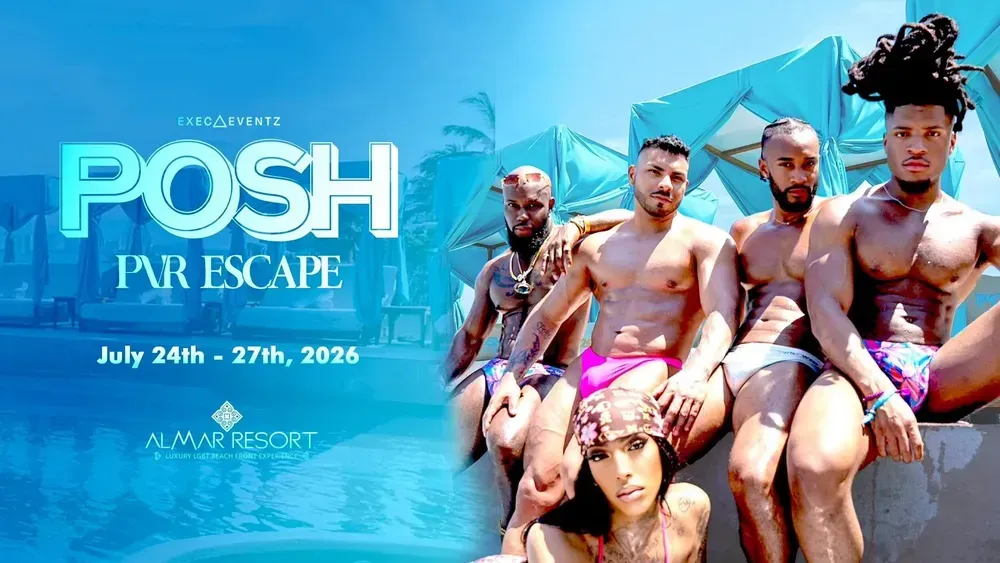
POSH PVR Escape, a luxury LGBTQIA+ destination weekend produced by Exec Eventz, is set to return to Puerto Vallarta in 2026 with an expanded four-day itinerary and added signature events.
POSH PVR Escape, a curated luxury travel weekend created for LGBTQIA+ travelers, is set to return to Puerto Vallarta with an expanded 2026 edition following a sold-out 2025 season. According to organizer Exec Eventz , the next iteration of the event will build on its growing reputation as one of the most sought-after queer destination weekends in Mexico.
The festival-style experience is anchored in Puerto Vallarta, a Pacific coastal city widely promoted as one of Mexico’s most LGBTQ+ inclusive destinations, particularly around its Zona Romántica neighborhood and oceanfront nightlife. The city regularly hosts queer-focused events and beach club parties, and POSH PVR Escape is positioned as a high-end addition to that landscape, blending nightlife, wellness, and community-building across multiple days.
For the upcoming cycle, Exec Eventz has confirmed that POSH PVR Escape will extend its format to four days, adding one extra day and an additional signature event compared with its earlier iteration. The organizing team has framed this expansion as an opportunity for more connection, programming, and shared experiences among attendees.
The event schedule published by Exec Eventz outlines a structured lineup from Friday through Monday. A welcome party is scheduled for Friday, July 24, at Eden Rooftop from 17:00–19:00, designed as an opening social gathering for guests arriving in Puerto Vallarta.
Later that night, the marquee POSH party is set for 22:00–03:00 at a yet-to-be-announced venue within the local nightlife circuit. On Saturday, July 25, the program moves to Mantamar Beach Club, a well-known LGBTQ+ beach venue in Puerto Vallarta, for a POSH Pool Party powered by CarterWear from 12:00–18:00. A second late-night POSH event follows that evening from 22:00–02:00 at another to-be-announced location.
Sunday’s schedule features the return of the POSH Brunch at SkyBar Rooftop, located at Amapas 380 in Zona Romántica, from 13:00–16:00, emphasizing daytime socializing and networking. That night, organizers have planned a POSH White Party from 19:00–00:00, continuing the themed nightlife programming that has become a staple of many international LGBTQ+ festivals. The weekend culminates on Monday, July 27, with a POSH Yacht Day from 12:00–18:00 on the Pacific Ocean, billed as a more intimate and scenic closing experience.
Exec Eventz has launched an early-bird promotion on all-access passes, offering a 15% discount through January 2 for the July 24–27 weekend. The company’s ticketing page confirms that these passes provide entry to the full weekend lineup, with a note that select add-on experiences may be purchased separately. Organizers have stated that this early-bird price is the lowest that will be available for the 2026 Escape, positioning it as an incentive for early booking.
The official host hotel for the event is Almar Resort, a property located in Puerto Vallarta’s beachfront LGBTQ+ district. The partnership includes a special discounted rate for guests who book using an exclusive POSH code, creating what organizers describe as a centralized “home base” for attendees over the course of the weekend. Exec Eventz’s customer information notes Almar Resort as the primary location reference for the event, reinforcing its role as the central lodging and meeting point.
Gaye Magazine has been announced as the official media partner for the upcoming edition, continuing a collaboration that highlights the event’s focus on LGBTQIA+ storytelling and visibility. The coverage emphasizes that POSH PVR Escape is designed as a space where gay, lesbian, bisexual, transgender, queer, intersex, asexual, and other queer-identifying travelers can experience nightlife, wellness, and culture in a setting that centers their identities.
In promotional language, Exec Eventz describes POSH PVR Escape as an LGBTQ+ travel experience that blends luxury venues, curated music, daytime wellness moments, and networking-style events. The program includes oceanfront wellness mornings, spa access, rooftop workouts, and social spaces alongside its nightlife parties, reflecting a broader trend of queer-focused travel experiences that prioritize both celebration and rest.
Organizers also highlight opportunities for attendees to connect with a global community of travelers, creatives, and innovators, particularly through events such as the POSH Brunch and other curated daytime gatherings. This emphasis on community and connection, alongside parties and performances, positions POSH PVR Escape as part of an evolving ecosystem of LGBTQ+ destination events that combine social, cultural, and leisure elements in affirming environments.
Nestled near Chapel Hill, Carrboro, North Carolina—a town of just over 21,000 residents—is emerging as a beacon of LGBTQ+ inclusivity in the South, highlighted by its election of a gay mayor in 2021 and the ongoing work of the LGBTQ Pop-Up Center.
Carrboro, North Carolina, with a population of 21,295, sits just a stone's throw from the larger university town of Chapel Hill, yet it carves out its own identity as a hub of progressive values and LGBTQ+ affirmation. Often overshadowed by its neighbor, Carrboro distinguishes itself through a collective forward-thinking mentality that prioritizes inclusivity for lesbian, gay, bisexual, transgender, queer, and other diverse identities. This small town's journey toward greater LGBTQ+ friendliness gained momentum in 2021 with the election of its first openly gay mayor, a milestone that signaled a cultural shift toward broader acceptance.
The election of Mayor Damon Seils, who identifies as gay, marked a pivotal moment for Carrboro, reflecting voter support for leaders who champion diversity. Seils' leadership has coincided with expanded community efforts to support transgender people, non-binary individuals, and others in the LGBTQ+ spectrum, fostering an environment where queer residents and visitors feel seen and valued. This political change is not isolated; it aligns with grassroots initiatives that have deepened the town's commitment to equity.
At the heart of Carrboro's LGBTQ+ scene is the LGBTQ Pop-Up Center of Carrboro, a dedicated queer organization that amplifies community voices through programming and outreach. The center organizes events tailored to diverse needs, creating spaces for connection among gay men, lesbians, bisexual individuals, transgender people, and queer youth. One standout annual event is the Carrboro Pride Piper Walk, which draws locals and visitors to march in celebration of pride and solidarity. This walk embodies the town's ethos: visible, joyful affirmation without the scale of larger city prides, allowing for intimate encounters with local culture.
Carrboro's annual Carrboro Pride Piper Walk is more than a parade; it's a community-led affirmation of LGBTQ+ rights and visibility, held in a setting that blends Southern charm with modern progressivism. Participants from across the spectrum— including allies, families, and queer elders—gather to highlight issues like access to healthcare for transgender people and support for queer youth. The event, organized by the LGBTQ Pop-Up Center , features speeches, performances, and resource fairs, making it accessible for newcomers to the area.
Beyond Pride Week, the town hosts ongoing pop-up events through the center, such as workshops on queer history and safe spaces for dating and socializing. These gatherings have contributed to a cultural change, where rainbow flags adorn local businesses year-round, signaling welcome to bisexual couples, non-binary travelers, and everyone in between. Local leaders, including Mayor Seils, have publicly reaffirmed commitments to protecting LGBTQ+ rights, echoing resolutions seen in other welcoming towns.
Carrboro's inclusivity extends to its business community, where queer-owned establishments thrive alongside allies. Weaver Street Market, a beloved co-op, embodies the town's communal spirit and has long supported LGBTQ+ causes through donations and event hosting. Nearby, cafes and boutiques in downtown Carrboro display pride merchandise and host queer artist showcases, creating a vibrant ecosystem for cultural expression. This business landscape reflects a broader evolution: from a quiet suburb to a destination where economic vitality intersects with social progress.
The town's proximity to the University of North Carolina at Chapel Hill infuses it with youthful energy, attracting queer students and faculty who extend campus inclusivity into Carrboro's streets. Community centers like the LGBTQ Pop-Up Center collaborate with university groups, offering resources such as mental health support tailored for transgender and queer individuals. These partnerships have led to sustained programming, including film screenings on queer Southern history and panels featuring local activists.
For queer travelers, Carrboro offers a low-key alternative to flashier destinations, with safe spaces to unwind and connect. Gay-owned bed-and-breakfasts dot the area, providing intimate stays with hosts who share insider tips on the best drag shows or hiking trails. The town's parks, like Anderson Park, host casual picnics where LGBTQ+ families gather, fostering a sense of belonging.
Lesbian travelers appreciate spots like Open Eye Cafe, a queer-friendly venue with live music that often features LGBTQ+ performers. Transgender visitors find affirmation through the Pop-Up Center's gender-affirming care referrals and support groups. One local queer resident noted in community coverage that "Carrboro feels like home because it's actively building spaces for us."
Now is the perfect time to visit as Carrboro's momentum builds. With the 2025 reaffirmation of inclusivity policies similar to those in peer towns like Bellingham—where governments passed resolutions protecting LGBTQ+ rights—Carrboro is solidifying its status. The Carrboro Pride Walk continues to grow, drawing regional attention and promising expanded events. Queer couples can explore nearby trails, dine at inclusive farm-to-table spots, and return to a town that's evolving in real time.
Start your trip at the LGBTQ Pop-Up Center for event calendars and maps of affirming businesses. Stay at queer-friendly lodging like the Carolina Inn, which partners with local pride initiatives. Dine at Lantern Restaurant, known for its welcoming vibe and Southern fusion cuisine. For nightlife, check The Crunkleton for themed queer nights.
Carrboro's blend of events, leadership, and community makes it a rising star. As one source describes, it's a place where "LGBTQ+ inclusivity" is lived daily, not just celebrated seasonally. Plan your visit to witness—and join—this quiet revolution.
In the apple-scented hills of Nova Scotia’s Annapolis Valley, an unlikely queer haven is taking root amid farm stands, cider barns, and foggy Bay of Fundy cliffs.
The first thing you notice in the Annapolis Valley isn’t the rainbow flags. It’s the smell. In late summer and early fall, the air between Wolfville and Berwick is thick with crushed apples, damp earth, and woodsmoke drifting from farmhouses that look like they were designed by someone whose only reference was “storybook.”
Then you start spotting the rainbows.
They’re taped in the windows of independent bookstores, stenciled on chalkboards outside coffee shops, sewn into bunting along farm-market stalls, and hanging—without fanfare—from front porches on quiet residential streets. A decade ago, this swath of rural Nova Scotia was best known for apples, universities, and the fog rolling in off the Minas Basin. Now, without much national fanfare, it has become a quietly confident, unexpectedly queer-friendly corner of North America, offering LGBTQ+ travelers a different kind of escape: not a party mecca, but a place to exhale.
The Annapolis Valley stretches along the Bay of Fundy in western Nova Scotia, a largely rural region dotted with small towns like Wolfville, Kentville, and Berwick, plus vineyards and orchards that roll toward the water. In recent years, Nova Scotia as a province has been repeatedly cited as one of Canada’s more LGBTQ-inclusive jurisdictions, with protections for sexual orientation, gender identity, and gender expression baked into provincial human rights law.
Wolfville, a university town anchored by Acadia University, has long skewed progressive, but its visible celebration of queer identity has intensified alongside a growing emphasis on diversity and inclusion in campus life and town policy. Acadia University has an Equity, Diversity and Inclusion office and supports queer student groups that regularly collaborate on Pride events in town. Town council meeting minutes from the last several years show routine proclamations of Pride Week, plus approvals for rainbow crosswalks and seasonal flag-raisings.
For queer visitors, the result is subtle but tangible. You can walk down Main Street holding your partner’s hand and, for the most part, draw no more attention than the couple arguing about what size bag of apples to buy.
The region’s most visible queer moment each year is Annapolis Valley Pride, centered largely in and around Wolfville and Kentville. Annapolis Valley Pride Society organizes parades, community picnics, youth events, and all-ages drag shows, leaning into the region’s family-oriented vibe while still centering LGBTQ+ joy. Events have included flag-raising ceremonies at town halls, sober social gatherings, storytelling nights, and performances in local venues that double—as only small-town infrastructure can—as both community theatre stages and high-school auditoriums.
For travelers used to big-city Pride circuits, this can feel less like a spectacle and more like being folded into an extended family reunion where everyone happens to know a very enthusiastic drag queen. A recent program included a “Pride at the Market” day where local farmers and artisans set up stalls decorated in rainbow bunting, selling everything from queer-owned small-batch cider to hand-dyed yarn and pronoun pins.
There is humor in the scale: a drag performer lip-syncing next to a stall selling 20-pound bags of potatoes; toddlers in rainbow suspenders zig-zagging between displays of heirloom tomatoes; an elder queer couple explaining to a curious farmer that yes, in fact, you can be nonbinary and still love a good plaid shirt.
What the Annapolis Valley does not have is a dense grid of gay bars, saunas, or circuit parties. This is not a destination for all-night clubbing. Instead, queer life is woven into the existing social fabric: indie cafés, farmers’ markets, campus hangouts, live-music venues, and quiet trails.
Wolfville’s cafés and bookshops—many independently run—regularly host queer-friendly events, from zine launches by LGBTQ+ writers to board game nights and open mics that explicitly encourage participation from transgender people, nonbinary folks, and other underrepresented voices. Posters on bulletin boards advertise everything from a local queer hiking group to a gender-diverse clothing swap.
Kentville, a short drive away, has invested in a network of trails and riverside parks that double as de facto gathering spaces, especially during Pride season and summer festivals. It is not unusual to see small groups of queer friends and couples picnicking along the Cornwallis River, a rainbow blanket spread out amid families and dog walkers.
For LGBTQ+ travelers—especially those who do not see themselves reflected in glossy ads for big-city “gayborhoods”—the Valley’s model can feel refreshing. Instead of asking queer people to come to a gay enclave, it invites them into a community that is quietly learning how to make every shared space a little safer.
Accommodations in the Annapolis Valley run the gamut from chain hotels along Highway 101 to historic inns and farm stays tucked into the hills. Nova Scotia’s official tourism site highlights several LGBTQ-friendly accommodations across the province and explicitly markets the region as “welcoming and inclusive” to LGBTQ visitors, noting the presence of Pride events in multiple rural communities.
Many small inns and bed-and-breakfasts in and around Wolfville and Grand Pré are run by owners who prominently display Pride and Trans Pride flags on their websites and properties and note inclusivity in their booking policies. Listings on provincial and third-party booking platforms increasingly highlight explicit statements welcoming same-sex couples, transgender travelers, and nonbinary guests, with several properties using gender-neutral language and offering flexible check-in arrangements for privacy and safety.
At night, away from the modest glow of town centers, the sky opens up. Stargazing becomes an unofficial Valley pastime, whether from a vineyard deck chair or a farmhouse porch. It is difficult to overstate what it feels like to be a queer or trans person sitting under that kind of sky in a place that takes your safety seriously. Rural darkness paired with visible inclusion—signs, flags, pronouns on staff name tags—can be quietly radical.
The Annapolis Valley has developed a reputation as one of Atlantic Canada’s emerging wine regions, with vineyards producing crisp whites and sparkling wines that have won national recognition. Wineries around Wolfville and Grand Pré offer tastings, tours, and seasonal events, many of which attract a diverse crowd that includes LGBTQ+ locals and visitors. Queer couples and friend groups are increasingly visible on patios overlooking tidy rows of vines and the tidal flats beyond.
Several craft cideries and breweries have collaborated with local Pride organizers on limited-run labels supporting LGBTQ+ causes, donating a portion of proceeds during Pride weeks in the Valley and elsewhere in Nova Scotia. Seasonal events like “queer trivia nights” or low-key drag performances in tasting rooms, advertised via Instagram and community posters, help normalize the idea that rural craft culture and queer community are not mutually exclusive.
For travelers, this means you can spend a day cycling between vineyards and cideries, sampling tart, effervescent ciders and regional specialties, without feeling the subtle tension of wondering whether it is safe to lean across the table and kiss your date.
Outdoor experiences are central to the Valley’s appeal: hiking in Cape Split Provincial Park, walking the UNESCO-listed dykelands of Grand Pré, or watching the Bay of Fundy’s high tides churn red-brown water along the shore. Trails range from accessible, stroller-friendly paths along dykes to more strenuous cliffside routes where the wind can feel like a personality test.
Local organizations and informal groups have begun organizing explicitly queer and trans-inclusive hikes and nature outings, often advertised through Pride networks and local social media. For LGBTQ+ travelers who may have complicated relationships with their bodies—because of dysphoria, disability, fatphobia, or racism—the presence of such groups signals that the outdoors here is not reserved for a narrow idea of who belongs in hiking boots. Queer and transgender people can show up in whatever combination of flannel, binders, nail polish, mobility aids, or glitter feels right that day.
The sensory experience is grounding: spruce and salt on the air, the squelch of tidal mud underfoot, the startling orange of lichen on basalt. There is humor too, in the shared grunt of strangers-turned-trailmates when a “moderate” hike reveals itself to be wishful thinking on the part of whoever wrote the sign.
Nova Scotia’s long history includes Indigenous Mi’kmaq stewardship of the land, Acadian settlement and displacement, and Black Loyalist communities, and today’s Annapolis Valley reflects that layered past in ways that continue to evolve. Queer and trans people who are also Indigenous, Black, or people of color may find both points of connection and the familiar gaps that appear in many rural communities where white residents are the majority.
Local Pride organizers have publicly emphasized intersectionality in their programming and mission statements, naming commitments to racial justice, Indigenous reconciliation, and accessibility in addition to LGBTQ+ rights. Events have included collaborations with Indigenous artists and Two-Spirit community members, as well as workshops on anti-racism and safer spaces.
On paper, Canada performs strongly on measures of LGBTQ+ legal protections, with marriage equality, anti-discrimination laws, and hate crime provisions at the federal level. Indexes like the annual Gay Travel Index from Spartacus and analyses by organizations such as ILGA World consistently place Canada among the world’s safer destinations for LGBTQ+ travelers.
Getting to the Annapolis Valley generally involves flying into Halifax Stanfield International Airport and driving about an hour west on Highway 101. Car rentals are widely available at the airport, and a patchwork of buses and shuttles connects Halifax with Wolfville and other Valley towns for those who prefer not to drive.
Once based in Wolfville, Kentville, or Berwick, most attractions—wineries, markets, trailheads—sit within short drives or bike rides. Provincial tourism offices provide free maps and guides that now routinely include Pride events and, in some cases, LGBTQ-specific travel tips.
But places like Nova Scotia’s Annapolis Valley suggest another possibility: that a rural landscape of apple orchards, tidal mudflats, and quiet campuses can also hold our bodies and stories. That a Pride flag tacked to the side of a farmstand can mean as much as a 30-foot banner in a downtown core. That queer and transgender people can be not just visitors or novelties, but neighbors, staff, elected officials, and the person who recommends which variety of apple will hold up best in your pie.
For travelers who want to feel seen and safe without disappearing into a crowd, the Valley offers something rare: room to breathe; space to hear your own footsteps on a dyke trail; and the gentle, persistent reminder—in rainbow stickers on cash registers and pronouns on nametags—that you belong here, exactly as you are.
Reno, long known as a budget casino town on the way to Lake Tahoe, is quietly becoming one of the most welcoming emerging hubs for LGBTQ+ travelers in the American West.
Step off the plane in Reno and the first thing you notice is the light: high‑desert sun pouring over snow‑dusted peaks, glinting off the Truckee River, catching on murals that wrap old brick warehouses in neon‑bright color. A decade ago, many travelers treated this northern Nevada city as a place to pass through on the way to Lake Tahoe or Burning Man. Today, Reno is increasingly a destination in its own right – and a quietly powerful choice for LGBTQ+ travelers looking for something smaller, more affordable, and more community‑driven than big‑name queer cities on the coasts.
Reno does not market itself as a gay resort town in the mold of Palm Springs or Provincetown, but local advocacy and cultural shifts have made it one of the more tangible examples of LGBTQ+ inclusion in the Intermountain West. In 2023 the city earned a perfect 100 score on the Human Rights Campaign Municipal Equality Index, which evaluates local laws, policies, and services affecting LGBTQ+ residents and visitors. That score – repeated in multiple recent years – places Reno in the same tier as far more famous queer destinations, signaling that the legal and policy climate is notably welcoming.
For queer travelers, policy can matter as much as nightlife. Reno’s 100‑point ranking on the Human Rights Campaign Municipal Equality Index reflects citywide nondiscrimination protections, inclusive municipal employment benefits, and active engagement with LGBTQ+ community organizations. Nevada state law also bans discrimination based on sexual orientation and gender identity in employment, housing, and public accommodations, and includes gender identity in its hate‑crime statute. These measures create a baseline of legal safety that many queer travelers specifically look for when choosing a destination.
In practical terms, this framework shows up in everyday civic life. The City of Reno has an official Human Rights Commission that includes focus on LGBTQ+ equity, and city leadership has publicly marked Pride Month with proclamations and the raising of Pride flags at government buildings in recent years. For transgender people and nonbinary visitors, the presence of explicitly inclusive language in city and state policies can help reduce the anxiety that often comes with navigating new public spaces.
If you look beyond casino marquees, a network of LGBTQ+ organizations gives Reno’s queer community structure and visibility. The long‑running nonprofit Our Center operates as northern Nevada’s LGBTQ+ community hub, providing support groups, youth programming, social events, and resources for transgender people and queer elders. Its calendar, which ranges from gender‑affirming peer circles to low‑key social nights, offers easy entry points for visitors who want to connect with locals rather than just pass through town.
On the university side, the University of Nevada, Reno hosts a Pride‑focused LGBTQ+ and ally student organization, along with an official Gender, Race, and Identity academic program that regularly sponsors public lectures and cultural events touching on queer issues. This campus presence filters into the city’s social life, particularly in the Midtown and downtown corridors, where students mingle with long‑time residents, artists, and hospitality workers.
Healthcare access, a concern for many LGBTQ+ travelers, is also part of the picture. Renown Health, the region’s major not‑for‑profit healthcare system, publicly states that it offers LGBTQ+ inclusive care and has participated in Pride events, while Northern Nevada HOPES – a community health center based in Reno – provides gender‑affirming care, HIV services, and PrEP access in an affirming environment.
For a city its size, Reno’s Pride weekend is striking. The Northern Nevada Pride parade and festival, centered in Midtown Reno along the Truckee River and organized by Our Center, draws tens of thousands of attendees annually and has grown steadily in scope, adding multiple performance stages, family spaces, and an expanded list of local and regional sponsors. The event explicitly positions itself as a cross‑border celebration, reflecting Reno’s role as the main urban center for a vast rural region of Nevada and neighboring California.
Reno’s queer calendar does not end in July. Our Center and Northern Nevada Pride collaborate on events throughout the year, including Transgender Day of Visibility observances, youth‑oriented gatherings, and community resource fairs. The city has also hosted drag brunches, LGBTQ+ film screenings connected to local independent theaters, and queer‑inclusive arts programming during the larger citywide Artown festival each July, which presents hundreds of music, theater, and visual arts events across Reno.
The Midtown district is where many visitors first sense how much Reno has changed. Over roughly the past decade, this formerly overlooked stretch south of downtown has become a walkable corridor of independent coffee shops, bars, vintage stores, tattoo studios, and restaurants, anchored by large‑scale murals commissioned through city and arts‑organization partnerships.
Local tourism and business organizations often highlight Midtown as the heart of Reno’s creative resurgence, and it is also where you will find a concentration of queer‑friendly spaces. LGBTQ+ travelers report gravitating to venues that openly advertise drag shows, Pride‑month specials, or support for local LGBTQ+ charities, particularly along Virginia Street and surrounding side streets.
Queer nightlife here tends to blur the line between “gay bar” and mainstream venue. Bars and lounges host themed nights featuring drag performers from Reno and nearby Sacramento, while live‑music spots book queer‑fronted bands and singer‑songwriters. During Northern Nevada Pride weekend, the neighborhood becomes an unofficial festival after‑party strip, with rainbow flags and trans flags hanging from balconies and chalk art spilling onto sidewalks.
Reno’s downtown has long been defined by casinos, but recent years have seen a shift toward a more mixed‑use, river‑oriented urban core. The Truckee River Walk – a paved path along the water lined with public art, small parks, and patio dining – has become a central gathering place for locals and visitors. Water levels permitting, you can watch kayakers navigate the whitewater features of the Truckee River Whitewater Park from a café table or amphitheater seat, a scene that feels far from the windowless gaming floors Reno was once known for.
While casinos still dominate some blocks, several major properties have repositioned themselves to emphasize food, live entertainment, and event hosting, including concerts and conventions that draw a visibly queer crowd. Regional LGBTQ+ sports associations and community groups have used downtown hotels as home‑base properties during Pride and other gatherings, contributing to a sense of comfort for queer travelers moving between the riverfront, arts spaces, and evening events.
For those who prefer quieter nights, boutique hotels and short‑term rentals in the Riverwalk and Midtown areas offer walkable access to dining and arts venues without requiring guests to pass through gaming floors, an option some LGBTQ+ travelers specifically seek out for comfort and accessibility reasons.
Reno’s arts ecosystem has grown alongside its queer community. The city brands itself officially as “Artown” during its July arts festival, which features over 500 events across genres, many of them free and family‑friendly. Drag performers, queer musicians, and LGBTQ+ visual artists have been part of Artown programming, often in collaboration with Our Center and other community groups to ensure inclusive representation.
Reno is also a key staging city for the Burning Man festival in Nevada’s Black Rock Desert, and the influx of artists, makers, and radically self‑expressive participants has shaped the local creative scene. Queer travelers who connect with Burning Man’s culture of radical inclusion and gender‑variant expression will find echoes of that ethos in Reno’s warehouse galleries, maker spaces, and interactive sculptures installed around downtown and the riverfront.
Formal institutions anchor this creative energy. The Nevada Museum of Art, the state’s only accredited art museum, regularly mounts exhibitions engaging with issues of identity, landscape, and social change, including shows by artists who explore queer and gender‑nonconforming themes. The museum also partners with local organizations and schools, helping to normalize LGBTQ+ inclusion within Reno’s broader cultural life.
Part of Reno’s appeal is how quickly you can move from urban streets to open landscapes. The city sits at the base of the Sierra Nevada, a short drive from alpine lakes, high‑desert trails, and ski resorts around Lake Tahoe. For LGBTQ+ travelers who prioritize outdoor experiences, this means the ability to pair queer nightlife and cultural events with hiking, snowboarding, or kayaking in a single trip.
Lake Tahoe, about 45 minutes from Reno depending on route and conditions, is an established regional draw with beaches, ski areas, and year‑round recreation. LGBTQ+ visitors frequently base themselves in Reno for more affordable lodging and queer community access, then make day trips to Tahoe for alpine scenery and outdoor sports. Local LGBTQ+ groups have organized queer‑inclusive hikes, snow days, and paddling meetups, often publicized through their websites and social media.
Within the city limits, the Truckee River corridor functions as an everyday nature escape. Shade trees, small beaches, and pedestrian bridges make it easy to find quieter corners for reflection or a picnic, while dog‑friendly paths attract a steady flow of locals and their pets. For transgender travelers and others who sometimes feel scrutinized in more confined spaces, the combination of open sightlines and mixed crowds can contribute to a greater sense of ease.
Unlike more famous LGBTQ+ destinations, Reno rarely appears at the top of national queer travel lists, which tend to spotlight coastal cities, historic resort towns, or long‑known “gayborhoods.” Yet affordability rankings and “most overlooked” city features aimed at general travelers have increasingly called attention to Reno’s revitalization, its growing arts profile, and its positioning as a smaller, more accessible alternative to larger metros.
For LGBTQ+ travelers, that under‑the‑radar status can be part of the draw. Instead of a destination dominated by tourism, visitors encounter a city where queer life is woven into everyday institutions: a community center on a neighborhood street rather than a resort complex, drag artists sharing festival stages with bluegrass bands, Pride floats sponsored by local clinics and libraries.
Reno’s combination of robust legal protections, an active community center, a growing arts scene, and direct access to Sierra Nevada landscapes positions it as a compelling “hidden gem” for LGBTQ+ travelers who want to feel both welcomed and genuinely plugged into local culture. For queer people used to choosing between high‑priced resort enclaves and large, sometimes overwhelming cities, the Biggest Little City offers a third option: a place where the Pride flags on downtown bridges and the pronoun pins at coffee counters are not a curated brand, but simply part of how the city is learning to see itself.
Axel Hotel Valencia, an adults-only queer-focused property in the historic center of Valencia, Spain, is now welcoming guests in a restored 17th-century building near the city’s main cultural landmarks.
Axel Hotels has expanded its queer-centered hospitality portfolio with the opening of Axel Hotel Valencia, an adults-only property located in the heart of Valencia’s Ciutat Vella . The new hotel sits just a short walk from Valencia Cathedral and the Central Market, placing guests within easy reach of the city’s main historic and cultural attractions.
The property is housed in a 17th-century building that has played multiple roles in Valencia’s recent cultural history, including serving as a dance club in the 1970s and later being occupied as a squatted space in the 1990s, before its latest transformation into a queer hotel. According to the International LGBTQ+ Travel Association , Axel Hotel Valencia now embraces that layered past while functioning as a contemporary meeting point for LGBTQIA+ travelers and allies.
Operated by Barcelona-based Axel Hotels, which describes itself as an LGBTQIA+–focused chain “aimed at the LGTBIQ+ public but open to everyone,” the Valencia property follows the brand’s model of creating explicitly queer spaces that are inclusive of all guests. The company’s marketing and communications leadership has emphasized in interviews that Axel properties are designed as “paradise free from labels and stigmas of any kind,” with a strong focus on safety and comfort for LGBTQIA+ travelers.
Axel Hotel Valencia is part of a broader growth strategy that has seen the group expand to more than ten properties across Europe and Latin America, including hotels in Barcelona, Madrid, Berlin, Ibiza, Maspalomas, Bilbao, Mykonos, Porto, and Havana. In coverage of Axel Hotels’ five-year plan, travel outlet Pink Ticket Travel reported that the Valencia opening is a key step in the company’s effort to anchor queer hospitality in cities where LGBTQIA+ life is visible and growing, noting that Valencia and Porto have both seen rising interest as gay-friendly destinations.
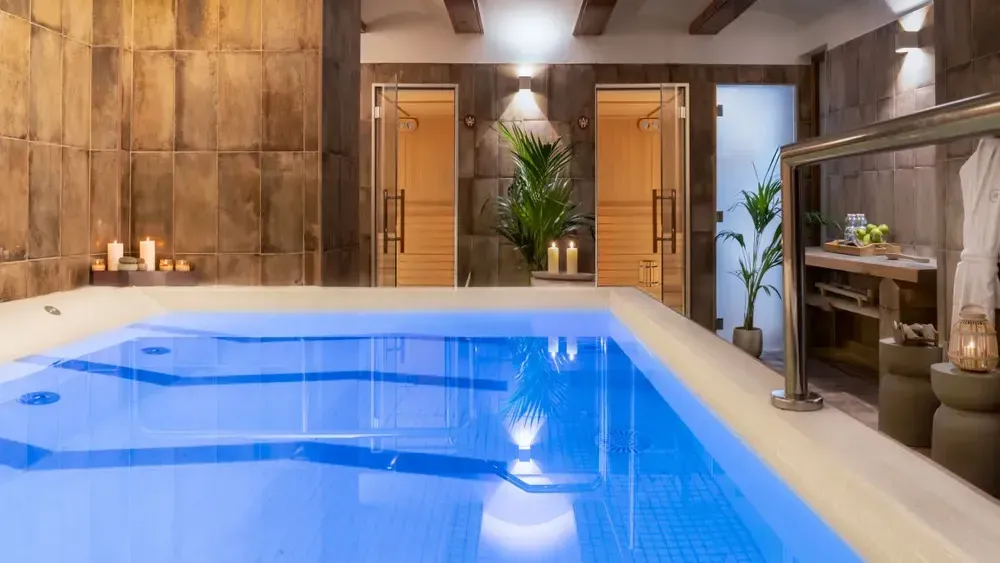
The hotel offers a range of amenities tailored to both leisure and city-break travelers. Axel Hotel Valencia features a seasonal outdoor pool, a rooftop Skybar—an Axel brand signature—spa and wellness facilities including a sauna and Turkish bath/hammam, a fitness center, and on-site bar and restaurant services. Listings on platforms such as Hotels.com and Booking.com describe the property as adults-only, with air-conditioned rooms, free Wi‑Fi, and multiple room categories including single, double, and suites.
Travelers’ reviews on TripAdvisor highlight the central location and modern interior design, describing the hotel as clean, comfortable, and well-placed for exploring Valencia’s nightlife and cultural offerings. Several guests also point to the welcoming atmosphere for LGBTQIA+ visitors as a significant part of the appeal.
From an LGBTQIA+ perspective, the opening of Axel Hotel Valencia adds another clearly identified queer space to Spain’s already extensive network of inclusive venues. Spain has for years been recognized by international organizations and travel bodies as one of Europe’s more advanced countries on LGBTQ+ legal protections, including marriage equality and anti-discrimination laws, which contribute to its popularity among queer travelers. The presence of an IGLTA-listed queer hotel in central Valencia signals both commercial confidence in the city’s LGBTQIA+ tourism market and a continued normalization of visible queer spaces within mainstream urban tourism.
Axel Hotels’ expansion into cities such as Valencia also reflects an evolution in how queer hospitality is framed. Early branding for the company leaned heavily toward gay male imagery, but recent coverage and the brand’s own communications describe a shift toward more inclusive language and representation that aims to welcome lesbian, bisexual, transgender, non-binary, intersex, and queer people, along with supportive heterosexual guests. This aligns with broader trends in LGBTQIA+ travel, where travelers increasingly look for accommodations that explicitly acknowledge diverse identities and commit to respectful, inclusive service.
By combining a historically significant building, a central urban location, and a clearly articulated queer-focused concept, Axel Hotel Valencia positions itself as both a base for exploring the city and a community-oriented space for LGBTQIA+ people and allies. As the chain continues to grow across multiple countries, properties like the one in Valencia demonstrate how dedicated queer hotels are becoming an established, visible part of the global hospitality landscape.
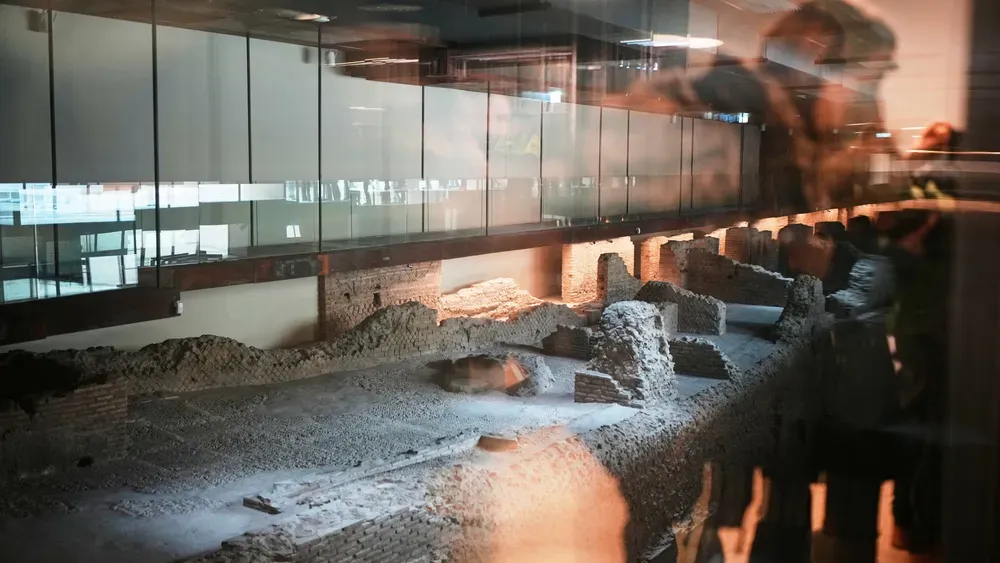
A view of the remains of Roman barracks built around the 2nd century AD under the emperor Trajan, visible in the Porta Metronia new subway station designed as a museum to showcase the archaeological finds uncovered during its construction, in Rome, Tuesday, Dec. 16, 2025. Photo Credit: AP Photo/Alessandra Tarantino
Rome opened two subway stations on Tuesday — one deep beneath the Colosseum — that mix the modernity of high-tech transport with artifacts from an ancient era.
Rome opened two subway stations on Tuesday — one deep beneath the Colosseum — that mix the modernity of high-tech transport with artifacts from an ancient era.
Commuters and tourists entering the station beside the iconic amphitheater can view displays of ceramic vases and plates, stone wells and suspended buckets, as well as the ruins of a cold plunge pool and thermal bath from a first-century dwelling. Screens show the excavation process — serving both to delight archaeology enthusiasts, and justify why it has taken so long to open the station.
The multibillion-euro Metro C subway line has been in the works for two decades but has been slowed by bureaucratic and funding delays and, crucially, the archaeological excavations necessary, given the underground ruins of imperial Roman and medieval civilizations in its way.
“The challenge was ... building it under such a large amount of groundwater and at the same time preserving all the archaeological finds that we found during the excavation, and all this while preserving everything that is above,” said Marco Cervone, construction manager for the consortium building the subway line, led by Webuild.
The total cost of the line’s 31 stations — three-quarters of which are now operational — will reach around 7 billion euros ($8.3 billion) and be completed by 2035, according to the press office of the city-owned company that has contracted the works.
Rome was inaugurating another station on Tuesday, Porta Metronia, located one stop away from the one beside the Colosseum and likewise at a depth of 30 meters (around 100 feet).
It features a nearly 80-meter (260-foot) military barracks dating to the start of the second century, found at a depth between 7 and 12 meters (22 and 39 feet), according to Simona Moretta, the scientific director of the excavation.
“Surety that it was a military building is given by the fact that the entrances to the rooms are not facing each other, but are offset, so that the soldiers could leave the rooms and get in line without colliding in the corridor,” the archaeologist told reporters.
Soldiers would either have been part of the emperor's guard or stationed there for city security, she added.
There's also a home with well-preserved frescoes and mosaics. A museum within the station will be opened in the future, Moretta said.
Digging near the center of Rome means coming in the contact with three millennia of civilizations built atop one another. So far, the consortium building Line C has found more than 500,000 artifacts, according to WeBuild.
In order to work in the delicate archaeological area, the company has employed techniques including freezing the ground to stabilize soil, as well as so-called sacrificial diaphragms — concrete walls built perpendicular to perimeter walls that are demolished as excavation advances.
As the subway line continues onward past the Colosseum, it will run underneath more of the world’s most important cultural heritage sites — Trajan’s Column and the Basilica of Maxentius, the largest building in the Roman Forum — as well as some of Rome’s prized Renaissance palaces, churches and the Vatican.
The next stop along the line is Piazza Venezia, the veritable heart of Rome's center. Subway cars will arrive at a depth of 48 meters (157 feet) when it opens in 2033, Cervone said.
Once completed, Line C will run a total of 29 kilometers (18 miles), of which 20 kilometers (12 miles) will be underground, and carry up to 800,000 passengers daily.
Tourists planning to visit the Colosseum and other sites in Rome’s historic center will be able to bypass the eternal city’s notoriously snarled surface traffic — made even worse in recent years by the construction projects themselves.
by David Biller
Copyright Associated Press. All rights reserved. This material may not be published, broadcast, rewritten, or redistributed.
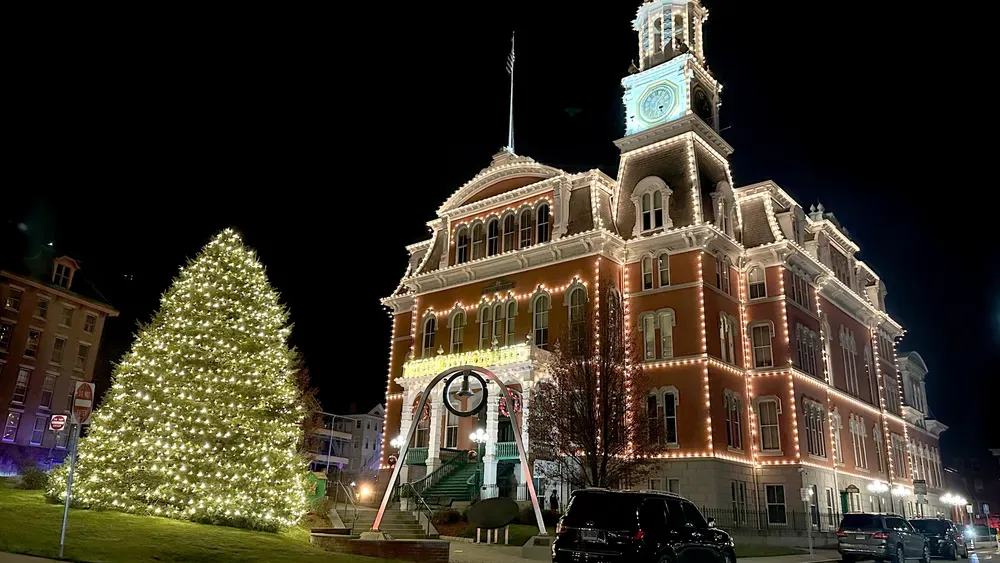
Norwich City Hall is decorated for the annual "Light Up City Hall" event in Norwich, Conn., Friday, Dec. 5, 2025. Scenes from Hallmark movie Sugar Plum Twist were filmed at City Hall. Photo Credit: AP Photo/Susan Haigh
Connecticut is working to become a destination for holiday movie fans, promoting its charming towns featured in films by Hallmark and Lifetime
“Christmas at Pemberly Manor” and “Romance at Reindeer Lodge” may never make it to Oscar night, but legions of fans still love these sweet-yet-predictable holiday movies — and this season, many are making pilgrimages to where their favorite scenes were filmed.
That's because Connecticut — the location for at least 22 holiday films by Hallmark, Lifetime and others — is promoting tours of the quaint Christmas-card cities and towns featured in this booming movie market; places where a busy corporate lawyer can return home for the holidays and cross paths with a plaid shirt-clad former high school flame who now runs a Christmas tree farm. (Spoiler alert: they live happily ever after.)
“It’s exciting — just to know that something was in a movie and we actually get to see it visually,” said Abby Rumfelt of Morganton, North Carolina, after stepping off a coach bus in Wethersfield, Connecticut, at one of the stops on the holiday movie tour.
Rumfelt was among 53 people, mostly women, on a recent weeklong "Hallmark Movie Christmas Tour," organized by Mayfield Tours from Spartanburg, South Carolina. On the bus, fans watched the matching movies as they rode from stop to stop.
To plan the tour, co-owner Debbie Mayfield used the “ Connecticut Christmas Movie Trail ” map, which was launched by the wintry New England state last year to cash in on the growing Christmas-movie craze.
Mayfield, who co-owns the company with her husband, Ken, said this was their first Christmas tour to holiday movie locations in Connecticut and other Northeastern states. It included hotel accommodations, some meals, tickets and even a stop to see the Rockettes in New York City. It sold out in two weeks.
With snow flurries in the air and Christmas songs piped from a speaker, the group stopped for lunch at Heirloom Market at Comstock Ferre, where parts of the Hallmark films “Christmas on Honeysuckle Lane" and “Rediscovering Christmas" were filmed.
Once home to America’s oldest seed company, the store is located in a historic district known for its stately 1700s and 1800s buildings. It's an ideal setting for a holiday movie. Even the local country store has sold T-shirts featuring Hallmark’s crown logo and the phrase “I Live in a Christmas Movie. Wethersfield, CT 06109."
“People just know about us now,” said Julia Koulouris, who co-owns the market with her husband, Spiros, crediting the movie trail in part. “And you see these things on Instagram and stuff where people are tagging it and posting it.”
The concept of holiday movies dates back to 1940s, when Hollywood produced classics like “It's A Wonderful Life," “Miracle on 34th Street” and “Christmas in Connecticut,” which was actually shot at the Warner Bros. studios in Burbank, California.
In 2006, five years after the launch of the Hallmark Channel on TV, Hallmark “struck gold” with the romance movie “The Christmas card,” said Joanna Wilson, author of the book “Tis the Season TV: The Encyclopedia of Christmas-Themed Episodes, Specials and Made-for-TV Movies.”
“Hallmark saw those high ratings and then started creating that format and that formula with the tropes and it now has become their dominant formula that they create for their Christmas TV romances,” she said.
The holiday movie industry, estimated to generate hundreds of millions of dollars a year, has expanded beyond Hallmark and Lifetime. Today, a mix of cable and broadcast networks, streaming platforms, and direct-to-video producers release roughly 100 new films annually, Wilson said. The genre has also diversified, with characters from a wider range of racial and ethnic backgrounds as well as LGBTQ+ storylines.
The formula, however, remains the same. And fans still have an appetite for a G-rated love story.
“They want to see people coming together. They want to see these romances. It’s a part of the hope of the season,” she said. “Who doesn’t love love? And it always has a predictable, happy ending.”
Hazel Duncan, 83, of Forest City, North Carolina, said she and her husband of 65 years, Owen, like to watch the movies together year-round because they're sweet and family-friendly. They also take her back to their early years as a young couple, when life felt simpler.
“We hold hands sometimes,” she said. “It's kind of sweet. We've got two recliners back in a bedroom that's real small and we've got the TV there. And we close the doors off and it's just our time together in the evening.”
Connecticut's chief marketing officer, Anthony M. Anthony, said the Christmas Movie Trail is part of a multipronged rebranding effort launched in 2023 that promotes the state not just as a tourist destination, but also as a place to work and live.
“So what better way to highlight our communities as a place to call home than them being sets of movies?” he said.
However, there continues to be debate at the state Capitol over whether to eliminate or cap film industry tax credits — which could threaten how many more of these movies will be made locally.
Christina Nieves and her husband of 30 years, Raul, already live in Connecticut and have been tackling the trail “little by little."
It's been a chance, she said, to explore new places in the state, like the Bushnell Park Carousel in Hartford, where a scene from “Ghost of Christmas Always” was filmed.
It also inspired Nieves to convince her husband — not quite the movie fan she is — to join her at a tree-lighting and Christmas parade in their hometown of Windsor Locks.
“I said, listen, let me just milk this Hallmark thing as long as I can, OK?” she said.
by Susan Haigh
Copyright Associated Press. All rights reserved. This material may not be published, broadcast, rewritten, or redistributed.
In northern New South Wales, the riverside city of Lismore is quietly evolving into one of regional Australia’s most compelling queer-friendly bases, shaped by decades of LGBTQIA+ organising, alternative culture and recent community-led recovery.
On a warm evening in Lismore, the main street glows with hand-painted shopfronts, political posters and community noticeboards advertising queer potlucks, drag nights and climate action meetings. The city’s iconic rainbow crossing – once painted by local activists in a show of pride – has become an unofficial landmark, a sign that this small regional centre in northern New South Wales is comfortable making its queer community visible in public space.
While Sydney’s Oxford Street and Melbourne’s Collingwood tend to dominate LGBTQIA+ travel lists, Lismore rarely appears on glossy itineraries. Yet for decades, it has been a hub for queer people seeking a slower, more alternative lifestyle in the Northern Rivers region – and in recent years, that history of activism and mutual support has helped shape a uniquely welcoming environment for LGBTQIA+ residents and visitors.
Lismore sits on Bundjalung Country, about 45 minutes’ drive inland from Byron Bay and roughly three hours’ drive south of Brisbane, positioning it at the heart of one of Australia’s most culturally diverse regional areas. Since the 1970s, the wider Northern Rivers has attracted people interested in counterculture, environmentalism and alternative living; LGBTQIA+ people were among those who settled here, contributing to the area’s reputation for progressive politics and community organising.
That history is visible in the city’s queer infrastructure. Tropical Fruits, a not-for-profit LGBTQIA+ social club based in Lismore, has been running parties, community events and an annual New Year’s Eve festival since the late 1980s. The organisation describes itself as a “safe, social environment for the diverse genders and sexualities of the Northern Rivers,” and it owns a dedicated clubhouse and warehouse space that hosts workshops, working bees and smaller gatherings year-round.
For queer travelers, Tropical Fruits’ New Year’s Eve festival has grown into a major regional pilgrimage: thousands of LGBTQIA+ people from across Australia travel to Lismore for several days of parties, cabaret, camping and community-focused events over the New Year period. The festival’s themes often centre on queer pride, futurism and social justice, and organisers regularly highlight inclusion for transgender people, First Nations LGBTQIA+ communities and people with disability in their program and accessibility planning.
Outside of New Year’s Eve, Tropical Fruits has developed a reputation for maintaining sober-friendly spaces, inclusive dress codes and explicit zero-tolerance policies on racism, transphobia, homophobia and harassment – conditions that can be especially significant for LGBTQIA+ travelers who may feel less comfortable in mainstream nightlife environments.
Unlike coastal tourist hotspots where LGBTQIA+ visibility can feel seasonal, Lismore’s queer presence is part of the city’s everyday fabric. In 2013, local residents painted a rainbow crossing in the town centre as a statement of support for LGBTQIA+ people; although it was later removed on safety grounds, the controversy prompted Lismore City Council to formalise processes for public art and consider ways of celebrating diversity more visibly.
The city has also hosted Rainbow Region Dragon Boat Club, a team founded with a focus on LGBTQIA+ inclusion that competes in regional sporting events and explicitly welcomes transgender women and non-binary people. Local health initiatives such as ACON Northern Rivers maintain a presence in Lismore, offering sexual health services, HIV prevention, counselling and community development programs tailored to LGBTQIA+ communities across the region.
This day-to-day infrastructure means that queer visitors are not just parachuting into an annual festival; they are stepping into a regional city where local cafes, bookshops and markets are accustomed to LGBTQIA+ customers and rainbow families. Several small businesses proudly display rainbow stickers or “Safe Space” signs in their windows, signifying support for LGBTQIA+ inclusion.
Lismore’s compact city centre makes it easy for visitors to explore on foot. Older brick buildings and arcades house art galleries, op shops, tattoo studios and vegetarian cafes that reflect the area’s alternative leanings. Many venues host small-scale live music, zine launches and poetry readings that attract a mixed crowd of students, artists and queer locals.
The Lismore Regional Gallery, one of the longest-running galleries in regional New South Wales, has a history of showing work by LGBTQIA+ artists and curating exhibitions that foreground gender diversity and queer perspectives. Past programs have included collaborations with the Sydney Gay and Lesbian Mardi Gras visual arts platform and screenings of films exploring regional queer life.
Across town, the weekly Lismore Farmers Market showcases local produce, much of it organic and grown on small farms in surrounding valleys – a scene where queer stallholders and customers mingle among buskers, herbalists and coffee carts. For many visitors, this casual, integrated environment – rather than exclusively LGBTQIA+ venues – is part of the appeal.
Lismore’s emerging status as a queer-friendly base cannot be separated from its recent history of crisis and repair. In early 2022, catastrophic flooding devastated the city, with water levels in the central business district reaching record heights and thousands of residents displaced. Among those affected were LGBTQIA+ people and community organisations, including Tropical Fruits, whose clubhouse and storage facilities were damaged.
In response, LGBTQIA+ networks mobilised quickly. Tropical Fruits launched fundraising appeals and working bees to repair its clubhouse, supported by donations and volunteer labour from across Australia’s queer communities. National organisations such as Equality Australia used their platforms to highlight the specific vulnerabilities of LGBTQIA+ people in disaster-affected regional areas, including housing insecurity and access to inclusive services.
Local media documented how queer residents played leading roles in mutual aid efforts, helping to coordinate food deliveries, temporary accommodation and mental health support for those affected by the floods. This response reinforced an existing culture of solidarity and helped ensure that LGBTQIA+ people remained part of the city’s long-term recovery planning, rather than being treated as an afterthought.
For LGBTQIA+ travelers, this story of resilience can be an important part of choosing where to spend time and money: visiting Lismore now often means supporting queer-led reconstruction efforts by staying in local guesthouses, buying from small businesses and attending community events that are helping the city rebuild.
Travelers arriving from Sydney or Brisbane often remark on the immediacy of Lismore’s community life. Queer-friendly spaces are less about big, dedicated nightlife districts and more about overlapping networks: activists who also run cafes, drag performers who work in local health services, or farmers who DJ for Tropical Fruits parties.
Several factors contribute to a sense of welcome:
- A long-established LGBTQIA+ presence, visible through Tropical Fruits, health services and activism, means queer travelers are not treated as novelties or “just tourists.”
- Regional demographics skew towards artists, students and people involved in social movements, many of whom explicitly support gender and sexual diversity.
- Public discussions about inclusion – from the rainbow crossing debates to council diversity policies – have made LGBTQIA+ visibility part of mainstream civic life.
- Local Indigenous organisations, including Bundjalung cultural groups, have participated in Tropical Fruits events and broader pride activities, acknowledging the role of Sistergirl and Brotherboy communities and intersecting identities.
This creates an environment where transgender people, non-binary people, intersex people and queer people of colour can find more than tokenistic “rainbow branding.” Instead, many report feeling that their identities are broadly recognised within the spectrum of difference that already defines the city’s social fabric.
For visitors, Lismore also functions as a practical and culturally rich base for exploring the wider Northern Rivers, including Nimbin, the lush hinterland and coastal towns like Ballina and Lennox Head. While Byron Bay is the best-known coastal destination, Lismore’s inland location offers access to national parks, waterfalls and small villages without the same level of tourist crowds or accommodation costs.
The city’s bus connections and car rental options make it feasible to combine a stay in Lismore with day trips to beaches, rainforest walks and neighbouring markets – returning each evening to a town where rainbow flags and queer events are visible.
Despite its long queer history, Lismore remains largely absent from international LGBTQIA+ travel guides, which tend to focus on larger cities like Sydney, Melbourne and Brisbane, or on Daylesford as a rural getaway. Some domestic travel features have highlighted Tropical Fruits as a notable regional pride event but stop short of positioning Lismore itself as a year-round queer-friendly destination.
That is slowly changing. Tourism bodies have begun to reference Lismore and the Northern Rivers as part of broader campaigns promoting inclusive travel in New South Wales, pointing to the region’s arts festivals, food culture and alternative communities. Social media content from Australian LGBTQIA+ travelers increasingly features Lismore’s street art, flood recovery murals and Tropical Fruits events, often framing the city as an authentic, community-oriented alternative to more commercial coastal scenes.
For now, this relative lack of mainstream visibility is part of Lismore’s appeal for some queer travelers. It offers a chance to experience queer life that is integrated into a regional Australian city – to attend a drag show in a local hall, shop at an op shop fundraiser run by a community group, or join a riverside vigil marking Transgender Day of Remembrance – without feeling like you are passing through a curated “rainbow precinct.”
For LGBTQIA+ visitors, engaging meaningfully with Lismore’s communities can mean seeking out local-led events and being attentive to the city’s post-flood realities. Many venues are still in various stages of repair, and some residents remain displaced or economically affected. Choosing queer-owned or queer-supportive accommodation, buying from markets and small shops, and donating to community organisations like Tropical Fruits or local Aboriginal-controlled services are tangible ways to contribute to a city that has welcomed many LGBTQIA+ people over the years.
It is also important to recognise that Lismore sits on unceded Bundjalung land. Many local events now open with Acknowledgements of Country, and some Tropical Fruits programs have included First Nations-focused panels and performances. Queer travelers can deepen their experience by engaging with Indigenous-run tours, arts spaces and cultural projects that highlight intersections between queerness, Country and decolonisation.
Lismore does not offer the density of LGBTQIA+ venues that you find in bigger cities, nor is it a resort town with luxury rainbow packages. What it does offer is something quieter but arguably more enduring: a community where queer life has helped shape the character of a regional city, and where pride is expressed through mutual aid, local art and everyday visibility as much as through parade floats.
For queer travelers seeking an emerging, culturally rich destination outside Australia’s usual circuits – a place where a New Year’s Eve party in a showground shed can feel as momentous as a capital-city parade, and where rainbow flags fly alongside flood-recovery posters and climate action banners – Lismore is increasingly hard to overlook.