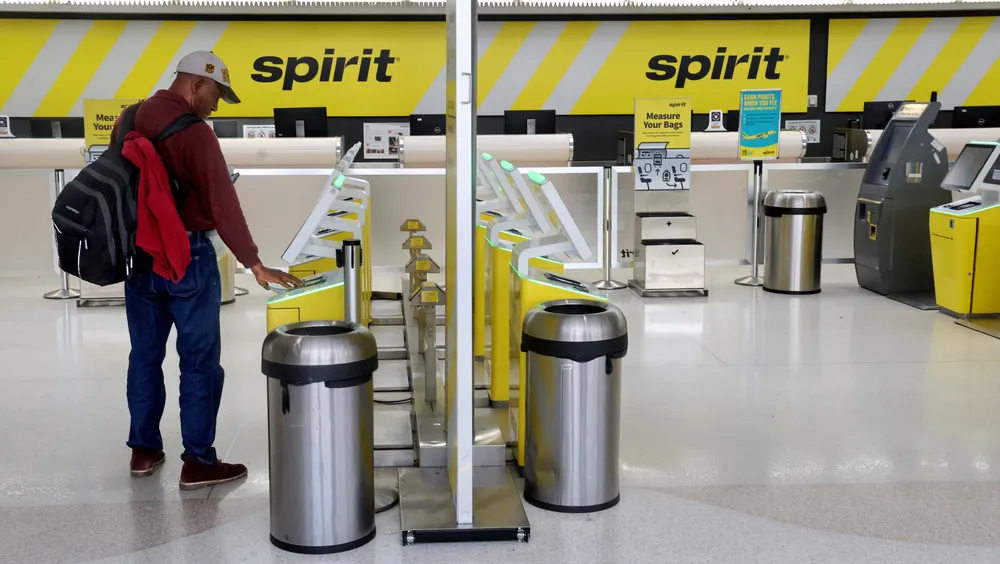
Pierre Ronet tries to check in to his flight to Tampa on Spirit Airlines at Fort Lauderdale-Hollywood International Airport, only to find out it was cancelled on Saturday, May 2, 2026. Photo Credit: Mike Stocker /South Florida Sun-Sentinel via AP
The collapse of Spirit Airlines isn't the only curveball confronting people planning summer trips
Days after Spirit Airlines shut down in the middle of the night, a lawyer for the defunct budget carrier stood before a bankruptcy judge and apologized to the price-conscious customers who might struggle to find affordable flights in its absence.
“We apologize most specifically to those Americans who may now be priced entirely out,” Spirit lawyer Marshall Huebner said in court, thanking all the passengers who relied on the airline during its 34-year run, many of whom, he said, "could not otherwise have afforded air travel.”
Spirit's May 2 demise is not the only curveball confronting people planning trips a week before the summer travel season has its traditional U.S. launch on Memorial Day. Rising jet fuel costs tied to the Iran war have pushed up airfares and associated fees across the commercial aviation industry. Two of the remaining U.S. budget carriers just finalized a merger.
The uncertain outlook for economical air travel reflects how difficult it has become for low-cost, no-frills airlines to operate while squeezed by volatile fuel prices, inflation and increasingly fierce competition. While budget airlines appeal to customers motivated by fare prices alone, traditional carriers can more easily generate revenue to offset fuel costs through premium cabins, membership rewards, corporate travel programs, add-on charges and pricing algorithms.
“Dynamic pricing has taken away one of the last structural advantages that low-cost carriers had,” said Shye Gilad, a former airline captain who now teaches at Georgetown University.
For decades, low-cost carriers thrived by offering fares that traditional airlines often couldn’t match without losing money. But that edge has weakened as the “big three” — American, Delta and United — got better at tailoring prices to different travelers, and as JetBlue, Southwest and other airlines that long positioned themselves as less expensive alternatives began chasing higher-paying customers.
Today, big airlines can sell a handful of bare-bones seats at Spirit-level prices while still charging more for standard and premium tickets elsewhere on their planes. That has made it harder for budget airlines to compete solely on price.
“They can’t just be the cheapest airline anymore,” Gilad said. “They have to be the smartest low-cost airline.”
Like gasoline and diesel prices, the price of jet fuel has jumped since the Iran war put a chokehold on Middle East oil shipments 11 weeks ago. The strain prompted the Association of Value Airlines, a U.S. trade group representing Allegiant Air, Avelo Air, Frontier Airlines, Spirit Airlines and Sun Country Airlines, to ask the Trump administration in late April for $2.5 billion in temporary financial aid.
Airlines for America, the trade group for Alaska Airlines, American, Delta, JetBlue and Southwest, opposed the idea, saying that federal help would give the budget airlines an unfair advantage.
“Government intervention on behalf of those airlines would punish other airlines that have engaged in self-help in order to deal with increased costs and reward airlines who haven’t made those tough decisions,” Airlines for America said in a statement. “And, in the long-term, sustaining businesses that cannot earn their cost of capital harms competition and consumers by making it more difficult for other airlines to compete.”
Transporation Secretary Sean Duffy rejected the request the day Spirit stopped flying.
Even before the latest run-up in fuel costs, consolidation was already underway in the budget airline sector. Alaska Airlines completed its $1 billion purchase of Hawaiian Airlines in September 2024 after the two carriers agreed to maintain the level of service on key routes within Hawaii and between Hawaii and the U.S. mainland where they didn't face much competition.
Spirit was an unsuccessful merger target of both Frontier and JetBlue as its losses mounted after the coronavirus pandemic.
Allegiant said last week it had finalized its roughly $1.5 billion acquisition of Sun Country, a deal first announced in January. The combined airline brings together passenger service with Sun Country's cargo operations and charter business serving sports teams, casinos and the U.S. Department of Defense.
“Consolidation is a signal” of weakness in the industry, Gilad said. “If you can remove a competitor and improve your product offering, you might be able to eke out more profit.”
Other experts note the diversity within the budget airline sector, a factor that could make some carriers more resilient to spiking fuel costs and market disruptions than others.
“Budget airlines are a pretty peculiar creature,” Vikrant Vaze, an aviation systems expert at Dartmouth College’s engineering school, said, describing a category that has encompassed struggling carriers like Spirit to giants like Southwest Airlines, which grew from a low-cost pioneer into one of the largest U.S. airlines.
“Even though they can be clubbed together as budget airlines, if you want a big umbrella term, they’re very different from each other,” Vaze said. “They have very different levels of budget-ness.”
Allegiant's focus on leisure travel centers on smaller airports with less direct competition. JetBlue, a hybrid low-cost carrier, leans more heavily on premium seating and loyalty perks than Spirit ever did.
Frontier comes closest to Spirit’s model as an ultra low-cost carrier, though analysts say it entered this period of volatility with stronger liquidity and could benefit from Spirit’s exit. It has already begun expanding in former Spirit-heavy markets that include Las Vegas, Detroit and the Florida cities of Orlando and Fort Lauderdale.
Gilad sees echoes of his own experience working as a pilot and flight-training instructor at Independence Air, a short-lived low-cost airline that previously served as a regional carrier for United and Delta. The airline, which launched in mid-2004 as fighting between U.S.-led forces and insurgents in Iraq sent fuel prices soaring, shut down during bankruptcy proceedings in January 2006.
“They burned through almost $200 million in 18 months,” Gilad said. “It was just that quick that they were gone.”
He said the same structural pressures remain in place today, but there are fewer remaining budget airlines to share them.
by Rio Yamat
Copyright Associated Press. All rights reserved. This material may not be published, broadcast, rewritten, or redistributed.
An hour up the coast from Salvador, the small resort town of Praia do Forte in Bahia, Brazil, is quietly emerging as a queer‑welcoming beach escape—without yet appearing on many mainstream LGBTQ+ travel lists.
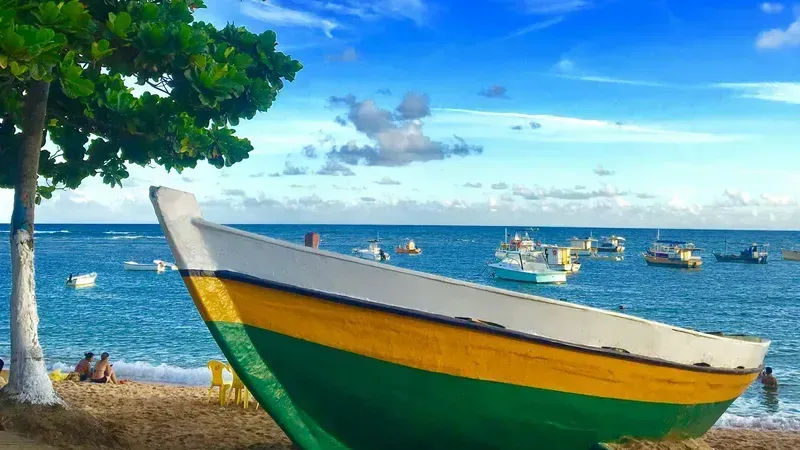
On Brazil’s northeastern coast, past the industrial outskirts of Salvador and along a highway fringed with coconut groves, Praia do Forte appears almost abruptly: a compact pedestrian village of cobbled lanes, open‑air cafés and a long crescent of sand where surfers, families and queer couples share the same stretch of Atlantic shoreline.
Despite its popularity with Brazilian travelers, Praia do Forte rarely appears in international LGBTQ+ destination roundups, which tend to focus on Rio de Janeiro, São Paulo or Florianópolis. Yet local activists and tour operators say this coastal community in the state of Bahia—a region long associated with Afro‑Brazilian culture and a history of resistance—is steadily becoming a discreet but genuinely welcoming base for queer travelers seeking beaches, culture and safety without the intensity or cost of Brazil’s major urban hubs.
Brazil’s evolving LGBTQ+ landscape—and Bahia’s place in it
Any account of queer‑friendly travel in Brazil starts with the law. Same‑sex marriage has been legal nationwide since 2013, following a ruling by Brazil’s National Council of Justice that required notaries to perform marriages and convert stable civil unions into marriages. Transgender people gained the right to change their name and gender marker on civil records without surgery or judicial authorization in a 2018 decision by the Federal Supreme Court.
Brazil’s federal Supreme Court has also criminalized homophobia and transphobia by equating them with racism under existing anti‑discrimination laws, effectively allowing hate crimes based on sexual orientation or gender identity to be prosecuted with similar severity. These decisions place Brazil among Latin America’s more progressive countries on paper, a status reflected in regional equality assessments that rank it in the upper tier, behind Uruguay and Argentina but ahead of several neighbors.
Yet rights on paper do not always translate to safety in the street. Brazilian LGBTQ+ organizations have repeatedly documented high levels of anti‑LGBTQ+ violence, particularly against transgender women and Black queer people, prompting warnings that travelers should understand local nuances.
Bahia, whose capital is Salvador, occupies a complex position in this landscape. It is one of Brazil’s most culturally influential states, with a Black majority population and a deep Afro‑Brazilian heritage expressed through Candomblé religious traditions, music and cuisine. Salvador’s Carnival, considered one of the largest street festivals in the world, has long included queer participation and blocos featuring drag performers, and the city hosts an annual Pride parade that draws hundreds of thousands of participants.
While Bahia still contends with homophobia and transphobia, local authorities and civil society organizations have launched initiatives to promote diversity, including an “LGBT+ Friendly Bahia” tourism campaign highlighting inclusive businesses in Salvador and coastal towns such as Praia do Forte.
A beach town built around conservation, not nightlife
Praia do Forte itself is small: the village has approximately 3, 000 permanent residents, though that number swells significantly on weekends and holidays when domestic tourists arrive. The town grew up around a 16th‑century fortress and a fishing community, but its modern identity is tied to eco‑tourism and planned development rather than high‑rise resorts.
In the 1970s and 1980s, the surrounding area was purchased and developed with an emphasis on low‑rise architecture and environmental preservation, including protection of dune systems and native vegetation. Today, the village center is mostly pedestrianized: the main street, known as Alameda do Sol, is lined with boutiques, pousadas , bars and restaurants, many of them open‑fronted and operating late into the evening.
The beach itself runs for several kilometers, with natural pools formed by reefs at low tide that are popular with families and snorkelers. The relative absence of large all‑inclusive resorts within the village core has contributed to a more mixed clientele: Brazilian family groups, couples, solo travelers and foreign visitors share the same streets, and no single demographic dominates.
For LGBTQ+ travelers, that integrated, small‑scale atmosphere can translate to a sense of being part of the everyday fabric rather than confined to a specific “gay beach. ” International travel advisories frequently note that in Brazil, queer acceptance is often strongest in urban and tourist areas where diversity is normalized. Praia do Forte fits this pattern: while it does not market itself explicitly as a gay destination, local tourism authorities include it in broader campaigns that frame Bahia as inclusive, and there are documented examples of queer‑owned businesses and mixed‑crowd venues where same‑gender couples can socialize without attracting undue attention.
Turtles, tides and a quieter kind of queer‑friendly
One of Praia do Forte’s most distinctive features is its role in Brazil’s sea turtle conservation movement. The town is home to one of the main visitor centers of Projeto Tamar, a long‑running national program that protects sea turtles through research, community engagement and environmental education.
The Praia do Forte center includes open‑air pools where rescued turtles are rehabilitated, educational exhibits and nighttime nest‑monitoring activities during the nesting season, typically from October to March. Families, school groups and international visitors mingle on the pathways, turning conservation into a shared social activity.
While Projeto Tamar is not an LGBTQ+ organization, its presence contributes to a broader culture of environmental awareness and social responsibility in the town. Brazilian LGBTQ+ travel specialists have noted that destinations with strong community‑based tourism and environmental projects often foster more inclusive attitudes, because they rely on attracting a diverse range of visitors and on long‑term relationships with guests. In interviews about Brazilian eco‑tourism corridors that include Praia do Forte, regional tourism planners have explicitly linked sustainability, community participation and diversity as pillars of development.
In practice, queer travelers who visit Praia do Forte describe a low‑key environment in which hand‑holding and public affection between same‑gender couples is increasingly visible on the beach and in restaurants, particularly on weekends when the town fills with visitors from Salvador. These reports align with broader observations that Brazil’s beach culture in tourist zones tends to be socially relaxed, provided visitors remain mindful of local norms.
Proximity to Salvador’s established queer scene
Part of Praia do Forte’s appeal for LGBTQ+ travelers is its access to, but separation from, Salvador’s larger and more visible queer community. The beach town lies about 80 kilometers north of the city, along the Linha Verde coastal highway. Regular buses and private transfers connect the two, and the journey generally takes around 1. 5 hours, depending on traffic.
Salvador has a documented LGBTQ+ nightlife scene, with bars and clubs in neighborhoods such as Rio Vermelho, Comércio and the historic Pelourinho, where mixed‑crowd venues host drag performances, samba and electronic music nights. During Carnival and Pride, the city’s trio elétrico parade trucks and street blocos include performances by openly queer artists, and local organizations use the events to advocate for LGBTQ+ rights.
International LGBTQ+ travel guides routinely recommend Salvador as a culturally rich stop for queer travelers who want Afro‑Brazilian music, religious heritage sites and nightlife without the scale of Rio de Janeiro. For those based in Praia do Forte, this means they can spend days in a quiet, beach‑centered environment and then dip into urban queer spaces for a night out or a festival before returning to the village.
Local tourism officials in Bahia have promoted this combination explicitly, positioning Salvador and Praia do Forte as a “culture and coast” pairing suitable for travelers seeking both city experiences and relaxation. While these campaigns do not exclusively target LGBTQ+ visitors, they highlight Pride events, inclusive cultural programming and a range of accommodations, including boutique inns and guesthouses that advertise themselves as welcoming to all couples.
Where queer travelers are staying—and what they’re eating
Praia do Forte’s lodging options skew toward small and medium‑sized pousadas rather than international hotel chains. Many are individually owned properties with 10 to 30 rooms, interior gardens and swimming pools, some of them explicitly marketing to couples and honeymooners.
Brazilian LGBTQ+ travel agencies that operate in Bahia describe Praia do Forte as a destination where queer couples can book mainstream accommodations without necessarily seeking out a “gay hotel, ” because staff in tourist‑oriented businesses are accustomed to diverse guests. While specific guesthouse owners’ identities are not always publicized, Bahia’s tourism secretariat has documented LGBTQ+‑friendly businesses in the region as part of its inclusive tourism program, which includes training in non‑discriminatory service practices and diversity awareness for hospitality workers.
Dining in Praia do Forte reflects Bahia’s culinary traditions: moqueca , acarajé and various preparations of fresh fish are commonly served in beachside restaurants and casual eateries along Alameda do Sol. The region’s strong Afro‑Brazilian influence is evident, and Salvador’s historic Pelourinho district—reachable as a day trip—offers deeper immersion with restaurants and cultural centers focusing on this heritage.
For many LGBTQ+ travelers, food can be a key entry point into local culture, and Bahia’s well‑documented culinary scene allows visitors to connect with the state’s Black and Indigenous histories, which have been central to Brazil’s broader movements for social justice and inclusion. While these movements are not exclusively queer, alliances between Black, feminist and LGBTQ+ organizations in Bahia have been recorded in campaigns against gender‑based violence and racism, reinforcing an intersectional approach to rights that informs local civic life.
Safety, visibility and the realities behind the postcard
Despite the welcoming atmosphere many visitors experience, it is important to contextualize Praia do Forte and Bahia within Brazil’s ongoing struggles with violence and inequality. Human rights organizations have reported that Brazil continues to record high numbers of killings of LGBTQ+ people, particularly transgender women, and have criticized authorities for inconsistent investigations and a lack of comprehensive national data.
Grupo Gay da Bahia, one of the country’s oldest LGBTQ+ rights organizations, based in Salvador, has published annual reports on anti‑LGBTQ+ violence for decades and has advocated for better protections and visibility for queer communities in the state. These reports emphasize that while coastal tourist areas like Praia do Forte may feel relatively safe, marginalized Brazilians—especially those who are Black, poor or transgender—face higher risks elsewhere.
Travel advisories from international LGBTQ+ tour operators recommend that visitors exercise the same caution in Bahia that they would in other parts of Brazil: avoiding isolated areas at night, being aware of petty theft, and adjusting expressions of affection according to context, particularly outside major tourist zones. These same sources note, however, that in practice, queer travelers in destinations like Salvador and the Bahia coast generally report positive interactions, especially in hospitality settings familiar with international guests.
The Brazilian government has recognized violence and discrimination against LGBTQ+ people as a public policy issue, and in 2023 announced measures including the reactivation of a national council focused on LGBTQ+ rights and efforts to improve data collection on hate crimes. Bahia’s state government has participated in these initiatives, including public campaigns against LGBTQ+phobia and support for Pride events.
An emerging “hidden gem” rather than a gayborhood
Praia do Forte does not have a designated “gay street” or rainbow‑flagged district, and it is unlikely to become Brazil’s next big party destination. Instead, its draw for LGBTQ+ travelers lies in a quieter combination of factors: progressive national laws, state‑level inclusion efforts, proximity to a city with an established queer community and a tourism model oriented around sustainability and cultural immersion rather than nightlife alone.
Regional and international travel outlets have started to highlight Bahia more frequently as a queer‑friendly region, pointing to Salvador and coastal towns like Praia do Forte as alternatives for travelers who may have already visited Rio de Janeiro or São Paulo. Yet the town remains largely absent from mainstream LGBTQ+ destination rankings compiled by large English‑language media brands, which tend to focus on well‑known South American capitals and beach resorts.
For travelers who prioritize local culture over club‑hopping, that relative anonymity can be part of Praia do Forte’s appeal. Days in the village follow an unhurried rhythm: sunrise over the reef pools, a walk to the turtle center, a lunch of moqueca under a thatched roof, an afternoon of reading under palm trees and an evening drink on Alameda do Sol while music spills onto the lane. Within that rhythm, queer couples and transgender travelers increasingly report feeling visible but unremarkable—noticed, when at all, as just another part of a larger, diverse crowd.
If Brazil’s ongoing efforts to strengthen protections and collect better data on anti‑LGBTQ+ violence bear fruit, and if Bahia’s tourism sector continues to invest in diversity training and community partnerships, destinations like Praia do Forte may come to be recognized not only for their beaches and turtles, but as models of how smaller, environmentally minded resorts can quietly embed inclusion into their everyday life.
For now, though, Praia do Forte remains something of a hidden gem in South America’s queer‑friendly map—a place where the most visible symbols of LGBTQ+ inclusion might be less about rainbow flags and more about who is comfortably sharing a table at the beach bar at sunset.
by Chris Tremblay
Copyright EDGE Media Network. All rights reserved. This material may not be published, broadcast, rewritten, or redistributed.
Long known to insiders but still a surprise to many travelers, Ogunquit, Maine, is emerging as a small-town LGBTQ+-friendly escape where cliffs, beaches, art galleries, and queer-owned businesses coexist without the usual big-city fuss.
If Provincetown is the glittering extrovert of New England queer travel, Ogunquit is its softer-spoken cousin: still stylish, still celebratory, but happier to greet you with sea salt on the wind than a velvet rope. The Maine town has long been described as a refuge for LGBTQ+ travelers, and recent travel coverage continues to place it among North America’s under-the-radar queer-friendly destinations.
That reputation is not built on one neon sign or a single annual party. It comes from a layered sense of place: a beach town with a famously walkable center, a coastal path that begins at the edge of the village and traces the Atlantic, and a local culture that has made room for queer people to vacation, work, own businesses, and simply exist without having to explain themselves.
Why Ogunquit feels different
Ogunquit does not sell itself like a mega-resort. Its appeal is more tactile and more intimate: weathered shingles, white sand, the sharp-bright smell of ocean spray, and a main village where you can move from coffee to gallery hopping to cocktails without needing a car. That walkability matters for queer travelers looking for a destination that feels relaxed rather than performative, social without being exposed, and inclusive without demanding explanation.
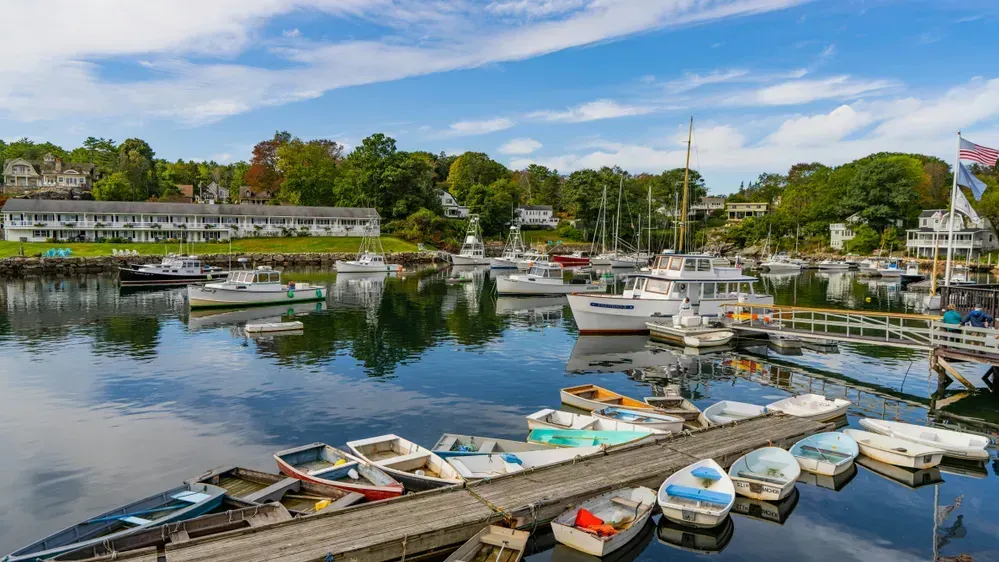
The town’s most famous natural feature, the Marginal Way, is a 1. 25-mile cliff walk that connects Ogunquit Village to Perkins Cove and offers long views over the Atlantic. It is one of those places where the scenery does the flirting for you: surf punching against rock, gulls banking in the wind, and benches set just far enough apart to let you linger without hurry.
For LGBTQ+ visitors, that calm can be a feature, not a lack. A destination does not have to be loud to be welcoming. In Ogunquit, the sense of safety comes from ordinary signals: a business district where Pride flags appear in windows, a hospitality scene accustomed to queer guests, and community institutions that have openly served LGBTQ+ residents and vacationers for years.
A destination built around art, not just nightlife
Ogunquit’s queer appeal also comes from its artistic backbone. The town has long been associated with galleries, theater, and a creative community that gives the destination more range than a simple “beach town” label allows. The Ogunquit Museum of American Art and the Ogunquit Playhouse help anchor that cultural identity, offering visitors something to do after the sun drops behind the water and the beach crowd heads in.
That arts scene matters for queer travelers because it gives the town a second pulse. During the day, the coast takes the lead: salt air, tide pools, sand underfoot. At night, the mood shifts toward theater curtains, restaurant patios, and bars where conversation can be the main event. For many travelers, especially transgender people, nonbinary people, and queer couples seeking a lower-key trip, that balance can feel safer and more restorative than destinations that market themselves almost entirely through nightlife.
Queer-owned and queer-friendly, without making a spectacle of it
A recurring theme in Ogunquit travel coverage is the presence of LGBTQ+-friendly and LGBTQ+-owned hospitality businesses, especially inns and guest houses that cater to queer travelers looking for a comfortable, explicitly welcoming stay. Recent roundups identify Ogunquit as a place where queer visitors can find community-minded lodging rather than simply tolerance-by-omission.
That kind of accommodation matters because “feeling seen” on vacation is often about small details: whether staff use inclusive language, whether a couple checking in is met with a neutral smile instead of a startled pause, whether local listings and welcome materials make it clear that all kinds of families are welcome. Those cues do not always appear in glossy brochures, but they shape whether a traveler relaxes or stays guarded.
One of Ogunquit’s strengths is that it does not require travelers to decode the town before arriving. It is already known, especially within queer travel circles, as a place where LGBTQ+ visitors have history and visibility. That legacy gives the town a credibility that cannot be manufactured with a rainbow banner in June.
What queer travelers actually do there
A day in Ogunquit can be gloriously uneventful in the best way. Start with coffee in the village, drift through independent shops and galleries, then head to Ogunquit Beach, where the Atlantic arrives in long, cold-blue sheets. Walk the Marginal Way when the light softens. Eat lobster rolls, seafood, or whatever coastal comfort food is calling your name. In summer, the town fills out with seasonal visitors, but it rarely loses its small-scale charm.
For travelers seeking community events, Ogunquit’s Pride-related visibility is usually woven into the local calendar rather than confined to a single defining festival. Nearby Southern Maine LGBTQ+ organizations, especially those serving the broader region, reinforce that the town sits within an affirming coastal corridor rather than as an isolated enclave.
That broader setting is important. A destination feels safer when it is not a one-off novelty but part of a region with a known commitment to inclusion. Maine has often been included in national lists of more LGBTQ+-friendly states, and Ogunquit benefits from being nested in that reputation while keeping its own local character intact.
Why small towns matter in LGBTQ+ travel
There is a tendency in travel writing to treat queer inclusion as something that only happens in giant cities or neon-soaked resort strips. Ogunquit pushes back on that idea. It shows how a small town, especially one with a strong arts scene and a long memory of welcoming LGBTQ+ visitors, can offer a different kind of freedom: less spectacle, more ease.
That difference is not cosmetic. For many queer people, especially those traveling with a partner, with chosen family, or while navigating questions of gender presentation and safety, a place that is quietly affirming can be more restful than a destination that performs inclusion at high volume. In Ogunquit, the welcome often feels practical rather than theatrical: a good check-in experience, an easy walk, a beach that belongs to everyone, and local businesses that understand who is in front of them.
The result is a destination that does not ask to be center stage, yet still leaves a strong impression. Ogunquit is proof that an LGBTQ+-friendly getaway can be an art town, a coastal retreat, and a place to exhale all at once. You do not go there to be dazzled by a “scene” so much as to be folded into one already in progress: waves, paint, theater, conversation, and the easy dignity of being treated like you belong.
by Chris Tremblay
Copyright EDGE Media Network. All rights reserved. This material may not be published, broadcast, rewritten, or redistributed.
Americans are trading packed itineraries for longer, slower trips, and the data says this shift is only accelerating. Photo Credit: Deposit Photos Via AP
Search interest in slow travel hit an all-time high in 2026, according to Google's 2026 travel trends data, with searches for "slow travel Italy" alone climbing 100% in a single month. At the same time, bookings for trips of more than eight days grew by 19% compared to the prior year, which indicates a clear, measurable shift in how Americans choose to spend their time away.
Search interest in slow travel hit an all-time high in 2026, according to Google's 2026 travel trends data, with searches for "slow travel Italy" alone climbing 100% in a single month. At the same time, bookings for trips of more than eight days grew by 19% compared to the prior year, which indicates a clear, measurable shift in how Americans choose to spend their time away.
The era of cramming 10 countries into two weeks is fading. In its place, a growing number of American travelers are choosing to settle into a single location for days or weeks at a time, trading the stamp-collecting pace of traditional tourism for something that feels less like a race and more like a life temporarily lived somewhere else. The shift toward longer vacations has been building for several years, but 2026 is the point at which the data stopped being a trend and started being a verdict.
The numbers behind the shift
The move towards slow travel comes from multiple directions at once: Google's travel data puts search interest in slow travel at a record peak this year, while the European Travel Commission and Eurail's Long-Haul Travel Barometer for 2026 found that the share of tourists identifying as slow travelers rose from 22% in 2025 to 26% in 2026. A separate Vrbo report says that 91% of travelers are interested in slower, simpler trips built around rest, reading, nature and meaningful experiences. That consistency across sources is hard to dismiss.
For American travelers specifically, the pull toward longer stays shows up in booking behavior. Trips of more than eight days are growing faster than any other trip length, and rental platforms are reporting sustained demand for weekly and monthly stays over short-term bookings. The preference for depth over breadth is no longer niche but the fastest-growing segment of the U.S. travel market.
What inspires Americans to slow down
Several forces converge to make slow travel not just appealing but practical, and this includes remote and hybrid work that's changing the relationship between people and the office. This opportunity gives millions of workers the flexibility to extend a trip beyond the traditional one-week window without burning through all their paid leave. In addition, a 2026 analysis of digital nomad trends found more than 18 million Americans identified as digital nomads in 2025, a figure that continues to rise as more employers formalize remote work policies.
Financial pressure also plays a role, though perhaps not in the way people might expect. Rising travel costs have pushed some toward longer stays in fewer places rather than multi-stop itineraries, because a week in one rental is often cheaper per night than three nights each in three different hotels. Slow travel reduces daily tourist spending: travelers who find a local grocery store and a neighborhood coffee shop in week one tend to spend considerably less than those moving from destination to destination.
Burnout is the third driver and arguably the most significant. Industry trend analyses published in early 2026 describe a measurable shift toward travel that restores energy rather than depletes it, with wellness-focused and intentional trips rising at the expense of activity-heavy itineraries. Travelers increasingly ask what a vacation is for, and answer that question differently than they did a decade ago.
Farm stays, reading retreats and the new slow itinerary
Slow travel appears in some specific and surprising ways in 2026, with farm stays becoming one of the breakout categories of the year. Another Vrbo data found that 84% of travelers are interested in staying on or near a farm, and mentions of farm-related experiences in Vrbo guest reviews climbed 300% year over year. The trend is driven by travelers who want structure built around the land rather than a packed list of activities.
"It's this slow travel movement. People just want a break from the hustle and bustle of everyday life," Melanie Fish, travel expert for Expedia, Hotels.com and Vrbo, said to CNBC. Reading-focused trips, which Vrbo has dubbed "readaways," see a similar surge, with mentions of reading-related terms in guest reviews up 285% year over year and Pinterest searches for "book club retreat ideas" climbing 275%.
What unites farm stays, reading retreats and other slow-travel formats is the absence of a packed itinerary. A day's structure comes from the place itself, such as morning walks, a long lunch and time outside, rather than from a list of attractions to tick off before checkout. For many Americans who have spent years returning from vacations more tired than when they left, that absence is precisely the point.
Where American slow travelers are heading
Italy remains the most-searched slow travel destination for U.S. travelers, with Google data showing search interest in "slow travel Italy" doubling in a single month. Portugal's Alentejo region draws consistent attention in 2026 travel trend reports as an ideal slow-travel base, with walkable historic centers, locally sourced food and wine and enough infrastructure to support a multi-week stay without the pace and cost of a major city.
In Asia, Vietnam, Thailand and Japan draw American travelers who want to spend a month rather than a week, often combining remote work with extended cultural exploration. On the domestic side, destinations including the Berkshires in Massachusetts, Door County in Wisconsin and Santa Fe in New Mexico are gaining traction with travelers who want slow travel without an international flight. The common thread across all of these places is the same: manageable scale, walkable centers and enough to do without needing to plan every hour.
The case for slowing down gets stronger
A 2026 global consultancy report found that nearly 60% of Gen Z and millennial travelers took at least two trips of five nights or more in 2025 and plan to increase their travel budgets again in 2026, with wellness and meaningful experiences as the stated priorities over rapid sightseeing. Wellness travel spending is rising in parallel, with travelers seeking trips built around rest, nature and recovery rather than a checklist of landmarks.
The numbers tell the same story from every angle: travelers who stay longer tend to spend more meaningfully, write more detailed reviews and return to destinations at higher rates than one-time visitors. The whirlwind vacation is not disappearing, but its market share is shrinking. Americans are deciding, in growing numbers, that a trip worth taking is a trip worth staying for.
Mandy Applegate is a luxury travel and fine dining journalist who has covered destinations across 47 countries, with a focus on high-end experiences and distinctive adventures. She is a co-founder of Food Drink Life, where she writes about travel, food and culture for a global audience. Her work is distributed through the Associated Press wire and appears in major U.S. outlets, including NBC, the Chicago Sun-Times, the Boston Herald and the Daily News.
by Mandy Applegate
Copyright Associated Press. All rights reserved. This material may not be published, broadcast, rewritten, or redistributed.
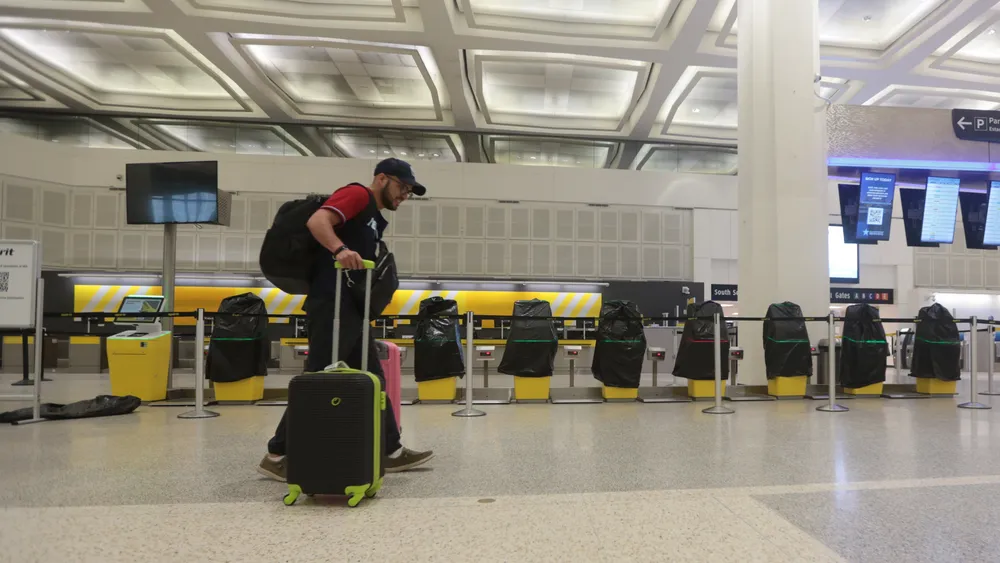
A traveler walks past covered Spirit Airlines kiosks, Saturday, May 2, 2026, at George Bush Intercontinental Airport, in Houston. Photo Credit: AP Photo/Lekan Oyekanmi
Spirit Airlines has secured court approval to begin dismantling the once-busy budget carrier and sell its parts to pay creditors
The bright yellow planes are grounded. Now the selloff begins.
Spirit Airlines, which abruptly canceled all its future flights over the weekend, secured court approval Tuesday to begin dismantling the once-busy budget carrier and to convert its parts into cash for creditors.
U.S. Bankruptcy Judge Sean Lane authorized the airline's plan for a rapid wind down of its remaining business activities, clearing the way for Spirit to move forward with liquidation.
“Today is a very challenging day. It’s not a day that anybody hoped would ever come,” Lane said as he ruled from the bench following an hourslong hearing in New York. The judge extended his “sympathy to the Spirit employees and their families.”
The company needed the judge’s green light to proceed because shutting down an airline is far from straightforward, with creditors, regulators, airport authorities and employees all tied into a process that has to be carefully unwound. More than 100 people tuned in to Tuesday’s hearing virtually, reflecting the broad interest in the case.
Spirit's plan centers on selling off every possible asset — from its airplanes, engines and spare parts to gates and landing slots at airports — while also limiting additional payroll, leasing and other costs.
The liquidation marks a dramatic turn for Spirit, which filed for bankruptcy protection in August 2025 hoping to escape financial ruin. The airline's parent company was attempting to restructure the business for the second time since November 2024 when it abruptly stopped operating flights early Saturday.
The shutdown itself was tightly choreographed. The company, Spirit Aviation Holdings Inc., said it made its going-out-of-business announcement in the middle of the night to ensure the jetliners making their final runs for the airline were safely on the ground and their crews accounted for.
Three days later, that sense of urgency carried into the courtroom, where the company's lawyers asked the judge for expedited approval of their wind-down plan, arguing that speed would benefit Spirit's creditors and customers.
“Any delay will cause chaos, confusion and cost the estate significant time and money,” the company said in a motion filed with the court, noting the airline was “not generating any revenue.”
Spirit attorney Marshall Huebner said Tuesday in court that rising jet fuel costs since the U.S. and Israel launched strikes on Iran “engulfed Spirit entirely.” The airline's fuel expenses grew by roughly $100 million “in March and April alone,” he said, and rapidly drained Spirit’s liquidity and derailed its restructuring efforts.
He also apologized directly to Spirit’s employees and customers, especially passengers who he said may now be completely “priced out” of certain routes without the ultra low-cost carrier known for its unbundled “no frills” service.
Huebner described a swift effort by other airlines and other segments of the aviation industry to assist Spirit's employees and customers once the airline's end looked inevitable.
“The entire industry sprang into action to get our people home,” Huebner said. Spirit employed about 17,000 people and carried about 50,000 passengers on its final day of operations. The final flight, which traveled from Detroit to Dallas, landed after midnight Saturday.
According to court filings, Spirit’s assets include its fleet of 114 Airbus A320-family planes. Most of them — 66 aircraft — were leased, but the company owns 28 that will be part of the liquidation process. Another 20 of the planes it owns outright were already set to be sold under a separate, previously approved court deal. Spirit also owns 18 spare engines.
Spirit says it plans to initially keep a skeleton crew of 130 to 150 employees who will help oversee the liquidation process, including securing aircraft and coordinating logistics. The team, expected to include some corporate officers, will eventually shrink to roughly 40.
In the last two weeks, Spirit was in discussions with the Trump administration about a hoped-for rescue deal that fell through, eliminating what the company described as its last viable path forward. Of the potential bailout, Transportation Secretary Sean Duffy said Saturday, “We oftentimes don’t have half a billion dollars laying around.”
Duffy said other U.S. airlines, including United, Delta, JetBlue and Southwest, were offering $200 one-way fares for a limited time to travelers holding Spirit confirmation numbers and proof of purchase.
Airlines also stepped in to assist stranded Spirit crew members, he said, with some offering a preferential hiring process for former Spirit employees looking for work.
by Rio Yamat
Copyright Associated Press. All rights reserved. This material may not be published, broadcast, rewritten, or redistributed.
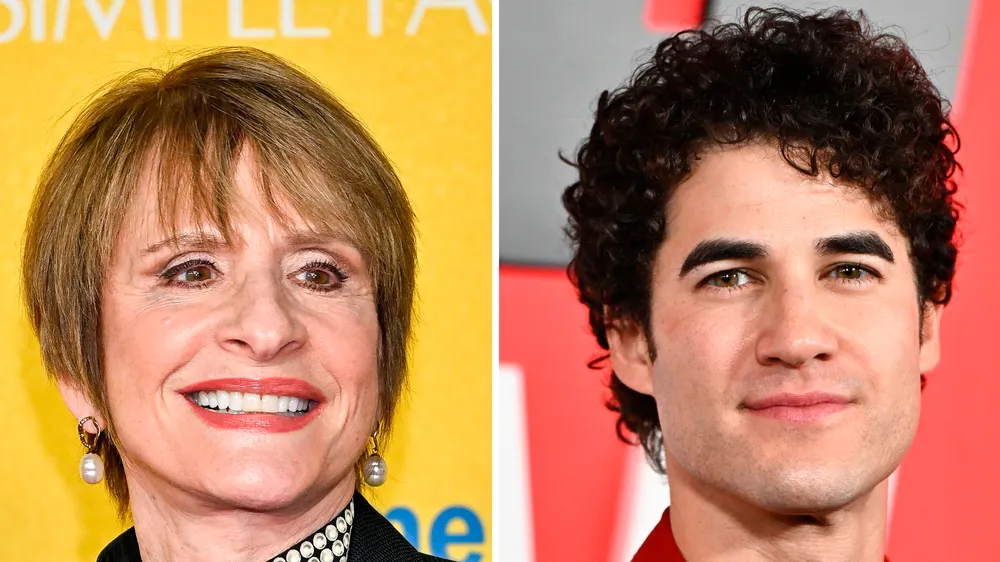
Patti LuPone appears at a screening of "Another Simple Favor" in New York on April 27, 2025, left, and Darren Criss appears at the premiere of "The Running Man" in New York on Nov. 9, 2025. Photo Credit: Photos by Evan Agostini/Invision/AP
A star-studded cruise ship featuring Broadway's biggest names is setting sail from Florida to Mexico and the Bahamas next spring
A star-studded cruise ship with some of Broadway's biggest names — including Tony Award-winners Patti LuPone, Darren Criss, Norbert Leo Butz and Adrienne Warren — is setting sail from Florida to Mexico and the Bahamas next spring.
The Broadway Cruise — heading roundtrip from Miami to Cozumel and Great Stirrup Cay from April 15-20, 2027 — will also feature Tony nominees Norm Lewis, Marissa Jaret Winokur, Laura Bell Bundy, Micaela Diamond and Kerry Butler.
In addition to performances, the cruise will offer multiple interactive theatrical events, Q&As, workshops, discussions on how to create a show and dance classes.
There will also be full performances of “Mama I’m a Big Girl Now!,” with Winokur, Bundy and Butler, who met starring as Tracy, Penny and Amber in “Hairspray” and reunite to sing Broadway hits and share behind-the-scenes stories.
Tony-winning composer Marc Shaiman — fresh off publishing his memoir “Never Mind the Happy: Showbiz Stories from a Sore Winner” — will be onboard, as well as three-time Tony-winning director and choreographer Jerry Mitchell, behind such shows as “Kinky Boots” and “La Cage aux Folles.”
“This isn’t just a fan experience, it’s Broadway without walls, an all-access experience at sea where fans and legends collide. For five extraordinary nights, the ship becomes the stage, the backstage, and everything in between. Nothing else comes close,” said Jeff Cuellar, CEO at Sixthman, in a statement.
This will be the fourth Broadway Cruise, which borrows the Norwegian Gem for its themed trips.
by Mark Kennedy
Copyright Associated Press. All rights reserved. This material may not be published, broadcast, rewritten, or redistributed.
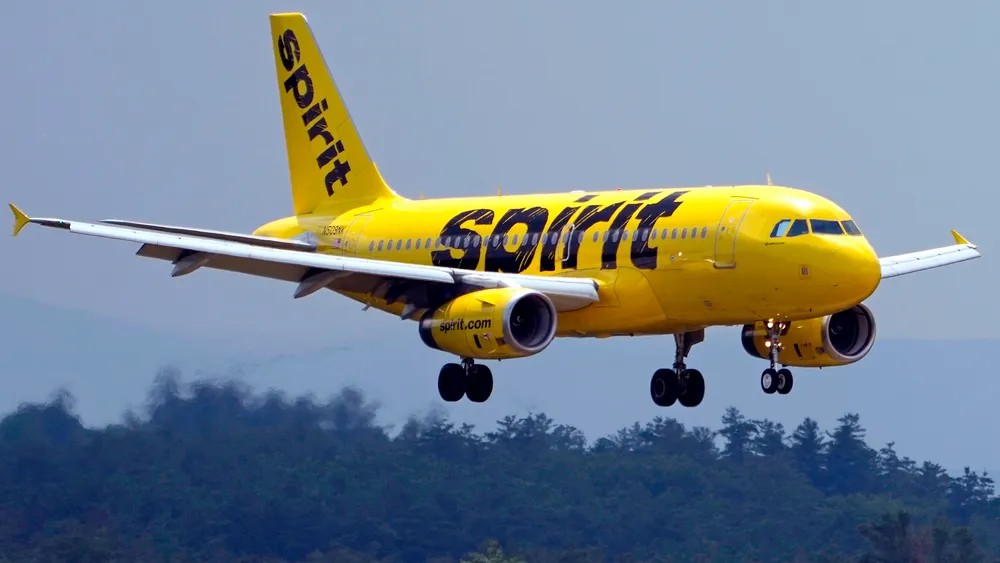
A Spirit Airlines 319 Airbus approaches Manchester Boston Regional Airport for a landing, June 2, 2023, in Manchester, N.H. Photo Credit: AP Photo/Charles Krupa, File
Spirit Airlines has announced it is going out of business after 34 years
Spirit Airlines, an impish upstart that shook the industry with its irreverent ads and deep discount fares, announced Saturday that it has gone out of business after 34 years.
The ultralow cost airline that once operated hundreds of daily flights on its bright yellow planes and employed about 17,000 people said it had “started an orderly wind-down of our operations, effective immediately.”
The airline said on its website that all flights have been canceled and customer service is no longer available.
“We are proud of the impact of our ultra-low-cost model on the industry over the last 34 years and had hoped to serve our guests for many years to come,” the announcement said.
The company advised customers that they could expect refunds but there would be no help in booking travel on other airlines.
The Trump administration had considered a government bailout for the cash-strapped business to keep it from going under, but a deal was not reached.
Transportation Secretary Sean Duffy said that travelers booked on Spirit flights could access special prices on a group of other airlines for a limited time, and said other carriers would help Spirit pilots and flight attendants return to their home cities. In a statement, he said travelers could check with their credit card company or travel insurance policy about refunds.
Trump had floated the idea of a bailout last week after the airline found itself in bankruptcy proceedings for the second time in less than two years with jet fuel prices soaring because of the Iran war.
As late as Friday afternoon, President Donald Trump had said that “we're looking at it" and had given the budget carrier a “final proposal” for a taxpayer-funded takeover.
Spirit has struggled financially since the COVID-19 pandemic, weighed down by rising operating costs and growing debt. By the time it filed for Chapter 11 protection in November 2024, Spirit had lost more than $2.5 billion since the start of 2020.
The budget carrier sought bankruptcy protection again in August 2025, when it reported having $8.1 billion in debts and $8.6 billion in assets, according to court filings.
Supporters of a rescue including labor unions representing Spirit’s pilots, flight attendants and ramp workers said a collapse would put thousands of Americans out of work and hurt consumers by reducing airline competition and increasing airfares. About 17,000 jobs could be impacted, according to Spirit lawyer Marshall Huebner.
Budget-conscious and leisure travelers would likely feel Spirit’s absence the most, especially in places where the airline has a big footprint such as Las Vegas and the Florida cities of Fort Lauderdale and Orlando.
The carrier flew about 1.7 million domestic passengers in February, roughly half a million fewer than during the same month a year earlier, according to aviation analytics firm Cirium. Spirit also has sharply reduced its capacity, with about half as many seats available this month than in May 2024.
by Aamer Madhani
Copyright Associated Press. All rights reserved. This material may not be published, broadcast, rewritten, or redistributed.
Tucked along the Hudson River, this charming upstate New York town is buzzing with LGBTQ+-owned shops, galleries flaunting homoerotic art, and a vibe that feels like a secret handshake among queer travelers. Far from the crowded scenes of Fire Island or Provincetown, Hudson offers art, antiques, and authentic community without the hype—yet.
Darlings, lean in close because I've got the tea on North America's best-kept queer secret: Hudson, New York. This riverfront darling, just 120 miles north of the Big Apple, is where queer creativity spills onto Warren Street like glitter on a dance floor. We're talking LGBTQ+-owned boutiques, galleries dripping with unapologetic homoerotica, and a community that's been thriving under the radar for years. No thumping Pride megafestals here—just the kind of intimate, sparkling energy that makes you feel seen, celebrated, and ready for a spontaneous gallery crawl or riverside cocktail.
Picture this: You're strolling Warren Street, Hudson's main drag, where the queer bona fides hit you like a fabulous plot twist. Pop into Mikel Hunter’s punk apparel shop for edgy threads that scream individuality, or lose yourself in FINCH’s vintage decor—both proudly LGBTQ+-owned and pulsing with that insider charm. It's the kind of place where transgender folks, non-binary artists, and lesbian couples mingle without a second glance, browsing crafts that honor our stories. And oh, the art! Carrie Haddad Gallery devotes an entire second-floor wing to Mark Beard’s homoerotic male nudes—bold, beautiful, and begging for your gaze. Free to visit, these spaces turn a simple afternoon into a queer cultural feast.
But honey, Hudson isn't just about the visuals; it's a full-body embrace of queer joy. By day, hop between those galleries and shops, soaking in the town's smattering of artistic gems that spotlight LGBTQ+ creators. The air hums with creativity—think pop-up exhibits and conversations that flow as easily as the Hudson River itself. Evenings? They soften into something magical, with queer-owned spots serving up farm-to-table bites and craft cocktails that pair perfectly with sunset views. It's personal here; locals remember your name, your pronoun, and your favorite vintage find from last visit. For queer travelers craving connection over crowds, this is where you plant your flag.
Why Hudson Deserves the Spotlight (But Not Too Much)
Let's spill: Hudson's rise as a queer haven didn't happen overnight. This former industrial spot reinvented itself in the '90s as an antiques mecca, drawing artists and LGBTQ+ folks fleeing urban frenzy. Today, over 140 businesses in the area nod to queer ownership, creating an ecosystem where bisexual baristas sling coffee next to gay gallerists and queer families run beloved eateries. Walk into a shop, and you're not just shopping—you're supporting a tapestry of stories from transgender entrepreneurs to lesbian-owned design studios.
Compare it to the over-the-top glamour of Provincetown, and Hudson wins on intimacy. P-Town's tea dances are legendary, but Hudson offers quiet cliff walks and pop-up queer events that feel like exclusive parties. No need for whale-watching tours when the real spectacle is the town's annual art walks, where queer artists unveil works that capture our resilience and radiance.
And accessibility? From NYC, it's a breezy two-hour drive or Amtrak ride—far easier than schlepping to Fire Island ferries. Stay at LGBTQ+-friendly inns like the Rivertown Lodge , where rainbow flags wave discreetly, and rooms come with Hudson Valley views that make morning coffee a ritual. Budget queens, rejoice: It's significantly less pricey than Hamptons hotspots, leaving room for splurges on custom queer-crafted jewelry.
Queer Nights and Daytime Delights
Nightlife in Hudson? Subtle sparkle, my loves. Spotty Dog Books & Ale hosts readings by LGBTQ+ authors, blending lit with libations. Transition to dusk with live jazz at queer-frequented venues, where monthly drag nights at Lil' Deb's Oasis draw crowds.
Foodies, your moment: Queer-owned spots like Cafe Mutton serve creative menus in a sun-drenched space, while Lil' Deb's Oasis offers tropical vibes that Esquire named one of America's best. Pair it with finds from the Hudson Farmers Market, where vendors champion sustainable, community-focused farming. It's affirming here; servers navigate pronouns with care, and menus highlight inventive plant-based options.
Perspectives from the community? Local queer artists like those at Carrie Haddad rave about the town's support, noting how galleries provide platforms for transgender and non-binary creators often overlooked elsewhere. One gallerist shared , "Hudson feels like home—where queer people build without begging for spotlight. "It's that person-first welcome that turns visitors into regulars.
Planning Your Hudson Escape
Timing is everything. Spring brings blooming orchards; fall explodes in foliage that rivals Napa. Summer weekends hum with pop-up markets, and winter is cozy with queer book clubs by the fireplace.Practical Tea: Fly into Albany International (55 mins away) or take the Amtrak from Penn Station (2 hours). Rent a car for flexibility, or bike the city.
Safety: Hudson scores high on inclusivity, with one of the highest densities of same-sex households in the country.
Why now? As queer travel maps expand, Hudson’s organic growth—fueled by heart rather than hype—positions it as the next must-sip. Go before the influencers do.
by Chris Tremblay
Copyright EDGE Media Network. All rights reserved. This material may not be published, broadcast, rewritten, or redistributed.
Nestled high in a lush Andean valley, Medellín emerges as a lesser-known queer-friendly gem in South America, boasting one of Latin America's most dynamic LGBTQ+ communities amid vibrant nightlife and cultural riches.
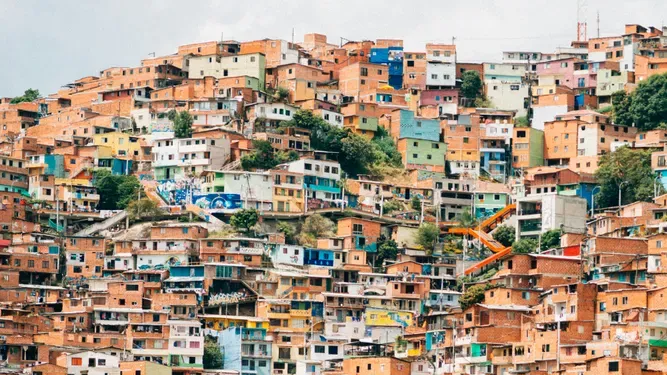
Medellín, Colombia's second-largest city, perches nearly a mile high in a verdant forested valley, transforming from a reputation marred by past violence into a beacon of innovation and inclusivity. Home to one of Latin America's most dynamic LGBTQ+ communities, queer people here are generally quite out and open, fostering an environment where same-sex relationships are visible in everyday life. This high-altitude setting, with its eternal spring climate averaging 72°F year-round, provides a refreshing backdrop for exploration, where misty mountains frame colorful neighborhoods and cable cars whisk visitors to hillside communities.
What sets Medellín apart as a lesser-known queer destination is its avoidance of the overcrowded tourist trails dominating standard LGBTQ+ travel lists, which often spotlight Buenos Aires, Rio de Janeiro, or Cartagena. Instead, Medellín offers an authentic Colombian experience, with queer-friendly venues integrated into upscale, walkable districts rather than isolated enclaves. Same-sex marriage has been legal in Colombia since 2016, providing a legal foundation that supports growing visibility, though societal attitudes can vary outside urban cores.
The Heart of Queer Nightlife: Zona Rosa and El Poblado
At the epicenter of Medellín's queer scene lies Zona Rosa, nestled within the fashionable El Poblado neighborhood. This district pulses with vibrant cafes, upscale restaurants, and a bounty of hotels catering to diverse travelers. Gay-popular bars cluster here, drawing locals and visitors for salsa, reggaeton, and drag performances. Venues like Bar Chiquita, with its flamboyant decor, and the massive Club Oráculo exemplify the area's inclusivity, hosting events that welcome transgender people, non-binary individuals, and allies alike.
El Poblado's tree-lined streets, the Provenza district with its rooftop lounges, and the iconic Parque Lleras make it ideal for queer couples to stroll hand-in-hand. Local residents emphasize the neighborhood's safety for public displays of affection, a rarity in many other parts of the continent. The Click Clack Hotel offers a stylish, inclusive stay with staff trained in LGBTQ+ sensitivity, while boutique guesthouses in nearby Laureles—like the Lettera Hotel—provide quieter, residential charm.
Daytime reveals a sophisticated side: trendy coffee shops roast beans from nearby fincas, serving local favorites alongside international fusion. Queer-owned businesses, from art galleries to yoga studios, contribute to a creative ecosystem where inclusive cafes foster deep community ties. This integration means queer travelers blend seamlessly into the city's pulse, avoiding the "tourist bubble" of more commercial destinations.
Cultural Riches and Artistic Soul
Medellín's cultural tapestry, woven from indigenous, Spanish, and African influences, captivates with world-class attractions that resonate deeply with queer sensibilities valuing history and expression. The standout Museum of Antioquia houses an exceptional collection of works by Fernando Botero, Colombia's most acclaimed artist, whose voluptuous figures and satirical pieces fill vast halls with color and commentary on society. Botero's paintings, like "Mona Lisa, Age Twelve, "invite reflection on body positivity—a theme aligning with body liberation movements in LGBTQ+ circles.
Nearby, Plaza Botero buzzes with life, where vendors offer handicrafts and local musicians play the accordion-heavy sounds of vallenato. The city's innovative transit—from the Metrocable gondolas to the independent outdoor escalators climbing steep hillsides—symbolizes social progress post-1990s turmoil. Comuna 13, once a conflict zone, now thrives as a street art mecca. Guided tours, including those led by LGBTQ+ artist collectives, recount transformation stories through murals that celebrate resilience and increasingly feature queer-themed graffiti, highlighting how art empowered gay and transgender youth to heal and reclaim their community.
The city's parks, like the sprawling Jardín Botánico with its iconic Orquideorama orchid collection and free cultural events, offer serene spots for picnics. During the windy weekends of August, queer families join the local tradition of kite-flying (cometas), underscoring Medellín's welcoming, family-friendly vibe. Culinary highlights include a hearty bandeja paisa at the legendary Mondongo's , often followed by aguardiente shots at the vibrant queer bars of El Poblado , where celebratory atmospheres and inclusive decor make every visitor feel at home.
Why Medellín is the Emerging Hidden Gem for Queer Travelers
Medellín's ascent as a queer haven stems from its blend of safety, affordability, and authenticity. Colombia ranks highly on regional LGBTQ+ equality indices—surpassing several neighbors in legal protections—making urban centers like Medellín reliable bases. While hotel nights average $80–$150 USD, the city offers a high-end experience at a fraction of the cost of North American hubs. Flights from Florida and New York are often direct and budget-friendly, while other major U.S. cities connect easily through Bogotá.
Queer community insights reveal a supportive network: organizations like Colombia Diversa and Antioquia Vive Diversa advocate for rights, hosting forums and the annual Pride march in June. This event fills the streets with colorful floats, drag performers, and salsa rhythms, evolving into a major regional draw that feels more community-rooted and less commercialized than São Paulo's massive festival. Travelers report feeling "visibly welcome," with locals sharing "hidden gem" bar tips via inclusive social groups.
Practical tips include using apps like Uber or Cabify for safe nighttime travel and joining queer-focused agencies like OUT in Colombia for coffee plantation tours. Health resources are accessible, with many private clinics in El Poblado offering English-speaking services. Medellín’s cultural richness—from Botero’s bold canvases to the electric energy of Provenza—cements it as a must-visit for LGBTQ+ adventurers seeking depth over dazzle.
by Chris Tremblay
Copyright EDGE Media Network. All rights reserved. This material may not be published, broadcast, rewritten, or redistributed.
Vienna, Austria, emerges as a lesser-known queer-friendly destination in Europe, blending imperial elegance with a relaxed, inclusive atmosphere for LGBTQ+ visitors year-round.
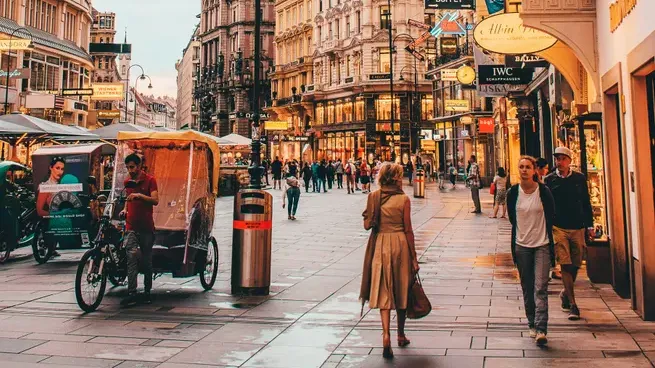
Nestled along the Danube, Vienna stands as one of Europe's most elegant cities, where baroque palaces meet coffeehouse culture in a symphony of history and modernity. For queer travelers seeking a destination beyond the well-trodden paths of Amsterdam or Madrid, Vienna offers a sophisticated welcome that feels both timeless and contemporary. Unlike flashier hotspots, Vienna's appeal lies in its understated inclusivity—safe streets, queer-friendly museums, and a growing scene of bars and drag events that blend seamlessly with the city's old-world charm.
What sets Vienna apart is its consistent sense of safety and relaxation for LGBTQ+ visitors, even outside peak events. The city ranks highly for its progressive attitudes, with legal protections including same-sex marriage since 2019 and strong anti-discrimination laws. Travelers report feeling at ease wandering the cobblestone streets or lingering in historic cafés like Café Central, a haunt for intellectuals where queer history subtly intertwines with Vienna's cultural fabric.
The Rainbow Ring: Pride and Beyond
Vienna's Pride season kicks off on May 29, 2026, culminating in the 30th anniversary of the Rainbow Parade on June 13, 2026. This vibrant procession along the iconic Ringstraße draws hundreds of thousands in a celebration of diversity amid the city's grand architecture. The event transforms the boulevard—lined with Habsburg-era buildings—into a sea of color, featuring floats, music, and community gatherings that highlight transgender, non-binary, and all LGBTQ+ identities. Yet, Vienna's queer-friendliness persists throughout the year, offering a sophisticated and stable community atmosphere that is less dependent on seasonal hype than cities like Cologne.
Local queer voices emphasize this everyday welcome. Queer-owned businesses and inclusive venues cluster around the Naschmarkt and Mariahilfer Straße , where food stalls buzz with multilingual chatter and rainbow flags signal safe spaces. Villa Vida and Das Vindobona are local favorites for high-energy drag events, while the city's famous opera houses continue to set a backdrop for a culture that celebrates gender fluidity. Emerging queer artists are also taking center stage, with the WUK hosting the "Queer Art Spaces Vienna" exhibition during the 2026 Pride month, further weaving LGBTQ+ narratives into the city's world-class art scene.
Cultural Riches Tailored for Queer Explorers
Vienna's cultural depth provides endless layers for queer travelers. Museums like the Leopold Museum house works by Egon Schiele, whose raw, expressive nudes are celebrated today for their exploration of gender fluidity and bodily autonomy. Guided history tours reveal hidden stories of the early 20th century, while the Jewish Museum Vienna honors these narratives in progressive exhibits like "Love me Kosher," which examines the intersection of faith and LGBTQ+ identity.
Stroll through the Prater , where the Ferris wheel offers panoramic views, or join casual queer meetups in the Stadtpark . On the Danube Island , inclusivity reigns at clothing-optional beaches and summer queer picnics. For a taste of tradition, visit legendary coffeehouses like Demel for Sachertorte; while they offer a timeless gemütlichkeit, the modern queer pulse is found at Villa Vida , a community café hosting everything from board game nights to vibrant drag performances.
For nightlife, Vienna's scene is intimate yet electric. Bars like Felixx cater to a diverse crowd with a friendly, inclusive atmosphere. The city's techno clubs, influenced by Berlin but notably more accessible, pulse with inclusive vibes—no dress code judgments here. Local insights highlight a "present-day sense of belonging," where couples of all genders find a welcoming home, extending from the historic city center to the rolling vineyards of the Wachau Valley.
Why Vienna is the Emerging Hidden Gem
Vienna's rise as a queer destination stems from its balance of luxury and approachability. Unlike the massive crowds of Barcelona or Madrid, Vienna offers space to breathe—iconic events like the Rainbow Ball merge waltzes with modern beats in a classic imperial setting. While Malta remains the top-ranked country for legal rights, Austria’s high safety metrics and "Best Gay City" accolades appeal to travelers seeking a sophisticated, safe haven beyond mainstream lists.
Travelers praise the lack of pretense: "Vienna feels safe and relaxed for LGBTQ+ visitors," with espresso-fueled days leading to inclusive evenings. Day trips to the Wachau Valley uncover queer-friendly wine taverns (heurigers), while the Volksoper Wien spotlights LGBTQ+ stories with its special 2026 Pride Edition productions. This cultural richness, paired with efficient public transport and a high level of English proficiency, positions Vienna as a top emerging favorite.
Practical tips: Stay in the 1st or 7th districts for centrality. While the Rainbow Parade is free to attend, you should book tickets early for specific highlights like the Pride Run or the Rainbow Ball via official sites. To find the best gay-hosted stays, use misterb&b, and check Wien.info for a full calendar of queer walking tours. Vienna’s fusion of history and hospitality makes it a destination where LGBTQ+ travelers can truly belong.
by Chris Tremblay
Copyright EDGE Media Network. All rights reserved. This material may not be published, broadcast, rewritten, or redistributed.