The picture most people carry of a wine trip is fixed: rolling rows in Napa or Sonoma, a cellar in Bordeaux, a Tuscan hillside at golden hour. It is a lovely picture, but it is increasingly out of date. Americans are pouring billions into wine travel, and a growing share of that money is leaving California behind for colder, stranger and older places most people could not find on a wine map.
The picture most people carry of a wine trip is fixed: rolling rows in Napa or Sonoma, a cellar in Bordeaux, a Tuscan hillside at golden hour. It is a lovely picture, but it is increasingly out of date. Americans are pouring billions into wine travel, and a growing share of that money is leaving California behind for colder, stranger and older places most people could not find on a wine map.
The map of where wine happens has quietly redrawn itself, and the new coordinates surprise even people who thought they knew wine country. Part of the change is what travelers now want from a trip. Fewer people are content to sip behind a tasting bar; they want to walk the rows, see how the wine is actually made and eat where it is poured. There is a quieter paradox in it, too. People are drinking less wine and traveling more to stand in the places it comes from, treating the vineyard as somewhere to understand a bottle, not just buy one.
The numbers behind that shift are not small. Seventy-four million visits to U.S. wine country and about $14.13 billion in tourism spending flow through the industry each year, and a rising share now points somewhere other than the usual valleys, toward countries most travelers could not have placed on a wine map five years ago.
Where wine was born, 8,000 years ago
Start in Georgia, the small Caucasus nation with a fair claim to being the birthplace of the whole craft. Winemaking here stretches back more than 8,000 years, and the method that defines it is still in daily use. Grapes ferment inside qvevri, large egg-shaped clay vessels buried underground, a tradition UNESCO added to its list of intangible cultural heritage. The wines that emerge, often amber, textured and nothing like a supermarket bottle, have made the country a magnet for travelers who want their wine with several thousand years of history behind it.
The world's largest cellar sits in Europe's least-expected corner
Moldova, wedged between Romania and Ukraine, is one of Europe's fastest-growing destinations, with international arrivals up 62% in the first half of 2025 compared with pre-pandemic levels. The draw is partly underground. Outside Chișinău, the Mileștii Mici cellars hold the largest wine collection in the world, with tunnels of bottles running for miles and tastings that start around $90.
A Champagne house bet on Kent, and the frontier kept moving north
The clearest sign that the climate is rewriting the map is who is planting where. Champagne Taittinger opened Domaine Evremond in Kent in late 2024 and released its first English sparkling wine the following spring, the first time a Champagne house has built an English estate from the ground up. The site was chosen for chalk soils and south-facing slopes that echo Champagne itself.
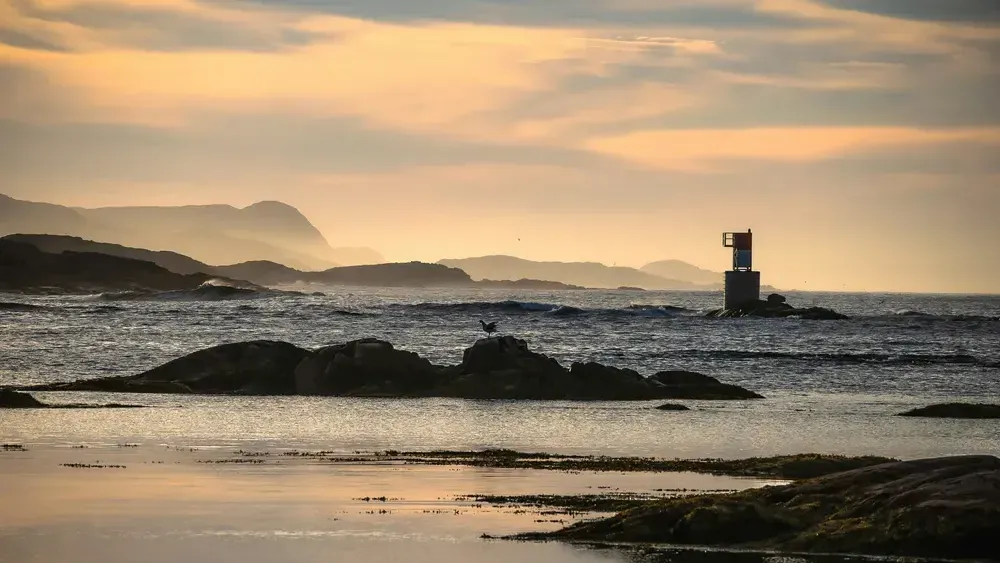
The frontier runs further north still. Sweden has grown from two commercial vineyards 15 years ago to roughly 40 today, helped by southern temperatures that have climbed about 3.6 degrees Fahrenheit over three decades, and the world's northernmost commercial vineyard now sits in Telemark, Norway.
In Kenya, a wine cellar in a water tower
Africa's wine story reaches well beyond the established estates of South Africa. In Kenya's Laikipia highlands, Segera Retreat keeps its cellar inside a converted water tower, where a private tasting or a dinner among the bottles is arranged on request rather than ordered from a list, often steps from where elephants pass at dusk.
Further west, Dakar has built a small but serious wine-bar culture, and Ethiopia pours tej, a honey wine with a history all its own. The industry is taking notice. The continent's biggest travel trade show added a dedicated wine tourism program for 2026.
What the numbers say comes next
None of this is a niche curiosity any longer. The first Global Wine Tourism Report, published in 2025 by Geisenheim University with the UN World Tourism Organization and partners, drew on responses from 1,310 wineries across 47 countries and found that tourism now generates around a quarter of total winery revenue.
Wine drinking is softening worldwide, yet visits to wineries are doing the opposite, and producers are building for it. Hotels and resorts increasingly stage the experience themselves rather than leave it to the vineyards. W Algarve, in southern Portugal, is launching a sommelier-led dinner series with the centuries-old Douro producer Van Zellers, making the wine itself the reason to book the trip.
There is a short-lived advantage in all of this. The regions that feel improbable now, a clay vessel buried in Georgia or a vineyard inching up the Swedish coast, are on the same path Napa walked 50 years ago, from curiosity to crowded. The travelers paying attention are the ones going while these places are still discoveries rather than destinations, before the maps catch up and the prices follow.
Mandy is a luxury travel, fine dining and bucket-list-adventure journalist with expert insight from 47 countries. She uncovers unforgettable experiences around the world and brings them to life through immersive storytelling that blends indulgence, culture and discovery, and shares them with a global audience as co-founder of Food Drink Life. Her articles appear on MSN, Yahoo and through the Associated Press wire in major U.S. outlets, including NBC, the Daily News, Boston Herald, the Chicago Sun-Times and many more.
by Mandy Applegate
Copyright Associated Press. All rights reserved. This material may not be published, broadcast, rewritten, or redistributed.
Tucked in the scenic Ozark Mountains, Bentonville, Arkansas, has emerged as a surprising and vibrant sanctuary for LGBTQ+ travelers and residents alike.
For many years, the mention of Northwest Arkansas conjured images of rolling hills and corporate boardrooms, but today, a new narrative is being written in the heart of Bentonville. With a population of approximately 54,000, this once-quiet town is rapidly evolving into one of North America’s most compelling "lesser-known" LGBTQ+ destinations. The shift isn't just happening in the margins; it is being led by world-class art institutions, local entrepreneurs, and a grassroots community determined to make the Ozarks a place where transgender people, non-binary individuals, and the entire queer spectrum can flourish.
A Celebration in Bloom
The momentum of this cultural change was palpable on the evening of Friday, June 19, 2026, when the 21c Museum Hotel Bentonville hosted its annual Pride Celebration. This year’s theme, “Nature is Queer,” drew hundreds of attendees to the boutique hotel’s downtown location at 200 NE A Street. The event, which ran from 7:30 p.m. to 11 p.m., was a high-energy testament to the city's growing inclusivity, featuring drag performances, live music, and a focus on the intersection of identity and the natural world.
Attendees at the "Nature is Queer" party were greeted by an environment that blended the hotel’s contemporary art galleries with vibrant, floral-inspired queer aesthetics. The celebration served as a fundraiser for local initiatives, reinforcing the idea that Pride in Bentonville is as much about community support as it is about visibility. By centering the event on the "Nature is Queer" concept, organizers highlighted the inherent diversity of the natural world, a message that resonates deeply in a region known for its outdoor beauty.
Curated Spaces for Connection
Beyond the high-profile parties, Bentonville has focused on creating consistent, year-round spaces for LGBTQ+ people to connect. A standout example is the "Hairpins" monthly happy hour series, which recently expanded from Little Rock to Bentonville. Hosted at The Momentary , a contemporary art space and sister site to Crystal Bridges, these gatherings occur every second Wednesday of the month. The June 10, 2026, gathering saw a record turnout of lesbian, queer, and gender-diverse residents who filled the venue for an evening of live music and community building.
The "Hairpins" events are intentional in their design, offering a free and public 21+ gathering that prioritizes safety and joy for gender-diverse people in a state that has seen challenging legislative climates. By partnering with major cultural venues like The Momentary, organizers are ensuring that queer social life is integrated into the city's premier artistic landscape. This partnership signifies a long-term commitment to visibility and stability for queer Arkansans, moving beyond one-off events to foster a genuine sense of belonging.
Art as an Anchor
The role of the Crystal Bridges Museum of American Art in this transformation cannot be overstated. Throughout June 2026, the museum has hosted a series of "Pride in the Galleries" cocktail tours, allowing visitors to explore the collection through an LGBTQ+ lens. One particularly popular tour in June focused on the exhibition *Keith Haring in 3D*, celebrating the legendary gay artist's work and activism. These tours, led by museum staff, provide a historical and cultural context for queer identity, grounding the local movement in a broader narrative of American art history.
Crystal Bridges is also currently undergoing a major expansion that is set to increase its size by 50% in 2026, further cementing Bentonville’s status as a global art destination. The museum’s commitment to diversity extends to its "CB to You" Mobile Art Lab, which brings art-making activities and LGBTQ+ resources directly into community spaces, including the upcoming Northwest Arkansas Pride festivities. By making queer art and history accessible to all, the museum serves as a powerful ally in the fight for equality and visibility.
Navigating the New Ozarks
The spirit of inclusion has permeated Bentonville’s local business community as well. Organizations like Northwest Arkansas Equality and digital resources like "Rainbow Radar" have helped identify and promote LGBTQ+-affirming businesses throughout the city. From creative studios like Crock a Doodle at 326 Southwest A Street to local coffee shops and boutiques, a visible network of allies is making the city more navigable and welcoming for LGBTQ+ travelers.
This business-led inclusion is essential for a city like Bentonville, which attracts thousands of visitors for its mountain biking trails and corporate headquarters. When travelers see Pride flags in shop windows and trans-affirming policies in local hotels, it changes the perception of what is possible in the South. The 21c Museum Hotel, for instance, explicitly welcomes guests of all sexual orientations and gender identities, offering "Pride Packages" where a portion of the proceeds is donated to Queer|Art, a non-profit supporting LGBTQ+ artists across the country.
The Road Ahead
While Bentonville serves as a sophisticated arts-centric hub, it is part of a larger regional awakening. The neighboring city of Fayetteville is currently preparing for Northwest Arkansas Pride, taking place from June 26 to June 28, 2026. This celebration, the largest in the state, includes a Trans March, a vibrant parade down Dickson Street, and the "Glitterville" party at George’s Majestic Lounge. The synergy between Bentonville’s curated art events and Fayetteville’s large-scale community celebrations creates a diverse weekend of festivities that attracts visitors from across the nation.
For those considering a visit, the current moment offers a unique opportunity to witness a community in bloom. Bentonville is no longer just a destination for corporate travelers; it is a city where the "Nature is Queer" celebration on June 19 and the monthly "Hairpins" gatherings are defining a new standard for Southern hospitality. As the city continues to expand its cultural footprint, its commitment to inclusive, person-first language and radical acceptance remains its most beautiful attribute.
by Chris Tremblay
Copyright EDGE Media Network. All rights reserved. This material may not be published, broadcast, rewritten, or redistributed.
Competitors take part in the Aberdeen Dragon Boat Race to celebrate the Dragon Boat Festival in Hong Kong, Friday, June 19, 2026. Photo Credit: AP Photo/Chan Long Hei
Dragon boat races, lion dances, and other festivities have been staged across mainland China, Hong Kong and Taiwan to mark the Dragon Boat Festival
Dragon boat races, lion dances and other festivities marked the Dragon Boat Festival on Friday across mainland China, Hong Kong and Taiwan. The more than 2,000-year-old holiday is best known for its sporting events, but its origins are rooted in ancient beliefs about health, protection and harmony with nature.
“The fact that this holiday has been preserved for thousands of years shows how much we value our traditional customs,” said Meng Dongmei, a retired resident of Beijing’s Tongzhou district.
Meng said her family observes the holiday through a variety of traditional customs. They prepare zongzi, the sticky rice dumplings associated with the festival, and children wear five-colored bracelets believed to ward off evil.
“We also learned online about a traditional recipe using mugwort leaves, red dates, brown sugar and ginger to boil eggs,” Meng said. “We heard that it could help ward off illness and keep people healthy throughout the year, so we hope that through this festival our family will enjoy good health.”
Thousands to gather for boat races
Beijing’s 2026 celebrations will continue through the weekend at the capital’s Grand Canal.
The three-day event features men’s, women’s and mixed dragon boat races over distances of 100, 200 and 500 meters. Teams from Beijing, Tianjin, Hebei, Shanxi and Guangdong will compete throughout the holiday weekend.
More than 1,000 athletes and 200,000 spectators are expected to gather for the event, organizers said in a press release.
“The competition helped strengthen our team spirit,” said Li Maoshan, a participant in Friday’s races. “It also gave us an opportunity to demonstrate the spirit of perseverance and hard work.”
Beyond the races
Among the cultural features during Beijing’s Dragon Boat Festival were demonstrations of Wing Chun martial arts, a market featuring traditional handicrafts and a performance in which dancers mimic the movements of a lion.
Activities were intended to highlight cultural exchanges between northern and southern China, officials said.
Friday’s lion dance was presented by a group of performers from Guangdong province in southern China. “Wherever there is a festive occasion, you’ll find dragon and lion dances,” said He Weihong, founder of the group. “Dragon boat racing and dragon-and-lion dancing are inseparable, as they are both part of our intangible cultural heritage.”
Ancient customs on health and protection
The festival’s roots run deeper than sporting competitions. It is widely associated with the ancient poet Qu Yuan, who according to legend drowned himself more than 2,000 years ago.
Tradition holds that people raced out in boats to search for him and threw rice into the river so fish would not eat his body. That story is often linked to both today’s dragon boat races and the zongzi still prepared by families across China.
“The Dragon Boat Festival is probably the richest and most diverse of all traditional Chinese festivals,” said Tsinghua University history professor Liu Xiaofeng. “Across different regions, people developed a wide variety of traditions based on ideas connected to the summer solstice and the balance of yin and yang.”
The holiday falls in the fifth month of the traditional Chinese lunar calendar, around the time of the summer solstice. Ancient Chinese viewed this as a period when insects, poisonous creatures and disease became more prevalent, giving rise to a wide range of customs aimed at preserving health and warding off misfortune.
“At its core, the Dragon Boat Festival is about disease prevention, warding off evil and maintaining health,” Liu said.
Some people wear sachets containing medicinal herbs during the festival. Others fumigate their homes with smoke, a practice intended to prevent disease by driving out things considered harmful.
“Chinese people have traditionally placed a special emphasis on happiness, well-being and living in peace and safety,” Liu said. “Nearly all of China’s major festivals are connected in some way to these aspirations.”
Evolving traditions
Participants in Hong Kong’s dragon boat races on Friday wore costumes including a cartoon version of Chinese Taoist deity Ne Zha.
Guided by the thunderous beat of their drummers, crews pulled their paddles through the water in unison, each boat surging toward the finish line as spectators cheered them on. Others watched the races at home as they enjoyed zongzi with their families.
“Today more than 64% of China’s population lives in urban areas and people’s lifestyles have been transformed,” Liu said. “In a large city, it’s difficult to celebrate the festival the way people once did in rural communities. Festivals evolve along with the times.”
Bao Nari, a Beijing resident who spent years away from home while she studied in Japan, said that while boat races were not part of her childhood celebrations, other long-standing Dragon Boat Festival traditions like wearing five-colored bracelets were passed down through her family.
“After coming back, I’m impressed by how much cultural development has progressed here,” Bao said. “This cultural heritage has become deeply rooted in our hearts and it inspires our generation to be more confident.”
by María Teresa Hernández
Copyright Associated Press. All rights reserved. This material may not be published, broadcast, rewritten, or redistributed.
Nestled in the rolling hills just off the Mississippi River, the small former mining town of Galena, Illinois, has quietly become one of the Midwest’s most LGBTQ-friendly getaways, trading big-city anonymity for front-porch warmth and rainbow bunting on Main Street.
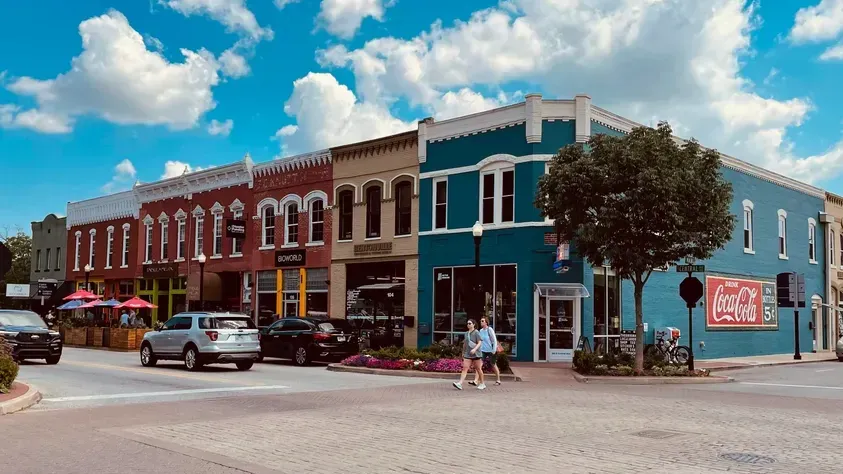
The first thing you notice in Galena isn’t a rainbow flag; it’s the light. On summer evenings, it sinks over the ridges of the Driftless Zone and catches the brick facades of 19th-century storefronts, turning Main Street the color of warm bourbon as church bells and bar chatter drift into the valley. Then, as you wander past antique shops and wine bars, you see it: a small Progress Pride flag taped in a café window, a rainbow decal on a real estate office door, a drag brunch poster in a shop that, from the outside, looks like it should only sell feed and seed.
For queer travelers used to hiding in plain sight in big cities, Galena feels oddly intimate and surprisingly *visible* at the same time. This town of roughly 3,000 people, three hours west of Chicago and a world away in pace, has quietly engineered a reputation as a rural queer refuge—complete with gay-owned inns, a Pride picnic that commandeers the local park every June, and locals so enthusiastic about inclusivity that an international LGBTQ+ magazine happily dubbed the place “Gaylena.”
How Galena Became “Gaylena”
Galena’s queer story begins like many good queer stories do: with a few stubborn dreamers buying old buildings and daring to imagine a different kind of future. Over the past decade, LGBTQ business owners have restored historic homes into boutique guesthouses, opened eclectic shops, and helped seed a culture where being openly gay, lesbian, bisexual, transgender, or nonbinary is not just tolerated but casually woven into daily life.
Attitude Magazine in the United Kingdom went so far as to call Galena “Gaylena,” describing it as a rural haven where queer couples stroll hand-in-hand past steeples and river bluffs without drawing a second glance. Travel outlet Islands Magazine echoed that sentiment in a 2024 feature on the most LGBTQ+ friendly small towns, highlighting Galena’s trifecta of gay-owned inns, a growing Pride calendar, and enthusiastic community support for queer visitors.
Local tourism officials have leaned into this evolution with a mix of Midwestern understatement and rainbow-forward marketing. The official Galena Country Tourism website features LGBTQ-friendly lodging and experiences alongside its broader messaging, and regional campaigns such as #AmazingForAll emphasize that the town’s welcome isn’t just seasonal or symbolic.
Staying in a Queer-Owned Historic Home
Where you sleep in Galena is part of the story. Many queer travelers choose one of several LGBTQ-owned or LGBTQ-welcoming inns that have turned 19th-century architecture into something decidedly 21st-century: safe, affirming space.
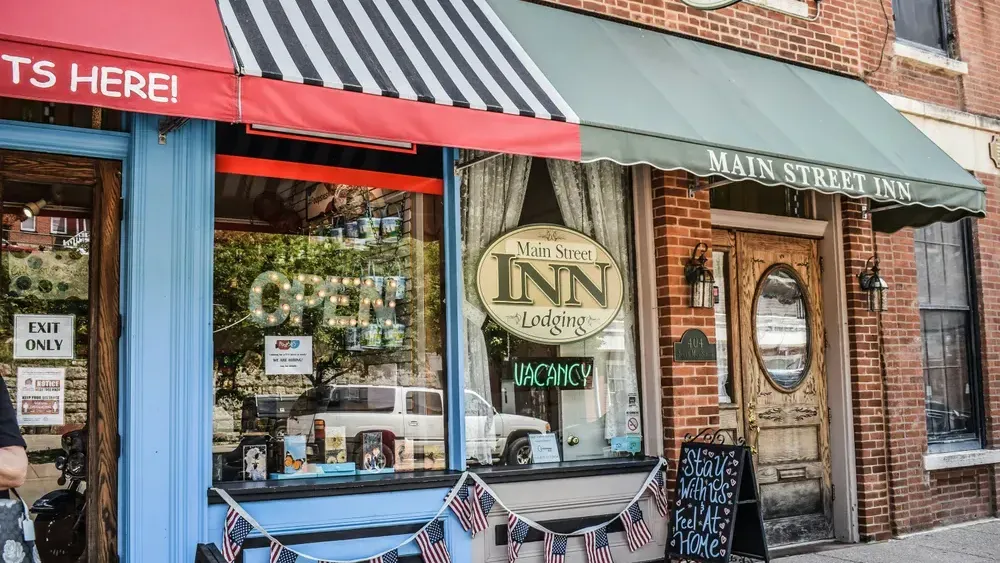
Aldrich Guest House, a gay-owned inn dating back to the 1840s, is routinely cited in LGBTQ travel features as a standout stay, pairing period details—hardwood floors, tall windows—with thoughtful touches like locally sourced breakfasts and evening wine-and-cocktail hours where guests actually talk to one another. Hawk Valley Retreat and Cottages, another gay-owned property just outside town, offers private cottages with porches that look out over rolling countryside, creating a retreat-like environment for couples and solo travelers who want to hear more birds than car horns.
Even beyond explicitly gay-owned lodging, the area’s hospitality industry has embraced inclusive training and messaging. Galena Country Tourism reports that many local accommodations, from B&Bs to vacation rentals, participate in regional diversity and hospitality programs, signaling to LGBTQ guests that they can disclose their partner’s pronouns or ask for one bed without bracing for awkwardness.
For transgender travelers and nonbinary guests, that attention to detail can be the difference between a weekend that feels like a true escape and one that feels like constant emotional labor.
Pride on the Pasture: Galena’s Pride Picnic
If big-city Pride is all about scale and spectacle, Galena’s annual Pride Picnic is about proximity—the kind where you can actually see the faces behind the flags. Every June, locals and visitors gather in a community park for a day that looks like a classic Midwestern picnic until you notice the drag performers, the rainbow picnic blankets, and the elderly couple wearing matching “Free Mom Hugs” T-shirts.
The Pride Picnic, launched in 2021 and now a staple of the town’s summer calendar, typically features live music, family-friendly activities, and a visible presence from regional LGBTQ organizations and affirming faith groups. Islands Magazine notes that nearly all of Main Street seems to show up, flying rainbow flags and using the hashtag #AmazingForAll to amplify the day beyond the hills.
EDGE Media Network reports that the event’s popularity reflects a deeper cultural shift, with LGBTQ residents visible in local leadership, entrepreneurship, and community groups. That visibility contributes to a climate where queer youth, queer elders, and visitors can see themselves reflected in more than just annual celebrations.
What Queer Visitors Actually Do Here
This is still a river town, which means Galena’s charms are as much about texture and air as they are about policy. On a typical weekend, visitors might wake to the smell of coffee and fresh pastries at a bed-and-breakfast, step onto a porch wrapped in morning fog, and then wander down to Main Street as the sun burns through over the bluffs.
For outdoorsy travelers, the area offers hiking and skiing at Chestnut Mountain Resort, where trails weave above the river valley and, in winter, chairlifts rattle over snow-dusted slopes. Kayaking and paddling excursions on the Galena River provide a quieter way to explore, with outfitters accustomed to welcoming LGBTQ couples and groups.
Back in town, the sensory palette shifts from pine and river mud to wood polish and bourbon. Main Street’s historic storefronts house galleries, tasting rooms, and boutiques, including Blaum Bros. Distilling Co., where small-batch spirits are poured for visitors of all identities in a space that frequently appears on queer travel itineraries. Evening can mean everything from a low-key dinner in a candlelit restaurant to a drag show in a former mining-town venue, an experience EDGE Media Network highlighted as emblematic of Galena’s blend of heritage and queer joy.
For art lovers, nearby studios and galleries showcase regional painters, sculptors, and photographers, and many spaces participate in inclusive programming that welcomes LGBTQ artists and audiences. That blend of rural landscape and creative energy has helped cement Galena’s image as a place where queer travelers can have both: a morning on a trail and an evening arguing about abstract art over local wine.
Safety, Policy, and the Feel of the Street
Legally, Galena benefits from Illinois’s statewide protections against discrimination based on sexual orientation and gender identity in employment, housing, and public accommodations, which have been in place in various forms since the mid-2000s. Human Rights Campaign’s latest Municipal Equality Index notes that several Illinois cities score highly on LGBTQ inclusivity, reflecting the broader policy environment that underpins rural destinations like Galena.
But queer travelers do not experience statutes; they experience sidewalks. Here, the sidewalks are narrow and often crowded, and anecdotal reports collated by LGBTQ travel writers and platforms such as OutCoast Nation describe a town where same-sex couples feel comfortable showing affection and transgender people report positive interactions in shops and restaurants.
Travelers should still use the same common-sense safety practices they would anywhere: check recent reviews, be mindful at night, and stay connected with trusted contacts. That said, Time Out’s and Islands Magazine’s small-town LGBTQ features consistently place Galena among the standout rural destinations in the country, not just for its picturesque streets but for the community norms that make queer visitors feel not just tolerated but welcome.
Why Rural Queer Escapes Matter Now
In an era when headlines often highlight legislative attacks on LGBTQ rights in parts of the United States, the existence of visibly queer-affirming small towns carries symbolic and practical weight. For queer people who grew up in rural areas and fled to cities for safety, places like Galena complicate the old narrative that the only safe direction is “away.”
LGBTQ advocates and travel professionals note that smaller destinations can also offer something large cities struggle to provide: relational visibility. In a town this size, your bartender might also be your hiking guide and your Pride volunteer coordinator, collapsing the distance between “service provider” and “neighbor.” That can create a sense of belonging that isn’t always available in anonymous urban nightlife districts.
Economically, Galena’s embrace of LGBTQ visitors is not just altruistic; it is strategic. State tourism campaigns have explicitly identified LGBTQ travelers as a key market segment, encouraging small towns to highlight inclusive events and queer-owned businesses as part of their growth strategies. In Galena, that has translated into support for Pride programming, marketing partnerships with LGBTQ media, and targeted outreach to Chicago’s queer community looking for weekend escapes.
Planning a Trip with an Eye on Inclusion
For LGBTQ travelers considering Galena, experts recommend some specific steps to maximize comfort and connection. Booking directly with queer-owned or clearly LGBTQ-welcoming inns such as Aldrich Guest House or Hawk Valley Retreat allows visitors to support local LGBTQ entrepreneurs and get insider recommendations on queer-friendly experiences.
Checking the calendar for the Pride Picnic or related events can shape the feel of a visit: June brings the most explicitly queer programming, but shoulder seasons offer more privacy and lower prices without sacrificing the town’s inclusive vibe. Social media channels from Galena Country Tourism and local businesses provide up-to-date information on drag shows, queer-led tours, and special events.
For transgender travelers or those with specific safety concerns, organizations like the International LGBTQ+ Travel Association maintain guides and partner lists that include properties and operators vetted for their commitment to inclusion. Combined with recent travel pieces in outlets such as Islands Magazine and EDGE Media Network, these resources paint a consistent picture: Galena may be small, but it is not timid about welcoming queer visitors.
As dusk settles and the last day-trippers drive back toward Chicago, the town quiets to a soft hum—crickets, clinking glasses, laughter spilling out of a bar where someone in a sequined dress is belting out a ballad. In the glow of porch lights and neon, Galena feels like what many LGBTQ people are still searching for: a place small enough to know your name and proud enough to make sure it is pronounced, and respected, exactly as you choose.
by Chris Tremblay
Copyright EDGE Media Network. All rights reserved. This material may not be published, broadcast, rewritten, or redistributed.
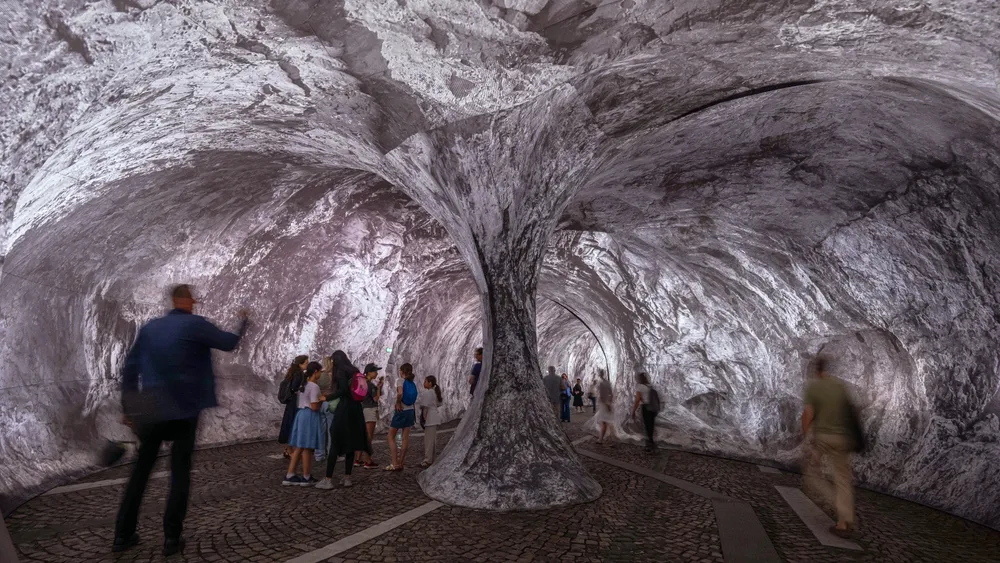
Visitors walk into the artwork "The Pont Neuf Cave" by French street artist JR on the Pont Neuf bridge, Tuesday, June 16, 2026, in Paris, open to the public from June 15 to 28. Photo Credit: (AP Photo/Aurelien Morissard)
French street artist JR has transformed Paris' oldest bridge, the Pont Neuf, into an artificial cavern
For weeks, a black mountain loomed over the Seine where Paris’ oldest bridge should have been. On Monday evening, its doors finally opened.
Inside, Paris smells different. The air carries the scent of earth after rain — damp ancient stone, cellar walls, perhaps a trace of smoke.
Visitors step from the bright riverfront into a dark passage lined with glowing photographs of caves, as a low electronic pulse seems to breathe through the walls.
Beneath it all, the old cobblestones of the Pont Neuf rise and fall underfoot.
Made largely from printed fabric and air, it transforms the 17th-century bridge into an artificial cavern rising 18 meters (59 feet) above the Seine.
“It feels like the city has disappeared,” said Léa Martin, a 22-year-old art student from Lyon on Tuesday. “You know the river is right outside, but for a moment you’re somewhere ancient.”
Paris steps in and sniffs history
The smell is central to the illusion.
Olfactory expert Sarah Bouasse created two shifting scents: drawing on geosmin and isoborneol, compounds associated with the aroma released when rain strikes dry earth.
It changes along the crossing: first wet earth and mineral dampness, then something warmer, smokier and faintly animal.
“Usually I cross here without looking up once,” said Michel Dupré, a 67-year-old retiree, blinking as he emerged into daylight. “Today I felt the stones under my feet. And smelled them too. It makes you walk like a child again.”
A sound installation by Thomas Bangalter, formerly of the French electronic duo Daft Punk, accompanies the work, filling the cavern with low rumbles, echoes and pulses.
Completed in 1607, the Pont Neuf — despite its name, “New Bridge” — is the oldest bridge still standing in Paris.
JR’s installation asks people to experience the familiar crossing through their noses, ears and feet.
It also pays tribute to Christo and Jeanne-Claude, whose 1985 wrapping of the bridge in pale golden fabric drew an estimated 3 million visitors.
Their work covered the Pont Neuf in light.
The dark side
JR sends visitors into darkness.
“You enter into the darkness,” he has said, “and emerge into the light on the other side.”
Visitors can also raise their phones to activate an augmented-reality experience developed with tech company Snap.
Digital bats trail light through the cave, passing bodies leave ghostly traces and a dancer materializes in space.
JR has linked the work to Plato’s allegory of the cave, in which prisoners mistake shadows for reality. Today’s cave walls, he argues, are screens and the algorithms that shape what people see. Yet the installation’s strongest effects require no phone.
“It’s completely strange,” said Nadia Benali, 34, smiling beside the artificial cliffs. “Paris needs things that make people stop.”
When the cave closes, its fabric will be reused or recycled.
The mountain will vanish, traffic will return and the Pont Neuf — older than the French Revolution — will emerge into the light once more.
by Thomas Adamson
Copyright Associated Press. All rights reserved. This material may not be published, broadcast, rewritten, or redistributed.
Wichita, Kansas, has been positioning itself as a more welcoming destination for LGBTQ+ travelers, and the Delano District has emerged as one of the city’s most visible examples.
Wichita’s Delano District is being presented by the city’s tourism arm as one of the most LGBTQ-friendly parts of town, a place where visitors can find independent businesses, walkable streets and a neighborhood identity that is openly welcoming. Visit Wichita describes Delano as one of the city’s “hip” and LGBTQ+ friendly neighborhoods, noting that it is home to boutiques, restaurants and attractions near the Arkansas River and the Keeper of the Plains.
That positioning matters because the travel market for LGBTQ+ people is not only about entertainment or nightlife; it is also about safety, ease of movement and the ability to patronize businesses without drawing unwanted attention. Visit Wichita says that Wichita does not have a dedicated gayborhood, but does have LGBTQ-friendly areas, restaurants, bars and shops spread across the city, especially in more central districts such as Downtown, Riverside, the Douglas Design District and Delano.
Why Delano is drawing attention
According to Visit Wichita, Delano stands out because it combines a historic riverfront setting with a mix of locally rooted commerce and tourist-friendly landmarks. The guide points visitors toward Riverfront Stadium, the Keeper of the Plains, Boats & Bikes, the Wichita Baseball Museum and nearby local shops, framing the district as a place where tourism and everyday neighborhood life overlap.
The district’s appeal also rests on its business mix. Visit Wichita highlights Vortex Souvenir, describing it as a shop that features local art and handcrafted goods from queer artists in the community. That emphasis on locally made goods and queer creators gives the area a distinctly small-business character rather than a chain-driven one.
For LGBTQ+ travelers, that kind of business ecosystem can be especially valuable. Travel guides and destination organizations often frame welcoming spaces not only as places that tolerate queer visitors, but as spaces where they can feel seen in the ordinary flow of commerce—shopping, dining, walking and attending events without needing to self-censor. The International LGBTQ+ Travel Association identifies itself as the world’s leading network of LGBTQ+ welcoming tourism businesses, reflecting the broader industry recognition that affirming travel experiences are a distinct market segment.
A city trying to signal inclusion
Wichita’s tourism guide says the city adopted what it calls the strongest non-discrimination ordinance in Kansas in 2021, protecting sexual orientation and gender identity within city limits. The same guide says that change helped Wichita earn a perfect 100 on the Human Rights Campaign’s Equality Index.
Those legal protections help explain why a neighborhood spotlight like Delano matters beyond tourism branding. When a city publicly identifies neighborhoods and businesses as welcoming, it creates a practical signal for travelers deciding where to stay, eat and spend their money. Visit Wichita’s guide presents central Wichita neighborhoods as places where queer couples are unlikely to face outright hostility and where public displays of affection are less likely to draw attention than in more suburban areas.
The tourism message is reinforced by the city’s broader visitor-facing narrative: Wichita does not claim a single concentrated LGBTQ+ district, but instead points to a network of friendly spaces across the city. That is a different model from the classic “gayborhood” approach, and it may appeal to travelers looking for a broader urban experience with multiple options for dining, culture and nightlife.
Business, nightlife and everyday visibility
The Delano District is not only about daytime tourism. Visit Wichita’s guide says Wichita’s nightlife is centered largely in Old Town, including two of the city’s gay bars, and it identifies XY as the city’s newest LGBTQ+ nightclub, with drag shows, karaoke and DJ nights. It also describes J’s Lounge as a gay dive bar near Old Town and notes that another nearby dive bar is popular with LGBTQ+ college students and locals.
Although those venues are not all in Delano itself, their proximity to the district helps create a larger visitor experience in central Wichita. For travelers, that means an evening out in one neighborhood can be paired with daytime shopping, riverfront sightseeing and dining in another nearby district without requiring extensive transit.
The nearby Douglas Design District adds another layer to that city-center network. Visit Wichita says the district includes shops, art galleries, restaurants and 108 murals, and it describes the area as gay-friendly. Together with Delano, this creates a corridor of visually distinctive, locally owned or locally flavored destinations that can be attractive to visitors interested in urban exploration rather than resort-style tourism.
Why this matters for LGBTQ+ travelers
A travel feature about one business district can reveal something larger about how destinations market themselves to LGBTQ+ visitors. The core message from Wichita’s tourism office is not that inclusion depends on one venue, but that welcome is distributed across multiple businesses, neighborhoods and public spaces. That approach reflects a shift in travel marketing, where affirming destinations increasingly emphasize walkability, neighborhood character and visible local commerce alongside formal protections.
For many queer travelers, a place like Delano can function as a low-pressure entry point into a city. Independent shops, restaurants and riverside attractions provide familiar travel anchors, while nearby districts extend the experience into nightlife and arts. The result is a destination image built less on spectacle than on everyday accessibility.
That matters because inclusive travel is not only about whether a destination is “friendly” in the abstract. It is also about whether businesses, public spaces and local institutions make visitors feel welcome in practice. Wichita’s tourism pitch suggests that Delano, along with nearby downtown districts, is part of that effort—one that combines local commerce, public art, and visible LGBTQ+ inclusion into a single visitor experience.
The business case behind the welcome
There is also a straightforward economic dimension to this story. When tourism boards identify LGBTQ-friendly districts, they are helping businesses reach a market that actively looks for affirming places to stay, shop and dine. Visit Wichita’s guide does exactly that by naming specific neighborhoods and businesses, from Delano’s Vortex Souvenir to Old Town’s LGBTQ nightlife venues, turning inclusion into a practical travel guide rather than a vague promise.
In that sense, Delano is more than a pleasant district near the river. It is part of Wichita’s public case that the city can be navigated comfortably by LGBTQ+ visitors, with affirming businesses and recognizable landmarks woven into the tourist experience.
by Chris Tremblay
Copyright EDGE Media Network. All rights reserved. This material may not be published, broadcast, rewritten, or redistributed.
The unique grandeur of the Sagrada Familia means that even those who work and worship at Barcelona’s world famous basilica every day can still be surprised with some fresh wonder
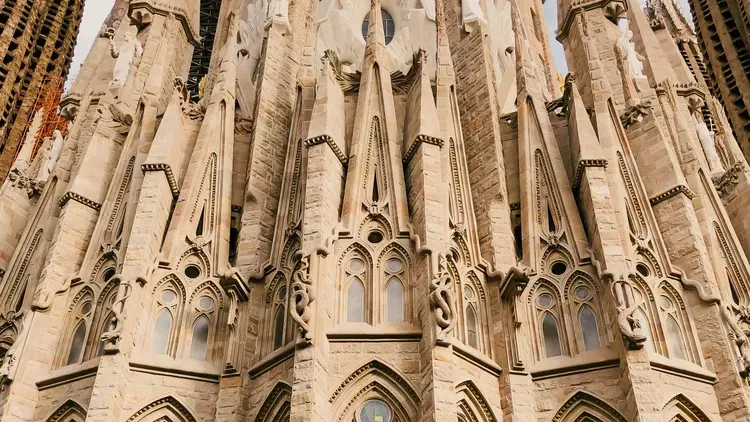
The Sagrada Familia basilica features sandcastle-like spires, stone carved to look like lush flora, a kaleidoscopic interior and a trove of treasures, some hiding in plain sight. Even regular worshippers at Barcelona’s world-famous landmark find themselves dumbstruck with wonder.
Josep Turull, the Catalan rector of the Sagrada Familia and the priest in charge of its parish activities, recently granted The Associated Press a private tour to show off his favorite gems ahead of Pope Leo XIV's highly anticipated Mass on Wednesday night.
“We say that one of the elements of the Sagrada Familia Basilica is that you never exhaust it,” Turull said. “I have spent the last eight years as its rector, and each day I discover something new.”
1. Enigmas are engraved in the façades
Each morning, Turull approaches the basilica's elaborately decorated façades. They are packed with an abundance of religious scenes and symbols, some easy to interpret for anyone with a basic understanding of Christianity, while others are mysterious and even shocking to see in a church.
The westward-looking Façade of the Passion is stark, its figures tormented, their bodies strained in angular poses. That was how architect Antoni Gaudí wanted it — “harsh and cruel, as if made of bones,” to show the pain and torment of Christ’s final days.
Decades after Gaudí's own death, sculptor Josep Subirachs tempered the façade's misery with some playful elements. There's Gaudí himself, above the central door, staring across at Jesus carrying his cross to Calvary. And what's that suduko-like numbered grid next to Judas kissing Jesus before his betrayal?
The “magic square” symbolizes the inevitability of Christ's death; adding the numbers in any direction always produces 33, Jesus's age at his crucifixion.
Another puzzle awaits the patient eye that drifts across to the scene of Peter denying Christ: a small, square-shaped labyrinth. Turull said that it alludes to the need to keep faith in God when we feel lost.
2. The tower tops hold cornucopias and real birds of prey
After celebrating Mass, Leo will step outside to offer a blessing for the Tower of Jesus Christ that made the Sagrada Familia the world’s tallest church when it was raised in October.
The basilica's heights are bursting with nature, from the rooster who crowed while Peter denied Christ to reptiles doing the job of gargoyles, and piles of fruit that crown its spires.
There are also flesh-and-blood beasts; a family of peregrine falcons nest in the tower dedicated to St. James, keeping away pigeons and, more importantly, their excrement.
Gaudí's masterpiece was chosen as one of the ideal spots to reintroduce the species, as it was one of the last locations in town where these birds nested before disappearing during the 1970s. The falcons have been breeding successfully at the basilica for over two decades.
Turull said that these lightning-fast birds of prey “recover the cycle of natural life.”
3. The tour goes underground to find Gaudí's crypt
For the millions of annual visitors who admire the colored light filtering through the basilica's stained-glass windows, jostle for position to snap selfies and huddle around tour guides, it is easy to overlook what Turull calls its “spiritual heart." That requires going through a modest side entrance and descending a staircase.
Underground is a much smaller, more intimate chapel, where dozens of worshippers silently attend Mass and faith manages to keep sightseeing at bay.
Fittingly, it is here where Gaudí, a fervent Catholic, rests in a discreet tomb set inside a nook. He died exactly 100 years ago after being hit by a streetcar.
“People come to ask for his intercession,” Turull said, gesturing to the tomb interred in the floor. “That’s why there are so many candles. Because people place their trust in him. Many people have received favors for having prayed at the tomb of Gaudí.”
The Vatican is in the midst of a decades-long process that could eventually make Gaudí a saint. After Pope Francis named Gaudí “venerable” in 2025, the Vatican must now confirm a miracle attributed to his intercession for him to be beatified, then a second miracle for him to be canonized.
The basilica has proposed that the pope pray at Gaudí’s tomb during his visit, but whether he does remains to be seen.
4. A seashell for holy water
Before ascending, Turull pauses at an enormous seashell — a real one, not made of stone — that serves as a basin for holy water. He said that Gaudí had the seashell from the Philippines set in wrought iron and fixed to the column.
“Gaudí always takes nature as an example,” Turull said, referencing the way the natural world inspired his designs and decorations.
5. A changing room fit for a pope
Up a twisting staircase, a private room bathed in sunlight houses two freestanding oak cabinets laced with intricate ironwork. Designed by Gaudí, they hold the basilica’s most precious relics and most important clerical clothing. Among them is Pope Benedict XVI's chasuble — a cloak that clergy wear when celebrating Mass — from when he consecrated the Sagrada Familia in 2010.
This is where Pope Leo will change into a chasuble that is being sewn at a workshop just for this occasion.
Turull said the vestment will feature details symbolizing the day’s importance and a design related to the basilica's recently raised Cross of Jesus Christ. But he won't say anything more for now; some things need to stay secret.
by Joseph Wilson
Copyright Associated Press. All rights reserved. This material may not be published, broadcast, rewritten, or redistributed.
On a remote rock off Newfoundland’s northeast coast, Fogo Island Inn has quietly built a reputation as one of Canada’s most welcoming luxury escapes for LGBTQ+ travelers, pairing rigorous inclusion policies with a deep commitment to community and culture.
On a small, wind‑swept island in the North Atlantic, a striking modernist building on stilts has become an unlikely beacon for LGBTQ+ travelers seeking both safety and solitude.
Fogo Island Inn, perched on the rocks of Joe Batt’s Arm off the coast of Newfoundland and Labrador, Canada, has been widely profiled for its architecture and social‑enterprise model, and it is increasingly recognized in travel media and guest accounts as a distinctly LGBTQ‑affirming destination in a remote setting that might otherwise feel uncertain for many queer and transgender people.
A remote luxury inn with community roots
The inn opened in 2013 as the flagship project of Shorefast, a registered Canadian charity founded by Fogo Island–born social entrepreneur Zita Cobb to support the economic and cultural resilience of the island’s outport communities after the collapse of the cod fishery.
Shorefast owns the inn, and 100% of operating surpluses are reinvested into local initiatives and cultural programs instead of being distributed to private shareholders. This structure has drawn international attention as a model for community‑owned tourism that benefits residents as much as visitors.
Designed by Newfoundland‑born architect Todd Saunders, the 29‑room inn is elevated on slender steel stilts above the rock, with floor‑to‑ceiling windows overlooking the North Atlantic. Architectural and travel publications have repeatedly highlighted the building’s prominence in contemporary design, and it has been featured in exhibitions at institutions such as the Canadian Centre for Architecture.
While the inn primarily markets its design, cuisine, and four “seasons of the North Atlantic,” its leadership has also articulated a values‑driven approach that explicitly emphasizes hospitality for a diverse range of guests, including LGBTQ+ people, families, and solo travelers.
Explicit commitments to inclusive hospitality
Fogo Island Inn states in its publicly available materials that it is committed to inclusion across gender identity, sexual orientation, race, and other identities, embedding these commitments in staff training and guest policies. While the inn does not market itself exclusively as an LGBTQ+ property, its leadership frames hospitality as “welcoming people as they are,” and connects this to the island’s long tradition of neighbors relying on one another in harsh conditions.
Major travel publications have echoed this positioning. Condé Nast Traveler, which included the inn in its coverage of standout Canadian stays, described Fogo Island Inn as a place where guests “from around the world” are welcomed into community‑hosted experiences, such as boat trips and traditional music nights, noting that staff focus on making the property feel safe and comfortable for guests arriving “with a range of identities and family structures.”
The inn’s affiliation with Design Hotels, a global collection that publicly promotes diversity and inclusive hospitality standards, further situates it within a network of properties that court LGBTQ+ travelers and implement nondiscrimination policies.
In interviews about Shorefast’s philosophy, Cobb has linked the organization’s values to a broad understanding of social justice and equity, stating that the project exists to “push back against the extractive economy” and create dignified, welcoming work for local residents while inviting visitors “from all walks of life” to engage with the island on respectful terms. Although these remarks are not limited to LGBTQ+ concerns, they form part of the broader ethical framework that guides the inn’s policies.
Why LGBTQ+ travelers seek out places like Fogo Island
LGBTQ+ tourism has grown into a significant global sector, with destinations and properties increasingly emphasizing safety and inclusion as key selling points alongside natural beauty or cultural attractions.
Research cited by the International LGBTQ+ Travel Association indicates that many LGBTQ+ travelers still weigh potential discrimination, local laws, and social climate heavily when choosing where to go, especially in rural or remote regions where legal protections may be strong but cultural familiarity with LGBTQ+ communities can be uneven.
Canada has robust federal and provincial human rights protections on the basis of sexual orientation and gender identity, including in Newfoundland and Labrador, where explicit protections for gender identity and gender expression were added to the provincial Human Rights Act in 2013. National organizations such as Egale Canada and local groups like Quadrangle NL in St. John’s have documented both advances and ongoing challenges for LGBTQ+ people in Atlantic Canada, noting that affirming spaces—particularly in smaller communities—play an important role in reducing isolation.
Within this context, a high‑end, explicitly inclusive inn in a remote fishing community offers something unusual: the chance for LGBTQ+ travelers and families to experience rugged landscapes and small‑town culture without having to leave their safety or identities at the door.
From guest rooms to community experiences
Fogo Island Inn’s guest rooms are designed with a mix of traditional Newfoundland craft and contemporary design, and the inn emphasizes personalized service for couples, families, and solo travelers across its marketing channels. Rooms can be configured with different bedding arrangements, and the property welcomes children, which is notable given lingering stigma that some LGBTQ+ parents face when traveling with kids in more conservative locations.
Meal service features locally sourced seafood and ingredients, with the kitchen team highlighting foraged and seasonal products. Food media, including coverage in Bon Appétit and regional culinary guides, has praised the inn’s ability to adapt menus to different dietary needs, which can include specific requests from queer and transgender guests around comfort, health, or cultural practices, although these outlets do not single out LGBTQ+ diners specifically.
Beyond the building itself, the inn is structured to connect visitors with island residents through guided hikes, boat outings, storytelling sessions, and visits to studios where local craftspeople produce traditional quilts and furniture. Shorefast’s community host program pairs guests with local people who introduce them to the island’s history and daily life.
LGBTQ+ guests who have written publicly about their stays, including in personal travel blogs and social media posts, have described the host program and staff interactions as key to feeling safe and affirmed, citing moments where partners were treated neutrally as couples and where pronouns were respected without hesitation. These accounts are anecdotal and reflect individual experiences rather than formal surveys, but they illustrate how the inn’s general inclusion policies play out in daily practice.
A rare kind of rural refuge
Globally, many LGBTQ+‑affirming tourism offerings are clustered in large cities or well‑known resort destinations, such as Amsterdam, San Francisco, or Berlin, which are frequently cited in mainstream LGBTQ+ travel round‑ups. Rural and remote options, particularly at the luxury level, remain comparatively rare.
Canada’s federal tourism agency and provincial organizations, including Destination Canada and Newfoundland and Labrador Tourism, have increasingly promoted LGBTQ+‑friendly itineraries and experiences, often centering urban hubs like St. John’s, Toronto, or Montréal. Fogo Island Inn appears in several of these promotional narratives as a distinctive, design‑forward stay that aligns with inclusive Canadian branding, even when marketing does not explicitly foreground LGBTQ+ themes.
This visibility, combined with the inn’s codified nondiscrimination policies and staff training programs, helps position it as a rural refuge where LGBTQ+ travelers can expect the same level of affirmation they might seek out in more cosmopolitan settings.
Local culture, global conversations
The presence of LGBTQ+ guests on Fogo Island also intersects with wider conversations in Newfoundland and Labrador about inclusion and the future of rural communities. Local media coverage has documented efforts by activists and community groups to increase visibility and support for LGBTQ+ people in the province’s smaller towns, including Pride celebrations in places such as Corner Brook and Gander.
While there is no evidence of a formal, island‑specific LGBTQ+ organization headquartered on Fogo Island itself, Shorefast’s public communications emphasize respect for diversity in the workforce and among guests, and the inn recruits staff from a range of backgrounds. For LGBTQ+ employees and guests, this can mean navigating the realities of a small community with the support of an employer that has articulated clear inclusion commitments.
Organizations such as Egale Canada have recommended that tourism and hospitality businesses in rural areas adopt written nondiscrimination policies, provide inclusive training, and partner with LGBTQ+ community groups to ensure that inclusion is rooted in concrete practices rather than symbolic gestures. Fogo Island Inn’s combination of codified policies, staff education, and relationships with national and international networks aligns with these recommendations, even though the inn’s primary mission focuses on economic development and cultural preservation.
Responsible storytelling and representation
Shorefast and Fogo Island Inn consistently present the island’s story through the voices of local residents, including fishers, craftspeople, and community hosts, in an attempt to avoid the extractive patterns that have historically characterized some tourism development in Indigenous and rural communities. The organization’s materials emphasize listening, reciprocity, and long‑term relationships with the island’s outport communities.
This narrative approach matters to LGBTQ+ travelers who may be wary of destinations that rely on stereotypes or exoticize local people. International LGBTQ+ travel organizations have highlighted the importance of ethical tourism that respects both local communities and LGBTQ+ visitors, encouraging properties to support human rights and community well‑being rather than simply marketing “gay‑friendly” imagery.
By centering local voices and maintaining a strong social‑enterprise mandate, Fogo Island Inn offers an example of how a business can be both LGBTQ+‑affirming and deeply accountable to the people who live in the surrounding community.
Looking ahead: A model for inclusive rural tourism
As climate change, economic shifts, and demographic changes reshape coastal regions worldwide, rural tourism projects are likely to play a growing role in sustaining small communities. Policy guidance from organizations such as the United Nations World Tourism Organization has underscored that inclusive tourism—where LGBTQ+ people, people with disabilities, and other marginalized groups are welcomed and protected—is not just a social imperative but also a long‑term economic strategy.
Fogo Island Inn’s continued prominence in international design and travel media suggests that remote, community‑owned enterprises can attract visitors precisely because they offer both high‑end experiences and a clear values framework. For LGBTQ+ travelers, that framework translates into an assurance that their identities will be respected in a place where the horizon is open, the weather is unpredictable, and the nearest major city is hundreds of kilometers away.
As more LGBTQ+ people look beyond traditional urban hubs for travel that combines safety, culture, and connection to local communities, the model taking shape on Fogo Island may offer a template: start with clear protections and training, root the business in community ownership, and treat inclusive hospitality as a core practice rather than an add‑on.
On the rocks outside the inn’s floor‑to‑ceiling windows, waves break against the shore much as they have for generations. Inside, couples, families, and solo travelers—including LGBTQ+ guests from around the world—share meals, stories, and the rare feeling of being fully welcomed at the edge of the world.
by Chris Tremblay
Copyright EDGE Media Network. All rights reserved. This material may not be published, broadcast, rewritten, or redistributed.
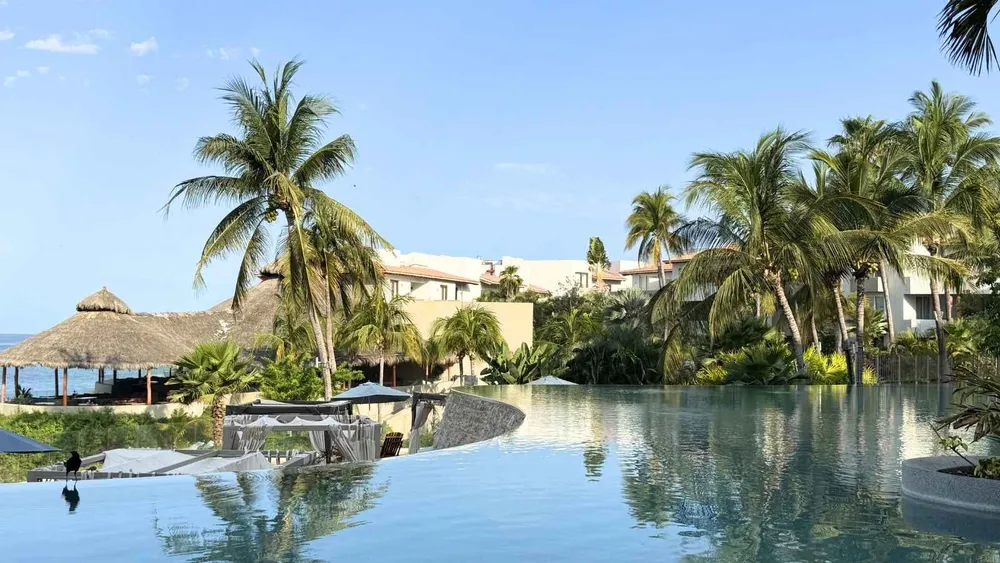
The first thing you notice at Armony Marival is what you cannot see; walk the path from the lobby toward the water, and the architecture keeps slipping behind fig trees and parota, the terraced buildings following the hillside instead of cutting through it.
The first thing you notice at Armony Marival is what you cannot see; walk the path from the lobby toward the water, and the architecture keeps slipping behind fig trees and parota, the terraced buildings following the hillside instead of cutting through it. The effect lands somewhere between Costa Rica and the windward side of a Hawaiian island, all canopy and birdsong and salt air, then the Pacific opens up at the bottom of the slope, and you realize the jungle was the point all along. This is a Mexican beach resort where the vegetation is the amenity, not the obstacle.
Banderas Bay has no shortage of all-inclusives, but few were built to disappear into the land the way this one was. Armony Marival Resort & Spa Punta de Mita sits directly on Playa Destiladeras, a roughly 3-mile run of Pacific coast, with 268 rooms tucked so far into the greenery you can barely pick them out from the sand. The sheltered bay keeps the water calm and the undertow light, which makes the beach genuinely swimmable, and there is no seaweed to wade through. It is the kind of sand built for a slow morning walk, sunrise yoga or an afternoon watching the kids dig in. The resort's biophilic design earned a 2023 Jalisco Architecture Award, down to the cuastecomate tree whose round fruit turns up scattered across the grounds and, eventually, on the dinner plate.
A family name behind the front desk
Armony is the newest chapter of a Mexican hospitality group whose roots run deep along this coast. The company traces its all-inclusive lineage to Nuevo Vallarta, where it converted the old Jack Tar Village property and helped pioneer the region's all-inclusive model decades ago. The group says it was among the first to bring the format to the bay. That heritage carries a family-owned sensibility the staff sums up as "mi casa, tu casa," and it reads in how they greet returning guests by name. Armony opened in 2020 as the group's first property in Punta de Mita, then joined Accor's MGallery Collection in early 2025.
The jungle as design language
Most resorts draw a hard line between the manicured grounds and the wild edge beyond. Armony blurs it on purpose. The buildings were sited to be consumed by vegetation rather than to hold it back, and guests who arrive expecting a sealed resort perimeter find something more porous and alive. Iguanas sun themselves on the walkways, and the canopy presses close to the open-air restaurants. The whole property reads less like a compound dropped onto the coast than like something that grew there.
Soft wellness; room for everyone
Wellness here is woven in rather than being the whole point. Watsu water therapy is complementary, and the daily program runs from beach yoga to sound healing and tai chi under the trees. The resort is family friendly, with a kids' club featuring art and nature programming, a family fun room loaded with arcade games and VR stations, a ramen vending machine, a cooking station where kids build their own bowls and more. The bay turns into a stage from December through March, when humpback whales move through to calve offshore. When someone spots one surfacing, the resort rings a gong, and guests up and down the beach turn to watch.
An all-inclusive that shows its math
Armony treats the all-inclusive format with unusual candor, with a European plan that allows guests to opt out of the full package if they want, and menus show the prices so you can see the value of what is already covered. A handful of premium items carry an upcharge, stated plainly rather than buried, and several restaurants remain open to the public rather than sealing the property off from the surrounding destination.
A taste of what is coming
The food program delivers well above the all-inclusive standard. At the buffet restaurant, live cooking stations put the preparation in front of you rather than behind a sneeze guard. Divum, the adults-only signature restaurant, runs a zero-kilometer kitchen, sourcing ingredients from the region and building its menu around what the land offers, including that cuastecomate mole that has become the property's calling card. A new concept, Parrotfish, is on the way. The mocktail that greets you on arrival, with passion fruit, pineapple and vanilla, sets the tone for how seriously the team takes what lands in the glass as well as on the plate.
What Armony offers that a standard beach resort cannot is the sense that you have been somewhere specific. Plenty of places promise warmth and a pool and a buffet, and most of them could be anywhere. Here, the jungle keeps reminding you exactly where you stand, pressing in at the edges of every path, refusing to let the destination fade into the background. That is the wager the whole property makes, and it is the direction more of the Mexican Pacific is starting to follow.
by Jennifer Allen
Copyright Associated Press. All rights reserved. This material may not be published, broadcast, rewritten, or redistributed.
South Haven, a once-sleepy Lake Michigan beach town better known for blueberries and boat shoes than queer nightcaps, has been quietly morphing into one of the Midwest’s most surprising LGBTQ‑friendly escapes.
If you had “South Haven, Michigan becomes a low‑key queer beach haven” on your 2026 bingo card, you’re either psychic or already in on one of the Great Lakes’ best under‑the‑gaydar surprises.
Perched on the eastern shore of Lake Michigan, about two hours from Chicago and three from Detroit, South Haven has long sold itself on sunsets, sailboats, and family‑friendly beach holidays. But over the last few years, a quieter shift has been unfolding: more queer‑owned businesses opening their doors, more visibly LGBTQ+ visitors strolling beachside, and a local Pride celebration that’s gone from “tiny picnic” to “full‑blown downtown moment.”
The result is the kind of place that makes you say, with genuine delight: “Wait… this town is queer now?!”
A Lake Town With Rainbow Edges
South Haven sits in southwestern Michigan’s traditionally conservative farm‑and‑fruit belt, but the city itself has leaned more socially progressive in recent years as tourism and remote workers have reshaped the lakeshore corridor. The area’s long‑running reputation as a summer escape for families from Chicago, Grand Rapids, and Detroit has gradually intersected with a broader trend: LGBTQ+ travelers looking for quieter, more affordable alternatives to legacy gay destinations like Provincetown or Fire Island.
Across the U.S., small towns from Lexington, Kentucky to Bisbee, Arizona have embraced LGBTQ+ visitors, with national publications increasingly spotlighting “unexpected” queer‑friendly destinations. South Haven is part of that wave, but its evolution has been particularly driven by visible LGBTQ+ business owners and community organizers.
One of the most attention‑grabbing signals came from travel‑focused LGBTQ+ content creators, including an early‑2024 Instagram reel that dubbed South Haven “the gayest small town in the Midwest, fight me,” calling out a queer‑owned bed‑and‑breakfast and the town’s surprisingly inclusive vibe. While that claim is more tongue‑in‑cheek than statistical fact , the video racked up tens of thousands of views and planted South Haven in the minds of LGBTQ+ travelers well beyond Michigan.
Queer‑Owned Inns and the New Great Lakes “Gay Guestroom”
The biggest sparkle in South Haven’s emerging LGBTQ+ scene comes from its lodging. Bed‑and‑breakfast culture is serious business here—this is a town where porches and pancakes are practically a competitive sport—and several queer‑owned or loudly queer‑friendly inns now anchor the hospitality landscape.
The historic Victoria Resort Bed & Breakfast, a 1920s property tucked into a tree‑lined residential neighborhood, has become a standout for LGBTQ+ travelers thanks to openly queer ownership, inclusive marketing, and an emphasis on welcoming same‑gender couples and transgender guests with zero fuss and plenty of carbs. The inn promotes South Haven Pride on its website, highlights LGBTQ+ events in its newsletters, and has been featured in queer travel content that praises it for being “as rainbow‑warm as the sunrise over the lake.”
Other area lodgings, while not explicitly branded as LGBTQ+ spaces, have leaned into inclusive language and imagery, featuring diverse couples in their marketing and listing their properties on LGBTQ+‑focused travel platforms like QueerAdventurers.com . This visible inclusion—rainbow stickers on front doors, nondiscrimination policies published on websites, pronoun‑friendly check‑in forms—is part of what signals safety and comfort to transgender travelers and queer families who have to think about more than just thread count when booking a room.
Pride at the Pier: How a Harbor Town Built a Celebration
South Haven’s Pride celebration is young, but growing fast. South Haven Pride, a local volunteer‑run organization, began coordinating events in the early 2020s with a mission to “create safe, affirming spaces for LGBTQ+ people and allies in South Haven and surrounding communities.”
In June 2024, South Haven Pride successfully launched the city's first-ever official LGBTQ+ Pride festival. The historic inaugural event brought the community together with a downtown march, live music, a family-friendly picnic, and booths from local businesses showing public support. Since that landmark debut, the celebration has rapidly grown, expanding its programming to include youth-focused events, weekend beach meetups, and partnerships with local inclusive churches.
Local media coverage from the South Haven Tribune described families with small children waving rainbow flags, older LGBTQ+ residents sharing that they “never expected to see a Pride march in South Haven,” and small‑business owners noting that Pride weekend has become a meaningful boost to early‑summer tourism. For a town of about 4,000 year‑round residents, that visibility is part celebration, part gentle revolution.
Behind the Sparkle: Who’s Making South Haven Queer‑Friendly?
South Haven’s queer turn is not an accident; it is the result of local organizing, hospitable business owners, and broader policy shifts in Michigan that signal support for LGBTQ+ residents.
In 2023, Michigan amended its Elliott‑Larsen Civil Rights Act to explicitly include sexual orientation and gender identity as protected categories, prohibiting discrimination in employment, housing, and public accommodations statewide. LGBTQ+ advocacy organizations, including Equality Michigan , identified the change as a “game‑changer” for queer people living outside of major cities, noting that legal protections can make smaller communities feel more livable and safer.
At the local level, South Haven’s city leadership and tourism promoters have echoed an inclusive message. The South Haven/Van Buren County Convention and Visitors Bureau uses language about welcoming “all visitors” and has shared Pride event information on its visitor‑facing platforms. While not branded explicitly as an LGBTQ+ destination, the bureau’s promotion of Pride programming and its partnerships with South Haven Pride help normalize queer presence in the local tourism economy.
On the ground, LGBTQ+ residents and seasonal workers are creating the social infrastructure that makes a place feel authentically queer‑friendly rather than just rainbow‑washed. South Haven Pride has highlighted the roles of local queer educators, artists, and hospitality workers who host meetups, drag‑adjacent variety shows, and informal social nights at bars and restaurants around town. While many of these events are still modest in scale—think twenty people at a trivia night, not a 2 a.m. circuit party—they provide vital community, especially for younger LGBTQ+ people and transgender residents who might otherwise feel isolated in a rural county.
The Unexpected Gay Itinerary: Beaches, Blueberries, and a Lot of Rosé
For LGBTQ+ travelers, South Haven offers a specific flavor of queer getaway: low‑key, outdoorsy, heavy on carbs and local wine, and light on big‑city nightlife.
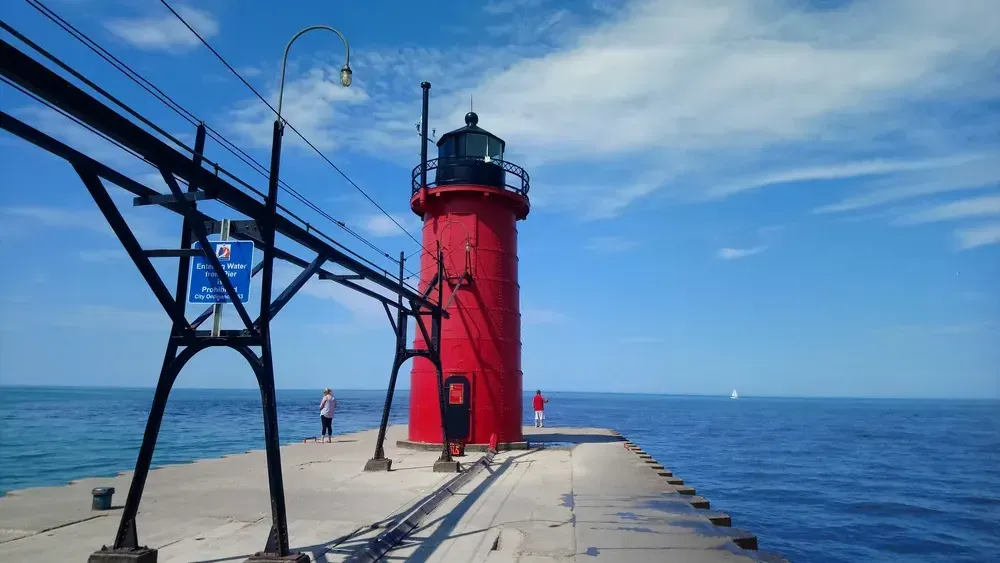
During the day, the draw is obvious. South Haven features seven public beaches along Lake Michigan, a picturesque lighthouse and pier, and a walkable harbor district lined with shops and cafés. The Kal‑Haven Trail, a 33‑mile rail‑trail connecting South Haven to Kalamazoo, adds bike‑friendly adventure, popular with couples looking for a blend of nature and town time.
Food and drink are another big pull. Nearby wineries and tasting rooms in Michigan’s Lake Michigan Shore American Viticultural Area have been increasingly vocal about LGBTQ+ inclusion, welcoming Pride groups and featuring rainbow flags and signage during June. Some South Haven eateries and bars have hosted Pride‑adjacent events, from drag brunches to themed cocktail nights, often promoted via Instagram and Facebook to LGBTQ+ audiences.
Then there are the blueberries. South Haven markets itself as the “Blueberry Capital of the World” and hosts the National Blueberry Festival every August, a four‑day event with parades, live music, pie‑eating contests, and a blueberry‑themed 5K. In recent years, festival organizers have highlighted inclusive, family‑friendly programming and have welcomed LGBTQ+ families and couples among the thousands of attendees that flood the town each summer. While the festival is not specifically queer‑branded, its open, community‑focused nature and the town’s growing Pride presence have made it part of the broader LGBTQ+ travel appeal.
How Safe and Inclusive Is It, Really?
For LGBTQ+ travelers—especially transgender people, queer people of color, and families with kids—the question isn’t just “Is this cute?” It’s “Is this safe and affirming?”
Michigan overall ranks in the upper tier of U.S. states for LGBTQ+ equality measures, according to state‑by‑state scorecards that weigh nondiscrimination protections, relationship recognition, and trans‑inclusive policies. The state’s explicit civil‑rights protections for sexual orientation and gender identity, plus its recognition of same‑gender marriage and adoption, create a legal backdrop that many Midwest queer travelers find reassuring.
On a local level, South Haven Pride reports positive relationships with city officials and law enforcement during Pride events, highlighting collaboration on safety planning and street closures. The South Haven Tribune has not reported significant anti‑LGBTQ+ incidents connected to Pride in recent years, noting that community responses have largely been supportive or neutral.
That said, South Haven remains a small town in a largely rural county. Public displays of affection by same‑gender couples may still draw stares in certain settings, and transgender travelers in particular may encounter inconsistent levels of understanding in some businesses or surrounding communities. LGBTQ+ advocacy groups generally recommend that travelers in smaller destinations research local resources, connect with community organizations like South Haven Pride in advance via email or social media, and prioritize clearly queer‑friendly lodging and venues.
The Bigger Picture: Small‑Town Queerness Is Having a Moment
South Haven’s evolution fits into a larger North American story: queer life slowly expanding beyond major urban centers.
Recent travel coverage has highlighted an array of small U.S. cities and towns—Lexington, Kentucky; McMinnville, Oregon; Saratoga Springs, New York; and Bisbee, Arizona among them—as notably LGBTQ+‑friendly, pointing to Pride celebrations, queer‑owned businesses, and visible local activism. LGBTQ+ travel guides emphasize that younger queer people and LGBTQ+ families are increasingly seeking destinations that combine outdoor recreation, affordability, and community over all‑night clubbing.
Meanwhile, organizations like Big Gay Hudson Valley in upstate New York have shown how regional LGBTQ+ initiatives can connect smaller communities into a broader queer ecosystem, promoting Pride events and queer‑owned businesses across multiple towns. South Haven Pride plays a similar role along Michigan’s lakeshore, connecting South Haven to nearby communities like Saugatuck, Douglas, and Holland, which have their own varying levels of LGBTQ+ visibility.
In this context, South Haven’s story is less about becoming “the next Provincetown” and more about joining a growing constellation of smaller, quieter queer places—spots where LGBTQ+ people can hold hands on a beach, sip local wine, chat with queer‑owned innkeepers about dinner reservations, and feel genuinely, comfortably included.
If You Go: Queer‑Forward South Haven, in Practice
Travel guides generally recommend late spring through early fall as the prime window for South Haven, when the beaches are open, the farmers’ markets are overflowing, and the sunsets linger well past 9 p.m. For LGBTQ+ visitors, timing a trip with South Haven Pride or the National Blueberry Festival in August can add a communal, celebratory layer to the experience.
Queer travelers looking to build an inclusive itinerary can:
- Stay at a queer‑owned or clearly queer‑affirming inn or bed‑and‑breakfast such as Victoria Resort Bed & Breakfast, which has a documented track record of welcoming LGBTQ+ guests.
- Use social media—searching hashtags like #SouthHavenPride or following South Haven Pride on Facebook and Instagram —to find current events, meetups, and Pride‑adjacent gatherings.
- Explore wineries along the Lake Michigan Shore Wine Trail and look for venues that have publicly supported Pride or hosted inclusive events.
- Build in some time to wander: the harbor, downtown shops, and beach paths are where you’re most likely to spot rainbow stickers on storefronts and other subtle signals that the town’s “queer now” reputation is rooted in real people and real community.
South Haven may never top the global “gay destination” charts, and that’s partly the point. Its appeal lies in its scale: a town where you can recognize faces by day two, where Pride organizers are also your baristas and bartenders, and where the most pressing evening decision is which beach to watch the sky go cotton‑candy over Lake Michigan.
For LGBTQ+ travelers who have ever wondered whether a classic Midwestern beach town could feel truly welcoming, South Haven’s emerging answer is gentle but clear: pull up a porch chair. You’re invited.
by Chris Tremblay
Copyright EDGE Media Network. All rights reserved. This material may not be published, broadcast, rewritten, or redistributed.