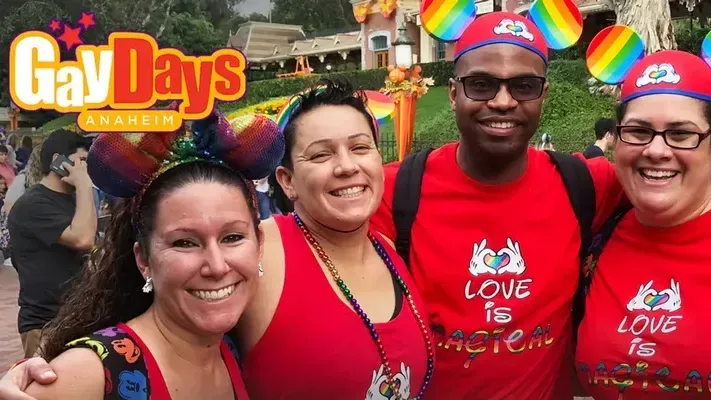
The twenty-eighth annual Gay Days at Disneyland are set to take place Friday, September 18 to Sunday, September 20. The event is expected to attract thousands of LGBTQ+ park-hoppers from California and all over the country. They will enjoy Disneyland in a way that it can only be experienced during Gay Days.
The twenty-eighth annualGay Days at Disneyland are set to take place Friday, September 18 to Sunday, September 20. The event is expected to attract thousands of LGBTQ+ park-hoppers from California and all over the country. They will enjoy Disneyland in a way that it can only be experienced during Gay Days.
Since the event began in 1998, the Disneyland Resort has welcomed this annual celebration and continues to do so even as some of the country’s culture wars aim their sights at Disney and the LBGTQ+ community.
Festivities begin on Friday at noon with the opening of the Gay Days Welcome Center/ Expo at the Grand Californian Hotel. At 7:00 PM, Cheyenne Jackson, fresh from starring opposite Maya Rudolph in Oh, Mary! on Broadway, takes to the stage with his new act, “That Guy from That Thing.” At 9:00, queer stand up comedian Zach Noe Towers returns to Gay Days debut with a night of comedy.
Saturday, September 19 will be Gay Day at Disneyland with a full day of activities and meet-ups scheduled in the park. The day culminates at House of Blues Anaheim with two performances featuring RuPaul’s Drag Race Global All Stars champion, Alyssa Edwards, in a brand-new show, “Once Upon a Tongue Pop” at 7:00 PM and 9:00 PM. At 10:00 DJ Paulo Ramirez. takes over for our signature dance party, KINGDOM!
Sunday, September 20 will be Gay Day at Disney's California Adventure with more in-park activitiesand at 11:00, Gay Days Drag Queen Bingo featuring Chico’s Angels star, Kay Sedia.
As the sun sets, we’ll close the weekend at 6:00 PM with more Drag Race favorites, Jackie Cox and Jan Sport in their show, Y2J, and then Irene the Alien, in “Diva Worship” at 8:00 PM.
VIP ticket packages are available now.
Both days in the parks will feature gatherings only available over Gay Days weekend, including a scavenger hunt, a group photo, a lesbian ice cream social, group meet ups at varying attractions, and many more events targeted to families, teens, bears, couples and Mouseketeers of every ilk. A complete schedule is available at the Gay Days website www.GayDaysAnaheiminfo.com
Other highlights of the weekend include the Gay Days Welcome Center (located inside the Trillium Room of Disney’s Grand Californian Hotel), a scavenger hunt, a gigantic group photo and mixers all over the resort.
Gay Days Anaheim is a "mix-in" with the park’s other weekend guests, but gays and lesbians are encouraged to wear red shirts in order to identify each other and to show strong numbers. Official T-shirts are available at the official Gay Days at Disneyland website.
Additionally, Gay Days guests can enjoy the exclusive discounts available at the three Disneyland Hotels. The rates are better than any pricing one could otherwise find throughout the year.
Gay Days Anaheim is NOT a Disney-sponsored event so Disney will not have any information regarding the "unofficial" happening.
Sponsors for the event include Delta, Howard Johnson Anaheim, and Radiant Health Center. Media sponsors are The Fight, Pink Media, and EDGE Media Network.
For complete details, including discounted hotel rooms and park tickets, visit www.GayDaysAnaheiminfo.com
by Gay Days Anaheim
Copyright EDGE Media Network. All rights reserved. This material may not be published, broadcast, rewritten, or redistributed.
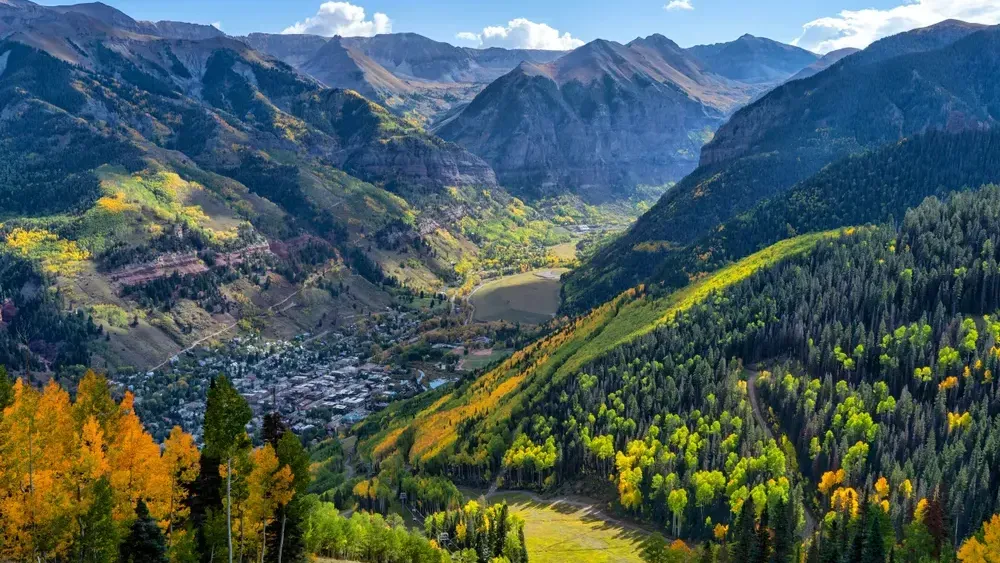
Tucked between red rock canyons and snow-dusted peaks, the former mining town of Salida, Colorado is emerging as an unexpectedly LGBTQ-friendly hub, drawing queer travelers who want art, rivers, and safety without the big-city scene.
On a summer evening in downtown Salida, Colorado, the Arkansas River glows copper in the late light, rafters float past in damp neoprene, and someone in sequins wheels a portable speaker into Riverside Park. A drag performer in hiking boots adjusts their wig against the breeze while a local family unfolds camp chairs nearby. No one stares. A few people wave.
For a growing number of LGBTQ+ travelers, this is the fantasy: not just rainbow crosswalks and nightclub districts, but a small mountain town where being visibly queer is about as remarkable as carrying a kayak helmet to dinner.
Salida—population around 6,000—has quietly become one of the most LGBTQ-friendly small destinations in the Rockies, even as nearby ski resorts and Denver soak up most of the tourism spotlight. Now, a visible queer community, a local Pride that has expanded from picnic to multi-event weekend, and an arts scene that actively centers inclusion are turning this high-desert outpost into a rural retreat where queer travelers can feel both seen and safe.
A river town with a rainbow current
Salida sits in Colorado’s “banana belt,” a pocket of comparatively mild climate surrounded by fourteen-thousand-foot peaks. The historic downtown, designated a creative district by the State of Colorado, is all brick storefronts, hand-lettered signs, and galleries spilling out onto the sidewalk. In winter, there’s Monarch Mountain’s powder. In summer, there’s whitewater, biking, and hot springs.
That mix—outdoor access plus artsy downtown—has increasingly drawn LGBTQ+ residents and visitors, reflecting a broader trend of queer people seeking community in smaller, more affordable places. Time Out has noted that LGBTQ-friendly small towns often share a combination of scenic beauty, creative culture, and vocal local allies; Salida now fits that pattern even though it’s not yet on most national lists.
Officially, Salida brands itself as “the Heart of the Rockies.” Unofficially, local queer residents are building a quieter tagline: “come for the river, stay because no one cares who you hold hands with.”
From informal hangouts to an official Pride
Salida Pride, the town’s LGBTQ+ festival, grew out of informal gatherings and has evolved into a more structured event schedule, including a family-friendly celebration at Riverside Park, drag performances, and community resource tables. The organization describes its mission as “celebrating and advancing equality, dignity, and visibility” for LGBTQ+ people in Salida and surrounding Chaffee County.
Photos from recent Salida Pride weekends show trans flags draped over camp chairs, kids chalking rainbow hearts on the pavement, and older residents in hiking hats dancing to live music. Unlike the huge corporate-branded parades in major cities, Salida’s Pride feels more like an extended potluck beside a very scenic river—if potlucks included spontaneous vogueing on the grass.
Salida Pride’s events sit within a broader Colorado context where state law explicitly prohibits discrimination based on sexual orientation and gender identity in public accommodations and employment, and where conversion “therapy” for minors is banned. That legal framework matters for queer travelers choosing where to spend their money and their vacation days.
Visible queer leadership in an arts-first downtown
Salida’s historic district is designated as a Colorado Certified Creative District, a program created to support arts-driven economic development. Galleries, studios, and performance spaces line F Street and the surrounding blocks, and several are owned or run by LGBTQ+ people or vocal queer allies.
For queer travelers, that arts infrastructure isn’t just about buying a locally thrown mug. It means spaces where creative expression and experimentation are normal, which can translate into safer environments for LGBTQ+ self-expression. Time Out’s analysis of queer-friendly small towns notes that places with strong creative economies often report more visible and integrated LGBTQ+ communities, even without a formal “gayborhood.”
Local venues and collectives—such as those listed by the Salida Creative District —regularly host drag shows, queer musicians, and LGBTQ+ themed art openings, especially during Pride month and peak summer. While individual lineups change seasonally, recent schedules have included cabaret-style performances, gender-bending costume nights, and open mics where nonbinary poets share the stage with folk singers in river sandals.
Safety, politics, and the “rural Colorado” question
Rural America is often portrayed as hostile terrain for LGBTQ+ people, but the reality is uneven and layered. National reporting has highlighted how queer communities have taken root in smaller, politically mixed locales, building networks of mutual support even when state policies lag behind.
In Salida’s case, local politics do not map neatly onto national talking points. Chaffee County has shown a mix of voting patterns over the past decade, reflecting both longtime residents and newer arrivals. However, public support for local LGBTQ+ events and the absence of major publicized anti-LGBTQ+ incidents in recent years have helped queer residents feel more comfortable being out, according to profiles in regional media and community organizations.
The broader state context also matters. Colorado ranks relatively high on LGBTQ+ legal equality indices, with protections in housing, public accommodations, and employment, and with hate-crime laws that include sexual orientation and gender identity. For many queer travelers, especially transgender people and queer families, that policy baseline is a core part of feeling safe enough to book a trip.
A basecamp for queer outdoor lovers
Salida’s geography is pure adventure catalogue: the Arkansas River’s famed whitewater, the Sawatch Range looming on the horizon, and miles of singletrack and forest roads within a quick drive. Colorado Parks and Wildlife notes that Chaffee County is home to extensive public lands, from Browns Canyon National Monument to nearby trailheads leading into the San Isabel National Forest.
Traditionally, outdoor culture has skewed macho and heteronormative, but LGBTQ+ outdoor organizations have been reshaping that landscape across North America. Groups such as The Venture Out Project and LGBTQ+ hiking collectives have shown that queer people are increasingly claiming trails, rivers, and climbing routes as spaces for community and healing.
While Salida is not formally branded as an LGBTQ+ outdoor hub, local outfitters and guide companies have publicly highlighted their commitment to inclusion and have hosted Pride-adjacent events and fundraisers, according to regional travel pieces and local business profiles. That kind of explicit allyship—from using inclusive language in marketing to training staff on respectful pronoun use—can make the difference between a transgender traveler feeling comfortable renting a wetsuit and opting out entirely.
For many LGBTQ+ visitors, the appeal is the ability to move between queer-affirming downtown spaces and wild landscapes in a single afternoon: a morning rafting trip with a guide who doesn’t flinch at they/them pronouns, an afternoon gallery stroll, then an evening drag show where you find the same bartender from your lunch shift cheering in the front row.
Lodging where pronouns are part of the welcome
Travel guides increasingly stress that queer-friendly lodging is less about rainbow stickers and more about everyday respect: correct pronouns at check-in, no awkward questions about bed configurations, and staff who understand that two women or two men checking in together are very likely a couple.
Salida’s accommodation landscape skews toward small: boutique hotels, riverside motels, bed-and-breakfasts, and vacation rentals in renovated miners’ cottages. While individual policies vary, several downtown properties highlight inclusivity and diversity on their websites or social media, aligning themselves with Colorado’s reputation as an LGBTQ+-friendly destination.
IGLTA and similar organizations recommend that LGBTQ+ travelers look for lodging that explicitly mentions nondiscrimination policies or inclusive practices on their sites, and that they prioritize destinations in states with strong legal protections—boxes that Salida and Colorado generally check.
How it feels to arrive as a queer visitor
While every traveler’s experience is individual, patterns emerge in reporting about LGBTQ+ visitors to smaller, progressive-leaning towns: people describe an initial wariness—especially for transgender people and queer couples of color—followed by cautious relief when they realize they are not the first visibly queer people to walk down Main Street.
In Salida, that emotional arc is helped along by physically visible cues: Pride flags in shop windows, event posters using inclusive language, and a mix of visitors and locals whose gender expression reads as delightfully nonconforming—from queer-coded river guides in cutoffs to nonbinary artists in paint-splattered overalls.
National LGBTQ+ organizations emphasize the importance of this “felt safety,” which extends beyond legal protections into everyday interactions: who smiles back when you hold hands, whether a bartender corrects a misgendering, how a local responds if you ask about the nearest gender-neutral restroom. These micro-moments can make or break a trip.
Reports from Colorado’s smaller creative towns—including Salida—indicate that many queer residents and visitors experience a strong sense of community grounded in repeated casual kindness: neighbors who show up en masse for Pride, straight river rats who recommend the best café for queer-friendly wifi time, and older residents who quietly mention that they’ve had a gay cousin “forever” and don’t see what the fuss is about.
Getting there (and getting oriented)
Reached by a two-and-a-half to three-hour drive from Denver or Colorado Springs, Salida is remote enough to feel like an escape but close enough for a long weekend. Most visitors arrive by car; once in town, downtown is walkable, with bike rentals widely available.
Queer travelers planning a trip can start with state and regional resources that highlight LGBTQ+-inclusive businesses and events across Colorado. Salida Pride’s channels and the Salida Creative District’s website list up-to-date event calendars, including Pride-month happenings, art walks, and performances with explicit queer themes.
For transgender and nonbinary travelers, organizations such as Advocates for Trans Equality (A4TE) and the Transgender Law Center offer state-by-state guides to ID requirements, healthcare access, and airport navigation, which can be useful when planning any trip that involves air travel into Colorado.
Why Salida matters in the bigger queer travel story
Salida is not Provincetown, Palm Springs, or Fire Island—and that’s the point. National travel media have begun celebrating a wider constellation of LGBTQ-friendly small towns, from Northampton, Massachusetts, to New Hope, Pennsylvania, and Eureka Springs, Arkansas, as queer people look for spaces that feel intimate, affordable, and integrated into local life.
Salida sits just outside that emerging canon: not yet widely marketed as a “gay town,” but steadily building the infrastructure—Pride celebrations, visible queer residents, inclusive arts spaces, and outdoor businesses that actively welcome LGBTQ+ people—that define truly affirming destinations.
For queer travelers exhausted by legislation targeting LGBTQ+ rights in parts of the United States, especially attacks on transgender health care and drag performance, choosing where to spend tourism dollars has become a form of quiet political expression. Destinations like Salida—where state law affirms LGBTQ+ dignity and local culture follows suit—offer a vision of what queer-friendly rural travel can be: not an exception, but a new kind of normal.
And there is something quietly radical about watching drag performers lip-sync in front of snowcapped peaks while rafters drift by, barely glancing up. In a time when visibility can feel dangerous in many places, Salida’s gift to LGBTQ+ travelers is deceptively simple: the freedom to be unforgettable if you want to be—or just another pair of muddy hiking boots in the crowd.
by Chris Tremblay
Copyright EDGE Media Network. All rights reserved. This material may not be published, broadcast, rewritten, or redistributed.
Bendigo, in central Victoria, is not the first Australian city that appears on most LGBTQ+ travel lists, but it is increasingly presenting itself as a culturally rich and inclusive stop for queer travelers.
Bendigo is the kind of destination that rewards travelers who prefer a slower, more layered kind of city break: grand gold-rush architecture, a strong gallery and museum culture, tree-lined avenues, cellar doors and a local rhythm that feels distinct from Australia’s better-known queer tourism hubs. It is not typically the first name on LGBTQ+ travel lists, which are more likely to foreground Sydney, Melbourne or coastal resort destinations, but it sits within a national context that is explicitly supportive of LGBTQ+ visitors. Australia legalized same-sex marriage in 2017, and the International LGBTQ+ Travel Association says discrimination based on sexual orientation and gender identity or expression is prohibited in every state and territory, with federal protections also in place.
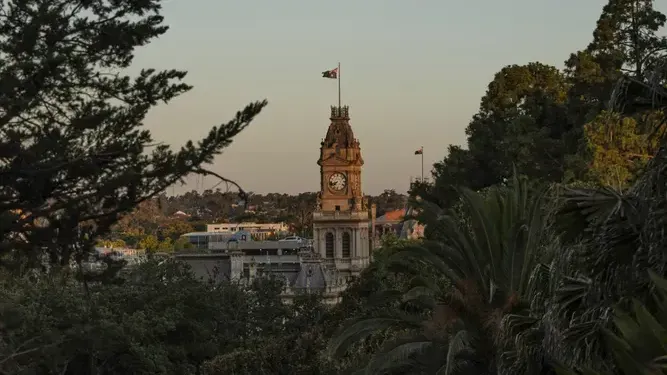
That legal backdrop matters for queer travelers, but Bendigo’s emerging appeal is also cultural. The city is known for its historic streetscapes and major arts institutions, including the Bendigo Art Gallery and the Bendigo Joss House Temple, which reflect the city’s layered colonial and migration histories. Bendigo Tourism describes the city as a place where heritage and contemporary culture sit side by side, shaping an experience that is more than a simple weekend stop.
For LGBTQ+ travelers, that kind of setting can be significant. Regional destinations often feel more intimate than major cities, and Bendigo’s compact center makes it easy to move between galleries, cafés, parks and heritage sites without the friction of a larger urban itinerary. The city’s tourism and cultural institutions consistently emphasize accessibility to its central precinct, which can make it an attractive base for travelers who want a relaxed stay rather than a nightlife-heavy trip.
A regional city with visible community signals
What makes Bendigo especially interesting as a queer-friendly destination is not a single marquee event, but a combination of visible signals. Regional Pride activity in central Victoria has become more established in recent years, with local groups and civic organizations using the city’s public spaces to mark inclusion and community visibility. These events are important because they indicate that queer life in Bendigo is not confined to private networks or metropolitan spillover; it has a public footprint.
Bendigo Pride Festival presents itself as a locally rooted celebration of LGBTQ+ communities in the region, and its existence points to a broader shift in how regional Australian cities are positioning themselves. Rather than relying only on “safe” branding, Bendigo is building a civic identity that includes queer people in the story of the city. That is especially relevant for travelers who want more than tolerance: they want evidence of participation, representation and ordinary belonging.
Local institutions also reinforce that message. The City of Greater Bendigo has public inclusion and diversity policies that frame the municipality as a community serving residents and visitors of differing identities and backgrounds. While a policy alone does not define the lived experience of every traveler, it does provide an institutional baseline that many LGBTQ+ visitors look for when deciding where to spend time and money.
Why Bendigo feels different from the usual LGBTQ+ circuits
Bendigo does not compete with Sydney’s Mardi Gras scale or Melbourne’s larger queer nightlife ecosystem, and that is precisely why it can stand out. Its value lies in offering a different model of queer-friendly travel: one centered on culture, daylight experiences and regional hospitality rather than an identity-specific entertainment district. That approach aligns with a broader pattern in LGBTQ+ travel, where many travelers increasingly seek places that are welcoming in everyday life rather than only during festival weekends.
The city’s arts institutions add depth to that experience. The Bendigo Art Gallery has a national profile for major exhibitions, which helps give the city a cosmopolitan edge uncommon in a regional center of its size. The gallery’s programming, combined with Bendigo’s heritage architecture and seasonal food-and-wine culture, makes it possible to build a trip that feels intellectually and aesthetically rich without leaving central Victoria.
Bendigo’s regional setting also matters because it reflects a broader Australian reality: LGBTQ+ travelers are not limited to the country’s largest cities. The national legal framework is comparatively strong, and state and territory protections are broadly established, which helps create the conditions for smaller destinations to market themselves as inclusive. In practice, that means a traveler can choose Bendigo for its architecture, food, art and slower pace without having to treat queer safety as an afterthought.
Local texture: heritage, food and the kind of small-city ease that can feel welcoming
A hidden-gem destination often succeeds because its physical character supports a sense of ease, and Bendigo has that quality in abundance. Its streets are defined by the wealth of the nineteenth-century gold rush, and the city has preserved enough of that era’s civic ambition to make a walk through the center feel like a tour through Australian history. At the same time, Bendigo’s tourism materials emphasize contemporary dining, creative production and wine-country day trips, which means the city does not read as a museum piece.
For queer travelers, that balance can be attractive. A place does not need a sprawling gayborhood to feel inclusive; it needs legible public spaces, cultural institutions that welcome broad audiences and a civic culture that does not insist visitors stay invisible. Bendigo’s appeal is that it offers all three in modest but recognizable form.
The city also benefits from being close enough to Melbourne to be accessible, but far enough away to feel like a change of pace. That makes it a useful add-on for travelers building a broader Victoria itinerary. Visitors can combine Bendigo with regional wine, country hospitality and the city’s museum and gallery circuit, creating a trip that is rooted in place rather than in the usual resort template.
What queer travelers are likely to notice
The most meaningful thing about Bendigo may be that it offers a quieter version of welcome. Queer travelers who have often had to decode whether a destination is safe, visible or merely marketing itself as friendly may find Bendigo’s strongest asset is its normalcy: a regional Australian city where inclusion is increasingly embedded in civic life, where cultural institutions are central to the visitor experience and where Pride has a local home.
That does not make Bendigo a queer capital, and it should not be described as one. But it does make the city a credible candidate for travelers looking for a place that is off the obvious route yet still grounded in real infrastructure, public visibility and a national framework of legal protection. In a travel market often dominated by the same handful of LGBTQ+ destinations, that is enough to make Bendigo feel like a hidden gem with room to grow.
by Chris Tremblay
Copyright EDGE Media Network. All rights reserved. This material may not be published, broadcast, rewritten, or redistributed.
Whether he’s getting rare access inside Big Ben’s Great Clock, sampling the generations old art of cheese making at Quatrehomme Paris, drifting off in a surreal dreamscape at Queztacoatl’s News in Mexico City or handing out medals alongside world-class volunteers at the finish line of the New York City Marathon, each stop cracks open a vivid slice of the culture, craft and creativity that brings the very best of the world to vibrant life.
Inspired by National Geographic’s acclaimed “Best of the World’ franchise, the series follows Emmy winner Antoni Porowski, known for his food and culture storytelling, as he sets out to uncover what truly makes a destination unforgettable. From iconic landmarks to hidden gems, he explores Mexico City, Paris, London, and his hometown of New York City, seeking out the people, flavors, and experiences that extend beyond the guidebook.
Whether he’s getting rare access inside Big Ben’s Great Clock, sampling the generations old art of cheese making at Quatrehomme Paris, drifting off in a surreal dreamscape at Queztacoatl’s News in Mexico City or handing out medals alongside world-class volunteers at the finish line of the New York City Marathon, each stop cracks open a vivid slice of the culture, craft and creativity that brings the very best of the world to vibrant life.
I spoke with Antoni about uncovering the moments—and people—that make each destination unforgettable.
by Steve Duffy
Copyright EDGE Media Network. All rights reserved. This material may not be published, broadcast, rewritten, or redistributed.
Three Caribbean islands see the sharpest search spikes heading into summer 2026. Sint Maarten, Aruba and San Juan outpace the broader Caribbean trend by a wide margin, and booking now is still the window to get ahead of peak crowds and peak prices.
Three Caribbean islands see the sharpest search spikes heading into summer 2026. Sint Maarten, Aruba and San Juan outpace the broader Caribbean trend by a wide margin, and booking now is still the window to get ahead of peak crowds and peak prices.
The broader Caribbean is already having a breakout year. Recent travel data reports summer 2026 Caribbean searches up 15% year-over-year, driven more by accommodation bookings than flights, a sign that travelers are locking in longer stays earlier than usual. Average U.S.-to-Caribbean economy fares at $385, 32% below South America, and are keeping demand at levels the region hasn't seen before.
Sint Maarten: Up 133% and still climbing
No other destination on this list has the structural advantage Sint Maarten does, which helps explain a 133% year-over-year jump in searches according to TravelAge West. Two countries share one island, with Dutch Sint Maarten and French Saint Martin each offering a genuinely different experience without a passport crossing between them, and ferry and charter connections to Anguilla, St. Barts and Saba extend that range further.
The travelers who book it are also doing their homework: Google Search data from April shows zip-lining ranked as the top-trending activity searched for Sint Maarten and Mullet Bay Beach logged as a breakout destination query. Late spring falls within the shoulder season here, with peak-season crowds gone, hotel rates lower and the island still weeks away from meaningful hurricane risk.
The cost most first-timers miss is inter-island transport, since ferry and charter fees to those neighboring islands accumulate fast and rarely appear in initial booking quotes. Travelers looking for a slower pace without leaving the island should spend time on the French side, where beaches are quieter, the dining scene runs Creole-French and the casino-resort energy of the Dutch side gives way to something considerably more relaxed.
Aruba: Up 62%, driven by geography as much as anything else
Aruba is located 15 miles off the Venezuelan coast, well outside the main hurricane belt, and that geography has become a selling point in its own right. The island averages roughly 350 days of sunshine per year with very low historical exposure to direct storm impacts, which makes it an easy booking decision for travelers who want warm weather without the weather anxiety most Caribbean islands carry in summer. The 62% year-over-year gain in search interest is the direct result.
For travelers who book in May, conditions are as good as any month on the calendar: dry-season weather holds, trade winds keep temperatures comfortable and occupancy runs lower than it will once June arrives. The cost that catches visitors off guard is the gap between advertised and actual spend, since all-inclusive rates along the Palm Beach corridor frequently exclude resort fees and gratuities.
Those who want to sidestep the resort strip entirely should head to Savaneta, the island's oldest village on the southwestern coast. Local seafood restaurants, calmer water and none of the north end's high-rise density create a quieter side of Aruba that many visitors never reach.
San Juan: Up 52%, largely because no passport is required
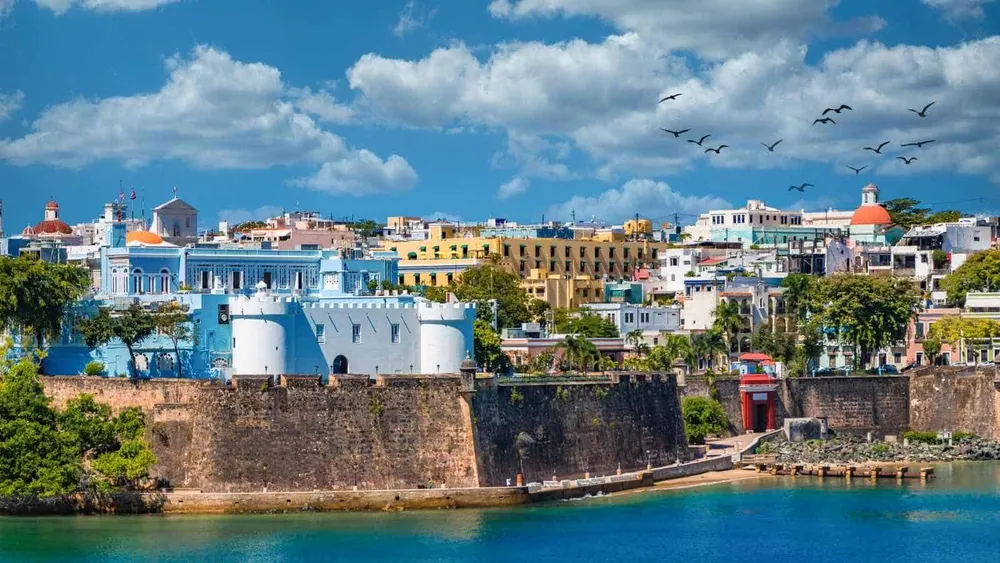
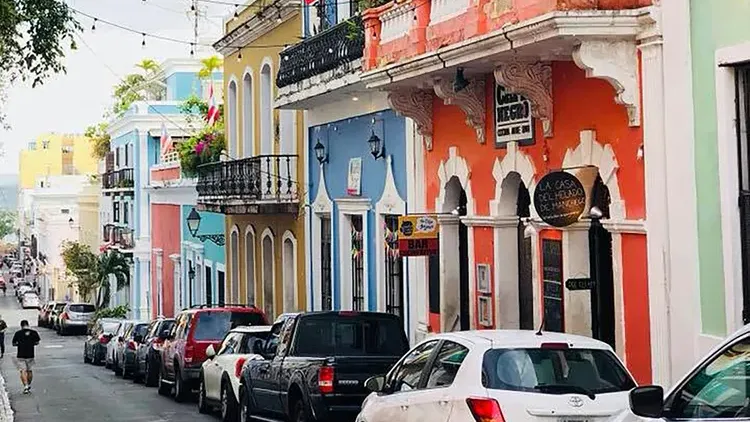
The case for San Juan starts with something no other Caribbean destination offers U.S. travelers: no passport, domestic airfare and no currency exchange. That combination has driven a 52% year-over-year search surge that is less about trend-chasing and more about practical decision-making. Old San Juan adds cultural weight to that access advantage, with 500-year-old Spanish colonial architecture, cobblestone streets and a food scene that has drawn serious national attention, giving the city a depth that beach-only islands can't match.
Booking now puts travelers ahead of the curve, before humidity builds, crowds push past the December-to-April peak and hotel rates follow the demand curve up. Car rentals are the expense most visitors underestimate: inventory is tight year-round and prices run high, so book in advance or plan around rideshares. Travelers who want beach access without the tourist concentration of Old San Juan should look at Isla Verde, east of the city center, close to the airport and running at a noticeably more local pace.
Caribbean demand keeps climbing higher
Beyond the destinations that see the biggest search spikes, travelers also widen the Caribbean map they consider for summer trips. Grenada enters more travel conversations as visitors look past the region's busiest resort hubs. The island appeals to travelers who want a quieter pace built around spice plantations, smaller boutique stays and a food scene tied closely to local agriculture and seafood rather than large resort corridors.
The Caribbean Tourism Organization projects 3% to 4% stayover growth across the region for 2026, but Sint Maarten, Aruba and San Juan already see search growth well above the broader Caribbean market. What travelers increasingly want from the Caribbean becomes clearer: easier access, fewer weather concerns, flexible pricing and enough local character to fill more than a beach chair and a cocktail hour. These islands happen to check all four boxes at once.
by Mandy Applegate
Copyright Associated Press. All rights reserved. This material may not be published, broadcast, rewritten, or redistributed.
A puppet-making workshop founded by the legendary creator of the Muppets is drawing back its curtain
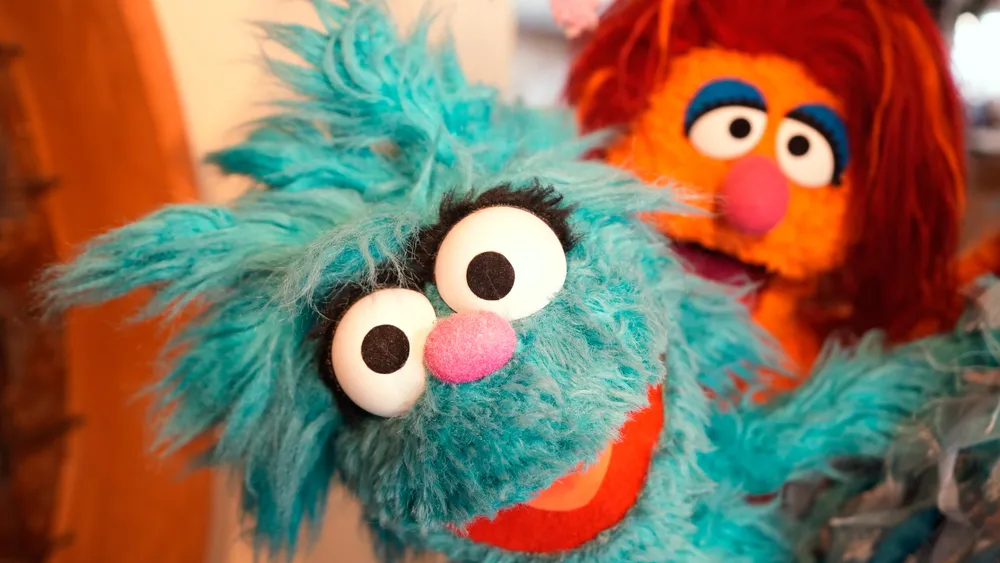
Deep in a cavernous New York City warehouse, the artisans behind some of the world’s most beloved children’s characters have been fashioning costumes and puppets for years in relative anonymity.
Now Jim Henson's Creature Shop, the workshop founded by the legendary creator of the Muppets, is drawing back the curtain.
This year, the company opened the doors of its Queens workshop to public tours for the first time, allowing fans to meet a puppet builder, see a puppetry demonstration and take photos and videos with beloved and iconic characters.
Jason Weber, the shop’s creative supervisor, said the tours, which cost $150 a person, are an opportunity to celebrate the unsung craftspeople that bring these famous characters to life.
“There is a level of expertise here that we’re sharing. It’s not just going to a pop-up store or something like that,” he said during a recent visit. “Things are made one-of-a-kind, made by hand with artisans who have been trained for years and decades.”
Besides Kermit, Miss Piggy and other Muppets, Henson was the creative force behind Big Bird, Cookie Monster and other famous “Sesame Street” denizens, as well as the “Fraggle Rock” characters. He died in 1990.
Henson originally founded the workshop in the 1960s in Manhattan and it has moved multiple times around the city since. It's been at its current location in Queens since 2009. The company also has a workshop in Los Angeles, though that doesn’t offer tours.
The 80-minute New York tours take place on Saturdays. Visitors start in a large room specially created for the tour that's filled with real show props and creations. It’s also the only spot on the tour where visitors are allowed to take photos and videos, as much of what’s in the actual workshop are still works in progress or proprietary.
“The Muppets" are now owned by Disney. Sesame owns the rights to Big Bird and other characters Henson created for the long-running show, which films at a nearby studio.
Among the centerpieces in that first room on the tour is an Oscar the Grouch display where the “Sesame Street” character is in his familiar trash can surrounded by heaps of fake garbage.
There’s also a menacing black throne from “The Dark Crystal,” Henson’s 1982 live-action fantasy film, and a full-sized working puppet of Junior Gorg, a giant from “Fraggle Rock,” which requires multiple performers to manipulate.
The workshop space itself is filled with fantastical creatures in various stages of assembly. There’s drawers and bins tucked into nearly every corner brimming with colorful furs, textured fabrics and ready-made puppet body parts, clothing and accessories.
“Everything we do is custom. Everything we do is bespoke,” said Melissa Creighton, the shop’s director.
On a recent visit, staff were busy preparing costumes and other pieces for a range of current projects, including a “Fraggle Rock" musical opening later this month at a theater near Times Square.
The shop’s past credits include the horror movie “Five Nights at Freddy’s,” the children’s fantasy film “Where the Wild Things Are" and the 1990s television sitcom “Dinosaurs.”
Sierra Schoening, a senior puppet builder, said working at the shop had been her “pie-in-the sky” dream job. Her favorite movie growing up was “The Labyrinth,” Henson's 1986 musical fantasy film starring David Bowie and Jennifer Connelly.
“I just really always wanted to know how those illusions were made,” Schoening said as she took a break from fashioning a set of new creations. “I know all the secret sauce, and I’m making the secret sauce now.”
by Philip Marcelo
Copyright Associated Press. All rights reserved. This material may not be published, broadcast, rewritten, or redistributed.
While New York, San Francisco, and Toronto soak up the rainbow spotlight, a new wave of smaller, often-overlooked North American cities is quietly building thriving, LGBTQ‑affirming scenes.
If your idea of LGBTQ+ travel is a greatest-hits playlist—New York, San Francisco, Toronto, rinse, repeat—you’re missing the B‑side tracks where the real queer magic is happening. The big names are still iconic, of course, but across North America, a constellation of smaller cities and “wait, really? ” destinations is quietly becoming more inclusive, more creative, and a lot more affordable for queer‑friendly travel.
Major travel roundups still tend to recycle the usual suspects: New York, San Francisco, Miami, Toronto, and Fort Lauderdale dominate “top LGBTQ destinations” lists in North America. Even queer‑focused sites spotlight classics like Provincetown, Palm Springs, Key West, Fire Island, and Fort Lauderdale as the best gay vacations in the USA. That leaves a whole layer of emerging queer‑affirming cities under‑discussed—places that might not yet be on the Pride parade circuit of your dreams but absolutely deserve to be.
Below, meet five under‑the‑radar North American destinations that pair concrete LGBTQ+ protections with a growing, lived-in queer culture. Think of this as insider gossip from the road: legally grounded, fact‑checked, but with just enough sparkle to make you start checking flight prices.
---
Salt Lake City, Utah: The “Wait… This Is Gay Now? ” Mountain Metropolis
Salt Lake City has long been shorthand for big mountains and bigger Mormon temples, not rainbow crosswalks. And yet, it’s increasingly recognized by LGBTQ+ travel writers as one of the most inclusive and up‑and‑coming urban destinations for queer travelers in North America.
Utah as a state still has work to do, but Salt Lake City punches above its weight in legal and cultural protections. In 2009, the city passed local non‑discrimination ordinances protecting people from discrimination in housing and employment based on sexual orientation and gender identity, a move later echoed at the state level in 2015.
Today, Utah law prohibits discrimination in employment and housing on the basis of sexual orientation and gender identity, protections that apply fully to residents of Salt Lake City.
On the ground, that legal scaffolding supports a surprisingly vibrant queer culture. Wanderlust, in a 2025 feature on emerging LGBTQ+ destinations, name‑checked Salt Lake City as a standout for inclusive urban travel, citing its growing Pride presence and welcoming atmosphere. The city hosts an annual Utah Pride Festival and Parade organized by the Utah Pride Center , drawing tens of thousands of attendees and featuring a full weekend of events that explicitly center LGBTQ+ people and families.
Bars and venues like drag show hotspots and queer‑friendly pubs may not be as densely packed as in San Francisco’s Castro District, but the community is tightly woven, with local advocacy groups, student organizations at the University of Utah, and LGBTQ‑affirming faith communities coexisting in the same mountain‑ringed valley.
For travelers, Salt Lake City offers what many big-ticket queer cities no longer do: relatively affordable accommodations compared with coastal hubs, easy access to national parks and ski resorts, and a visible queer community that’s still small enough to feel like everyone’s on a first‑name basis. This is the kind of city where your bartender might also be the person you see waving a Pride flag at the Capitol the next day.
---
Burlington, Vermont: Cozy Lakefront Queerness in a College Town Wrapper
If Provincetown is the loud summer fling, Burlington is the soft, steady relationship energy—with better hiking boots. Vermont has some of the strongest LGBTQ+ legal protections in the United States, and Burlington, the state’s largest city, is where those protections translate into everyday queer‑affirming life.
Vermont became the first U. S. state to introduce civil unions for same‑sex couples in 2000 and legalized same‑sex marriage in 2009. The state protects people from discrimination based on sexual orientation and gender identity in employment, housing, and public accommodations. Burlington, as a progressive university town on Lake Champlain, operates firmly within that legal safety net.
While Burlington doesn’t always appear on mass‑market LGBTQ+ travel lists, queer‑focused guides point to it as a standout smaller city for LGBTQ+ residents and visitors. Queer Adventurers, an LGBTQ+ travel resource site, highlights Burlington as a welcoming destination with outdoor access, arts, and an active queer community.
The University of Vermont in Burlington was among the earlier U. S. institutions to adopt inclusive policies for transgender students, including chosen name and pronoun use in institutional systems and housing policies that recognize gender identity. That policy infrastructure contributes to a student and local culture where many queer and transgender people report feeling visible on campus and downtown.
Burlington hosts an annual Vermont Pride celebration each September, centered in the city and drawing attendees from across the state and northern New York. Events typically include a parade, festival, and family‑friendly activities that explicitly welcome LGBTQ+ people of all ages. Local organizations such as the Pride Center of Vermont provide health, social, and advocacy services, including programming for transgender people, LGBTQ+ youth, and rural queer Vermonters.
For visitors, the queer joy here is quieter but deeply rooted: independent bookstores flying Progress Pride flags, cafes where pronouns are casually exchanged alongside coffee orders, and lakeside bike paths where same‑gender couples can hold hands without earning a second glance. Burlington won’t give you all‑night circuit parties, but it will give you a Pride‑flag‑wrapped farmers market and a sunset over the Adirondacks.
---
Atlanta, Georgia: The Southern Queer Capital That’s Still Shockingly Underrated by Tourists
Within LGBTQ+ circles, Atlanta has long been known as a Southern Black queer cultural powerhouse, but it’s strangely absent from many mainstream “top LGBTQ+ destination” lists, which tend to favor coastal resort towns and a handful of legacy gayborhoods.
Georgia does not yet have statewide non‑discrimination laws covering sexual orientation and gender identity, but Atlanta’s municipal government has moved to fill that gap. The city enacted comprehensive non‑discrimination ordinances covering sexual orientation and gender identity in housing, employment, and public accommodations. Atlanta also maintains an LGBTQ Affairs office within the Mayor’s Office of Equity, Diversity and Inclusion, aimed at supporting LGBTQ+ residents and engagement.
The Human Rights Campaign’s Municipal Equality Index , which assesses LGBTQ+ protections in U. S. cities, has repeatedly awarded Atlanta a high score for its policies, services, and law enforcement practices related to LGBTQ+ equality.
Culturally, Atlanta is one of the United States’ most significant centers of Black LGBTQ+ life. The city hosts Atlanta Black Pride, described by organizers as one of the largest Black Pride celebrations in the world, drawing tens of thousands of attendees each Labor Day weekend for parties, cultural events, and community programming. It also hosts Atlanta Pride in October, with a parade and festival in Piedmont Park that highlight LGBTQ+ advocacy, organizations, and performers from across the South.
Queer Adventurers’ LGBTQ Guide to the United States explicitly highlights Atlanta as a must‑visit city for queer travelers, citing its nightlife, food, and arts scenes as well as its role as a hub for LGBTQ+ Southerners.
From queer‑owned restaurants to legendary drag houses, Atlanta offers travelers a rich, intersectional queer experience not centered on beaches or gay resorts but on community resilience, music, and activism. For LGBTQ+ people who want their trip to include both nightlife and a living history of Black liberation and queer organizing, Atlanta is an essential but still under‑celebrated stop.
---
San Juan, Puerto Rico: Caribbean Pride Beyond the US Mainland
San Juan slips into some niche gay travel lists but rarely gets the same marquee treatment as Miami or Key West, despite combining U. S. legal frameworks with Caribbean beaches and a growing Pride infrastructure.
Puerto Rico is an unincorporated territory of the United States, and its residents are U. S. citizens. U. S. federal court rulings and laws protecting LGBTQ+ rights apply in Puerto Rico, including the 2015 U. S. Supreme Court decision that legalized same‑sex marriage nationwide and in U. S. territories. Following that decision, the Puerto Rico government began recognizing and performing same‑sex marriages.
In recent years, Puerto Rico has enacted local measures to strengthen LGBTQ+ protections. In 2013, it passed legislation prohibiting employment discrimination based on sexual orientation and gender identity. In 2019, the governor signed an executive order banning so‑called conversion therapy on minors by public health professionals.
San Juan hosts an annual Pride parade and festival, Orgullo Boquerón and related events in the capital, featuring floats, performances, and community organizations advocating for LGBTQ+ rights. Local advocacy groups such as the Puerto Rico LGBTQ+ organization CAMBIO and other community-based organizations in San Juan provide services for LGBTQ+ people, including transgender people and LGBTQ+ youth, and advocate for improved legal protections and healthcare access.
For queer travelers, San Juan offers a combination of LGBTQ‑friendly beaches, nightlife, and a Spanish‑speaking Caribbean cultural context. While it has some gay bars and clubs, it has not yet developed the hyper‑commercialized gay resort infrastructure seen in Fort Lauderdale or Puerto Vallarta, leaving more room for community‑driven spaces and local Pride.
San Juan’s relative under‑the‑radar status on mainstream LGBTQ+ travel lists, paired with its legal protections and local advocacy, make it a compelling emerging destination for travelers who want sun, sand, and a chance to support community organizations on the ground.
---
Palm Desert, California: Desert Queer Calm Next Door to the Party
Palm Springs is not just famous; it’s practically synonymous with gay pool floaties and mid‑century modern house parties. But tucked right next door in the Coachella Valley, Palm Desert offers a quieter, more residential take on LGBTQ‑affirming desert life that rarely shows up in standalone queer travel spotlights.
California law provides robust protections for LGBTQ+ people statewide, prohibiting discrimination based on sexual orientation and gender identity in employment, housing, education, and public accommodations. California also allows legal gender marker changes and has enacted protections for transgender students and LGBTQ+ youth.
Palm Desert operates under that umbrella of legal protection and benefits from its proximity to Palm Springs’ well-established LGBTQ+ institutions, including health centers, community organizations, and Pride events that serve the broader Coachella Valley.
While Palm Desert itself does not yet have the same density of explicitly queer venues as Palm Springs, regional travel guides and LGBTQ+ resources highlight the entire Greater Palm Springs area as one of the world’s most LGBTQ‑inclusive regions, with Palm Desert positioned as a more low‑key base for visitors. Out Adventures, in its global list of LGBTQ+-friendly countries and destinations, singled out Canada and certain U. S. cities for their protections, while separately highlighting Palm Springs as a leading LGBTQ+ resort area—implicitly extending queer‑friendly expectations to neighboring communities like Palm Desert that share tourism infrastructure and community support.
For travelers who want access to Palm Springs’ Pride events, film festivals, and pool parties without staying in the middle of the nightlife, Palm Desert offers resort hotels, golf courses, hiking trailheads, and shopping centers that are accustomed to serving LGBTQ+ guests as part of the region’s tourism economy.
The vibe here is less “drag brunch until 3 a. m. ” and more “sunset hike with your partner and a quiet patio dinner, ” all within a legal and cultural context that affirms LGBTQ+ visitors and residents.
---
Why These “Almost Famous” Queer Cities Matter
Looking at where the rainbow spotlight lands tells us something about power, money, and visibility. Major travel apps and airlines still steer queer travelers toward the same big‑name cities: one 2024 ranking of top LGBTQ destinations in North America from travel app Visited highlighted New York City, Washington, D. C. , San Francisco, Miami, Boston, Chicago, San Diego, Toronto, Fort Lauderdale, and Hawaii—most of them already iconic and heavily marketed queer hubs.
Emerging destinations like Salt Lake City, Burlington, Atlanta, San Juan, and Palm Desert operate differently. They pair legal protections—whether at the city, state, or territorial level—with grassroots organizing, regional Pride events, and queer‑owned businesses that make LGBTQ+ people feel welcomed not just as tourists, but as whole people.
What links them is not one single metric, but a pattern:
- Concrete legal protections or policies covering at least some aspects of LGBTQ+ equality, such as non‑discrimination laws or marriage equality. - Active Pride organizations and annual events that explicitly invite LGBTQ+ people and families. - Recognition by LGBTQ‑focused travel or advocacy organizations as welcoming or up‑and‑coming destinations, even if they haven’t broken into mainstream gay tourism lists.
They are, in other words, places where a queer traveler can reasonably expect both legal recognition and cultural affirmation—and where your tourism dollars can support local communities that are still in the process of building out their rainbow infrastructure.
So, if the big names are starting to feel a bit predictable, consider booking your next queer‑friendly escape somewhere that isn’t yet famous for it. The Pride flags may be fewer, but the conversations are deeper, the communities are often closer‑knit, and you just might arrive before the world catches on.
by Chris Tremblay
Copyright EDGE Media Network. All rights reserved. This material may not be published, broadcast, rewritten, or redistributed.
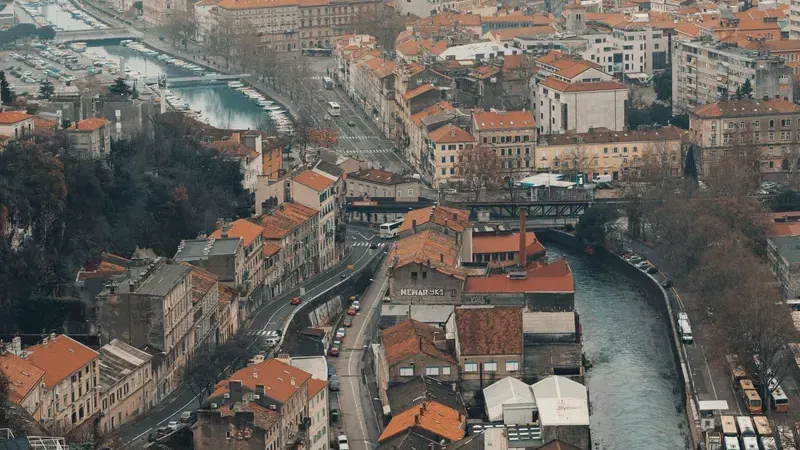
On Croatia’s northern Adriatic coast, the industrial port city of Rijeka is quietly positioning itself as one of Europe’s most welcoming lesser-known destinations for LGBTQ+ travelers, far from the mainstream party circuits of Barcelona or Berlin.
On a stretch of the northern Adriatic where the mountains meet the sea, Rijeka has long been known to Croatians as a working port city and gateway to nearby islands. Now, this city of just over 100,000 residents is increasingly being noticed for something else: a quietly confident, queer‑affirming atmosphere that sets it apart from more commercialized European LGBTQ+ hubs.
Unlike well‑publicized destinations such as Madrid or Amsterdam, Rijeka rarely appears on standard LGBTQ+ “top 10” travel lists. Yet local activists, cultural institutions, and city officials have spent the past decade building a record of public Pride events, anti‑discrimination policies, and inclusive programming that make the city an emerging “hidden gem” for queer travelers seeking both safety and substance.
A progressive pocket on the Adriatic
Croatia’s legal framework has shifted markedly in the last 15 years, laying the groundwork for cities like Rijeka to become safer spaces for lesbian, gay, bisexual, transgender, queer, and intersex travelers. The country introduced life partnership legislation for same‑sex couples in 2014, granting many of the rights associated with marriage, and later expanded adoption rights to include partners in same‑sex unions in 2022. While activists emphasize that full marriage equality and broader social acceptance are still unfinished work, Croatia consistently ranks in the upper tier of Eastern and Southeastern European states on LGBTQ+ legal protections.
Within this national context, Rijeka has developed a reputation as one of Croatia’s more progressive urban centers. The city was among the first in the country to adopt local anti‑discrimination measures and support Pride activities with visible municipal backing. According to the municipality, Rijeka’s development strategy explicitly references inclusion and diversity as guiding values for cultural and urban planning, positioning minority rights as a core component of city branding rather than a side note.
Travel advisories and guides for queer visitors increasingly highlight the Adriatic coast—including cities such as Rijeka, Split, and nearby Opatija—as a region where legal protections and tourism infrastructure combine to provide relatively safe conditions for LGBTQ+ travelers compared with some neighboring states. Those guides often single out Rijeka as notably less tourist‑saturated than Croatia’s best‑known destination, Dubrovnik, and more explicitly progressive than some smaller coastal towns.
An evolving Pride tradition
Rijeka’s LGBTQ+ community has made itself visible in public spaces primarily through its Pride events, which have emerged over the past decade as a recurring focal point for local activism and regional solidarity. Local organizers held early Pride marches and queer‑focused protests in the 2010s, and by the early 2020s, Rijeka had established an annual Pride gathering featuring a city‑center march, concerts, and panel discussions on equality and human rights.
LORI—the Lesbian Organization Rijeka—has been active since 2000, making it one of the oldest continuously operating LGBTQ+ organizations in Croatia. The group organizes workshops, film screenings, and youth programs, and has played a leading role in Pride events, often in cooperation with other NGOs and local institutions. In recent years, LORI has reported increasing attendance from both local residents and visitors from elsewhere in Croatia and neighboring countries, including Slovenia and Italy.
Rijeka’s Pride events are smaller than those in Zagreb or Split, but that scale offers something different for visitors: the opportunity to experience an event where local residents, activists, and allies are more likely to know one another, and where Pride functions as both celebration and grassroots community organizing. Queer travel blogs and community‑run platforms note that this intimacy can be appealing for travelers who prefer conversation‑friendly gatherings and workshops over large commercial parades.
While there is comparatively limited mainstream media coverage of Rijeka Pride in English‑language outlets, Croatian and regional media regularly document the events, noting visible support from local authorities, the presence of human rights organizations, and, in some years, counter‑protests that underscore ongoing challenges for LGBTQ+ equality in the region.
Hidden in plain sight: Rijeka’s queer spaces
Rijeka does not have a large, commercially branded “gay district” on the scale of Berlin’s Schöneberg or Madrid’s Chueca, but local venues and community spaces have carved out explicitly queer‑friendly niches. Bars and cafes in and around the compact city center and waterfront host LGBTQ+ club nights, drag shows, and themed events, often promoted via social media pages rather than large tourist campaigns.
Community organizations, including LORI and partner NGOs, emphasize culture and education as central pillars of their work, hosting queer film screenings, exhibitions, and public discussions in collaboration with independent cinemas and cultural centers. These activities often take place in multi‑use spaces rather than dedicated LGBTQ+ venues, strengthening connections between queer communities and the wider cultural scene.
For queer travelers, this means that Rijeka’s LGBTQ+ life is more integrated into the everyday life of the city. Visitors are likely to encounter queer‑inclusive events at mainstream venues, from art galleries to small theaters, rather than only in clearly labeled “gay bars.” Travel writers covering Croatia for LGBTQ+ audiences note that Rijeka’s atmosphere is “quietly welcoming” rather than overtly branded, with visible affection between same‑sex couples generally accepted in central areas, though discretion is still recommended in more conservative spaces.
From shipyards to European Capital of Culture
Rijeka’s broader cultural transformation has helped create conditions that are more welcoming to LGBTQ+ communities and travelers. Historically an industrial port with major shipyards, the city used its designation as the European Capital of Culture 2020 to launch a wave of cultural projects and infrastructure upgrades that emphasized openness, diversity, and social inclusion.
The official “Rijeka 2020 – European Capital of Culture” program included more than 600 cultural, artistic, and community events, many of them designed to address themes of migration, minority rights, and freedom of expression. Organizers highlighted the city’s long history as a multicultural hub at the crossroads of Central Europe and the Mediterranean—a history that includes Italian, Austro‑Hungarian, and Yugoslav influences.
While the COVID‑19 pandemic disrupted some of the planned programming in 2020, many of the physical and institutional legacies remain. These include newly renovated cultural venues, strengthened networks among local arts organizations, and higher international visibility for Rijeka’s contemporary arts scene. Local activists and cultural workers have continued to use these spaces to address issues around gender, sexuality, and minority rights.
In interviews with Croatian media, organizers have framed inclusivity as a core value of Rijeka’s cultural identity, emphasizing that programming linked to the Capital of Culture initiative aimed to reflect the city’s diverse residents and communities. For LGBTQ+ travelers, this focus on diversity translates to exhibitions, performances, and public art that explore queer narratives alongside other stories of social change and migration.
Why queer travelers are looking beyond the usual European hotspots
Recent LGBTQ+ travel coverage has pointed to a broader trend in which queer travelers are increasingly interested in “second‑tier” cities—smaller, less internationally famous destinations that offer a mix of legal safety, community presence, and cultural depth without the crowds and costs of major capitals.
Guides aimed at queer women and non‑binary travelers, for example, highlight that destinations like Rijeka can feel more approachable than large nightlife‑oriented scenes, with more space for daytime culture, outdoor activities, and small‑scale community events. Rijeka’s compact size makes it easy to navigate on foot, and its position on the Kvarner Gulf places beaches, islands, and hiking trails within easy reach by local bus or short ferry rides.
At the same time, Croatia’s membership in the European Union and Schengen Area is cited in travel guidance as a practical safety benefit, with standardized protections against discrimination in services and access to consular support for many international visitors. Human rights organizations note that hate speech and anti‑LGBTQ+ rhetoric still exist in public life, but they also document a steady expansion of legal protections and institutional support, including anti‑discrimination provisions in Croatia’s Constitution and labor laws.
For queer travelers weighing different European options, experts recommend considering both national legal frameworks and local community realities. In Rijeka’s case, that combination includes:
- National‑level recognition of same‑sex life partnerships and related rights. - A documented history of local NGO work on LGBTQ+ rights through organizations such as LORI. - Ongoing Pride events with visible municipal backing. - A city‑wide cultural narrative that explicitly celebrates diversity following the European Capital of Culture program.
Travel guides aimed at LGBTQ+ audiences increasingly mention Croatia in lists of relatively LGBTQ+‑friendly European countries, often noting that coastal cities and islands with established tourism industries tend to be more accepting than some inland areas. Rijeka’s growing presence in these conversations suggests that it is no longer entirely under the radar, but it remains far less commercialized than other Adriatic hotspots.
Local life: from Korzo to Kvarner Bay
For visitors, much of Rijeka’s appeal lies in its combination of lived‑in urban atmosphere and easy access to nature. The city’s main pedestrian street, Korzo, serves as an informal social hub, lined with cafes and terraces where residents of all ages gather throughout the day. LGBTQ+ visitors are a small but growing part of that mix, and travel writers report that same‑sex couples can generally sit together comfortably at central cafes, particularly in warmer months when outdoor seating dominates the streetscape.
Historic landmarks such as the City Tower and nearby Trsat Castle offer panoramic views of the port and Kvarner Bay, while the restored art‑nouveau Governor’s Palace hosts the Maritime and History Museum of the Croatian Littoral. Many of these institutions participated in the European Capital of Culture program, hosting contemporary art installations and thematic exhibitions alongside permanent collections.
A short ride from the center, beaches and seaside promenades stretch along the coast in the direction of Opatija and beyond, with swimming possible from late spring through early autumn. Outdoor‑oriented queer travelers can combine city‑based cultural activities with day trips to nearby islands such as Krk or Cres, ferried from ports within the Kvarner region.
Food culture in Rijeka reflects its position at the meeting point of Central European and Mediterranean traditions. Restaurants and konobe serve seafood from the Adriatic, pasta and risotto dishes influenced by nearby Italy, and hearty stews that recall the city’s Austro‑Hungarian past. LGBTQ+ travel writers advise that while overtly queer‑themed venues remain limited, most central restaurants and bars are accustomed to international guests and do not treat same‑sex couples differently from other patrons.
Community resilience and remaining challenges
Human rights organizations stress that progress in cities like Rijeka should be understood alongside continuing challenges for LGBTQ+ communities across Croatia and the wider region. ILGA‑Europe’s latest Rainbow Europe report, which assesses laws and policies affecting LGBTQ+ people, places Croatia in the middle range among European states, noting advances in partnership recognition and anti‑discrimination protections but highlighting gaps in legal gender recognition procedures for transgender people and persistent social stigma in some contexts.
Local reporting on Pride events in Rijeka and other Croatian cities documents instances of verbal hostility and counter‑demonstrations, underscoring that many LGBTQ+ people still experience discrimination in daily life. Activists emphasize that visibility—through Pride, cultural programming, and public education—remains crucial to countering prejudice and pushing for further legal reforms.
For travelers, this means that Rijeka offers a relatively safe and welcoming environment within a national and regional context that is still evolving. Travel advisories encourage LGBTQ+ visitors to stay informed about local conditions, connect with community organizations such as LORI for up‑to‑date guidance, and approach religious or strongly conservative spaces with cultural sensitivity.
Yet the same activists also stress that tourism can play a positive role. By choosing destinations like Rijeka—where local LGBTQ+ organizations, inclusive businesses, and municipal authorities are actively working to build affirming environments—queer travelers can support ongoing efforts toward equality, both economically and symbolically.
In Rijeka today, that support might look like attending a locally organized Pride discussion, visiting an exhibition that explores gender and identity in a city gallery, or simply sharing a quiet coffee on the Korzo as part of the city’s everyday mix. For a growing number of queer travelers seeking spaces that are both welcoming and rooted in local realities, this Adriatic port is becoming one of Europe’s most compelling lesser‑known destinations.
by Chris Tremblay
Copyright EDGE Media Network. All rights reserved. This material may not be published, broadcast, rewritten, or redistributed.
Mozambique’s capital, Maputo, is quietly becoming one of Africa’s most promising city breaks for LGBTQ+ travelers, even as it rarely appears on standard queer travel lists.
On a balmy weekend night in Maputo, Mozambique’s low‑slung capital, the sounds of marrabenta music mix with Afro‑house and kizomba spilling from small bars near the Baixa and Polana neighborhoods. In the crowd, couples of all kinds dance closely; same‑gender pairs attract little more than a passing glance. It is not a scene many travelers associate with Africa, nor with a country that still appears on few international LGBTQ+ destination lists, yet local advocates say this is precisely what makes Maputo one of the continent’s most quietly queer‑friendly urban escapes.
A legal landscape that quietly opened the door
Mozambique decriminalized consensual same‑gender sexual activity in 2015, when a new penal code came into force and removed colonial‑era provisions that had been used to target same‑gender intimacy. The United Nations High Commissioner for Human Rights has cited Mozambique among African states that have reformed or removed criminal laws against consensual same‑gender relations in the past decade.
Although Mozambique does not yet have explicit nationwide anti‑discrimination legislation that covers sexual orientation and gender identity, international rights monitors describe the legal environment as comparatively permissive by regional standards. The advocacy group ILGA World has repeatedly noted that Mozambique does not criminalize same‑gender sexual acts between consenting adults, distinguishing it from many neighboring states.
Travel guidance for LGBTQ+ people from African‑based writers often points to Mozambique as one of the more welcoming destinations on the continent, especially when compared with countries where punitive penalties remain. This broader legal context has helped make Maputo an increasingly attractive base for regional queer travelers who are seeking relative safety and anonymity in a busy coastal city rather than an overtly marketed gay destination.
A capital city where visibility is cautious but growing
Public LGBTQ+ visibility in Maputo is still measured, but human rights researchers and local organizations describe a noticeable shift in urban attitudes over the past decade. Maputo’s younger residents, influenced by regional migration, online culture, and the city’s universities, are often reported to be more accepting of diverse sexual orientations and gender identities than older generations.
The organization Lambda, widely recognized as Mozambique’s first LGBTQ+ rights group, has been active in Maputo for years, advocating for recognition and providing support services, although it has faced delays in obtaining full legal registration as an association. Lambda’s staff and volunteers have engaged in community outreach, legal accompaniment, and dialogue with state institutions, contributing to a gradual normalization of public discussion around sexual orientation and gender identity in the capital.
International reporting from human rights organizations notes that while discrimination and stigma persist in Mozambique, Maputo residents who are part of the LGBTQ+ community often describe a degree of “quiet tolerance” in many urban social spaces, particularly in comparison with more conservative rural areas. This combination of legal reform, city anonymity, and evolving attitudes has contributed to Maputo’s reputation among some regional travelers as a city that feels “livable” and manageable for LGBTQ+ people, even if it is still far from fully equal.
A coastal city with layered culture
For travelers in general, Maputo’s appeal has long been its blend of Indian Ocean coastline, mid‑20th‑century architecture, and a food scene shaped by Portuguese, Mozambican, Indian, and Arab influences. The national tourism board and travel publishers frequently highlight Maputo’s seaside setting, tree‑lined avenues, and historic buildings such as the domed Central Railway Station and the Iron House, a pre‑fabricated structure attributed to Gustave Eiffel.
The city’s mercado central and waterfront fish market are cited as key stops for visitors seeking grilled seafood and local dishes like matapa, a stew made with cassava leaves, coconut milk, and peanuts. Cafés in the Polana and Sommerschield districts, many housed in renovated villas, have become gathering points for artists, students, and activists, including LGBTQ+ people who prefer mixed, low‑key spaces rather than explicitly queer venues.
Music is central to Maputo’s cultural life. The city’s clubs and live venues feature marrabenta, jazz, hip‑hop, and Afro‑house, and cultural centers such as the Franco‑Mozambican Cultural Centre regularly host performances and film screenings that attract a diverse audience. Local activists say these arts spaces are often more welcoming to LGBTQ+ people than overtly political forums, providing opportunities to connect in environments where self‑expression is valued.
An emerging, discreet queer nightlife
Unlike Cape Town or Johannesburg, Maputo does not have a clearly defined gay neighborhood or a widely advertised LGBTQ+ club circuit, and many venues that are perceived as queer‑friendly present themselves as mixed or alternative spaces instead. Regional travel advisors focusing on LGBTQ+ visitors note that in cities like Maputo, informal networks and word‑of‑mouth recommendations are often more important than labels on the door.
Some nightlife spots in Maputo have developed a reputation—primarily through local social media, personal recommendations, and messaging apps—as safe places where same‑gender couples can socialize relatively freely. Specific venue names and details of programming are often shared privately to minimize unwanted attention, and many bars and lounges operate on a principle of general openness rather than explicit branding as LGBTQ+ spaces. Because these details depend heavily on personal networks and can change quickly, travelers are encouraged by queer‑focused travel writers to connect with local organizations and community members online before arrival.
Digital platforms also play a significant role. Rights groups and community collectives in Maputo use Facebook pages, WhatsApp groups, and Instagram accounts to share information about social events, film nights, or workshops that welcome LGBTQ+ people, though this activity is often described as semi‑private and invite‑based to reduce risks of harassment.
What “welcoming” looks like in practice
Travel advocates who focus on African destinations emphasize that “queer‑friendly” in Maputo, as in many cities on the continent, typically means a combination of legal non‑criminalization, a degree of urban anonymity, and pockets of social acceptance, rather than a fully visible Pride‑branded experience. They underline that discretion is still advisable in public, especially outside central and coastal districts, and that public displays of affection—by any couple—may be frowned upon in more conservative settings.
International human rights reporting documents cases in Mozambique where LGBTQ+ people have faced discrimination, including in healthcare, housing, and family settings, but notes that these experiences are often tied more to social stigma than to targeted state prosecution. For travelers, organizations that specialize in LGBTQ+ tourism in Africa stress the importance of understanding this gap between law and lived reality, encouraging people to engage respectfully with local culture while being attentive to their own safety.
These advisors also highlight that Maputo’s hospitality sector has begun to respond, albeit slowly, to the needs of LGBTQ+ guests. International hotel brands operating in the city often bring corporate non‑discrimination policies and staff training that cover sexual orientation, which can offer an additional layer of reassurance for same‑gender couples or transgender travelers checking in together. Independent guesthouses and boutique hotels, particularly in the Polana and Sommerschield neighborhoods, have also been recommended by LGBTQ+ travel specialists for their more relaxed, cosmopolitan atmosphere.
Community work and quiet advocacy
Behind the scenes, local organizations based in Maputo have been working for years to improve conditions for LGBTQ+ people. Lambda’s advocacy for legal recognition is documented by international human rights groups, which report that the organization has submitted applications for registration and engaged in dialogue with state authorities, arguing that formal status is essential for it to operate fully as a civil society actor.
These organizations also prioritize health and education. Reports from human rights observers note that LGBTQ+ groups in Maputo have collaborated with public health programs to expand access to HIV prevention and treatment, and to address stigma in clinics and hospitals. Some of this work involves training healthcare workers, distributing information materials, and supporting peer‑education initiatives that reach gay men, bisexual men, transgender women, and other key populations.
Although large‑scale Pride marches are not widely reported in Maputo, smaller community events—such as panel discussions, cultural evenings, and film screenings related to sexual orientation and gender identity—have been documented by civil society groups and international partners. These events often take place in cultural centers and educational institutions, focusing on human rights and public health, and they contribute to a gradual increase in visibility for LGBTQ+ people within Maputo’s broader civic life.
Why Maputo hardly appears on standard LGBTQ+ travel lists
Despite these developments, most global LGBTQ+ travel rankings and mainstream destination lists still highlight South Africa’s major cities, the Seychelles, or Réunion Island as Africa’s primary “gay‑friendly” options, often overlooking Mozambique altogether. Equality indices compiled by data platforms such as Equaldex show Mozambique as more progressive than many of its neighbors on legal measures, but still behind South Africa, which has constitutional protections and marriage equality.
Travel experts attribute Maputo’s absence from mainstream LGBTQ+ marketing to several factors: limited tourism promotion budgets, the city’s smaller international profile, and the still‑cautious approach of local organizers who prioritize community safety over visibility. At the same time, some African‑based queer travel writers argue that this lack of overt branding is part of the city’s appeal, allowing LGBTQ+ travelers to blend into an everyday urban environment rather than being singled out as a niche market.
Navigating Maputo as an LGBTQ+ traveler
Travel safety guides for LGBTQ+ visitors to Africa consistently recommend that travelers learn about the legal and social situation of their destination, use discretion in public, and connect with local community networks when possible. These recommendations apply to Maputo as well. Advisors note that, although same‑gender intimacy is not criminalized, public expressions of affection—particularly outside nightlife or arts spaces—may still draw attention in a society where many people are socially conservative.
Many guides suggest that travelers:
- Familiarize themselves with Mozambique’s legal status regarding sexual orientation and gender identity. - Use gender‑neutral language when discussing partners with strangers, especially in unfamiliar situations, if that feels safer. - Seek recommendations for queer‑friendly accommodation and venues from local organizations or LGBTQ+‑aware tour operators before arrival. - Respect local customs and dress norms, particularly when visiting religious or traditional sites.
These steps, travel writers say, are intended not to restrict self‑expression, but to help LGBTQ+ travelers make informed choices in a context where legal reforms coexist with ongoing social stigma.
A hidden gem for those willing to look beyond the obvious
For LGBTQ+ travelers accustomed to established hubs like Cape Town, Maputo offers a very different experience: one rooted in everyday city life rather than Gay Pride parades, in seafood markets and seaside promenades rather than rainbow‑flagged districts. Tourism officials and independent travel writers consistently describe Maputo as culturally rich and relatively relaxed, with a slow‑burn charm that rewards visitors who take the time to walk, eat, listen to music, and engage with residents.
For LGBTQ+ people, particularly those from the region who may be seeking a short break from more hostile environments, that combination of urban anonymity, emerging community structures, and non‑criminalized legal status is significant. While Maputo is not yet a fully inclusive city—and activists stress that there is substantial work ahead—it is gradually becoming a place where more lesbian, gay, bisexual, transgender, queer, and intersex people can move with a little less fear and a little more freedom.
The city’s relative absence from standard LGBTQ+ travel lists has not stopped local advocates from pushing for rights, or visitors from quietly discovering its possibilities. For now, Maputo remains a hidden gem: a coastal African capital where queer life is emerging in the spaces between art exhibitions, café terraces, and dance floors, even as the struggle for full equality continues.
by Chris Tremblay
Copyright EDGE Media Network. All rights reserved. This material may not be published, broadcast, rewritten, or redistributed.
In the traditionally conservative state of Zacatecas, Mexico, an unusually progressive and celebratory Pride event has quickly become a regional symbol of LGBTQ+ joy, visibility, and resilience.
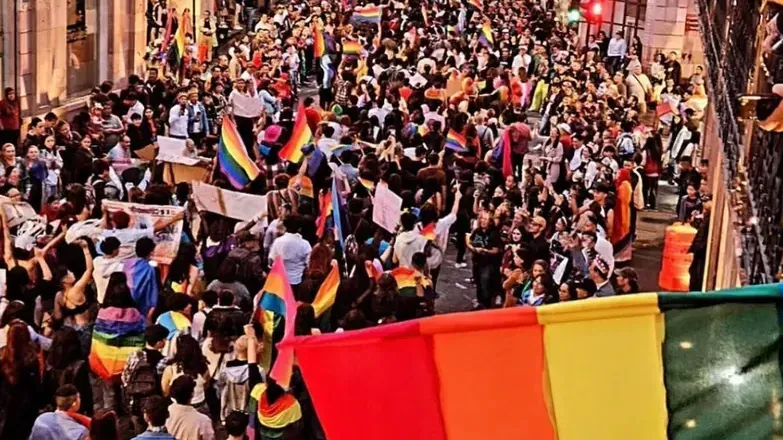
When thousands of people gather in the colonial streets of Zacatecas City for its annual Pride march, they are doing more than celebrating lesbian, gay, bisexual, transgender, queer, and intersex communities—they are reshaping the public image of an entire state long regarded as socially conservative and religiously traditional.
Zacatecas Pride, anchored in the state capital’s historic center, has rapidly evolved in recent years from a modest local march into a fuller week of programming that includes cultural events, panel discussions, and nightlife, drawing visitors from other Mexican states and, increasingly, from abroad.
Local organizers describe the event as “unusually progressive” for its context: a public, unapologetic celebration of LGBTQ+ life in a state where many queer and transgender people still navigate strong social stigma rooted in traditional religious norms and patriarchal expectations.
At the center of this year’s push to bring Zacatecas Pride to a wider audience is activist and organizer Teresa Lopez, who has been urging U. S. and international visitors to consider the city as a Pride-season destination.
A Pride Celebration in a Traditionally Conservative State
Zacatecas, located in north-central Mexico, has historically been known more for mining, agriculture, and its baroque architecture than for LGBTQ+ rights organizing. For many years, LGBTQ+ activists in the region focused on discrete community support and HIV prevention, often operating with limited public visibility due to social and religious conservatism.
Over the last decade, however, the broader national context for LGBTQ+ rights in Mexico has shifted significantly. Mexico’s Supreme Court has repeatedly affirmed marriage equality, culminating in a series of decisions that effectively made same‑sex marriage legal across all states by 2022, including historically conservative regions.
These legal developments created new space for local activists in places like Zacatecas to push for visible, joyful Pride celebrations that go beyond legal recognition to affirm the full dignity and cultural presence of LGBTQ+ people.
According to reporting by LGBTQ Nation, Zacatecas Pride has distinguished itself by leaning into that opportunity, positioning the city as “a surprisingly progressive Pride destination” within a region better known for conservative politics.
Organizers Center Local Community — and Invite the World
In an interview highlighted by LGBTQ Nation, organizer Teresa Lopez explains that the Pride celebration is designed first and foremost to serve local lesbian, gay, bisexual, transgender, and queer residents who often feel pressure to leave the state to live openly. Lopez emphasizes that many LGBTQ+ people from Zacatecas relocate to larger cities like Mexico City or Guadalajara seeking more inclusive environments, and that the Pride march and related events are a way of “bringing that sense of queer belonging back home. ”
At the same time, Lopez and other organizers are actively courting national and international visitors, framing Zacatecas Pride as both a political demonstration and a celebration of culture. They highlight the city’s colonial architecture, walkable historic center, and established tourism infrastructure as reasons LGBTQ+ travelers might choose to attend the event and support local businesses that are welcoming to LGBTQ+ customers.
This approach mirrors a broader pattern across Mexico, where Pride events increasingly intertwine local cultural identity, tourism promotion, and LGBTQ+ visibility. For example, Pride celebrations in Mexico City and Guadalajara already draw substantial numbers of visitors alongside local participants, combining marches with concerts, drag performances, and art exhibitions.
From Protest to Party—and Back Again
Although Zacatecas Pride is celebrated for its festive atmosphere, organizers have repeatedly stressed that it remains grounded in the political realities LGBTQ+ people face in the region. Mexican LGBTQ+ organizations have documented ongoing discrimination, violence, and barriers to healthcare for LGBTQ+ communities, particularly for transgender people and those living outside major urban centers.
Reports by Mexican civil society groups note that hate‑motivated violence against LGBTQ+ people remains a serious concern nationally, with many incidents underreported, especially in smaller cities and rural areas. That context gives the Pride march in Zacatecas particular resonance: marching openly as LGBTQ+ in a historically conservative state carries symbolic and personal risk, as well as profound affirmation for participants.
Organizers have described how the event balances protest and celebration—the march includes rainbow flags, music, and dancing, but also banners demanding better enforcement of anti‑discrimination protections, improved access to gender‑affirming care for transgender people, and stronger measures to address hate‑motivated violence. This dual nature aligns with the broader global Pride movement, where many events are simultaneously parades and political demonstrations.
A Different Kind of Pride Experience
LGBTQ Nation’s coverage notes that Zacatecas Pride offers a more intimate experience than some of Mexico’s largest Pride events, with smaller but deeply engaged crowds that allow participants to connect more easily with local activists and community spaces.
Visitors can attend the central march, which moves through the historic center, and then explore local bars, cafés, and community events that have become informal gathering points during Pride week. According to tourism promotions by the federal government, Zacatecas City offers a range of cultural attractions—including museums, churches, and panoramic viewpoints accessible by cable car—allowing visitors to weave Pride festivities into broader explorations of the city’s history and architecture.
For many LGBTQ+ travelers who are used to large, commercialized Pride parades, Zacatecas Pride offers a contrast: less corporate sponsorship, more grassroots organizing, and a stronger focus on local community needs. That dynamic has become appealing to some LGBTQ+ people who seek Pride experiences that feel closely connected to on‑the‑ground activism rather than solely to entertainment.
Regional Context: Pride Beyond Mexico City
The emergence of Zacatecas Pride as a notable event reflects a broader shift in Mexico and in Latin America, where Pride celebrations are expanding beyond major capitals into mid‑sized cities and regional centers. In recent years, cities across Mexico—including Mérida, Puebla, and Tijuana—have developed their own Pride marches, each shaped by local culture and politics.
Mexico City remains one of Latin America’s largest Pride gatherings, drawing hundreds of thousands of participants and featuring extensive programming around HIV awareness, transgender rights, and legislative advocacy. However, advocates point out that local Pride events like those in Zacatecas are critical because they offer visibility and support to LGBTQ+ people who may not have the means or ability to travel to the capital.
International human rights organizations have noted that visibility through Pride events can play an important role in shifting public attitudes, particularly in communities where LGBTQ+ people have historically faced high levels of stigma and exclusion. These organizations emphasize that Pride celebrations are not only about expression but also about asserting the presence and rights of LGBTQ+ people in public space.
Economic and Social Impact for Zacatecas
Although detailed economic data specific to Zacatecas Pride are not yet available in national tourism or municipal reports, federal tourism authorities have documented the broader importance of LGBTQ+ tourism for Mexican cities that host Pride events and queer‑inclusive festivals. These reports describe how Pride and LGBTQ‑focused cultural events can attract visitors who support local hotels, restaurants, transportation providers, and cultural venues.
LGBTQ Nation’s coverage underscores that organizers in Zacatecas are conscious of this potential impact and see the Pride celebration as a way to demonstrate that the city can be welcoming to LGBTQ+ visitors while also uplifting local businesses that embrace inclusion.
From a social perspective, advocates say that the visible participation of local institutions—such as small businesses flying Pride flags or hosting Pride‑related events—can help normalize LGBTQ+ presence in everyday life. In other Mexican cities, this visible support has sometimes preceded changes in local policy or improvements in how authorities respond to anti‑LGBTQ+ discrimination.
Balancing Safety, Visibility, and Joy
Organizers in Zacatecas are also navigating the realities of security in a country where public marches must consider both general safety concerns and the specific risks LGBTQ+ people can face. In other parts of Mexico, Pride events have at times required coordination with local authorities to ensure safe routes and adequate policing while also addressing community concerns about trust in law enforcement.
LGBTQ Nation notes that the Pride march in Zacatecas has proceeded in recent years with a strong emphasis on joy and community care, highlighting how participants look out for one another and how local organizations provide information about services ranging from legal support to mental health resources.
This focus on community care is in line with recommendations from international LGBTQ+ rights organizations, which encourage Pride organizers worldwide to integrate safety planning, consent culture, and accessible support services into Pride events, especially in contexts where LGBTQ+ people may face elevated risks.
An Invitation to Witness Local LGBTQ+ Joy
Through her outreach, Teresa Lopez has been explicit that Pride in Zacatecas is not only about drawing tourists; it is also about inviting people to witness and support local LGBTQ+ joy in a place where that visibility remains relatively new. She frames the event as an opportunity for solidarity, where visitors can honor the leadership of local organizers, attend workshops and cultural events, and demonstrate that LGBTQ+ communities in smaller cities are not alone.
Global LGBTQ+ media coverage of Zacatecas Pride has highlighted this message, presenting the event as a reminder that Pride’s most transformative power often emerges not only in the largest metropolitan parades, but in smaller marches where every rainbow flag carried through a historic plaza can signal a significant cultural shift.
As Mexico approaches another June filled with Pride events across its many regions, the story of Zacatecas Pride demonstrates how local organizers are harnessing law, culture, and community to build spaces where lesbian, gay, bisexual, transgender, queer, and intersex people can claim both public visibility and joy—on their own streets, in their own state, and on their own terms.
by Chris Tremblay
Copyright EDGE Media Network. All rights reserved. This material may not be published, broadcast, rewritten, or redistributed.