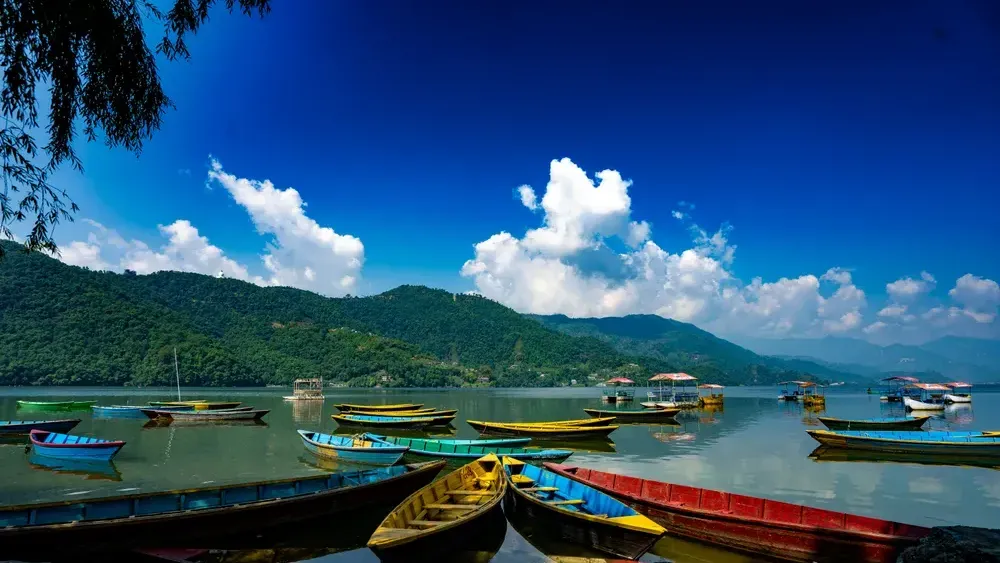
While Bangkok and Taipei dominate LGBTQ+ travel lists, the lakeside city of Pokhara in central Nepal is emerging as a quieter, lesser‑known haven for queer travelers.
On the shores of Lake Phewa, ringed by the snow‑streaked Annapurna range, Pokhara has long been a waypoint for trekkers and spiritual seekers moving through the Himalayas. Now, a quieter shift is underway: this laid‑back Nepali city is becoming an emerging, queer‑friendly destination in a region where LGBTQ+ travelers still tread carefully.
Unlike marquee Asian queer hubs such as Bangkok, Taipei, or Tokyo, Pokhara rarely appears on LGBTQ+ travel lists. Yet Nepal’s comparatively progressive legal framework, combined with a growing local LGBTQ+ community and a tourism sector accustomed to working with diverse visitors, is making this city one of Asia’s most underrated options for queer‑affirming travel.
Legal Landscape: A Small Country with Surprisingly Big Protections
For travelers scanning maps for safe destinations, the starting point is often law. Nepal stands out in South Asia for some of the region’s most progressive constitutional protections for sexual and gender minorities, even if implementation is uneven.
In 2007, the Supreme Court of Nepal ruled that sexual and gender minorities were entitled to equal rights and protections under the law and directed the government to form a committee to study same‑sex marriage. The landmark decision came in a case brought by Blue Diamond Society, a Kathmandu‑based LGBTQ+ rights organization , and other petitioners.
Those protections were later reflected in Nepal’s 2015 constitution, which explicitly prohibits discrimination on the basis of “gender and sexual orientation” and recognizes “gender and sexual minorities” in its list of protected groups.
Nepal introduced a “third gender” category in its citizenship documents and passports, allowing gender‑diverse people to identify beyond the male–female binary. In 2015, the government began issuing passports with an “O” designation for gender.
These developments are significant for queer travelers for two reasons. First, they signal that state persecution based on sexual orientation or gender identity is not official policy. Second, they contribute to a broader social climate—especially in tourism‑heavy cities like Pokhara—that is more accustomed to diversity than many neighboring destinations.
At the same time, same‑sex marriage is not yet fully legalized nationwide, despite years of advocacy and a 2023 Supreme Court interim order instructing the government to create a temporary register for same‑sex marriages. Implementation has been halting, and activists report that many same‑sex couples still struggle to register their marriages at the local level.
From Kathmandu to the Lake: Why Pokhara Matters
Most international coverage of LGBTQ+ life in Nepal focuses on Kathmandu, where Blue Diamond Society and other groups organize Pride events, community drop‑in centers, and HIV‑prevention projects. Pokhara, by contrast, is often framed purely as a trekking base camp.
Yet tourism research suggests that Pokhara is one of the country’s fastest‑growing tourist hubs, with pre‑pandemic visitor numbers rivalling Kathmandu’s and a rapid expansion of hotels, cafes, and bars along the Lakeside district.
For queer travelers, that growth intersects with Nepal’s relative openness in subtle but important ways:
- Many Pokhara guesthouses and trekking agencies are run by younger Nepalis who have worked abroad in Gulf countries, East Asia, or Europe and are accustomed to cosmopolitan clientele. - The city’s economy relies heavily on international visitors, which encourages service providers to maintain a reputation for safety and non‑discrimination. - LGBTQ+ travelers tend to blend easily into the steady flow of foreign tourists, reducing unwanted attention in public spaces.
Informal accounts from LGBTQ+ travel bloggers describe Pokhara as relaxed and relatively safe for same‑gender couples, especially around the Lakeside area, provided public displays of affection are modest. These accounts are consistent with broader observations by international rights organizations that note a gap between legal progress in Kathmandu and more conservative attitudes in rural areas—but place Pokhara, a cosmopolitan urban center, closer to the capital in terms of day‑to‑day tolerance.
Queer Community, Mostly Offline but Increasingly Visible
Pokhara does not yet have an extensive network of LGBTQ+ venues comparable to the dedicated gay bars of Bangkok or Taipei. Instead, queer community life is emerging through mixed‑crowd spaces, activist networks, and occasional events.
Blue Diamond Society reports that it operates or partners with community‑based organizations in several provincial cities, including Pokhara, offering HIV testing, counseling, and support services for lesbian, gay, bisexual, transgender, and intersex people. A 2014 joint report by the United Nations Development Programme and the United States Agency for International Development noted that many sexual and gender minority people in Nepal migrate from rural districts to urban centers such as Kathmandu and Pokhara in search of community and economic opportunity.
Local activists have also hosted Pride‑related activities in Pokhara, often timed around the national Pride observances that coincide with the June International Day Against Homophobia, Transphobia and Biphobia and local festivals. While these events are smaller than Kathmandu’s main parade, they signal a growing willingness among local LGBTQ+ people and allies to claim space in the public sphere.
Digital platforms are helping to knit these efforts together. Nepali LGBTQ+ groups maintain active social media presences—such as Queer Youth Group and Mitini Nepal —that share information about regional meet‑ups, legal developments, and mental‑health resources. Although these organizations are headquartered in Kathmandu, their online outreach regularly reaches queer people living in Pokhara and other cities.
For visiting travelers, this means that in‑person queer spaces may not be immediately visible but can often be accessed through online networks, community health centers, or connections made via LGBTQ+‑friendly trekking companies that work closely with NGOs.
Nightlife: Mixed Spaces and Quiet Acceptance
Pokhara’s nightlife centers on the Lakeside district, where bars and live‑music venues line the main road and side streets. Tourist guides describe an easygoing bar culture: casual rock venues, rooftop lounges, and lakeside cafes that cater to an international crowd of hikers, paragliders, and yoga practitioners.
While no major English‑language guidebook or travel resource identifies a fully exclusive gay bar in Pokhara, several sources emphasize that same‑gender couples are generally welcome in popular venues, provided they respect the same social norms as heterosexual couples. This “integrated” nightlife pattern is common across much of South Asia, where queer‑friendly spaces are often mixed and inclusive rather than explicitly branded.
Travel companies that specialize in LGBTQ+ itineraries, such as Out Adventures , have repeatedly listed Nepal—rather than just its capital—as one of Asia’s more welcoming destinations, citing interactions with local guides and hospitality workers as evidence of practical tolerance. Gay travel platforms such as Nomadic Boys similarly recommend Pokhara as part of broader Nepal trips, pointing to its relaxed atmosphere and outdoor activities as major draws for queer visitors.
Culture and Spirituality: A Queer‑Inclusive Context
Part of what makes Pokhara distinctive is the cultural and spiritual lens through which many Nepalis—queer and non‑queer alike—understand gender and sexuality. Scholars note that South Asian religious and cultural traditions include long‑standing recognition of gender diversity, even if modern legal systems and social attitudes have fluctuated.
UN‑supported research on sexual and gender minorities in Nepal concludes that some transgender and gender‑diverse people have found ways to integrate spiritual identities with their gender expression, particularly within Hindu and Buddhist contexts. This can translate into nuanced, if sometimes ambivalent, forms of social acceptance.
In Pokhara, this cultural layering is visible in small ways: temple bells ringing above rainbow‑clad foreign trekkers on the lakeside path; young queer Nepalis attending both local shrines and activist meetings; and tourism businesses that quietly partner with LGBTQ+ groups for HIV‑prevention and awareness campaigns.
Local festivals add another dimension. Pokhara is a gateway for visitors traveling to nearby religious and cultural sites, including the Annapurna region and smaller temples around the valley. Regional festivals—such as Dashain and Tihar—are celebrated citywide, blending family gatherings, public rituals, and street‑level celebrations that visiting queer travelers can respectfully observe or join. While these festivals are not explicitly LGBTQ+ themed, activists note that visibility during major holidays has become one subtle strategy for sexual and gender minorities to assert their presence in society.
Safety, Challenges, and the Limits of Progress
Pokhara’s appeal for LGBTQ+ travelers does not erase the challenges that sexual and gender minorities still face in Nepal. Reports by Human Rights Watch and OutRight International describe ongoing discrimination in employment, housing, and healthcare, particularly for transgender people and intersex people.
A 2023 briefing by Human Rights Watch noted that, despite constitutional protections, government agencies and local officials have been slow to implement court orders on same‑sex marriage and other rights, leaving many couples in legal limbo. Transgender people have reported difficulties in changing their legal gender markers, especially when documentation requirements remain unclear at the local level.
For visitors, these structural issues translate into a nuanced but navigable environment:
- The risk of state‑backed persecution based on sexual orientation or gender identity is significantly lower than in several neighboring countries, thanks to the Supreme Court rulings and constitutional safeguards. - Social attitudes in Pokhara, while often tolerant, can still be conservative, particularly outside tourist districts and in more traditional neighborhoods. - LGBTQ+ travelers are advised by local activists to be mindful of public displays of affection and to seek information from established organizations, such as Blue Diamond Society or Queer Youth Group, when they want to connect with the local community in ways that are safe and respectful.
These complexities are not unique to Pokhara. They reflect broader tensions within Nepal’s rapid legal transformation and slower cultural change. Yet for queer travelers who weigh legal frameworks, social climate, and on‑the‑ground experiences when choosing destinations, Pokhara offers a pragmatic balance: a city where the law is comparatively protective, locals are accustomed to diversity, and the tourism industry has strong incentives to remain welcoming.
A Hidden Gem in a Changing Asian Travel Map
As global LGBTQ+ travelers look beyond established hubs, Nepal is starting to appear more frequently in guides and rankings of queer‑friendly Asian destinations, often alongside Thailand, Taiwan, and Japan. Regional equality indexes similarly rank Nepal among the more LGBTQ+‑affirming countries in Asia, based on its constitutional protections, recognition of gender diversity, and absence of criminalization laws targeting consensual same‑sex relationships.
Pokhara benefits directly from this shifting map. Its combination of natural beauty, outdoor adventure, spiritual heritage, and emerging queer community infrastructure makes it particularly appealing to travelers seeking more than just nightlife. LGBTQ+ guests can share a sunrise boat ride across Lake Phewa, embark on a multi‑day trek with affirming guides, or attend a yoga retreat that welcomes all identities, then spend evenings in mixed‑crowd venues where difference is largely unremarkable.
Behind these experiences is nearly two decades of sustained activism by Nepali sexual and gender minority organizations, whose court cases, advocacy, and service provision have helped reshape both the law and public debate. Their work has laid the groundwork for cities like Pokhara to welcome queer visitors within a national framework that, while imperfect, is among the most progressive in the region.
For LGBTQ+ travelers scanning Asia for destinations that combine safety, cultural richness, and a sense of emerging community, Pokhara may not yet be a headliner. But on the lakefront paths and mountain trails of this Himalayan city, a quieter, inclusive future for regional travel is already taking shape.
by Chris Tremblay
Copyright EDGE Media Network. All rights reserved. This material may not be published, broadcast, rewritten, or redistributed.
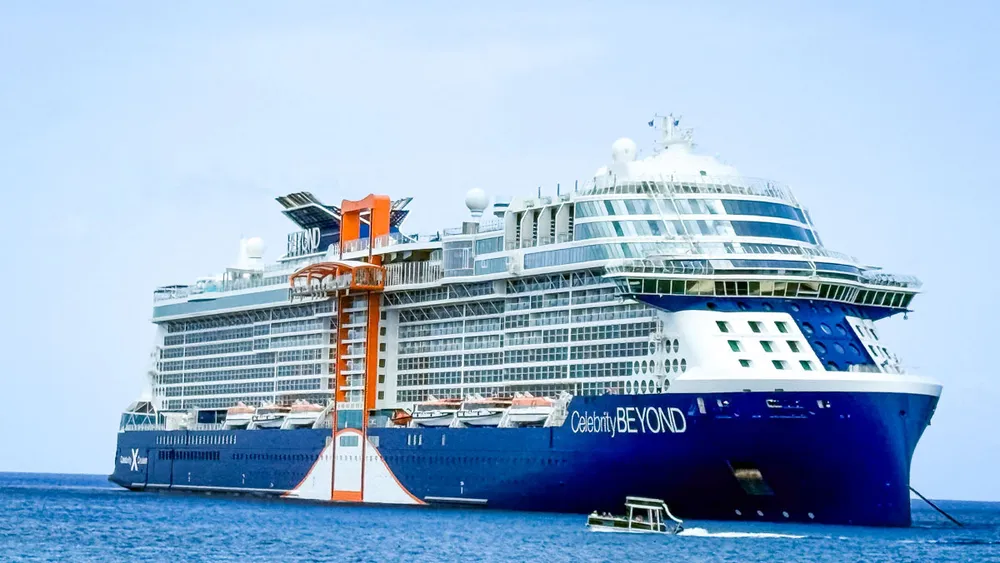
Picture the classic cruise passenger with a deck chair, ocean view and a formal dinner by 6 p.m. That image clashes with a harder set of numbers: 76% of Gen Z travelers who have already been on a cruise plan to do it again, and the industry knows it. Cruise lines are overhauling itineraries, forging sport partnerships and rethinking who they're building for because the youngest generation of travelers has arrived at sea, and they're not leaving.
Picture the classic cruise passenger with a deck chair, ocean view and a formal dinner by 6 p.m. That image clashes with a harder set of numbers: 76% of Gen Z travelers who have already been on a cruise plan to do it again, and the industry knows it. Cruise lines are overhauling itineraries, forging sport partnerships and rethinking who they're building for because the youngest generation of travelers has arrived at sea, and they're not leaving.
The demographic change goes well beyond one age group. According to Cruise Lines International Association, or CLIA, global cruise passengers hit a record 37.2 million in 2025, with roughly one-third of all cruisers now under 40. Royal Caribbean logged a 19% jump in Gen Z customers in 2025 compared to the year before, and nearly 90% of all passengers say they intend to sail again, the highest intent level the industry has ever recorded. That under-40 share isn't incidental; it represents millions of passengers who booked cabins, spent money onboard and came back for more.
Short itineraries, big pull
What Gen Z wants from a cruise doesn't look like what their parents booked, with shorter durations, port-heavy routes and itineraries that don't require two weeks of vacation time. Virgin Voyages and Celebrity Cruises have leaned into influencer marketing to reach this audience where they already spend time, swapping traditional travel advertising for content creators who show the real experience onboard.
Sail Croatia takes the format further with its Navigator Cruises, seven-night voyages along the Dalmatian Coast built specifically for travelers aged 18 to 39. The itineraries pair cultural immersion with flexibility: hidden coves, coastal hiking, ancient towns and local food, with nightlife available but not mandatory.
When the ship is the event
Themed sailings have become one of the sharpest tools cruise lines have for attracting younger travelers, because they reframe the trip entirely. The cruise isn't the backdrop; it's the reason. Explora Journeys, the luxury ocean travel brand of MSC Group, will dock EXPLORA I at Port Hercule in Monaco from June 3 to June 8, 2026, for the Formula 1 Grand Prix de Monaco. The ship sits 492 feet from the track. Guests have access to exclusive onboard programming across race weekend, with options to add three-day grandstand tickets or F1 Paddock Club hospitality. MSC Group's partnership with Formula 1 runs through 2030.
Cunard works a different passion point with its Abbey Road at Sea voyage aboard Queen Mary 2, a Southampton-to-New York crossing built around live performances, a photography exhibition and the history of one of music's most iconic albums.
What longtime cruisers should know
The demographic change doesn't shrink the product; it expands it. One-third of all cruises are now multigenerational sailings, with grandparents, parents and adult children booking together. Itinerary variety has grown at every price point, with more themed options, port choices and onboard programming; the fleet is larger and more diverse than it has ever been. The traveler booking a 14-night Mediterranean voyage and the 24-year-old signing up for a race weekend in Monaco are, more and more, on the same ship.
Where this goes next
CLIA projects 42 million passengers will cruise by 2028; growth that depends heavily on converting younger first-timers into repeat bookers. The lines courting Gen Z through sport partnerships, influencer campaigns and short-form itineraries aren't abandoning their existing base. They're making a calculated bet that identity-driven travel, trips built around what you love and not just where you go, is where the entire market is headed. The retiree cliche didn't disappear because it was wrong. It disappeared because the product became much more interesting.
by Jennifer Allen
Copyright Associated Press. All rights reserved. This material may not be published, broadcast, rewritten, or redistributed.
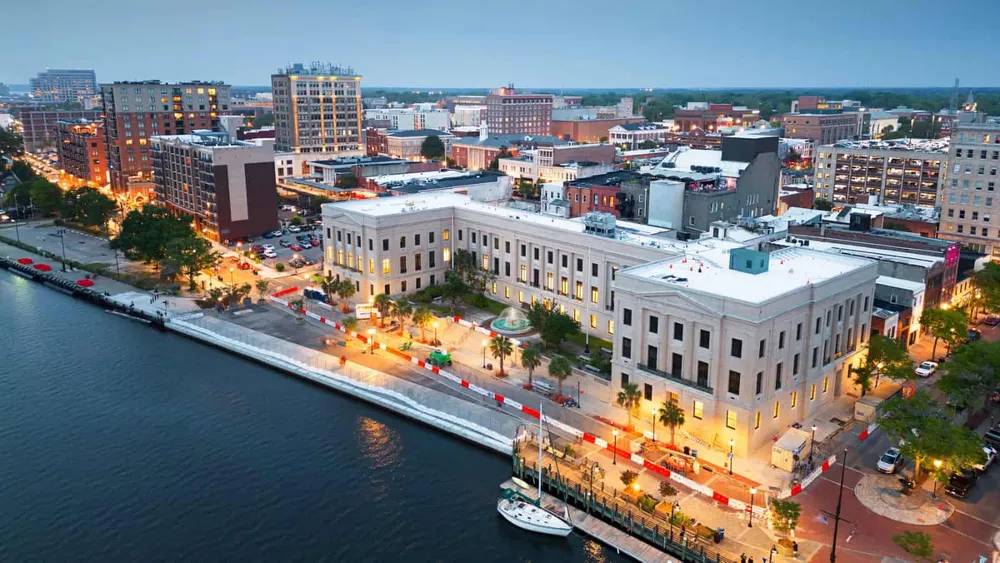
Forget overpriced resort towns. Wilmington, North Carolina, delivers coastal charm, historic streets and family fun for less.Photo Credit: Deposit Photos Via AP
Airfare prices, for the carriers that still exist, jumped nearly 15% this year; escalating travel costs across the board have families rethinking where they spend their summers. The usual suspects, like Hilton Head, Virginia Beach and the Florida Gulf Coast, carry price tags and crowd levels to match their popularity. Wilmington, North Carolina, is a different story.
Airfare prices, for the carriers that still exist, jumped nearly 15% this year; escalating travel costs across the board have families rethinking where they spend their summers. The usual suspects, like Hilton Head, Virginia Beach and the Florida Gulf Coast, carry price tags and crowd levels to match their popularity. Wilmington, North Carolina, is a different story.
As a destination for family coastal travel, this port city on the Cape Fear River quietly delivers the kind of vacation that feels expensive: a walkable historic district, multiple beaches within 20 minutes, world-class gardens and a food scene rooted in fresh coastal seafood. The catch? The cost stays surprisingly low.
That's good news, as gas prices continue to rise, up more than 19% since this time last year. The U.S. Travel Association reports vacation costs in 2026 nearly doubled the overall inflation rate. Meanwhile, a stay in Wilmington averages $245 per person, per day.
Wilmington's three surrounding beaches, Wrightsville Beach, Carolina Beach and Kure Beach, were named top travel destinations for 2026. The region's coastal charm, rich history and family-friendly atmosphere win tourists over. The recognition is well-earned, and for families watching their budgets, the timing could not be better.
The Riverwalk sets the tone for free
Any visit to Wilmington begins on the Riverwalk, a nearly 2-mile wooden boardwalk that hugs the Cape Fear River through the heart of the Historic Downtown River District. Lined with locally owned restaurants, boutiques and open-air seating, it has been voted one of the best riverfronts in America, and strolling it costs nothing.
Families can spend an entire morning exploring the waterfront, watching boats move along the river, and ducking into the kind of shops that feel curated rather than commercial. The downtown itself rewards slow exploration. Brick-lined streets connect antebellum architecture, art galleries and a food scene that leans heavily on locally sourced seafood and Southern staples. The vibe is unhurried and genuine, a sharp contrast to the neon-and-miniature-golf atmosphere that defines many coastal tourist trap towns.
Attractions that deliver big experiences at small prices
Wilmington's paid attractions are priced far below what families typically encounter at comparable East Coast beach destinations. The Battleship North Carolina, moored directly across the river from downtown, charges $14 for adults and $6 for children ages 6 through 11, with children 5 and under admitted free. The self-guided tour spans nine decks and keeps families occupied for two to three hours aboard the most decorated United States battleship of World War II. USA Today readers ranked it among the top 10 best museum ships in the country in 2025.
Airlie Gardens offers 67 acres of walking trails, a butterfly house, 10 acres of lakes and a 470-year-old live oak for $10 per adult and just $3 for children ages 4 to 12, with children under 4 admitted free. A single admission stretches into hours of family time: the grounds host a summer concert series, seasonal light shows and guided history walks.
For families who prefer something more active, the North Carolina Aquarium at Fort Fisher sits just a short drive south. The aquarium boasts touch tanks, sea turtles and marine life exhibits in a setting that doubles as an educational experience.
What makes Wilmington particularly appealing for budget-conscious families is the sheer volume of free experiences. Greenfield Lake Park, just south of downtown, offers 5 miles of paved trails around a cypress-lined lake at no cost. The city's farmers market runs Saturday mornings in the downtown historic district with free admission and local produce, baked goods and artisan wares that give families a genuine taste of the region.
‘Hollywood East' adds a layer no other beach town can match
Few beach destinations can claim more than 400 film and television credits, but Wilmington has carried the nickname "Hollywood East" since famed producer Dino DeLaurentiis built Cinespace Studios here in 1984. Productions including "Iron Man 3," "Dawson's Creek," "One Tree Hill" and Prime Video's "The Summer I Turned Pretty" all filmed on location throughout the city and its surrounding beaches.
For families, this creates another entirely free layer of entertainment. The self-guided film location tour winds through downtown, along the Riverwalk and out to Airlie Gardens, where dozens of recognizable sites appear in shows that kids and adults alike will recall. Guided walking tours of filming locations are also available for around $12 per adult, one of the better entertainment values in any coastal city.
3 beaches for eco-tourism itineraries
Wrightsville Beach, just 15 minutes from downtown, consistently draws praise for its clean water, manageable crowds and family-friendly atmosphere. Budget Your Trip ranks Wilmington as a stronger family destination than Myrtle Beach, noting its combination of family-friendly attractions, historic appeal and budget-accessible activities.
Carolina Beach and Kure Beach, both roughly 20 to 30 minutes south of downtown, offer a quieter alternative with a boardwalk, state park access and the Fort Fisher State Historic Site, all at little to no cost.
The beaches here do not come with the carnival-ride infrastructure and high-rise resort density of the Grand Strand. What they do provide is clean, uncrowded sand and clear Atlantic water, which, for many families, is the point.
Lodging that respects the budget
Average hotel rates in Wilmington run approximately $155 per night, with budget-friendly options starting around $100. Several properties near the Wrightsville Beach corridor supply complimentary breakfast and pool access, meaning a family of four can anchor a five-night stay for significantly less than comparable accommodations in coastal Florida or the Virginia Beach resort corridor.
For something more memorable, The Cove Riverwalk Villas offers 35 custom-designed luxury houseboats moored at Port City Marina, directly on the Cape Fear River and steps from the Riverwalk. It's a one-of-a-kind stay that feels far more indulgent than its price suggests. Vacation rentals and short-term condo options near Carolina Beach and Kure Beach extend the value further, particularly for families who prefer a kitchen to keep dining costs in check.
A refined feel without the resort price tag
What separates Wilmington from other affordable coastal options is that it does not feel like a compromise. The historic district, the riverside dining, the botanical gardens and the three distinct beaches combine into a destination that reads as polished and well rounded. It's the kind of trip families return to. For those searching for family coastal travel that delivers genuine experiences without the pressure of a big-destination budget, Wilmington makes a compelling case that the best vacations do not always come with the highest price tag.
Kimberly Stroh is an Atlanta-based family travel writer and the founder of Savvy Mama Lifestyle. Since 2015, she has been sharing expert travel tips, destination guides and parenting insights tailored for modern families, and her content is syndicated to over 10 million readers through platforms like MSN. With a strong social media presence, Kimberly has built a vibrant community of travel-savvy Millennial Moms who trust her for real-world advice and inspiration on making family travel memorable and manageable.
by Kimberly Stroh
Copyright Associated Press. All rights reserved. This material may not be published, broadcast, rewritten, or redistributed.
American travelers are booking Toronto at a pace the city hasn't seen in years. Summer travel searches for the city are up 24% year over year, according to data, and the draw isn't the CN Tower or the waterfront. It's a food city that took generations to build, and visitors are only now catching up to what locals have known all along.
American travelers are booking Toronto at a pace the city hasn't seen in years. Summer travel searches for the city are up 24% year over year, according to data, and the draw isn't the CN Tower or the waterfront. It's a food city that took generations to build, and visitors are only now catching up to what locals have known all along.
Toronto is home to more than 200 nationalities. According to Statistics Canada's 2021 census, 55.7% of the city's population belongs to a visible minority group, a figure higher than any other major Canadian city. That's not a marketing statistic, but the reason the food scene here operates differently than anywhere else in North America. The restaurants visitors find weren't built for them; they were built by communities feeding themselves, which is exactly what makes them worth finding.
The neighborhoods that built Toronto's food identity
Kensington Market is the most compressed food corridor in the city, a few walkable blocks west of the downtown core, where Jamaican patties, Portuguese custard tarts and Mexican birria sit within a few blocks of each other. No chains have ever been established here; the vendors are owner-operated, the streets are narrow and the whole thing resists the kind of curation that turns neighborhoods into dining districts. It is one of the few places left in any major North American city that still feels genuinely accidental.
Chinatown, located along Spadina Avenue and Dundas Street West, is one of the densest Chinese food corridors on the continent. Dim sum houses that have been running the same service for three decades sit alongside newer Sichuan and Shanghainese spots that draw serious eaters from across the city. The depth here is generational, and the prices mirror a neighborhood feeding its own, not a tourist corridor inflating for visitors.
Little Italy on College Street is the original immigrant strip, now layered. Second- and third-generation Italian-Canadian cooking shares storefronts with wine bars and late-night spots that moved in as rents changed. The recipes at the old-guard spots haven't changed in 40 years. That's not nostalgia, and that's the point.
Greektown on the Danforth runs along Danforth Avenue east of the Don Valley and is one of the largest Greek commercial corridors in North America. The souvlaki and loukoumades at the institutions are the obvious draws, but the neighborhood tavernas that haven't updated their menus since the 1980s are the real reason to make the trip east.
Little Portugal along Dundas Street West is lined with pastelarias, bifanas and bacalhau, with Brazilian and Cape Verdean communities layered into the same corridor over decades. It feeds itself first and happens to welcome visitors, and there is nothing quite like it in any American city.
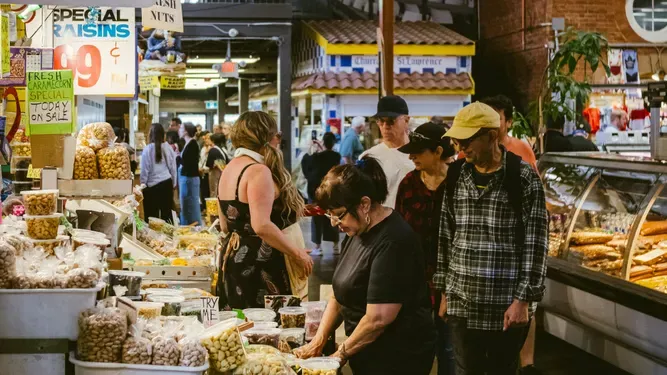
St. Lawrence Market, open since 1803, was named one of the world's best food markets by National Geographic in 2011. The Saturday-morning peameal bacon sandwich from Carousel Bakery is the non-negotiable first stop. Everything else, such as the cheese vendors, the fish stalls, the produce from Ontario farmers who have been showing up at dawn for two centuries, follows from there.
For the food-curious: Step outside the usual haunts
The neighborhoods above will fill a long weekend. These five reward the traveler who wants to eat where the city's newest and oldest communities actually live.
Gerrard India Bazaar on Gerrard Street East is North America's longest South Asian commercial strip, running through what Toronto calls Little India. Chaat counters, dosa spots and mithai shops stack up along several city blocks. It draws far fewer visitors than it should.
Corso Italia along St. Clair Avenue West is the other Italian strip, quieter and older than College Street, with less scenery and considerably better espresso. The regulars have been coming for decades, and that fact alone is reason to go.
Roncesvalles still showcases its Polish heritage at the institutions, where pierogies, kielbasa and borscht remain the draws, while the surrounding blocks have absorbed a wave of serious independent restaurants that haven't displaced the neighborhood's working-class food identity. Both versions coexist without friction.
Scarborough, the city's eastern district, is the pick that Toronto food writers have been pushing for years and visitors rarely act on. Authentic Tamil, Sri Lankan, Caribbean and Chinese cooking at prices the downtown core cannot match. The 30-minute transit ride from Union Station is the only barrier, and it is not a real one.
Koreatown along Bloor Street West near Christie Street is compact, walkable and best visited after 9 p.m., when the Korean BBQ grills run at full output, and the army stew spots fill up. Banchan shops and late-night noodle counters are spread across a few dense, walkable blocks.
The moment to go is now
Destination Toronto reported a record 28.2 million visitors in 2025, generating $9.1 billion in direct spending. TripAdvisor's Summer Travel Index flagged Toronto as a trending Memorial Day weekend international destination for 2026. The FIFA World Cup arrives this summer with six matches at BMO Field, and the city's international profile is about to get significantly louder. All just a part of what's driving the increased searches for summer travel to Toronto.
Toronto's food scene grew from the inside out over decades. No single chef moment put it on the map, and no James Beard wave rewrote the story. What American travelers are finding in 2026 is a city that was already complete before anyone outside Canada was paying close attention. The food will be the same when the crowds arrive, but the experience of finding it first will not.
Jennifer Allen is a retired chef turned traveler, cookbook author and nationally syndicated journalist; she's also a co-founder of Food Drink Life, where she shares expert travel tips, cruise insights and luxury destination guides. A recognized cruise expert with a deep passion for high-end experiences and off-the-beaten-path destinations, Jennifer explores the world with curiosity, depth and a storyteller's perspective. Her articles are regularly featured on the Associated Press Wire, The Washington Post, Seattle Times, MSN and more.
by Jennifer Allen
Copyright Associated Press. All rights reserved. This material may not be published, broadcast, rewritten, or redistributed.
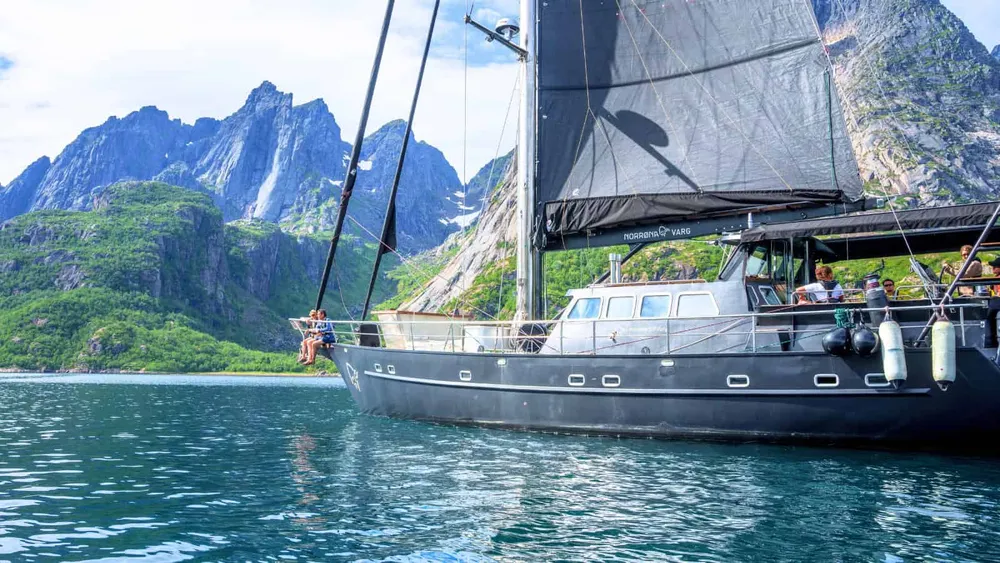
Travelers spending the most on cruises aren't booking the ships with roller coasters. They're choosing the opposite.Photo Credit: Norrøna Adventure Via AP
The mainstream cruise industry is building bigger than ever. Ships carrying 5,000 passengers, private islands and onboard roller coasters have made scale the default language of cruise marketing. But among travelers willing to spend the most, something different is happening.
The mainstream cruise industry is building bigger than ever. Ships carrying 5,000 passengers, private islands and onboard roller coasters have made scale the default language of cruise marketing. But among travelers willing to spend the most, something different is happening.
New research from Internova Travel Group, one of the world's largest travel services companies, found that one-third of North American travelers now express interest in small-ship cruising. Among luxury and ultra-luxury travelers, the demand is stronger. The data, drawn from millions of bookings and a survey of 4,000 North American travelers, found expedition cruise prices have risen more than 20% since 2023, the largest price increase of any cruise category, and a reliable indication of demand outpacing supply.
Expedition and exploration cruising is the fastest-growing segment in the entire cruise sector, with passenger numbers up 42%, according to Cruise Lines International Association, or CLIA, a trend the association's 2026 report confirms is continuing.
Access is the new luxury
The organizing idea is the same across every operator driving this shift. A vessel carrying 36 guests instead of 3,600 can navigate a shallow river gorge in the Australian Kimberley, anchor overnight in a harbor closed to larger ships or sail into an Antarctic bay that mainstream itineraries will never reach. Small size is not a compromise in this market; it is the product.
The operators defining the category
SeaDream Yacht Club has been making this argument since before "expedition cruising" was a marketing term. The family-owned line, now celebrating more than 25 years, operates two intimate mega-yachts carrying just 112 guests each under a philosophy it calls "yachting, not cruising." That means overnight stays in secluded harbors, midnight departures from anchorages closed to larger ships and the kind of spontaneity only a small vessel can deliver. When conditions are right in the Caribbean, the captain anchors, deploys the onboard marina and hosts a Champagne & Caviar Splash with jet skis and an inflatable slide off the stern. Itineraries span the Mediterranean, Caribbean and Northern Europe.
At the far end of the expedition spectrum, Terra Nova Expeditions has launched what it calls the world's first cruise-sailing hybrid in Antarctica. The 20-day Ultimate Antarctic Adventure pairs a purpose-built expedition vessel with a six-day microexpedition aboard the intimate Icebird Yacht, which gives guests access to rarely visited bays and the ability to sail among icebergs well beyond any traditional Antarctic itinerary. The line carries a maximum of 98 guests and backs the adventure with its Antarctic Classroom, a structured onboard program pairing guests with scientists for real-time citizen science and sustainability education.
In Arctic Norway, Varg Sail Yacht takes intimacy to its logical conclusion. The 62-foot sailing yacht, operated by Norwegian outdoor brand Norrøna Adventure, accommodates just six guests across three cabins and earned a spot on TIME's World's Greatest Places list for 2026. Winter voyages center on whale watching and northern lights in the Barents Sea, while spring itineraries combine ski touring with coastal sailing through the Lyngen Alps. Summer shifts to the remote anchorages of the Lofoten archipelago. A wood-fired sauna and outdoor hot tub sit on a deck; the culinary program is built around foraged and locally sourced Arctic ingredients.
Sailuxe operates 13 premium Lagoon catamarans ranging from 51 to 65 feet across the Aeolian Islands, Sardinia's Costa Smeralda and the waters around Amalfi and Capri. Each vessel carries a crew trained to boutique hotel standards and a private chef certified through an exclusive partnership with the Gambero Rosso Academy, Italy's most respected culinary institution. Signature experiences vary by catamaran: cinema under the stars off one coast, private granita-making with a Sicilian producer off another. Bookings have grown 113% in the past two years.
Geography makes the case for small-ship cruising in British Columbia and Alaska. Maple Leaf Adventures operates in Haida Gwaii, the Great Bear Rainforest and remote Vancouver Island, places where cultural site access, wildlife sensitivity and permit structures cap group sizes by design. The company's luxury vessel, Cascadia, delivers spacious cabins, locally inspired design and highly personalized service in a market where the company says no comparable luxury offering exists.
True North Adventure Cruises has spent more than 35 years making the same argument along Australia's Kimberley coast. The 50-meter expedition vessel carries a maximum of 36 guests with a crew of 22, and its shallow draft allows it to navigate river systems and gorges that larger ships cannot physically enter. An onboard helicopter extends that reach further, lifting guests above Mitchell Falls and into the wilderness inaccessible by any other means. Chef-driven menus built on sustainable local ingredients, 18 en-suite staterooms and a $4 million fleet refit ahead of the 2026 season round out a product that holds full membership in Luxury Lodges of Australia.
Regent Seven Seas Cruises extends the access argument through time. Its new Legendary Voyages collection for 2028 includes the 101-night Grand Pathways of Europe and the 61-night Grand Silk Seas Passage, built around longer port stays and deeper destination immersion rather than maximizing ports visited. Shore excursions, fine dining and business-class air are all included, which lets travelers focus entirely on the places they are in rather than the logistics of getting there.
New Zealand's Heritage Expeditions brings 40-plus years of Southern Ocean expertise to the category's most remote itineraries. The second-generation family-owned operator sends its new vessel, Heritage Discoverer, on a 21-day preview voyage this November to the Antarctic Peninsula, South Georgia and the Falkland Islands, ahead of the ship's maiden 2027-28 season. A maximum of 130 expeditioners sail with an expedition team of 15 and 14 Zodiacs. South Georgia alone hosts penguin, seabird and fur seal populations numbering in the millions; early-season Antarctica delivers more than 20 hours of daylight each day.
Where the category is heading
CLIA projects expedition cruise capacity will grow 150% between 2019 and 2029, a figure that confirms this segment has moved well past niche status. The operators that see the sharpest demand share one advantage: a product that cannot be replicated at scale. The gorge, iceberg bay and remote anchorage belong only to the vessel small enough to reach them.
The real measure of luxury
The table stakes in high-end travel now are the suite, fine dining and personalized service. What this generation of small-ship operators is selling is something harder to manufacture: a berth on a vessel small enough to go where the crowds are not and, in some cases, where almost no one has gone before. In 2026, that is the most exclusive address at sea.
by Jennifer Allen
Copyright Associated Press. All rights reserved. This material may not be published, broadcast, rewritten, or redistributed.
From immersive workshops to world-class festivals, this is a city that invites you to do more than just visit.
Tucked into the heart of southwest Michigan, Kalamazoo is a vibrant town which blends creativity, culture, and community in a way that feels both refreshingly unpretentious and quietly progressive. Long known for its craft beverage scene and artistic spirit, Kalamazoo is increasingly becoming a destination for LGBTQ+ travelers seeking a welcoming Midwest escape filled with hands-on experiences, live performance, and meaningful connection.
From immersive workshops to world-class festivals, this is a city that invites you to do more than just visit.
by Joseph Amato
Copyright EDGE Media Network. All rights reserved. This material may not be published, broadcast, rewritten, or redistributed.
France welcomed 102 million international visitors in 2025, more than any country on earth. Most of them went to Paris. A major new study suggests they left without seeing one of the best parts of France: Nantes.
France welcomed 102 million international visitors in 2025, more than any country on earth. Most of them went to Paris. A major new study suggests they left without seeing one of the best parts of France: Nantes.
Research published in April 2026 by GetYourGuide, drawn from nearly 2.9 million bookings across France, found that Paris ranks sixth in average spend per transaction, well behind smaller destinations where travelers linger longer, spend more and return with something Paris rarely delivers at scale: access. "Growth no longer comes solely from volumes," said Cécile Lavarenne, regional manager of GetYourGuide France, "but from the value created by experiences, often outside of major metropolises." Nantes, two hours from Paris on France's high-speed rail network, is the clearest proof of that shift, and spring is the time to go.
A castle in the middle of the city
The Château des ducs de Bretagne sits in the center of Nantes, the way the Louvre sits in Paris, except you can walk its ramparts for free, picnic on the surrounding lawns and spend an afternoon inside the Museum of the History of Nantes without booking weeks in advance. Built in the late 15th century by François II, the last Duke of Brittany, the chateau is a listed Historic Monument and the site where Henri IV signed the Edict of Nantes in 1598. Through Nov. 8, it hosts " Expression(s) Décoloniale(s) #4," an exhibition featuring Brazilian artist Rosana Paulino, Senegalese artist Omar Victor Diop and Beninese historian Lylly Houngnihin. The combination of medieval architecture and urgent contemporary art is about as far from a Paris queue as travel gets.
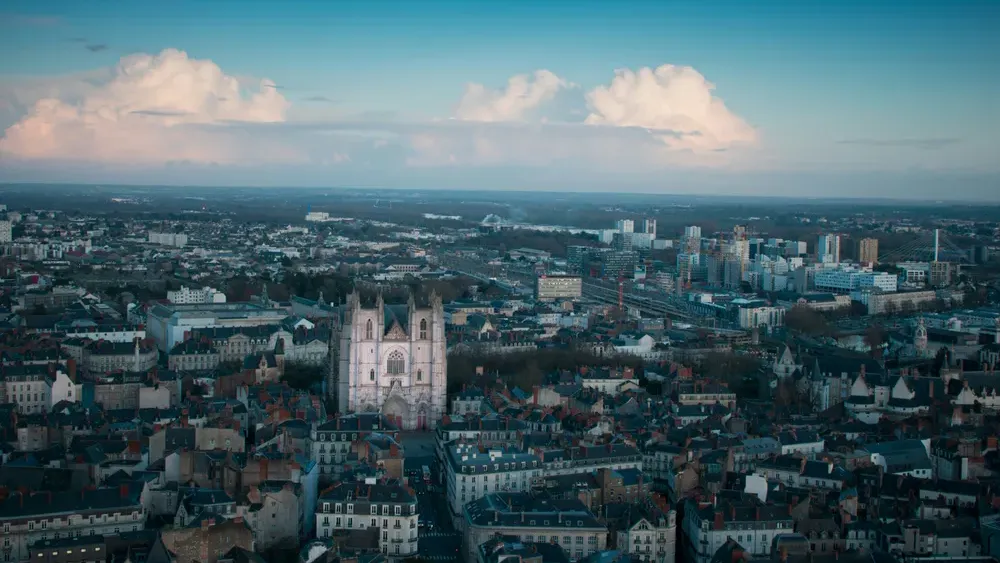
A five-minute walk delivers you to the Cathédrale Saint-Pierre-et-Saint-Paul, which reopened on September 27, 2025, after a five-year restoration following a devastating 2020 arson attack. Its nave rises 123 feet, taller than Notre-Dame de Paris, and spring 2026 is its first full season back. Restoration continues through 2028, but the cathedral is open and worth every step.
Seven stars and a table by the river
Nantes retained seven Michelin Stars in the 2026 guide: L'Atlantide 1874 - Maison Guého, LuluRouget, Le Manoir de la Régate, Les Cadets, Freia, Omija and Le 1201 in nearby Les Sorinières. The dining culture beyond the starred tables runs just as deep. Each spring, "guinguettes," open-air restaurants along the Loire riverbanks, reopen their terraces, serving fouées, zander with beurre blanc and local Muscadet by the glass. La Cantine du Voyage, Station Nuage and Château de la Frémoire are among those opening tables in the sunlight this season, and river cruise dining is returning to the Loire for the warmer months. Paris has its brasseries; Nantes has the river.
The summer festival you should beat to it
On July 4, Le Voyage à Nantes launches its 15th edition, this year themed around earth, the first in a four-year cycle exploring the elements. Running alongside it, the HAB Galerie will host " Interstellar: Re-imagining Earth," an immersive exhibition featuring around 20 contemporary visual artists, photographers, videographers and designers, which opens on May 23 and runs through Sept. 27. The festival will transform the city with a green line painted through the streets connecting new installations and cultural sites across the urban landscape.
The event runs through Sept. 6. That makes spring, now through late June, the smart window: the Château is open, the cathedral is back, the guinguettes are serving and the city is unhurried. By July, Nantes will have earned its crowds; it just hasn't yet.
Where the value has gone
The GetYourGuide research found that more than a quarter of travelers said an experience was a decisive factor in their choice of destination, and nearly 1 in 4 extended their stay because of one. Nantes is the perfect choice: a walkable medieval core, a riverfront that has been reclaimed for public life, a Michelin-dense food scene and a cultural infrastructure that has been compounding for years. Paris will always be Paris, but in 2026, the traveler getting the most out of France may not be the one standing in line at the Eiffel Tower.
Jennifer Allen is a retired chef turned traveler, cookbook author and nationally syndicated journalist; she's also a co-founder of Food Drink Life, where she shares expert travel tips, cruise insights and luxury destination guides. A recognized cruise expert with a deep passion for high-end experiences and off-the-beaten-path destinations, Jennifer explores the world with curiosity, depth and a storyteller's perspective. Her articles are regularly featured on the Associated Press Wire, The Washington Post, Seattle Times, MSN and more.
by Jennifer Allen
Copyright Associated Press. All rights reserved. This material may not be published, broadcast, rewritten, or redistributed.
Pierre Ronet tries to check in to his flight to Tampa on Spirit Airlines at Fort Lauderdale-Hollywood International Airport, only to find out it was cancelled on Saturday, May 2, 2026. Photo Credit: Mike Stocker /South Florida Sun-Sentinel via AP
The collapse of Spirit Airlines isn't the only curveball confronting people planning summer trips
Days after Spirit Airlines shut down in the middle of the night, a lawyer for the defunct budget carrier stood before a bankruptcy judge and apologized to the price-conscious customers who might struggle to find affordable flights in its absence.
“We apologize most specifically to those Americans who may now be priced entirely out,” Spirit lawyer Marshall Huebner said in court, thanking all the passengers who relied on the airline during its 34-year run, many of whom, he said, "could not otherwise have afforded air travel.”
Spirit's May 2 demise is not the only curveball confronting people planning trips a week before the summer travel season has its traditional U.S. launch on Memorial Day. Rising jet fuel costs tied to the Iran war have pushed up airfares and associated fees across the commercial aviation industry. Two of the remaining U.S. budget carriers just finalized a merger.
The uncertain outlook for economical air travel reflects how difficult it has become for low-cost, no-frills airlines to operate while squeezed by volatile fuel prices, inflation and increasingly fierce competition. While budget airlines appeal to customers motivated by fare prices alone, traditional carriers can more easily generate revenue to offset fuel costs through premium cabins, membership rewards, corporate travel programs, add-on charges and pricing algorithms.
“Dynamic pricing has taken away one of the last structural advantages that low-cost carriers had,” said Shye Gilad, a former airline captain who now teaches at Georgetown University.
For decades, low-cost carriers thrived by offering fares that traditional airlines often couldn’t match without losing money. But that edge has weakened as the “big three” — American, Delta and United — got better at tailoring prices to different travelers, and as JetBlue, Southwest and other airlines that long positioned themselves as less expensive alternatives began chasing higher-paying customers.
Today, big airlines can sell a handful of bare-bones seats at Spirit-level prices while still charging more for standard and premium tickets elsewhere on their planes. That has made it harder for budget airlines to compete solely on price.
“They can’t just be the cheapest airline anymore,” Gilad said. “They have to be the smartest low-cost airline.”
Like gasoline and diesel prices, the price of jet fuel has jumped since the Iran war put a chokehold on Middle East oil shipments 11 weeks ago. The strain prompted the Association of Value Airlines, a U.S. trade group representing Allegiant Air, Avelo Air, Frontier Airlines, Spirit Airlines and Sun Country Airlines, to ask the Trump administration in late April for $2.5 billion in temporary financial aid.
Airlines for America, the trade group for Alaska Airlines, American, Delta, JetBlue and Southwest, opposed the idea, saying that federal help would give the budget airlines an unfair advantage.
“Government intervention on behalf of those airlines would punish other airlines that have engaged in self-help in order to deal with increased costs and reward airlines who haven’t made those tough decisions,” Airlines for America said in a statement. “And, in the long-term, sustaining businesses that cannot earn their cost of capital harms competition and consumers by making it more difficult for other airlines to compete.”
Transporation Secretary Sean Duffy rejected the request the day Spirit stopped flying.
Even before the latest run-up in fuel costs, consolidation was already underway in the budget airline sector. Alaska Airlines completed its $1 billion purchase of Hawaiian Airlines in September 2024 after the two carriers agreed to maintain the level of service on key routes within Hawaii and between Hawaii and the U.S. mainland where they didn't face much competition.
Spirit was an unsuccessful merger target of both Frontier and JetBlue as its losses mounted after the coronavirus pandemic.
Allegiant said last week it had finalized its roughly $1.5 billion acquisition of Sun Country, a deal first announced in January. The combined airline brings together passenger service with Sun Country's cargo operations and charter business serving sports teams, casinos and the U.S. Department of Defense.
“Consolidation is a signal” of weakness in the industry, Gilad said. “If you can remove a competitor and improve your product offering, you might be able to eke out more profit.”
Other experts note the diversity within the budget airline sector, a factor that could make some carriers more resilient to spiking fuel costs and market disruptions than others.
“Budget airlines are a pretty peculiar creature,” Vikrant Vaze, an aviation systems expert at Dartmouth College’s engineering school, said, describing a category that has encompassed struggling carriers like Spirit to giants like Southwest Airlines, which grew from a low-cost pioneer into one of the largest U.S. airlines.
“Even though they can be clubbed together as budget airlines, if you want a big umbrella term, they’re very different from each other,” Vaze said. “They have very different levels of budget-ness.”
Allegiant's focus on leisure travel centers on smaller airports with less direct competition. JetBlue, a hybrid low-cost carrier, leans more heavily on premium seating and loyalty perks than Spirit ever did.
Frontier comes closest to Spirit’s model as an ultra low-cost carrier, though analysts say it entered this period of volatility with stronger liquidity and could benefit from Spirit’s exit. It has already begun expanding in former Spirit-heavy markets that include Las Vegas, Detroit and the Florida cities of Orlando and Fort Lauderdale.
Gilad sees echoes of his own experience working as a pilot and flight-training instructor at Independence Air, a short-lived low-cost airline that previously served as a regional carrier for United and Delta. The airline, which launched in mid-2004 as fighting between U.S.-led forces and insurgents in Iraq sent fuel prices soaring, shut down during bankruptcy proceedings in January 2006.
“They burned through almost $200 million in 18 months,” Gilad said. “It was just that quick that they were gone.”
He said the same structural pressures remain in place today, but there are fewer remaining budget airlines to share them.
by Rio Yamat
Copyright Associated Press. All rights reserved. This material may not be published, broadcast, rewritten, or redistributed.
An hour up the coast from Salvador, the small resort town of Praia do Forte in Bahia, Brazil, is quietly emerging as a queer‑welcoming beach escape—without yet appearing on many mainstream LGBTQ+ travel lists.
On Brazil’s northeastern coast, past the industrial outskirts of Salvador and along a highway fringed with coconut groves, Praia do Forte appears almost abruptly: a compact pedestrian village of cobbled lanes, open‑air cafés and a long crescent of sand where surfers, families and queer couples share the same stretch of Atlantic shoreline.
Despite its popularity with Brazilian travelers, Praia do Forte rarely appears in international LGBTQ+ destination roundups, which tend to focus on Rio de Janeiro, São Paulo or Florianópolis. Yet local activists and tour operators say this coastal community in the state of Bahia—a region long associated with Afro‑Brazilian culture and a history of resistance—is steadily becoming a discreet but genuinely welcoming base for queer travelers seeking beaches, culture and safety without the intensity or cost of Brazil’s major urban hubs.
Brazil’s evolving LGBTQ+ landscape—and Bahia’s place in it
Any account of queer‑friendly travel in Brazil starts with the law. Same‑sex marriage has been legal nationwide since 2013, following a ruling by Brazil’s National Council of Justice that required notaries to perform marriages and convert stable civil unions into marriages. Transgender people gained the right to change their name and gender marker on civil records without surgery or judicial authorization in a 2018 decision by the Federal Supreme Court.
Brazil’s federal Supreme Court has also criminalized homophobia and transphobia by equating them with racism under existing anti‑discrimination laws, effectively allowing hate crimes based on sexual orientation or gender identity to be prosecuted with similar severity. These decisions place Brazil among Latin America’s more progressive countries on paper, a status reflected in regional equality assessments that rank it in the upper tier, behind Uruguay and Argentina but ahead of several neighbors.
Yet rights on paper do not always translate to safety in the street. Brazilian LGBTQ+ organizations have repeatedly documented high levels of anti‑LGBTQ+ violence, particularly against transgender women and Black queer people, prompting warnings that travelers should understand local nuances.
Bahia, whose capital is Salvador, occupies a complex position in this landscape. It is one of Brazil’s most culturally influential states, with a Black majority population and a deep Afro‑Brazilian heritage expressed through Candomblé religious traditions, music and cuisine. Salvador’s Carnival, considered one of the largest street festivals in the world, has long included queer participation and blocos featuring drag performers, and the city hosts an annual Pride parade that draws hundreds of thousands of participants.
While Bahia still contends with homophobia and transphobia, local authorities and civil society organizations have launched initiatives to promote diversity, including an “LGBT+ Friendly Bahia” tourism campaign highlighting inclusive businesses in Salvador and coastal towns such as Praia do Forte.
A beach town built around conservation, not nightlife
Praia do Forte itself is small: the village has approximately 3, 000 permanent residents, though that number swells significantly on weekends and holidays when domestic tourists arrive. The town grew up around a 16th‑century fortress and a fishing community, but its modern identity is tied to eco‑tourism and planned development rather than high‑rise resorts.
In the 1970s and 1980s, the surrounding area was purchased and developed with an emphasis on low‑rise architecture and environmental preservation, including protection of dune systems and native vegetation. Today, the village center is mostly pedestrianized: the main street, known as Alameda do Sol, is lined with boutiques, pousadas , bars and restaurants, many of them open‑fronted and operating late into the evening.
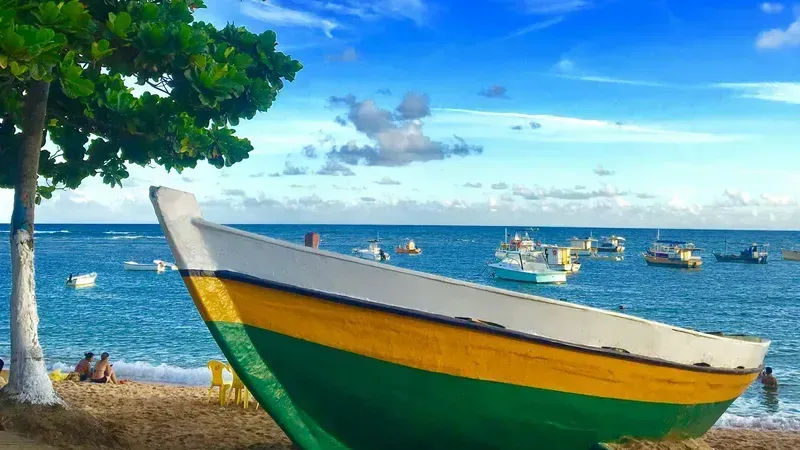
The beach itself runs for several kilometers, with natural pools formed by reefs at low tide that are popular with families and snorkelers. The relative absence of large all‑inclusive resorts within the village core has contributed to a more mixed clientele: Brazilian family groups, couples, solo travelers and foreign visitors share the same streets, and no single demographic dominates.
For LGBTQ+ travelers, that integrated, small‑scale atmosphere can translate to a sense of being part of the everyday fabric rather than confined to a specific “gay beach. ” International travel advisories frequently note that in Brazil, queer acceptance is often strongest in urban and tourist areas where diversity is normalized. Praia do Forte fits this pattern: while it does not market itself explicitly as a gay destination, local tourism authorities include it in broader campaigns that frame Bahia as inclusive, and there are documented examples of queer‑owned businesses and mixed‑crowd venues where same‑gender couples can socialize without attracting undue attention.
Turtles, tides and a quieter kind of queer‑friendly
One of Praia do Forte’s most distinctive features is its role in Brazil’s sea turtle conservation movement. The town is home to one of the main visitor centers of Projeto Tamar, a long‑running national program that protects sea turtles through research, community engagement and environmental education.
The Praia do Forte center includes open‑air pools where rescued turtles are rehabilitated, educational exhibits and nighttime nest‑monitoring activities during the nesting season, typically from October to March. Families, school groups and international visitors mingle on the pathways, turning conservation into a shared social activity.
While Projeto Tamar is not an LGBTQ+ organization, its presence contributes to a broader culture of environmental awareness and social responsibility in the town. Brazilian LGBTQ+ travel specialists have noted that destinations with strong community‑based tourism and environmental projects often foster more inclusive attitudes, because they rely on attracting a diverse range of visitors and on long‑term relationships with guests. In interviews about Brazilian eco‑tourism corridors that include Praia do Forte, regional tourism planners have explicitly linked sustainability, community participation and diversity as pillars of development.
In practice, queer travelers who visit Praia do Forte describe a low‑key environment in which hand‑holding and public affection between same‑gender couples is increasingly visible on the beach and in restaurants, particularly on weekends when the town fills with visitors from Salvador. These reports align with broader observations that Brazil’s beach culture in tourist zones tends to be socially relaxed, provided visitors remain mindful of local norms.
Proximity to Salvador’s established queer scene
Part of Praia do Forte’s appeal for LGBTQ+ travelers is its access to, but separation from, Salvador’s larger and more visible queer community. The beach town lies about 80 kilometers north of the city, along the Linha Verde coastal highway. Regular buses and private transfers connect the two, and the journey generally takes around 1. 5 hours, depending on traffic.
Salvador has a documented LGBTQ+ nightlife scene, with bars and clubs in neighborhoods such as Rio Vermelho, Comércio and the historic Pelourinho, where mixed‑crowd venues host drag performances, samba and electronic music nights. During Carnival and Pride, the city’s trio elétrico parade trucks and street blocos include performances by openly queer artists, and local organizations use the events to advocate for LGBTQ+ rights.
International LGBTQ+ travel guides routinely recommend Salvador as a culturally rich stop for queer travelers who want Afro‑Brazilian music, religious heritage sites and nightlife without the scale of Rio de Janeiro. For those based in Praia do Forte, this means they can spend days in a quiet, beach‑centered environment and then dip into urban queer spaces for a night out or a festival before returning to the village.
Local tourism officials in Bahia have promoted this combination explicitly, positioning Salvador and Praia do Forte as a “culture and coast” pairing suitable for travelers seeking both city experiences and relaxation. While these campaigns do not exclusively target LGBTQ+ visitors, they highlight Pride events, inclusive cultural programming and a range of accommodations, including boutique inns and guesthouses that advertise themselves as welcoming to all couples.
Where queer travelers are staying—and what they’re eating
Praia do Forte’s lodging options skew toward small and medium‑sized pousadas rather than international hotel chains. Many are individually owned properties with 10 to 30 rooms, interior gardens and swimming pools, some of them explicitly marketing to couples and honeymooners.
Brazilian LGBTQ+ travel agencies that operate in Bahia describe Praia do Forte as a destination where queer couples can book mainstream accommodations without necessarily seeking out a “gay hotel, ” because staff in tourist‑oriented businesses are accustomed to diverse guests. While specific guesthouse owners’ identities are not always publicized, Bahia’s tourism secretariat has documented LGBTQ+‑friendly businesses in the region as part of its inclusive tourism program, which includes training in non‑discriminatory service practices and diversity awareness for hospitality workers.
Dining in Praia do Forte reflects Bahia’s culinary traditions: moqueca , acarajé and various preparations of fresh fish are commonly served in beachside restaurants and casual eateries along Alameda do Sol. The region’s strong Afro‑Brazilian influence is evident, and Salvador’s historic Pelourinho district—reachable as a day trip—offers deeper immersion with restaurants and cultural centers focusing on this heritage.
For many LGBTQ+ travelers, food can be a key entry point into local culture, and Bahia’s well‑documented culinary scene allows visitors to connect with the state’s Black and Indigenous histories, which have been central to Brazil’s broader movements for social justice and inclusion. While these movements are not exclusively queer, alliances between Black, feminist and LGBTQ+ organizations in Bahia have been recorded in campaigns against gender‑based violence and racism, reinforcing an intersectional approach to rights that informs local civic life.
Safety, visibility and the realities behind the postcard
Despite the welcoming atmosphere many visitors experience, it is important to contextualize Praia do Forte and Bahia within Brazil’s ongoing struggles with violence and inequality. Human rights organizations have reported that Brazil continues to record high numbers of killings of LGBTQ+ people, particularly transgender women, and have criticized authorities for inconsistent investigations and a lack of comprehensive national data.
Grupo Gay da Bahia, one of the country’s oldest LGBTQ+ rights organizations, based in Salvador, has published annual reports on anti‑LGBTQ+ violence for decades and has advocated for better protections and visibility for queer communities in the state. These reports emphasize that while coastal tourist areas like Praia do Forte may feel relatively safe, marginalized Brazilians—especially those who are Black, poor or transgender—face higher risks elsewhere.
Travel advisories from international LGBTQ+ tour operators recommend that visitors exercise the same caution in Bahia that they would in other parts of Brazil: avoiding isolated areas at night, being aware of petty theft, and adjusting expressions of affection according to context, particularly outside major tourist zones. These same sources note, however, that in practice, queer travelers in destinations like Salvador and the Bahia coast generally report positive interactions, especially in hospitality settings familiar with international guests.
The Brazilian government has recognized violence and discrimination against LGBTQ+ people as a public policy issue, and in 2023 announced measures including the reactivation of a national council focused on LGBTQ+ rights and efforts to improve data collection on hate crimes. Bahia’s state government has participated in these initiatives, including public campaigns against LGBTQ+phobia and support for Pride events.
An emerging “hidden gem” rather than a gayborhood
Praia do Forte does not have a designated “gay street” or rainbow‑flagged district, and it is unlikely to become Brazil’s next big party destination. Instead, its draw for LGBTQ+ travelers lies in a quieter combination of factors: progressive national laws, state‑level inclusion efforts, proximity to a city with an established queer community and a tourism model oriented around sustainability and cultural immersion rather than nightlife alone.
Regional and international travel outlets have started to highlight Bahia more frequently as a queer‑friendly region, pointing to Salvador and coastal towns like Praia do Forte as alternatives for travelers who may have already visited Rio de Janeiro or São Paulo. Yet the town remains largely absent from mainstream LGBTQ+ destination rankings compiled by large English‑language media brands, which tend to focus on well‑known South American capitals and beach resorts.
For travelers who prioritize local culture over club‑hopping, that relative anonymity can be part of Praia do Forte’s appeal. Days in the village follow an unhurried rhythm: sunrise over the reef pools, a walk to the turtle center, a lunch of moqueca under a thatched roof, an afternoon of reading under palm trees and an evening drink on Alameda do Sol while music spills onto the lane. Within that rhythm, queer couples and transgender travelers increasingly report feeling visible but unremarkable—noticed, when at all, as just another part of a larger, diverse crowd.
If Brazil’s ongoing efforts to strengthen protections and collect better data on anti‑LGBTQ+ violence bear fruit, and if Bahia’s tourism sector continues to invest in diversity training and community partnerships, destinations like Praia do Forte may come to be recognized not only for their beaches and turtles, but as models of how smaller, environmentally minded resorts can quietly embed inclusion into their everyday life.
For now, though, Praia do Forte remains something of a hidden gem in South America’s queer‑friendly map—a place where the most visible symbols of LGBTQ+ inclusion might be less about rainbow flags and more about who is comfortably sharing a table at the beach bar at sunset.
by Chris Tremblay
Copyright EDGE Media Network. All rights reserved. This material may not be published, broadcast, rewritten, or redistributed.
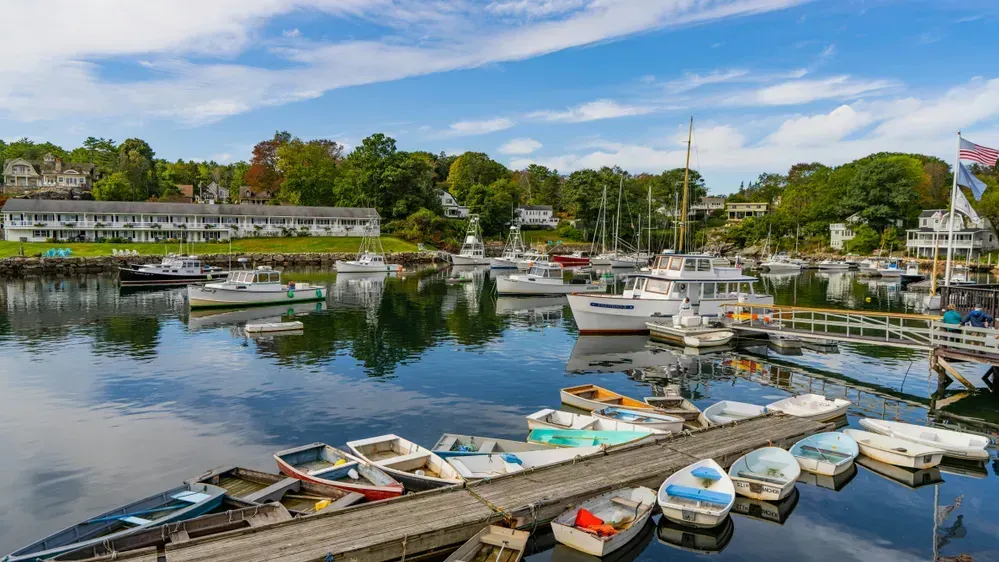
Long known to insiders but still a surprise to many travelers, Ogunquit, Maine, is emerging as a small-town LGBTQ+-friendly escape where cliffs, beaches, art galleries, and queer-owned businesses coexist without the usual big-city fuss.
If Provincetown is the glittering extrovert of New England queer travel, Ogunquit is its softer-spoken cousin: still stylish, still celebratory, but happier to greet you with sea salt on the wind than a velvet rope. The Maine town has long been described as a refuge for LGBTQ+ travelers, and recent travel coverage continues to place it among North America’s under-the-radar queer-friendly destinations.
That reputation is not built on one neon sign or a single annual party. It comes from a layered sense of place: a beach town with a famously walkable center, a coastal path that begins at the edge of the village and traces the Atlantic, and a local culture that has made room for queer people to vacation, work, own businesses, and simply exist without having to explain themselves.
Why Ogunquit feels different
Ogunquit does not sell itself like a mega-resort. Its appeal is more tactile and more intimate: weathered shingles, white sand, the sharp-bright smell of ocean spray, and a main village where you can move from coffee to gallery hopping to cocktails without needing a car. That walkability matters for queer travelers looking for a destination that feels relaxed rather than performative, social without being exposed, and inclusive without demanding explanation.
The town’s most famous natural feature, the Marginal Way, is a 1. 25-mile cliff walk that connects Ogunquit Village to Perkins Cove and offers long views over the Atlantic. It is one of those places where the scenery does the flirting for you: surf punching against rock, gulls banking in the wind, and benches set just far enough apart to let you linger without hurry.
For LGBTQ+ visitors, that calm can be a feature, not a lack. A destination does not have to be loud to be welcoming. In Ogunquit, the sense of safety comes from ordinary signals: a business district where Pride flags appear in windows, a hospitality scene accustomed to queer guests, and community institutions that have openly served LGBTQ+ residents and vacationers for years.
A destination built around art, not just nightlife
Ogunquit’s queer appeal also comes from its artistic backbone. The town has long been associated with galleries, theater, and a creative community that gives the destination more range than a simple “beach town” label allows. The Ogunquit Museum of American Art and the Ogunquit Playhouse help anchor that cultural identity, offering visitors something to do after the sun drops behind the water and the beach crowd heads in.
That arts scene matters for queer travelers because it gives the town a second pulse. During the day, the coast takes the lead: salt air, tide pools, sand underfoot. At night, the mood shifts toward theater curtains, restaurant patios, and bars where conversation can be the main event. For many travelers, especially transgender people, nonbinary people, and queer couples seeking a lower-key trip, that balance can feel safer and more restorative than destinations that market themselves almost entirely through nightlife.
Queer-owned and queer-friendly, without making a spectacle of it
A recurring theme in Ogunquit travel coverage is the presence of LGBTQ+-friendly and LGBTQ+-owned hospitality businesses, especially inns and guest houses that cater to queer travelers looking for a comfortable, explicitly welcoming stay. Recent roundups identify Ogunquit as a place where queer visitors can find community-minded lodging rather than simply tolerance-by-omission.
That kind of accommodation matters because “feeling seen” on vacation is often about small details: whether staff use inclusive language, whether a couple checking in is met with a neutral smile instead of a startled pause, whether local listings and welcome materials make it clear that all kinds of families are welcome. Those cues do not always appear in glossy brochures, but they shape whether a traveler relaxes or stays guarded.
One of Ogunquit’s strengths is that it does not require travelers to decode the town before arriving. It is already known, especially within queer travel circles, as a place where LGBTQ+ visitors have history and visibility. That legacy gives the town a credibility that cannot be manufactured with a rainbow banner in June.
What queer travelers actually do there
A day in Ogunquit can be gloriously uneventful in the best way. Start with coffee in the village, drift through independent shops and galleries, then head to Ogunquit Beach, where the Atlantic arrives in long, cold-blue sheets. Walk the Marginal Way when the light softens. Eat lobster rolls, seafood, or whatever coastal comfort food is calling your name. In summer, the town fills out with seasonal visitors, but it rarely loses its small-scale charm.
For travelers seeking community events, Ogunquit’s Pride-related visibility is usually woven into the local calendar rather than confined to a single defining festival. Nearby Southern Maine LGBTQ+ organizations, especially those serving the broader region, reinforce that the town sits within an affirming coastal corridor rather than as an isolated enclave.
That broader setting is important. A destination feels safer when it is not a one-off novelty but part of a region with a known commitment to inclusion. Maine has often been included in national lists of more LGBTQ+-friendly states, and Ogunquit benefits from being nested in that reputation while keeping its own local character intact.
Why small towns matter in LGBTQ+ travel
There is a tendency in travel writing to treat queer inclusion as something that only happens in giant cities or neon-soaked resort strips. Ogunquit pushes back on that idea. It shows how a small town, especially one with a strong arts scene and a long memory of welcoming LGBTQ+ visitors, can offer a different kind of freedom: less spectacle, more ease.
That difference is not cosmetic. For many queer people, especially those traveling with a partner, with chosen family, or while navigating questions of gender presentation and safety, a place that is quietly affirming can be more restful than a destination that performs inclusion at high volume. In Ogunquit, the welcome often feels practical rather than theatrical: a good check-in experience, an easy walk, a beach that belongs to everyone, and local businesses that understand who is in front of them.
The result is a destination that does not ask to be center stage, yet still leaves a strong impression. Ogunquit is proof that an LGBTQ+-friendly getaway can be an art town, a coastal retreat, and a place to exhale all at once. You do not go there to be dazzled by a “scene” so much as to be folded into one already in progress: waves, paint, theater, conversation, and the easy dignity of being treated like you belong.
by Chris Tremblay
Copyright EDGE Media Network. All rights reserved. This material may not be published, broadcast, rewritten, or redistributed.